

10 Min Glute Workout: Quick Moves for a Stronger Booty
A quick, effective glute workout can change the way your body feels, looks, and even works. The glutes—your body’s largest muscle group—are not just for appearance. They play a big role in stability, posture, and overall strength. Many people don’t realize that weak glutes can lead to back pain, poor athletic performance, and even injuries.
You don’t need a gym or fancy equipment to build stronger glutes. In just 10 minutes, with the right exercises and intensity, you can activate and develop these muscles. This workout fits busy schedules, works for all fitness levels, and needs only a small space—perfect for home, travel, or the gym.
This guide will take you through a focused 10-minute glute workout, breaking down each of the 10 key moves. You’ll learn how to do each exercise, common mistakes, tips for better results, and ways to adjust for your level. You’ll also get smart insights about glute training that most beginners overlook.
Whether you want to tone, strengthen, or just move better, this routine will help you get there.
Why Train Your Glutes In Just 10 Minutes?
Modern life makes it easy to neglect the glutes. Sitting for long hours causes these muscles to “switch off,” leading to weaker, less active glutes. But a short, focused workout can quickly “wake up” these muscles, leading to benefits like:
- Better posture and back support
- More power in daily movements
- Improved balance and sports performance
- Higher calorie burn (strong glutes are big muscles!)
A 10-minute session works because it uses high-effort, compound moves. It fits into a morning routine, a lunch break, or as a finisher after another workout. The key is to use good form, stay focused, and keep rest short.
What You Need
You don’t need equipment for this routine—just your own bodyweight. If you want to make it harder, you can use a resistance band or a dumbbell for some exercises. A soft mat helps protect your knees and back.
Before you start, spend 1-2 minutes doing light cardio (like jogging in place or jumping jacks) to warm up. You’ll also want to stretch your hips and legs a bit.
The 10-minute Glute Workout: 10 Key Moves
Each exercise targets the glutes from a different angle. You’ll perform each move for 45 seconds, with a 15-second rest between exercises. If you’re a beginner, reduce each interval to 30 seconds and rest for 30 seconds.
Let’s break down each move.
1. Bodyweight Squat
The bodyweight squat is a classic for a reason. It works the gluteus maximus, quads, and hamstrings, and also improves mobility.
How to do it:
Stand with feet hip-width apart, toes pointing slightly out. Push your hips back and bend your knees, lowering your body as if sitting in a chair. Go as low as you can without your heels lifting. Press through your heels to stand back up.
Pro tip:
Don’t let your knees collapse inward. Focus on pushing your knees out as you lower.
Common mistake:
Leaning forward too much. Keep your chest up and back straight.
Why it matters:
Squats teach your glutes to fire during daily movements like sitting and standing.
2. Glute Bridge
This simple floor move isolates the glutes and hamstrings.
How to do it:
Lie on your back with knees bent and feet flat on the floor, hip-width apart. Press your feet into the floor and lift your hips until your knees, hips, and shoulders form a straight line. Squeeze your glutes at the top, then lower down.
Pro tip:
Pause at the top for a second and really contract your glutes.
Common mistake:
Using your lower back to lift. Focus on glute power, not arching.
Why it matters:
Glute bridges train your muscles to extend the hips—a key for walking, running, and lifting.
3. Reverse Lunge
This move works the glutes, quads, and balance muscles.
How to do it:
Stand tall, step one foot back, and lower your body until both knees are bent at about 90 degrees. Push through your front heel to return to standing. Alternate legs each rep.
Pro tip:
Keep your torso upright and step back far enough for a deep lunge.
Common mistake:
Letting your front knee go over your toes or wobble sideways.
Why it matters:
Reverse lunges are easier on the knees than forward lunges and hit the glutes hard.
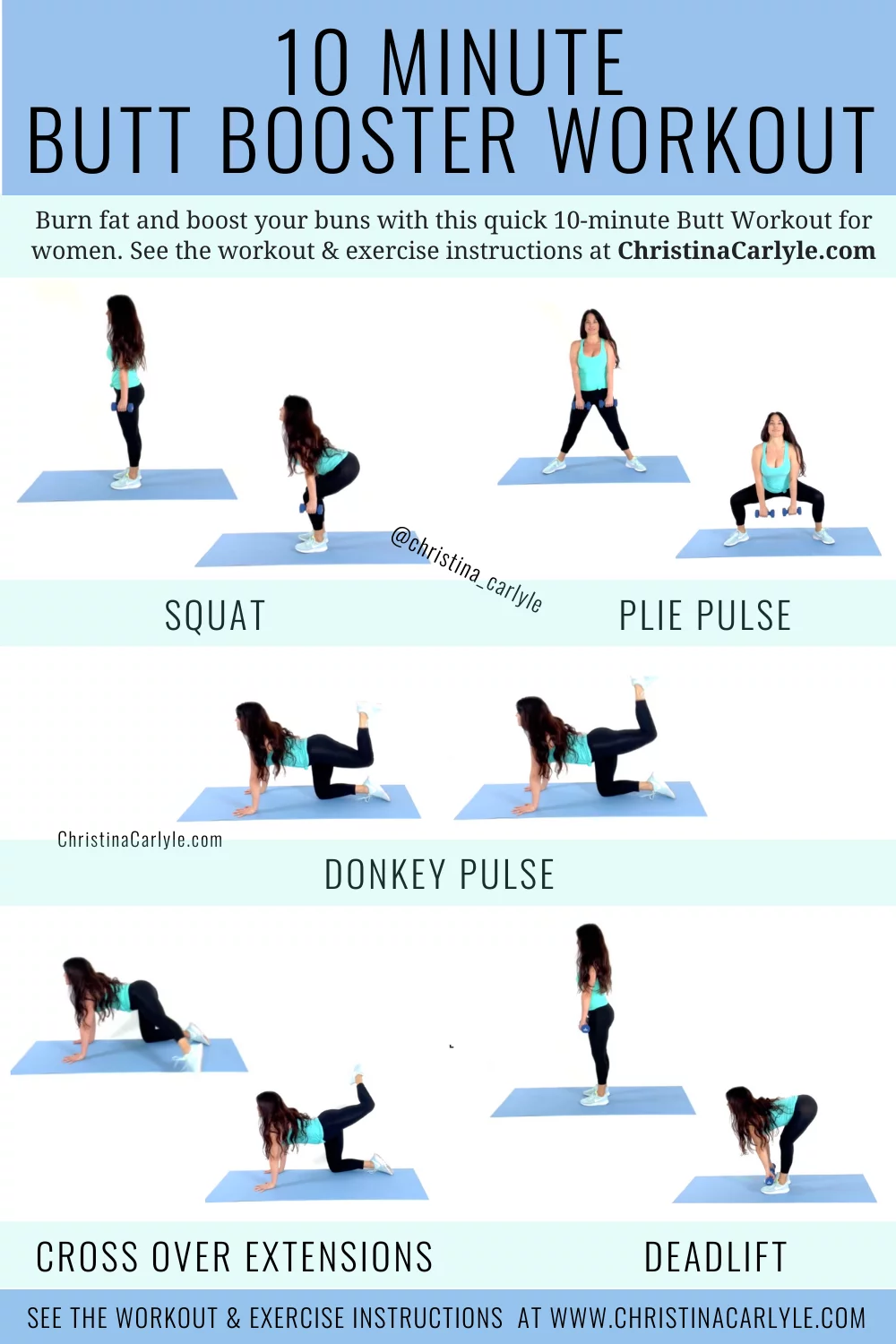
4. Donkey Kick
Donkey kicks focus on the gluteus maximus, helping to lift and shape the butt.
How to do it:
Start on all fours, wrists under shoulders and knees under hips. Keeping your knee bent, lift one leg up and back, pressing your heel toward the ceiling. Lower with control and repeat on the same side, then switch.
Pro tip:
Keep your hips square to the floor—don’t twist.
Common mistake:
Swinging your leg too high or arching your lower back.
Why it matters:
Donkey kicks isolate the glutes without stressing the joints.
5. Side-lying Clamshell
This move targets the gluteus medius, which shapes the sides of your hips and controls leg movement.
How to do it:
Lie on your side with knees bent, feet together. Keeping feet touching, lift your top knee as high as you can without rolling your hips back. Lower with control.
Pro tip:
Add a resistance band above your knees for extra challenge.
Common mistake:
Letting your hips roll back or using momentum.
Why it matters:
Strong glute medius muscles improve balance, reduce injury risk, and help with hip stability.
6. Bulgarian Split Squat
This single-leg move is tough but worth it for serious glute and leg gains.
How to do it:
Stand a few feet in front of a chair or bench. Place one foot behind you on the bench. Lower your body until your front thigh is parallel to the ground, then push back up. Switch sides halfway through.
Pro tip:
Lean forward slightly at your hips to better target the glutes.
Common mistake:
Letting your front knee collapse in or bounce off the bottom.
Why it matters:
This move is more glute-focused than a standard lunge and quickly reveals strength imbalances.
7. Curtsy Lunge
The curtsy lunge hits the glute medius and minimus, giving your hips a rounder look.
How to do it:
Stand tall. Step one leg back and across behind your other leg, bending both knees. Lower your hips toward the floor, then return to standing. Alternate sides.
Pro tip:
Keep your chest up and core tight.
Common mistake:
Letting your front knee twist or falling sideways.
Why it matters:
The curtsy lunge works the glutes from a different angle, building shape and stability.
8. Single-leg Glute Bridge
This is a harder version of the regular glute bridge, forcing each side to work alone.
How to do it:
Lie on your back, knees bent. Extend one leg out straight. Press through the heel of your bent leg to lift your hips, keeping your other leg in line with your body. Lower with control and repeat, then switch sides.
Pro tip:
Don’t let your hips dip—keep them even.
Common mistake:
Using your back or letting your knee collapse in.
Why it matters:
Unilateral moves like this fix muscle imbalances and build stability.
9. Fire Hydrant
A favorite for glute medius and minimus, the fire hydrant helps lift and round the hips.
How to do it:
Start on all fours. Keeping your knee bent, lift one leg out to the side as high as possible without twisting your hips. Lower and repeat.
Pro tip:
Control the motion—don’t swing your leg.
Common mistake:
Rotating your body or arching your back.
Why it matters:
This move is great for hip shape and injury prevention.
10. Squat Pulse
Finish strong with squat pulses, which burn out the glutes and legs.
How to do it:
Start in a squat position. Instead of standing up, pulse up and down a few inches, staying low the whole time.
Pro tip:
Keep your chest up and weight in your heels.
Common mistake:
Letting your knees collapse in or standing up fully.
Why it matters:
Pulses keep constant tension on the muscles for a deep burn and better results.
Sample 10-minute Glute Workout Plan
Here’s how you can structure your time for maximum results. Each exercise lasts 45 seconds, with 15 seconds rest.
| Exercise | Work (seconds) | Rest (seconds) |
|---|---|---|
| Bodyweight Squat | 45 | 15 |
| Glute Bridge | 45 | 15 |
| Reverse Lunge | 45 | 15 |
| Donkey Kick (right) | 22 | 8 |
| Donkey Kick (left) | 22 | 8 |
| Side-Lying Clamshell (right) | 22 | 8 |
| Side-Lying Clamshell (left) | 22 | 8 |
| Bulgarian Split Squat (right) | 22 | 8 |
| Bulgarian Split Squat (left) | 22 | 8 |
| Curtsy Lunge | 45 | 15 |
| Single-Leg Glute Bridge (right) | 22 | 8 |
| Single-Leg Glute Bridge (left) | 22 | 8 |
| Fire Hydrant (right) | 22 | 8 |
| Fire Hydrant (left) | 22 | 8 |
| Squat Pulse | 45 | 15 |
This plan breaks up single-side moves so both legs get equal work. Adjust time as needed for your level.
Comparing Bodyweight Vs. Resistance Band Glute Training
Some people wonder if a simple bodyweight workout is enough for real glute gains. Adding a resistance band can help, but it’s not always necessary. Here’s a quick comparison to help you decide which is best for you:
| Training Style | Benefits | Drawbacks |
|---|---|---|
| Bodyweight Only | - Easy to do anywhere - Great for beginners - Teaches correct form |
- May not be challenging enough long-term - Progress can slow |
| With Resistance Band | - Adds extra challenge - Increases muscle activation - Good for all levels |
- Needs equipment - Can slip if not used correctly |
Insight:
For most people, starting with bodyweight is best. As you get stronger, add a band for more progress—especially on moves like the clamshell, fire hydrant, and bridge.
Common Glute Workout Mistakes
Many people train their glutes but see little change. Here’s why:
1. Rushing The Moves
Glutes respond best to slow, controlled reps. Fast, sloppy reps shift work to other muscles.
2. Not Feeling The Muscle
If you don’t feel your glutes working, check your form. Sometimes, tight hip flexors or weak core muscles make it hard to activate your glutes.
3. Doing Only Squats
Squats are great, but alone they don’t hit all parts of your glutes. You need side-to-side and single-leg moves too.
4. Neglecting Recovery
Muscles grow and strengthen during rest, not during the workout. Take at least one rest day between hard sessions.
5. Skipping The Warm-up
Cold muscles don’t fire well. Warm up before every session for better results and fewer injuries.
Beginner Insight:
You may need to “wake up” your glutes before your main workout. Simple moves like glute bridges or side steps can help. This is called “activation. ”
How Often Should You Do This Workout?
For most people, 2-4 times per week is enough to see results. Give yourself at least one day off between sessions to recover.
Some advanced exercisers add glute finishers (short, intense sets) at the end of leg or cardio workouts. But if you’re just starting, stick to the 10-minute session and watch your form.
Quick Tip:
If you feel more in your thighs or lower back than your glutes, try this:
- Slow down your reps
- Focus on squeezing your glutes at the top of each move
- Use a mirror or video to check your form
Tracking Your Progress
How do you know if your glute workout is working? Track your progress with these tips:
- Take photos every few weeks. Changes happen slowly.
- Notice your strength: Are you able to do more reps or harder versions?
- Check your balance: Moves like single-leg bridge should get easier.
- Watch your posture: Strong glutes help you stand taller.
Advanced Tips For Faster Results
Once you’ve mastered the basics, here’s how to keep improving:
1. Increase Resistance:
Add a heavy band or hold a dumbbell for bridges, squats, and lunges.
2. Try Tempo Changes:
Slow the lowering phase of each move for more muscle tension.
3. Add “burnout Sets”:
After your 10 minutes, pick one exercise and do it to failure (as many reps as you can).
4. Mix Up Your Moves:
Every 4-6 weeks, swap in new glute exercises to keep your muscles guessing.
5. Work On Mobility:
Tight hips limit how much your glutes can work. Stretch your hip flexors and quads after each session.
Little-Known Tip:
Glutes are often “inhibited” by tight hip flexors. Spend 30 seconds after your warm-up stretching your hip flexors. Your glutes will work harder during the workout.
Who Should Do This Workout?
This 10-minute glute workout is safe for most people. It’s good for:
- Beginners wanting to tone up
- Runners, cyclists, and athletes
- People who sit a lot (office workers, drivers)
- Anyone with weak hips or back pain
If you have knee, hip, or back injuries, check with a health professional before starting. Always listen to your body. If something hurts, skip that move or modify it.

Credit: confessionsofamotherrunner.com
Modifying The Workout For Your Needs
Everyone’s body is different. Here’s how to make the workout fit you:
- Beginner: Do 30 seconds per move, rest 30 seconds, skip the hardest moves (like Bulgarian split squat at first).
- Intermediate: Follow the plan as written.
- Advanced: Add a band or weight, do more rounds, shorten rest times.
If you want to focus on certain glute areas (like the top, bottom, or sides), adjust the mix of exercises:
| Glute Area | Best Exercises | Why |
|---|---|---|
| Upper glutes | Donkey kick, fire hydrant, clamshell | These target the glute medius/minimus for lift and shape |
| Lower glutes | Bridge, single-leg bridge, squat pulse | These focus on the gluteus maximus for power and roundness |
| Side glutes | Curtsy lunge, side-lying clamshell, fire hydrant | These work the outer hip for width and stability |
Nutrition And Recovery For Glute Growth
Exercise is only part of building strong, shapely glutes. Pay attention to:
- Protein intake: Muscles need protein to repair and grow. Try to include a source of protein (like chicken, tofu, or eggs) in each meal.
- Hydration: Muscles work better when you’re well-hydrated.
- Sleep: Aim for 7-9 hours per night. Growth happens during deep sleep.
- Stretching: After your workout, stretch your hips, quads, and glutes to improve recovery and mobility.
Little-Known Insight:
Muscle soreness is normal, but not necessary for results. Focus on progress in strength and form—not just how sore you feel.
Credit: www.sekompos.com
Staying Motivated
Consistency is the key. Set small goals—like doing this workout 3 times a week for a month. Track your progress with photos or a workout log.
Try new music, invite a friend, or join an online challenge to keep things fresh. Remember, small changes add up over time.
Frequently Asked Questions
How Soon Will I See Results From A 10-minute Glute Workout?
Most people notice better muscle tone and strength within 2-4 weeks, if they train consistently and eat well. Visible changes depend on your starting point and other factors like diet, sleep, and genetics. Strength and posture often improve before appearance.
Can I Do This Workout Every Day?
It’s best to give your glutes at least one rest day between intense sessions. Training every day can lead to fatigue and less progress. Two to four times per week is ideal for most people.
Will This Workout Make My Legs Bulky?
No. Bodyweight glute workouts build strength and shape without adding bulky mass. For most people, legs look more toned and defined. Women especially do not “bulk up” easily without heavy weights and extra calories.
Is This Workout Safe For Beginners?
Yes, most of these moves are beginner-friendly. Start with shorter intervals and focus on form. Skip any move that causes pain, and add difficulty as you get stronger.
What If I Don’t Feel My Glutes Working?
Check your form, slow down, and focus on squeezing your glutes. Sometimes, tight hips or weak core muscles make it hard to activate the glutes. Try a short glute activation routine before starting your workout.
For more on glute training science and muscle activation, see the Wikipedia entry on gluteus maximus.
A 10-minute glute workout can help you build strength, shape your body, and feel better every day. It’s fast, flexible, and fits any routine—no excuses needed. Start today and see what a difference strong glutes can make.

Credit: rmcuk.in
