

What Not to Wear for Business Casual: Style Mistakes to Avoid
What Not To Wear For Business Casual
Getting dressed for work can feel confusing, especially when the dress code says “business casual.” Many people think this means anything except a suit, but that’s not true. Business casual is a balance: you want to look professional, but not too formal. Wearing the wrong clothes can hurt your confidence, distract others, or even affect your chances for promotion. This article will help you understand what not to wear for business casual, using clear examples and practical advice. Whether you’re new to the workplace or want to refresh your wardrobe, you’ll learn how to avoid common mistakes and create a polished look that fits almost any office.
Understanding Business Casual
Business casual is not the same everywhere. In some companies, it means you can wear a polo shirt and khakis. In others, it’s closer to a suit without a tie. The main goal is to look tidy and professional, without being too stiff.
If you’re unsure, it’s better to dress slightly more formal than less. Your outfit should never make you stand out for the wrong reasons, and it’s wise to observe what your colleagues and managers wear.
What Business Casual Is Not
Business casual is not casual Friday or weekend wear. It’s also not formal business attire, like a full suit and tie. It sits somewhere between these two extremes. The key is neatness, comfort, and respect for the workplace. For example, you shouldn’t wear clothes that you might wear while relaxing at home or going to a party. Formal business attire is reserved for important meetings or client presentations, so avoid wearing it daily unless your company expects it.
How Dress Codes Vary
Different industries and regions have their own standards. Tech companies may allow jeans, while law firms expect dress pants. Always check your company guidelines or ask coworkers for advice. If you’re interviewing, aim for a clean, professional look. In some offices, business casual may mean wearing a collared shirt and slacks, while in others, it may include more creative options.
For example, in creative industries, you might see more colors and patterns, but you should always avoid anything too bold or casual.
Why Business Casual Matters
Studies show first impressions are formed within seconds. Clothes send strong signals about your attitude, skills, and respect for the company. According to a survey by OfficeTeam, 50% of managers said employees’ attire affects their chances of promotion. Dressing well can help you feel more confident and ready to tackle your tasks.
It can also help you earn trust from coworkers and clients. In many workplaces, how you dress is seen as a sign of how seriously you take your job.
Common Mistakes In Business Casual
Many people misunderstand business casual. Here are the most frequent errors:
- Too casual clothing: T-shirts, shorts, flip-flops
- Overly formal attire: Suits, ties, evening dresses
- Distracting outfits: Loud patterns, bright colors, flashy accessories
- Poor fit: Baggy or tight clothes
- Worn-out items: Stained, wrinkled, or torn clothes
Let’s look deeper at each mistake.
Too Casual Clothing
Some items are never suitable for business casual. T-shirts with logos, hoodies, shorts, and sandals make you look unprofessional. Even if your office feels relaxed, avoid clothes that seem like weekend wear. For example, graphic t-shirts may be allowed in some creative spaces, but most offices expect you to look a bit more polished.
If you’re unsure, choose a simple button-down shirt or a plain sweater.
Overly Formal Attire
Wearing a full suit or tie can make you stand out in the wrong way. You might look out of place and even intimidate coworkers. Save formal clothes for special meetings or interviews. Overdressing can also make others uncomfortable, as it suggests you are not aware of the company culture.
For instance, showing up in a black suit and tie when everyone else is wearing polos and khakis may create distance between you and your colleagues.
Distracting Outfits
Patterns and bright colors can be fun, but they may draw too much attention. Big jewelry or noisy accessories are also distracting. Stick to subtle designs and neutral colors. Wearing clothes with large logos or slogans can make you appear less serious.
Flashy accessories can also become the focus instead of your work, so keep your style simple and understated.
Poor Fit
Fit is more important than style. Baggy or tight clothes look sloppy. Choose items that fit your body without being uncomfortable. Clothes that are too loose can look careless and make you appear less professional, while clothes that are too tight may be distracting or even uncomfortable.
Consider getting your clothes tailored if needed; it makes a big difference in how you look and feel.
Worn-out Items
Stains, holes, or wrinkles can ruin your appearance. Even expensive clothes look bad if they’re not clean and pressed. Always check your clothes before leaving home. If you notice a stain or wrinkle, take a few minutes to fix it.
Investing in a steamer or iron can help you look sharp every day.
Items To Avoid For Business Casual
Now, let’s break down what not to wear, piece by piece.
Tops
T-shirts: These are too informal, especially with graphics or slogans. Save them for weekends. Even plain t-shirts can look too relaxed for most offices.
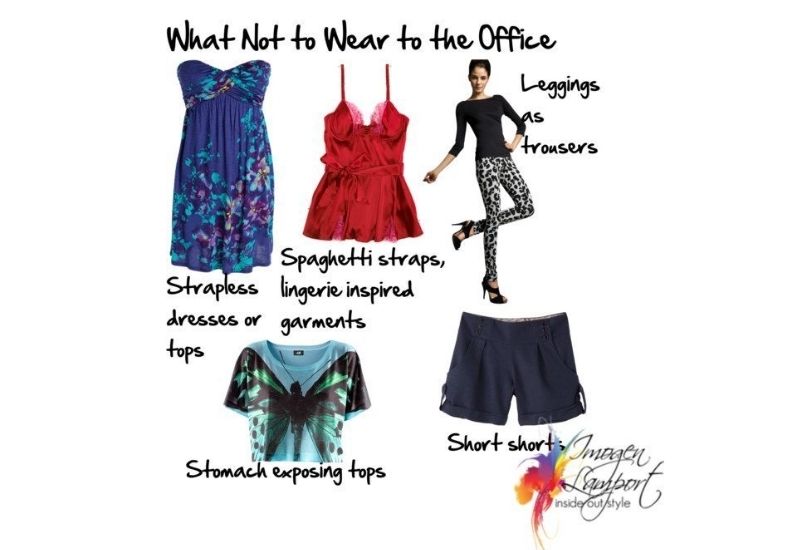
Tank tops: Even in summer, tank tops look unprofessional. Sleeveless shirts should have wide straps and cover your shoulders.
Hoodies: A hoodie signals relaxation, not readiness for work. Stick to cardigans or sweaters if you need warmth.
Sheer or revealing tops: Anything see-through or low-cut is not office-appropriate. If you wear a blouse, make sure it isn’t transparent.
Loud prints: Avoid tops with neon colors or large, bold patterns. Subtle stripes or small prints are usually fine.
Bottoms
Jeans: Some companies allow dark, clean jeans. But ripped, faded, or light-wash jeans are not business casual. If you wear jeans, make sure they have no holes or distressed areas.
Shorts: Shorts are always too casual, no matter the weather. Even tailored shorts are not suitable for most offices.
Leggings: Unless paired with a long tunic or dress, leggings are not business casual. Leggings can show too much and are better for weekends.
Sweatpants: These belong at home or the gym. Always choose trousers or skirts instead.
Mini skirts: Skirts should reach at least mid-thigh. Anything shorter is not suitable. Knee-length or midi skirts are safer choices.
Footwear
Flip-flops: These are a major mistake. They’re noisy and show too much of your feet. Closed-toe shoes are always better.
Sneakers: Athletic shoes are not business casual, unless your office allows them. Opt for loafers, oxfords, flats, or low heels.
Open-toed shoes: Some companies allow sandals, but many do not. Avoid them unless you’re sure. If sandals are allowed, choose styles that are simple and cover most of the foot.
Platform shoes: High platforms or chunky heels can distract from your professional image. Stick to classic styles.
Dirty shoes: Even if your shoes are stylish, dirty or scuffed footwear looks careless. Clean your shoes regularly.
Accessories
Large jewelry: Big earrings or chunky necklaces can distract others. Simple studs or small pendants are better.
Bright colors: Accessories should be subtle and match your outfit. Avoid anything too flashy.
Hats: Baseball caps or beanies are rarely acceptable. Only wear hats if required for religious or medical reasons. In most offices, hats are seen as too casual.
Backpacks: Unless your office is casual, choose a briefcase or tote instead. Backpacks can look too youthful or informal.
Outerwear
Puffer jackets: Bulky coats look too casual. Choose a tailored coat or blazer. If you need warmth, a simple trench coat or pea coat is more professional.
Rain ponchos: These are practical, but not stylish. Bring an umbrella instead. Ponchos can make your outfit look messy.
Bright colors: Stick to neutral tones for jackets and coats. Black, navy, or gray are always safe options.
Comparison: Business Casual Vs Casual Wear
To make things clearer, here’s a simple comparison.
| Business Casual | Casual Wear |
|---|---|
| Button-down shirts, polos | T-shirts, tank tops |
| Dress pants, skirts | Jeans, shorts |
| Loafers, flats | Sneakers, flip-flops |
| Subtle accessories | Bold, bright accessories |
| Neat, pressed clothes | Wrinkled, worn-out clothes |
This table shows the clear difference between business casual and everyday casual. While casual wear is comfortable and relaxed, business casual is neat and respectful.
Gender Differences In Business Casual
Business casual rules can be slightly different for men and women, though the main idea stays the same.
For Men
Avoid: T-shirts, shorts, athletic shoes, tank tops, ripped jeans
Recommended: Button-down shirts, polos, khakis, dress pants, loafers
Men should also avoid wearing shirts untucked unless the style is made to be worn that way. A blazer or cardigan can add polish without being too formal.
For Women
Avoid: Mini skirts, spaghetti straps, sheer tops, leggings (without coverage), flashy jewelry
Recommended: Blouses, tailored pants, knee-length skirts, flats or low heels
Women should watch for fit and coverage. Tops should cover the shoulders and chest. If wearing dresses, make sure they are not too tight or short.
Why Gender Differences Matter
Some companies have stricter rules for women’s clothing. For example, heels may be expected, or skirts must reach the knee. Always check your employee handbook. Sometimes, there are double standards, so it’s wise to observe your workplace carefully and ask HR if you’re unsure.
Business Casual In Different Industries
The meaning of business casual changes with your workplace.
| Industry | Acceptable | Not Acceptable |
|---|---|---|
| Tech | Clean jeans, polos | Shorts, graphic tees |
| Finance | Dress shirts, slacks | T-shirts, sneakers |
| Education | Knee-length skirts, sweaters | Flip-flops, tank tops |
| Healthcare (office roles) | Button-downs, khakis | Leggings, mini skirts |
| Retail | Blouses, flats | Shorts, hoodies |
Every industry has its own standard. For example, tech companies may be more relaxed, but finance and law are usually stricter. Retail offices often want you to look approachable but professional, while education settings may require more coverage and comfort.
How Fit And Fabric Matter
Not all mistakes are about style. The fit and fabric of your clothes affect your appearance.
Fit
A good fit shows you care about your look. Baggy clothes seem lazy; tight clothes seem unprofessional. Tailored pants and shirts make a strong impression. If you’re between sizes, choose the one that fits best and consider tailoring. Many stores offer free or low-cost adjustments.
Fabric
Avoid shiny, loud, or sheer materials. Choose cotton, wool, or blends. They stay neat and are comfortable for long hours. Synthetic fabrics can look cheap and wrinkle easily. Linen is good for summer, but can wrinkle, so iron it before wearing.
Avoid fabrics that cling or stretch too much.
Practical Example
If you wear a cotton button-down shirt and tailored pants, you look clean and ready for work. If you wear a shiny polyester shirt and tight jeans, you seem unprepared. A wool blend skirt and a soft sweater are comfortable and professional, while a nylon mini skirt and a sweatshirt are not.
Dress Code Violations: Real Consequences
Many companies take dress codes seriously. Wearing the wrong clothes can lead to warnings, poor reviews, or lost promotions. According to a survey by CareerBuilder, 31% of employers said dress code violations lead to disciplinary action. Even small mistakes can create negative impressions.
Examples Of Dress Code Violations
- An employee wore shorts and flip-flops to a meeting, was sent home to change.
- A worker wore a graphic tee, received a warning.
- Someone wore a wrinkled shirt and old sneakers, lost a client’s trust.
Sometimes, repeated violations can lead to bigger problems, such as missing out on important projects or being overlooked for raises. Employers often see dress code mistakes as signs of poor judgment.

Credit: b-movie.ch
Seasonal Mistakes In Business Casual
Dressing for the weather is important, but don’t let comfort ruin your look.
Summer
Avoid shorts, tank tops, and sandals. Choose lightweight fabrics, like cotton or linen, but keep your outfit professional. Light colors are fine, but avoid anything too bright.
Winter
Don’t wear bulky jackets or hoodies indoors. Layer with a neat sweater or blazer. Avoid hats and scarves in the office. Wool or cashmere sweaters are good choices, but avoid anything oversized or sloppy.
Rainy Days
Rain ponchos or waterproof boots may be necessary for travel, but change into proper shoes at work. Keep an umbrella and a spare pair of shoes at your desk if possible. Wet clothes can look messy, so plan ahead.
Color And Pattern Choices
Colors and patterns can affect how others see you. Avoid extremes.
Bright Colors
Neon, red, or orange can be distracting. Stick to blues, grays, blacks, whites, and earth tones. Pastel colors are often safe, but avoid anything too bold unless your office encourages creativity.
Patterns
Small stripes or checks are fine. Avoid large prints, logos, or cartoons. If you wear patterns, pair them with neutral items. Mixing too many patterns can look chaotic.
Example
A navy-blue blouse and gray pants look professional. A bright orange shirt with cartoon graphics does not. Subtle prints, such as polka dots or pinstripes, add interest without distraction.
Grooming And Hygiene Mistakes
Your outfit is just one part of your image. Grooming matters.
Common Grooming Errors
- Messy hair
- Strong perfume or cologne
- Dirty nails
- Heavy makeup
Even if your clothes are perfect, poor grooming can ruin your appearance. Keep nails clean and trimmed. Use light scents and avoid anything overpowering.
Why It Matters
A survey by LinkedIn found 68% of professionals said grooming affects their perception of coworkers. Good grooming shows attention to detail and respect for others.
The Role Of Accessories
Accessories can add style, but too much can hurt your look.
What Not To Wear
- Large necklaces
- Big hoop earrings
- Flashy watches
- Bright scarves
Avoid accessories that make noise or draw too much attention. Simple pieces add polish without distraction.
Better Choices
- Small studs
- Simple necklaces
- Classic watches
- Neutral belts
Choose accessories that match your outfit and are not too bold. If you wear a scarf, pick solid colors or small prints.
Technology And Business Casual
Phones, tablets, and laptops are part of work life. But carrying them in the wrong way can affect your image.
Common Mistakes
- Using a backpack instead of a briefcase or tote
- Carrying devices in pockets, which makes clothes bulge
- Using loud phone cases
Bulky bags or bright phone cases can look messy. Keep devices out of sight during meetings, and avoid checking your phone constantly.
Better Options
Choose a slim laptop bag or professional tote. Keep devices out of sight during meetings. Neutral-colored cases look more professional.
How To Fix Business Casual Mistakes
If you’ve made mistakes, it’s easy to fix them.
- Review your company’s dress code.
- Look at what managers wear.
- Ask HR for advice.
- Start with basics: Button-down shirts, neat pants, closed-toe shoes.
- Avoid extremes: Don’t dress too formal or too casual.
Make small changes one step at a time. If you’re unsure, keep your look simple and neutral.

Credit: www.ultimatemedical.edu
Data: Business Casual Trends
According to a survey by the Society for Human Resource Management, 62% of companies now use business casual dress codes. But only 34% allow jeans, and just 12% allow shorts. This means you should avoid risky items unless you’re sure.
More companies are moving toward flexible dress codes, but standards still matter.
Business Casual Vs Smart Casual
Some people confuse business casual with smart casual. Here’s a comparison.
| Business Casual | Smart Casual |
|---|---|
| Button-down shirts, polos | Stylish tops, turtlenecks |
| Dress pants, khakis | Dark jeans, chinos |
| Closed-toe shoes | Dressy sneakers, ankle boots |
| Classic accessories | Trendy accessories |
| Professional look | Mix of comfort and style |
Smart casual is more flexible and often seen at social events or creative offices. Business casual is safer in most workplaces.
Two Insights Most Beginners Miss
- Even small mistakes matter: Many people think only big errors—like wearing shorts—are risky. But small details, like wrinkled clothes or loud jewelry, can hurt your image as much as obvious mistakes. For example, wearing a dress shirt with stains or a blazer with missing buttons can be as damaging as wearing sneakers.
- Dress code is dynamic: What’s allowed today may change next month. Always check for updates and stay flexible. If you notice your managers change their style, follow their lead. Company culture evolves, and staying alert helps you avoid mistakes.
Practical Tips To Avoid Business Casual Mistakes
- Plan your outfit the night before: This avoids rushing and missing details.
- Keep backup items at work: Store a clean shirt or shoes for emergencies.
- Take photos of your outfits: You’ll see mistakes more easily.
- Ask for feedback: Trusted coworkers can give honest advice.
Also, keep your wardrobe organized. Separate work clothes from casual items to avoid confusion. Practice mixing and matching basic pieces for variety.
Credit: insideoutstyleblog.com
Where To Learn More
If you want deeper guidance, check trusted sites like Society for Human Resource Management for dress code updates and tips.
Frequently Asked Questions
What If My Company Doesn’t Have A Clear Dress Code?
If your company doesn’t give specific rules, look at what managers and senior employees wear. Dress slightly more formal than the average. This shows respect and caution, and protects you from mistakes. If you’re still unsure, basic business casual staples are always safe.
Are Jeans Ever Acceptable For Business Casual?
Jeans may be allowed in some workplaces if they’re dark, clean, and free of rips. Avoid light-wash, distressed, or baggy jeans. When in doubt, choose dress pants or khakis instead. Always check with HR or your supervisor first.
Can I Wear Sneakers In A Business Casual Office?
Sneakers are usually too casual. Some tech or creative offices allow plain, clean sneakers. Avoid athletic shoes, bright colors, or flashy designs. If unsure, pick loafers, flats, or low heels.
What Should I Do If I Accidentally Dress Too Casually?
If you realize your outfit is too casual, apologize to your supervisor and make a note to dress better next time. Keep backup clothing at work if possible. Learning from mistakes is part of professional growth. Consider making a checklist for future outfits.
How Can I Express My Personality In Business Casual?
You can show personality with subtle colors, simple accessories, or unique patterns. Just avoid extremes—bright colors, loud prints, or big jewelry. Focus on neatness and fit for a confident look. Small touches, such as a patterned scarf or colored socks, are enough.
Choosing the right business casual outfit is not just about following rules. It’s about respect for yourself and your workplace. Take time to review your wardrobe and make small changes. These efforts pay off in confidence, success, and a stronger professional image.
With careful planning, you can avoid mistakes and build a style that helps you stand out for the right reasons.
