

What is the Difference Between Business Casual and Smart Casual for Men?
What is the Difference between Business Casual And Smart Casual for Men
Understanding what to wear can be tricky, especially when invitations or office memos mention dress codes like business casual or smart casual. These terms can sound similar, but they actually mean different things for men. Picking the right outfit can affect not just how others see you, but also how confident you feel. Whether you’re heading to a meeting, dinner, or networking event, knowing the difference helps you fit in and stand out for the right reasons.
Many men struggle to tell business casual from smart casual. Sometimes, even managers and HR teams confuse the two. This confusion leads to awkward moments, underdressing, or overdressing. In this guide, you’ll learn how to spot the differences, why they matter, and how to build your wardrobe for each dress code.
You’ll also see real-world examples, practical advice, and mistakes to avoid. By the end, you’ll feel confident dressing for any occasion where these terms come up.
What Is Business Casual For Men?
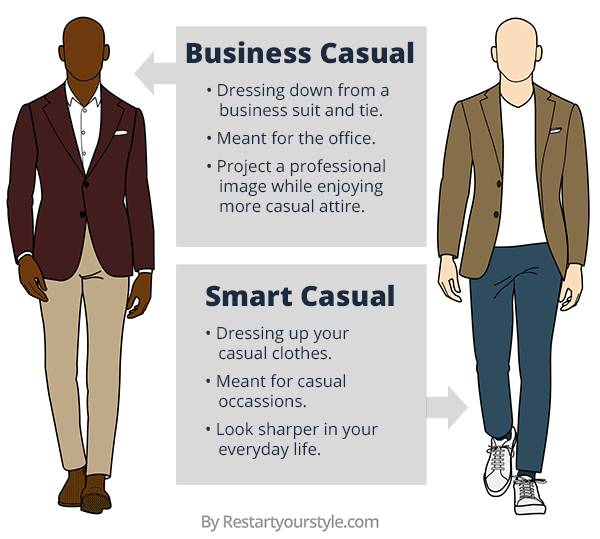
Business casual is a dress code used in offices, meetings, and professional settings. It’s less formal than a suit, but more polished than jeans and a T-shirt. The goal is to look professional and tidy without being too stiff or formal.
Typical Business Casual Items
Business casual includes:
- Dress shirts (plain or with subtle patterns)
- Dress slacks or chinos
- Blazers (optional, but adds polish)
- Leather shoes (loafers, oxfords, or brogues)
- Belts (matching the shoes)
- Sweaters (over a shirt, for cooler days)
Jeans, shorts, and sneakers are usually not included. Ties are optional, and jackets are not required unless specified.
Common Business Casual Outfits
- Light blue dress shirt, navy chinos, brown loafers
- White dress shirt, gray dress pants, black brogues, navy blazer (optional)
- Light sweater over a collared shirt, beige chinos, leather belt, dark brown shoes
Where You’ll See Business Casual
Business casual is popular in:
- Corporate offices
- Job interviews (unless otherwise stated)
- Conferences and seminars
- Casual Fridays (in traditional workplaces)
Why It Matters
Wearing business casual shows respect for your workplace or event. It signals professionalism without being overdressed. In many modern offices, business casual is the standard, especially where suits feel too formal.
What Is Smart Casual For Men?
Smart casual is a flexible, stylish dress code. It’s less formal than business casual, but still neat and intentional. Smart casual allows you to mix more relaxed items with dressier pieces. This style focuses on looking sharp without strict rules.
Typical Smart Casual Items
Smart casual includes:
- Collared shirts (can be dress shirts or polos)
- Sweaters and cardigans
- Chinos, dark jeans, or tailored shorts (in warm climates)
- Casual jackets (like bomber or Harrington)
- Loafers, dress sneakers, or boots
- Accessories (watches, belts, pocket squares)
You can wear jeans and sneakers, as long as they are clean and not worn out. Ties are rarely needed.
Common Smart Casual Outfits
- White polo shirt, dark jeans, white sneakers, navy bomber jacket
- Light blue dress shirt, olive chinos, tan Chelsea boots
- Gray cardigan, black jeans, brown loafers, simple watch
Where You’ll See Smart Casual
Smart casual is common at:
- Dinner parties
- Date nights
- Upscale bars and restaurants
- Networking events outside the office
- Casual office days (in creative industries)
Why It Matters
Smart casual lets you express personality and style. It’s about looking well-dressed without being stiff. The flexibility means you can adjust your outfit for different occasions, climates, and moods.
Key Differences Between Business Casual And Smart Casual
Although business casual and smart casual sound similar, they have distinct rules and expectations. Here are the main differences:
Formality
- Business casual is more formal. It’s meant for professional settings.
- Smart casual is relaxed. It fits social events and creative workplaces.
Clothing Choices
- Business casual avoids jeans, sneakers, and t-shirts.
- Smart casual welcomes clean jeans, stylish sneakers, and even simple t-shirts (under a jacket or sweater).
Color And Pattern
- Business casual uses neutral colors (navy, gray, beige, white).
- Smart casual allows brighter colors, patterns, and textures.
Accessories
- Business casual keeps accessories simple and functional.
- Smart casual encourages style with watches, pocket squares, or trendy belts.
Fit And Style
- Business casual favors classic cuts.
- Smart casual supports modern fits and creative combinations.
Comparison Table: Business Casual Vs. Smart Casual
Here’s a quick overview:
| Aspect | Business Casual | Smart Casual |
|---|---|---|
| Formality | Medium-high | Medium-low |
| Jeans | Not allowed | Allowed (dark, clean) |
| Sneakers | Not allowed | Allowed (dress sneakers) |
| T-shirts | Not allowed | Allowed (under jacket/sweater) |
| Blazers | Optional | Optional (more casual styles) |
| Accessories | Minimal | Stylish, creative |
| Colors | Neutral | Wide range |
Practical Examples: Business Casual Vs. Smart Casual
Seeing real outfit examples helps clarify the differences. Here are three scenarios:
Scenario 1: Office Meeting
- Business casual: Navy dress pants, light gray dress shirt, brown belt and shoes, optional navy blazer.
- Smart casual: Olive chinos, white button-down shirt, tan Chelsea boots, gray cardigan.
Scenario 2: Dinner With Friends
- Business casual: Dark gray dress pants, blue dress shirt, black loafers.
- Smart casual: Dark jeans, black polo, white sneakers, navy bomber jacket.
Scenario 3: Networking Event
- Business casual: Beige chinos, white dress shirt, brown brogues, navy blazer.
- Smart casual: Blue jeans, pale pink shirt, tan boots, stylish watch.
These examples show how the two dress codes look in real life. Business casual always stays polished and neutral, while smart casual mixes more relaxed pieces and colors.
Building A Business Casual Wardrobe
If your job or events require business casual, it’s smart to invest in key pieces. Quality matters more than quantity.
Essential Items
- Dress shirts: Choose solid colors (white, blue, gray) and subtle patterns.
- Dress pants: Navy, gray, or beige slacks that fit well.
- Chinos: For a less formal look, but still professional.
- Blazers: Navy or gray, single-breasted.
- Leather shoes: Loafers, oxfords, or brogues.
- Belts: Match the color of your shoes.
- Sweaters: V-neck or crew neck, worn over shirts.
Practical Tips
- Buy shirts with a slim but comfortable fit.
- Avoid shirts with flashy patterns or colors.
- Make sure pants are hemmed to the right length.
- Shoes should be clean and polished.
- Keep accessories minimal—simple watches, belts, and cufflinks.
Common Mistakes
- Wearing jeans or sneakers
- Choosing shirts with loud patterns
- Untucked shirts or wrinkled clothing
- Mixing too many colors
Building A Smart Casual Wardrobe
Smart casual is more flexible, so you can experiment with style and personality. Choose items that can be dressed up or down.
Essential Items
- Collared shirts: Button-downs, polos, or even henleys.
- Chinos or dark jeans: Slim fit works best.
- Casual jackets: Bomber, Harrington, or denim jackets.
- Sweaters and cardigans: Neutral or bold colors.
- Dress sneakers or boots: Clean, stylish, and comfortable.
- Accessories: Watches, belts, pocket squares.
Practical Tips
- Mix textures (cotton, wool, denim) for interest.
- Try layering—jacket over shirt, sweater over T-shirt.
- Jeans should be dark, slim, and free of rips.
- Sneakers must be clean and simple (no flashy logos).
- Add a bit of personality with color or accessories.
Common Mistakes
- Overdressing—wearing a suit or tie
- Wearing old, worn jeans or sneakers
- Too many loud colors or patterns
- Forgetting to iron or steam clothes

Credit: thedarkknot.com
Choosing The Right Dress Code For Different Occasions
Picking between business casual and smart casual depends on the occasion, your role, and the expectations of the people you’ll meet. Here’s how to decide:
Workplaces
- Corporate offices: Business casual is safest unless told otherwise.
- Creative companies: Smart casual is common, but check the culture.
- Interviews: Business casual is standard for most roles. Only wear smart casual if the company is known for creativity.
Social Events
- Dinner parties: Smart casual fits best. Business casual may look too formal.
- Weddings: Business casual works for daytime, smart casual for more relaxed, evening events.
- Bars and cafes: Smart casual is ideal.
Special Tips
- When unsure, dress slightly more formal. You can always remove a blazer or tie.
- Ask HR or event organizers about the dress code.
- Look at photos from past events for reference.
How Fit And Fabric Affect Business Casual And Smart Casual
Fit and fabric matter as much as style. Bad fit ruins even the most expensive clothes. Good fit makes cheap clothes look sharp.
Fit
- Pants should sit at your waist, not sag or bunch.
- Shirts should have sleeves ending at your wrist, not past.
- Jackets should fit your shoulders, not droop.
Fabric Choices
- Business casual needs cotton, wool, or blends that resist wrinkles.
- Smart casual allows denim, linen, and more relaxed fabrics.
Data Table: Fabric Choices By Dress Code
| Item | Business Casual Fabrics | Smart Casual Fabrics |
|---|---|---|
| Shirts | Cotton, poplin, oxford | Cotton, linen, flannel |
| Pants | Wool, cotton, blends | Denim, chinos, linen |
| Jackets | Wool, cotton, blends | Denim, cotton, lightweight blends |
| Shoes | Leather | Leather, suede, canvas |
Insider Tip
Many men forget to check how fabric behaves during the day. Wrinkle-resistant fabrics help you stay sharp. For smart casual, linen is great for summer, but it wrinkles easily—choose blends if you want less maintenance.
Credit: mysocietysocks.com
How Age And Personality Affect Dress Code Choices
Your age and personality can change how you approach business casual or smart casual.
- Younger men often prefer smart casual, adding trendy pieces or bold colors.
- Older men usually stick to business casual, focusing on classic, timeless pieces.
- Your personality can shine more in smart casual—through accessories, colors, or unique jackets.
Non-obvious Insight
Many men think business casual means boring, but you can add subtle patterns, textured fabrics, and stylish shoes for personality. Smart casual is not just about jeans and sneakers—it works best when you add one “dressy” item, like a blazer or a quality watch.
Business Casual And Smart Casual In Different Cultures
Dress codes are not the same everywhere. In some countries, business casual is almost as formal as a suit. In others, smart casual is the norm.
- Europe: Business casual often includes blazers, even with chinos.
- Asia: Smart casual leans toward clean, minimal looks—avoid flashy sneakers.
- North America: More relaxed. Jeans and polos are common in smart casual.
External Resource
If you want more details about how dress codes work in different countries, this guide from GQ explains global variations.
Credit: restartyourstyle.com
How To Transition Between Dress Codes
Sometimes, you need to change from business casual to smart casual (or vice versa) during the day. Here’s how to do it smoothly:
- Keep a jacket or blazer handy: Adding or removing it changes your look.
- Swap shoes: Leather shoes for business casual, sneakers or boots for smart casual.
- Change shirts: Switch a dress shirt for a polo or a casual button-down.
- Add or remove accessories: Pocket squares or stylish watches can elevate smart casual.
Data Table: Quick Transitions
| Business Casual Item | Smart Casual Swap |
|---|---|
| Dress pants | Dark jeans or chinos |
| Dress shirt | Polo or casual shirt |
| Leather shoes | Dress sneakers or boots |
| Classic blazer | Bomber or casual jacket |
How To Save Money While Building Your Wardrobe
You don’t have to spend a lot to look great in either dress code. Here’s how to build your wardrobe on a budget:
- Buy versatile items: Navy chinos work for both business casual and smart casual.
- Shop sales: Look for quality brands during discounts.
- Choose classic styles: Timeless pieces last longer and fit more situations.
- Avoid trendy items: They go out of style quickly.
- Care for your clothes: Iron shirts, polish shoes, and store items properly.
Insider Tip
Many men waste money on expensive shirts or shoes, but fit and care are more important than price. A $30 shirt that fits well and is well-maintained looks better than a $150 shirt that’s wrinkled or too big.
Mistakes To Avoid In Business Casual And Smart Casual
Even experienced men make mistakes. Avoid these common errors:
- Mixing dress codes: Wearing jeans with a business casual shirt confuses the look.
- Ignoring fit: Baggy or tight clothes look sloppy.
- Forgetting grooming: Hair and nails should be neat.
- Over-accessorizing: Too many watches, rings, or bracelets distract from the outfit.
- Choosing the wrong shoes: Sneakers in business casual, worn-out shoes in smart casual.
- Misunderstanding the event: Dressing too formal or too casual for the occasion.
Dressing For Body Shape And Height
Different body types need different styles for best results.
- Tall men: Avoid pants that are too short or jackets that are too tight.
- Short men: Choose slim fits, avoid long jackets or shirts.
- Slim men: Layering helps add shape.
- Broad men: Avoid overly tight shirts or jackets.
Non-obvious Insight
Many men stick to one style because they fear experimenting. Trying new fits or layering can change how you feel and look in both business casual and smart casual.
The Role Of Personal Branding
How you dress is part of your brand. In business casual, you show reliability and professionalism. In smart casual, you show creativity and confidence.
- Business casual: Works well for traditional roles—finance, law, management.
- Smart casual: Suits creative jobs—design, marketing, tech.
Your clothing choices help others understand your personality before you even speak.
Frequently Asked Questions
What If I’m Unsure About The Dress Code For An Event?
If you don’t know, it’s safer to dress business casual. You can remove a blazer or tie to look more relaxed. Ask the host or check event photos for clues.
Can I Wear Jeans In Business Casual?
Usually, jeans are not allowed in business casual. Some modern offices accept dark, clean jeans, but check your company policy first.
Are Sneakers Allowed In Smart Casual?
Yes, but only dress sneakers—plain, clean, and not too sporty. Avoid running shoes or flashy designs.
How Do I Keep My Outfits Looking Fresh?
Maintain your clothes by ironing shirts, polishing shoes, and storing items well. Rotate outfits to avoid wear and tear. Mix and match pieces for new looks.
Is It Okay To Mix Business Casual And Smart Casual?
Mixing is risky unless you know the event’s vibe. For example, a dress shirt with dark jeans can work for smart casual, but avoid sneakers with dress pants. Always check the context.
Whether you’re dressing for work or social events, understanding business casual and smart casual helps you look your best. Both styles have their place, and knowing the difference gives you confidence and flexibility. The right outfit opens doors, builds trust, and shows respect.
With these tips and insights, you can dress for any occasion and express your personality with style.
