

What is the Difference Between Business Casual and Business Professional for Women: Style Guide
What is the Difference between Business Casual and Business Professional for Women
Choosing the right outfit for work is more than just a fashion choice—it can shape how people see you, affect your confidence, and even play a role in career growth. For women, two terms often come up: business casual and business professional. These dress codes may sound similar, but they have clear differences. Many women feel uncertain about what’s expected in each setting. This guide breaks down both styles in detail, offers practical examples, and helps you understand when to wear each. Whether you’re starting a new job, preparing for an interview, or just want to refresh your wardrobe, knowing the differences can save you stress and help you make a strong impression.
Understanding Business Casual For Women
Business casual is a relaxed version of traditional office wear. It allows women to express some personality, but still requires a neat and professional look. This dress code is popular in many modern workplaces, especially in creative industries, tech companies, and offices with a more relaxed culture.
Key Elements Of Business Casual
- Tops: Blouses, knit tops, sweaters, and button-down shirts are common. Subtle patterns and colors are usually acceptable.
- Bottoms: Slacks, tailored pants, and knee-length skirts are the norm. Dark jeans (not ripped or faded) may be allowed in some offices.
- Dresses: Simple dresses that are not too short or revealing work well.
- Footwear: Flats, loafers, low-to-mid heels, and even dressy boots can be worn. Open-toed shoes may be fine in some places.
- Accessories: Simple jewelry, scarves, and belts help complete the look.
Business casual is about balance. The goal is to look polished but not overly formal. For example, a woman might wear a navy blouse with gray slacks and ballet flats. She could add a simple necklace for a touch of style.
Unlike business professional, a full suit is not needed, and colors and patterns are more flexible.
What To Avoid In Business Casual
Even though business casual is relaxed, some items are never appropriate:
- T-shirts with logos or slogans
- Tank tops or spaghetti straps without a blazer or sweater
- Mini skirts or shorts
- Flip-flops or sneakers
- Overly flashy jewelry
Non-obvious insight: Many women believe business casual means “anything but jeans.” In reality, the definition varies by company. Some allow dark, tailored jeans; others do not. Always check your company’s policy before wearing jeans.
Understanding Business Professional For Women
Business professional is the classic, formal office style. It is expected in law firms, banks, consulting companies, and corporate environments. This dress code creates a sense of authority and trust. It’s also the standard for interviews, high-stakes meetings, and some presentations.
Key Elements Of Business Professional
- Suits: Matching blazer and skirt or pants in neutral colors like black, navy, gray, or beige.
- Blouses and Shirts: Collared, button-down shirts, or structured blouses. White, cream, and pale blue are most common.
- Dresses: Tailored, knee-length dresses in solid colors or subtle patterns. Often paired with a blazer.
- Footwear: Closed-toe pumps or flats in neutral shades, usually with a low or medium heel.
- Hosiery: Often required, especially in conservative industries. Neutral or black stockings are preferred.
- Accessories: Minimal—simple stud earrings, a watch, and a structured bag.
Business professional is about uniformity and authority. For example, a woman might wear a black pantsuit with a white blouse, black pumps, and subtle earrings. The overall look is clean, classic, and free from distractions.
What To Avoid In Business Professional
- Bright, bold patterns or colors
- Skirts above the knee
- Open-toe shoes or sandals
- Large or statement jewelry
- Casual fabrics like denim, linen, or jersey
Non-obvious insight: Hosiery is often overlooked. Some offices still expect women to wear stockings with skirts or dresses, even in warm weather. Failing to do so can be seen as unprofessional in certain settings.
Key Differences Between Business Casual And Business Professional
It’s easy to confuse these two dress codes, but several factors set them apart. Understanding these differences will help you choose the right look for any situation.
Formality Level
- Business professional is more formal, structured, and conservative.
- Business casual is relaxed, comfortable, and allows for more color and personality.
Clothing Pieces
- Suits are a must for business professional, but not for business casual.
- Business casual allows for separates, sweaters, and even some types of jeans.
- Dresses in business professional must be tailored and paired with a blazer, while business casual dresses can be more relaxed.
Colors And Patterns
- Neutral colors dominate business professional: Black, navy, gray, and beige.
- Business casual allows for softer colors, small prints, or subtle patterns.
Footwear
- Business professional requires closed-toe shoes, usually heels or flats.
- Business casual includes dressy boots, loafers, and sometimes open-toe shoes.
Accessories
- Business professional accessories are minimal and subtle.
- Business casual allows for more expressive jewelry and scarves, but nothing too flashy.
Below is a direct comparison to help clarify:
| Feature | Business Casual | Business Professional |
|---|---|---|
| Formality | Moderate | High |
| Core Clothing | Blouses, slacks, skirts, sweaters | Matching suits, tailored dresses |
| Colors | Soft tones, subtle patterns | Neutral, solid colors |
| Footwear | Flats, loafers, low heels | Closed-toe pumps or flats |
| Accessories | Simple, can be expressive | Very minimal |
| Hosiery | Optional | Often required |
| Permitted Fabrics | Wool, cotton, blends, sometimes denim | Wool, high-quality blends, no denim |
When To Wear Business Casual Vs. Business Professional
Knowing which dress code to follow depends on your industry, the occasion, and sometimes even your region. Here are some common scenarios:
Appropriate Situations For Business Casual
- Regular office days in creative, tech, or education fields
- Networking events with a relaxed atmosphere
- Casual business lunches or team meetings
- “Casual Fridays” in more formal offices
Appropriate Situations For Business Professional
- Job interviews (unless told otherwise)
- Important presentations or client meetings
- Work in law, finance, government, or upper management
- Company events where executives are present
Example: If you work at a tech startup, business casual is likely expected. If you’re interviewing at a bank, business professional is a must.
Tip: When in doubt, dress up. It’s easier to remove a blazer or tone down your look than to fix an outfit that’s too casual for the situation.
Business Casual Outfit Ideas For Women
Dressing business casual gives you more freedom, but it’s still easy to make mistakes. Here are some outfit suggestions that work in most business casual settings:
- Classic blouse + tailored pants: Try a pastel blouse with slim-fit navy pants and loafers.
- Knit sweater + midi skirt: Pair a soft sweater with a dark midi skirt and ankle boots.
- Dress + cardigan: Choose a knee-length dress in a subtle print with a lightweight cardigan and ballet flats.
- Button-down shirt + dark jeans: A crisp white shirt, dark jeans (if allowed), and a statement necklace can look polished.
- Blazer + printed top + slacks: Mix a solid blazer with a printed top and gray slacks.
Practical tip: Always keep an emergency blazer or scarf at your desk. They can quickly elevate a business casual outfit if needed.
Business Professional Outfit Ideas For Women
Business professional outfits require more structure and less room for creativity. Here are some safe, stylish options:
- Pant suit + silk blouse: A tailored navy or black suit with a cream silk blouse and closed-toe pumps.
- Skirt suit + button-down shirt: A charcoal skirt suit with a pale blue shirt and nude hosiery.
- Sheath dress + matching blazer: A fitted, knee-length dress in gray with a matching blazer and black pumps.
- Tailored pants + blazer + minimal jewelry: Structured black pants, a coordinating blazer, and a thin silver necklace.
- Conservative dress with blazer: Solid-color dress (no patterns) with a single-button blazer and small stud earrings.
Pro tip: Spend more on one high-quality suit than several lower-quality pieces. A well-fitted suit lasts longer and always looks more professional.
How To Transition Between Business Casual And Business Professional
Sometimes you may need to switch between dress codes during the day. For example, you might have a business casual office but a professional client meeting later. Here’s how to adjust quickly:
- Keep a suit jacket or blazer at work. Adding it to your outfit instantly raises the formality.
- Choose neutral basics. Wearing black or navy pants with a white blouse can work for both codes. Add or remove accessories as needed.
- Carry closed-toe pumps in your bag. Swap shoes before a meeting for a more professional appearance.
- Have a classic tote or structured handbag. It looks professional and can hold extra shoes or a blazer.
Non-obvious insight: If you style your hair and makeup for business professional, it’s easier to dress down than dress up during the day.
The Role Of Grooming And Presentation
Clothing is only part of the picture. Grooming and overall presentation matter just as much in both business casual and business professional settings. Well-groomed hair, clean nails, and minimal makeup are key for a polished look.
- Hair: Neat styles are best. Avoid bright colors or extreme cuts in business professional settings.
- Makeup: Natural, understated makeup is safest. Business casual allows for a bit more color, but avoid heavy looks.
- Nails: Clean, trimmed nails. Neutral polish is best for business professional; business casual can include soft colors.
- Fragrance: Light, if any. Strong scents can be distracting.
Employers often notice grooming before they notice your outfit. A well-put-together appearance shows attention to detail and respect for your workplace.
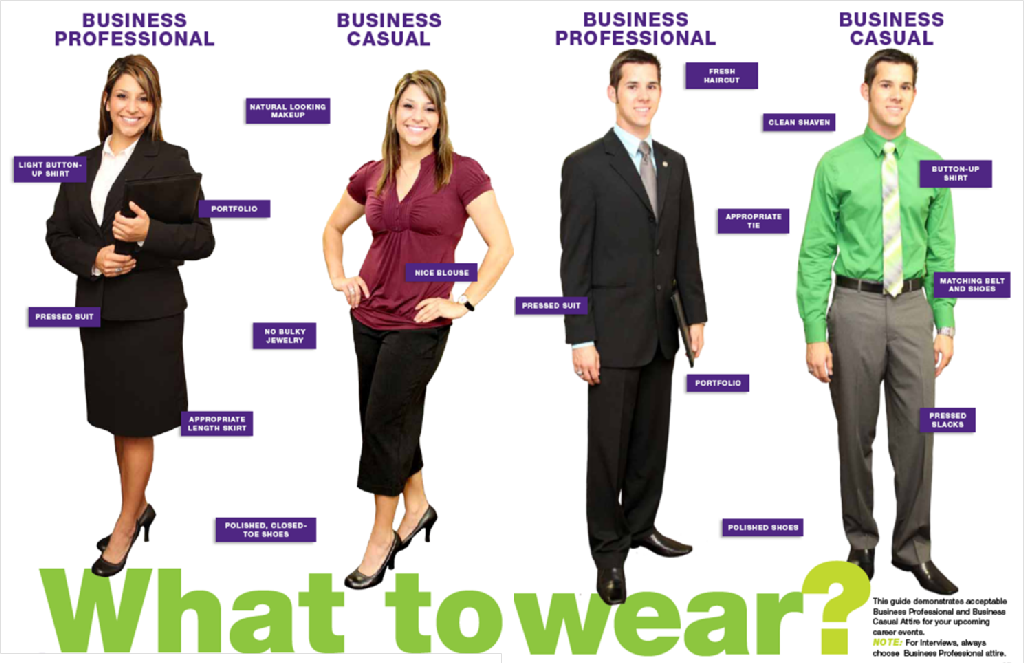
Credit: www.morganhunter.com
Common Mistakes Women Make With Business Attire
Even experienced professionals make errors with business dress. Here are some mistakes to avoid:
- Misjudging the dress code: Wearing business casual in a business professional setting (or vice versa) can send the wrong message.
- Wearing wrinkled or ill-fitting clothes: Fit is key. Tailored pieces always look more professional.
- Choosing loud patterns or colors: These can distract and look less serious in formal settings.
- Ignoring company culture: What’s accepted at one company may not be at another. Always observe what senior women wear.
- Forgetting about shoes and bags: Scuffed shoes or worn-out bags can ruin an otherwise polished look.
Practical advice: When starting a new job, dress slightly more formal than you think is needed. Adjust once you understand the office norms.
Regional And Cultural Differences In Dress Codes
Dress codes are not the same everywhere. Culture, climate, and even city size can affect expectations.
- Big cities: Tend to be more formal, especially in finance or law.
- Smaller towns: Often more relaxed, but not always—some industries remain traditional.
- Hot climates: May allow for lighter fabrics, but not always more casual styles.
- International workplaces: Standards can vary widely. For example, some countries expect women to cover their arms or legs even in business casual settings.
Real-world example: In New York’s financial district, business professional is the norm. In Silicon Valley, business casual dominates—even for managers.
If you travel for work or have international clients, research local customs before your trip. A good resource for this is the Wikipedia entry on business attire.
The Impact Of Dress Code On Career Progression
What you wear at work can influence your career in subtle but important ways. Studies show that first impressions are made within seven seconds, and clothing plays a big role. Dressing appropriately for your office’s standards shows that you understand the culture, respect your role, and are ready for new responsibilities.
- Managers and executives tend to dress more professionally. If you want to move up, mirror their style.
- Confidence increases when you feel well-dressed. This can help you perform better in meetings or presentations.
- Colleagues and clients take you more seriously when your appearance matches your position.
Statistic: A survey by OfficeTeam found that 80% of managers said clothing choices affect an employee’s chances of a promotion.
Remember, dressing well is not about expensive clothes—it’s about fit, neatness, and matching the company’s expectations.
Cost-effective Tips For Building A Business Wardrobe
You don’t need to spend a fortune to dress well for business. Here are some tips to build a wardrobe for either dress code:
- Start with basics: Buy a few classic pieces in neutral colors. These mix and match easily.
- Invest in tailoring: Even less expensive clothes look better when they fit well.
- Shop sales and outlets: Look for quality brands at reduced prices.
- Accessorize wisely: Simple scarves or jewelry can refresh an outfit without big spending.
- Care for your clothes: Regular dry cleaning and careful washing keep pieces looking new.
- Rotate shoes: This helps them last longer and keeps your look fresh.
Non-obvious insight: Renting high-end clothing for big meetings or interviews is now common and affordable. Services like Rent the Runway offer business attire options.
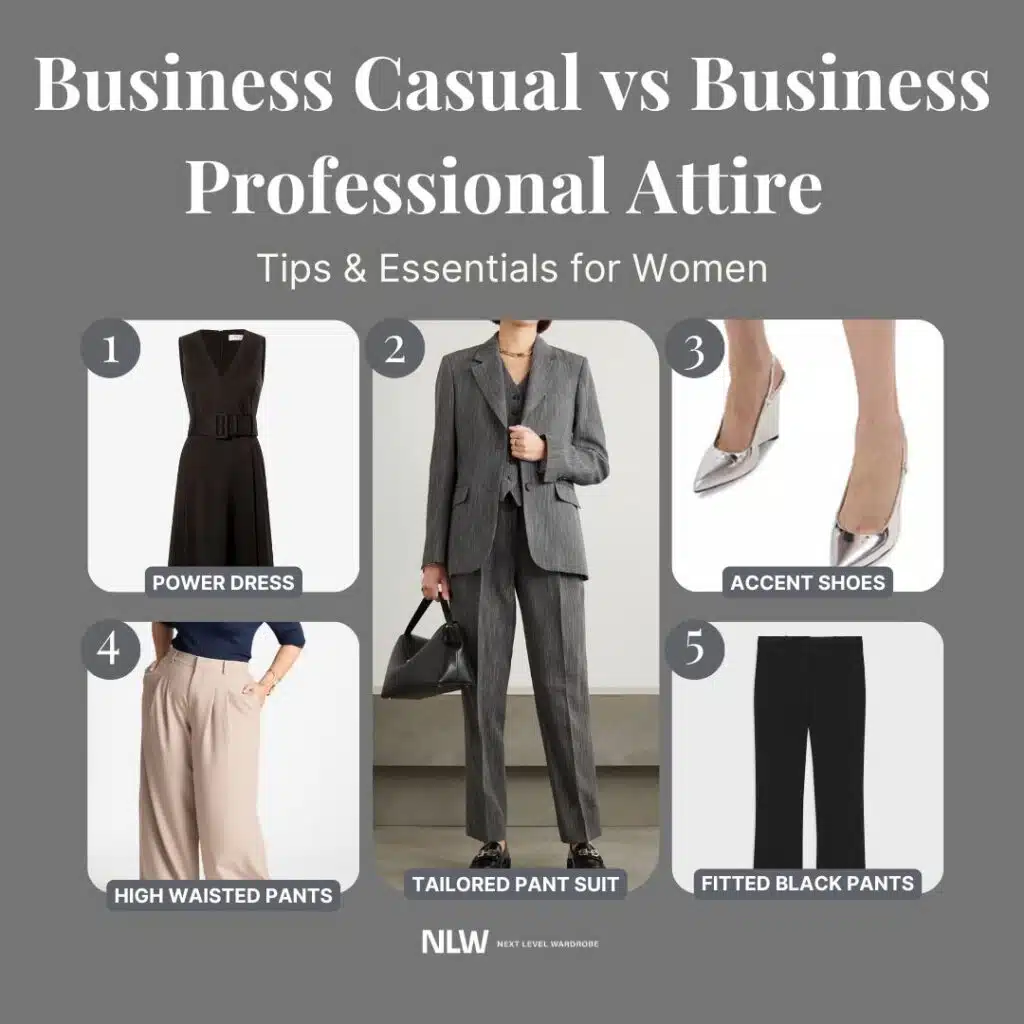
Credit: nextlevelwardrobe.com
How Dress Codes Are Evolving
Workplace fashion is always changing. Since remote work has grown, some offices have relaxed their dress codes further. However, many companies still expect business professional for important events.
- Tech companies: Lean toward business casual, even for leaders.
- Startups: Often have the most relaxed standards, but dressing slightly above the minimum can set you apart.
- Traditional industries: Law, banking, and consulting are slow to change and still value business professional looks.
Insider tip: Even as dress codes relax, dressing well can set a positive example and open doors. It shows you’re serious about your career.
Frequently Asked Questions
What Is The Main Difference Between Business Casual And Business Professional For Women?
Business casual is more relaxed and allows for personal style—think blouses, slacks, and flats, sometimes even dark jeans. Business professional is stricter: matching suits, tailored dresses, and closed-toe shoes in neutral colors. It’s about formality and authority.
Can Women Wear Jeans In Business Casual Environments?
Sometimes, yes. Dark, tailored jeans with no rips or fading can be allowed in business casual offices, but not in all. Always check your company’s dress code before wearing jeans to work.
Are Open-toed Shoes Acceptable In Business Professional Settings?
No. Business professional requires closed-toe shoes, usually pumps or flats. Open-toed shoes or sandals are considered too casual for this dress code.
How Can I Transition From Business Casual To Business Professional If Needed During The Day?
Keep a blazer and closed-toe pumps at work. By adding these to your outfit, you instantly upgrade your look. Neutral basics also help you move between dress codes easily.
Do Accessories Matter In Business Professional Attire?
Yes, but they should be minimal—think small stud earrings, a watch, and a simple bag. Large or flashy jewelry is not appropriate for business professional but can work in business casual if not too bold.
Final Thoughts
Understanding the difference between business casual and business professional for women helps you make smart wardrobe choices and feel more confident at work. Each dress code has clear rules and expectations, but both allow room to express yourself when you know the guidelines. Pay attention to your company’s culture, observe what leaders wear, and always aim to look polished and neat. Dressing well is not about following every trend—it’s about showing respect for yourself and your workplace. With the right approach, your clothes can support your career goals and help you stand out for all the right reasons.

Credit: www.boltstaffing.com
