

What is the Difference between Business Casual and Business Professional?
What Is The Difference Between Business Casual And Business Professional
Every workplace has its own dress code, and knowing what to wear can be confusing. Two common styles you hear about are business casual and business professional. These terms sound similar, but they mean very different things. Making the wrong choice can leave you feeling out of place, or even affect how others see you at work. If you want to feel confident and fit in, it’s important to understand the difference between these two styles.
This guide will help you see what makes each dress code unique, when to wear each, and how to avoid common mistakes. You’ll also learn practical details, see real-world examples, and get answers to questions people often ask. Whether you’re new to the office or preparing for an interview, this article will help you dress smart and feel comfortable.
Knowing these differences can save you from embarrassment and help you make a positive impact, whether you’re starting your first job or moving up in your career.
What Does Business Casual Mean?
Business casual is a dress code that blends professional attire with a relaxed touch. It’s not as formal as business professional, but it’s more polished than everyday casual clothes. The goal is to look neat and presentable without wearing a full suit.
Many people find business casual easier to adapt to because it offers flexibility, yet still demands a degree of neatness and care.
Key Features Of Business Casual
- No suit or tie required for men
- Collared shirts (like polos or button-downs)
- Dress pants or khakis
- Skirts or dress pants for women
- Closed-toe shoes
- Avoid clothes that are too relaxed, like jeans, T-shirts, or sneakers
Business casual is about balance. You want to look tidy and professional, but not stiff. For example, a man might wear a button-down shirt with khakis, while a woman might choose a blouse and tailored trousers. You can express your personality more in business casual.
For example, you might wear a colored shirt or a patterned blouse. Accessories are allowed, but they should be simple and not flashy. Subtle jewelry, a neat watch, or a patterned scarf can add interest without being distracting.
One thing many people miss: fabrics matter. Even a button-down shirt can look too casual if it’s made of denim or has a faded color. Stick with crisp cotton, blends, or knits that hold their shape.
Typical Business Casual Outfits
Men:
- Button-down shirt (no tie)
- Khakis or dress pants
- Leather shoes (loafers or oxfords)
- Optional sweater or sport jacket
Women:
- Blouse or knit top
- Dress pants or skirt (knee length or longer)
- Closed-toe flats or low heels
- Optional cardigan or blazer
Accessories should be minimal and clean. For example, a slim belt or a delicate necklace works well. Some companies allow dark, clean jeans and open-toe shoes, but this depends on the workplace. Always check the company rules or observe what your managers wear.
Beginners often forget that shoes matter. Even in a business casual office, dirty or worn shoes can ruin your look. Choose shoes that are not only comfortable but also in good condition.
When Is Business Casual Appropriate?
Business casual is common in many offices, especially in tech, marketing, and creative fields. It’s also popular for casual Fridays or company events. You might also wear business casual for networking, lunch meetings, or presentations where a full suit is not expected.
For example, if you work at a design agency, you might see people wearing stylish blouses and modern trousers every day. In a traditional insurance office, business casual might be allowed only on Fridays. If your workplace has a “casual Friday,” this usually means you can relax your outfit, but you should still avoid ripped jeans or graphic T-shirts.
If you are visiting another company or attending a conference, ask about the dress code ahead of time. When in doubt, business casual is a safe middle ground that won’t draw unwanted attention.
What Does Business Professional Mean?
Business professional is the most formal dress code for offices. It’s the style you see in law firms, banks, government offices, and high-level corporate meetings. The goal is to look polished, serious, and trustworthy. It shows that you respect the workplace and are ready for important tasks.
Key Features Of Business Professional
- Suit and tie required for men
- Matching suit sets (jacket and pants/skirt)
- Dress shirts (usually white or light colors)
- Conservative shoes (closed-toe, leather)
- Minimal accessories
Clothes should fit well, be clean, and look new. You should avoid bright colors, bold patterns, or casual fabrics. Everything should look professional and classic. For women, this means choosing subtle jewelry and simple hairstyles. For men, it means making sure ties are properly knotted and shirts are ironed.
One detail many miss: the importance of tailoring. A suit that’s too big or too small looks unprofessional. Even a simple, affordable suit can look sharp if it fits well. Also, always check that your shoes are polished—scuffed shoes can quickly ruin a formal outfit.
Typical Business Professional Outfits
Men:
- Suit (matching jacket and pants)
- Dress shirt (usually light colored)
- Tie (simple pattern)
- Leather dress shoes
- Belt matching shoe color
Women:
- Pantsuit or skirt suit (matching jacket and pants/skirt)
- Blouse (plain or light colored)
- Closed-toe heels or flats
- Simple jewelry
Hair and makeup should be neat. The focus is on professionalism, not personal style. Keep in mind, even small things like a wrinkled shirt or chipped nail polish can stand out in a business professional setting.
Another detail: hosiery is often expected for women wearing skirts in business professional settings, especially in very formal industries. This is a small touch that shows you know the rules.
When Is Business Professional Required?
Business professional is expected in formal workplaces, interviews for high-level positions, and important meetings. If you’re unsure about the dress code, business professional is a safe choice. For example, if you’re meeting with senior executives or clients in finance or law, always choose business professional.
During interviews, even if you think the company is casual, it’s safer to dress up. It shows respect and that you take the opportunity seriously. If you arrive and see others dressed more casually, you can always remove your jacket or tie.
Business Casual Vs. Business Professional: Key Differences
Understanding the differences helps you choose the right outfit and avoid mistakes. Sometimes, the line between the two can be subtle, so let’s make it clear.
| Feature | Business Casual | Business Professional |
|---|---|---|
| Formality | Moderate | High |
| Suit Required | No | Yes |
| Tie Required | No | Yes (Men) |
| Colors Allowed | More variety | Conservative only |
| Accessories | Simple, more freedom | Minimal, classic |
| Shoes | Closed-toe, loafers, flats | Leather dress shoes |
| Jeans Allowed | Sometimes (dark, clean) | No |
Visual Differences
Business professional looks sharper and more uniform. People in this dress code usually look almost the same, because the rules are strict. Business casual lets you add a touch of personality. For example, a colorful blouse or patterned tie can show some style without breaking the rules.
Comfort Level
Business casual is more comfortable. You can move easily, and clothes feel less restrictive. Business professional can feel stiff, especially if you’re not used to wearing suits. If you have a long day with meetings and presentations, business professional can sometimes feel hot or tight, especially in warm weather.
Impact On Perception
Business professional signals authority, seriousness, and trust. People might assume you are a manager or someone with responsibility. Business casual signals approachability, creativity, and flexibility. For example, in a creative team, wearing business professional might make you seem unapproachable, while business casual helps you blend in and encourages teamwork.
Real-life Examples And Contexts
Let’s look at situations where each dress code fits, and how mistakes can happen. Understanding context is key to making the right choice.
Business Casual Examples
- Tech company office: Employees wear polo shirts, khakis, and casual blazers. A project manager might add a statement necklace or wear colorful socks to express personality.
- Marketing agency: Staff wear patterned blouses, slim-fit pants, and stylish flats. It’s common to see colorful scarves or fashionable cardigans.
- Casual Friday: Employees swap suits for sweaters and dress pants. Some may wear dark jeans, but always with smart shoes and a neat top.
You might notice that in business casual environments, there’s still an “unwritten rule” not to look sloppy. Even if jeans are allowed, they should be well-fitted and paired with a smart shirt or blouse.
Business Professional Examples
- Law firm: Everyone wears dark suits, ties, and formal shoes. Women may wear skirt suits with neutral hosiery and minimal jewelry.
- Finance company: Employees wear matching suit sets, plain shirts, and minimal jewelry. Men often choose navy or charcoal suits, while women opt for classic colors.
- Job interview: Candidates dress in a full business suit. Even if the office is more casual, you show respect by dressing up for the interview.
Common Mistakes
- Wearing jeans in a business professional setting
- Using bright or flashy accessories for business professional
- Skipping the tie when it’s required
- Wearing sneakers instead of dress shoes
- Choosing a skirt that’s too short for business professional
Another common mistake: thinking “business casual” means the same everywhere. Some companies have stricter rules, even for business casual. For example, some might ban jeans or require closed-toe shoes at all times.
How To Decide Which Dress Code To Follow
Choosing the right dress code depends on your workplace, event, and role. The process is not always straightforward, but a few strategies can help you avoid mistakes.
Research The Company Culture
Ask about the dress code before your first day or interview. Check the company website for photos. If you’re unsure, dress one step more formal. Social media profiles, like LinkedIn or Instagram, may also give clues about what people wear daily.
If you’re moving to a new department, or attending an event with another team, ask someone who’s attended before. Sometimes, different departments in the same company have their own “unwritten” dress rules.
Consider Your Role And Department
Higher positions often require business professional. Creative or tech roles allow business casual. If you’re in sales or management, you may need to look more formal, especially when meeting clients.
If you’re starting a new job, look at your manager and the people in similar roles. Match their style, or go a little more formal at first.
Think About The Occasion
- Interviews: Business professional
- Client meetings: Usually business professional
- Office days: Business casual, unless told otherwise
- Casual Fridays: Business casual or relaxed (but not too casual)
Be careful with special events like company parties or off-site meetings. Dress codes can be different for these occasions. Always read invitations carefully and ask if you’re not sure.
Ask For Guidance
If you don’t know, ask your manager or HR. It’s better to check than to guess. Many companies have handbooks or guidelines you can review. Don’t be afraid to ask questions—it shows you care about fitting in and respecting company norms.
Detailed Comparison: Men’s Business Casual Vs. Business Professional
Understanding the details helps men avoid confusion, especially when rules seem similar.
| Item | Business Casual | Business Professional |
|---|---|---|
| Shirt | Polo, button-down (no tie) | Dress shirt, tie |
| Pants | Khakis, dress pants | Matching suit pants |
| Jacket | Optional sport coat | Suit jacket (matching) |
| Shoes | Loafers, Oxfords | Leather dress shoes |
| Belt | Brown or black, less strict | Must match shoes |
| Accessories | Watch, simple jewelry | Minimal, classic |
Practical Tips For Men
- If your shirt is untucked, it’s usually too casual.
- Avoid sneakers, even if they look new.
- Choose socks that match pants for business professional.
- Make sure your tie is not too bold—a simple stripe or solid color is best.
- If you wear a sport coat for business casual, it doesn’t have to match your pants, but it should still look neat and professional.
Another non-obvious detail: check your collar stays. A floppy collar can look messy, even with a nice shirt. For business professional, always use collar stays.
Detailed Comparison: Women’s Business Casual Vs. Business Professional
Women have more options, but the rules can be tricky. Paying attention to details can make a big difference in how you’re perceived.
| Item | Business Casual | Business Professional |
|---|---|---|
| Top | Blouse, knit top, cardigan | Blouse, suit jacket |
| Pants/Skirt | Dress pants, skirt (knee or longer) | Matching suit pants/skirt |
| Dress | Simple, solid color | Under suit jacket |
| Shoes | Flats, low heels | Closed-toe heels |
| Accessories | More freedom (scarves, jewelry) | Minimal, classic |
| Makeup | Natural, light colors | Conservative, polished |
Practical Tips For Women
- Avoid sleeveless tops in business professional.
- Skirts should reach the knee or longer.
- Keep jewelry and makeup subtle.
- For business professional, choose blouses without low necklines or flashy prints.
- Consider wearing a blazer even for business casual if you’re meeting new clients.
A detail many overlook: check your bag or purse. In business professional, a structured, neutral-colored bag looks best. Bright or oversized bags can look out of place.
Why Dress Codes Matter In The Workplace
Dress codes aren’t just about looks. They affect how people feel and act at work.
Building Trust And Credibility
Wearing business professional shows you take your job seriously. Clients and managers trust you more when you look polished. This can make a big difference when you’re starting new projects or hoping for a promotion.
Encouraging Team Spirit
Dress codes help everyone feel equal. If everyone wears business casual, no one stands out too much. This makes it easier for people to focus on work rather than on what others are wearing.
Supporting Brand Image
Companies use dress codes to create a certain image. Banks want to look reliable, tech companies want to look creative. When everyone dresses the same way, clients know what to expect.
Reducing Distractions
Dress codes set limits, so people focus on work, not fashion. They also prevent awkward situations where someone’s outfit might be too revealing or casual.
Protecting Employees
Some jobs require certain clothes for safety or hygiene (like closed-toe shoes). Even in offices, dress codes can help prevent accidents or misunderstandings.
How Dress Codes Are Changing
Workplaces are evolving, and dress codes are too. Many companies now allow more relaxed clothing, but standards still exist.
Shift Toward Business Casual
Tech and creative industries have led the way. Employees can express themselves more, and comfort is valued. It’s common to see sneakers with suits in some tech offices, but always clean and stylish ones.
Formality Still Matters
In law, finance, and government, business professional remains the norm. These fields value tradition and formality. Dress codes here are less likely to change, and even “casual” days can still be quite formal.
Hybrid Dress Codes
Some companies mix rules. For example, business casual is the norm, but business professional is required for big meetings. Others allow jeans only on certain days or in specific roles.
Remote Work Impact
Working from home has made dress codes more flexible. But video calls often require at least business casual. Many people keep a jacket or neat shirt ready for online meetings, even if they wear sweatpants out of view.
Pros And Cons Of Each Dress Code
Choosing the right dress code affects how you feel and perform. Think about what works best for your role and comfort.
Business Casual Pros
- Comfortable
- Flexible
- Allows personality
- Easier to maintain
- Helps you feel relaxed, which can boost creativity
Business Casual Cons
- Can be confusing
- Risk of looking too relaxed
- Not suitable for formal occasions
- Some people may judge you for being “too” casual
Business Professional Pros
- Clear standards
- Builds trust
- Shows authority
- Safe for important events
- Makes you look ready for leadership roles
Business Professional Cons
- Less comfortable
- Expensive to maintain
- Limited personal expression
- Can feel restrictive, especially in hot weather
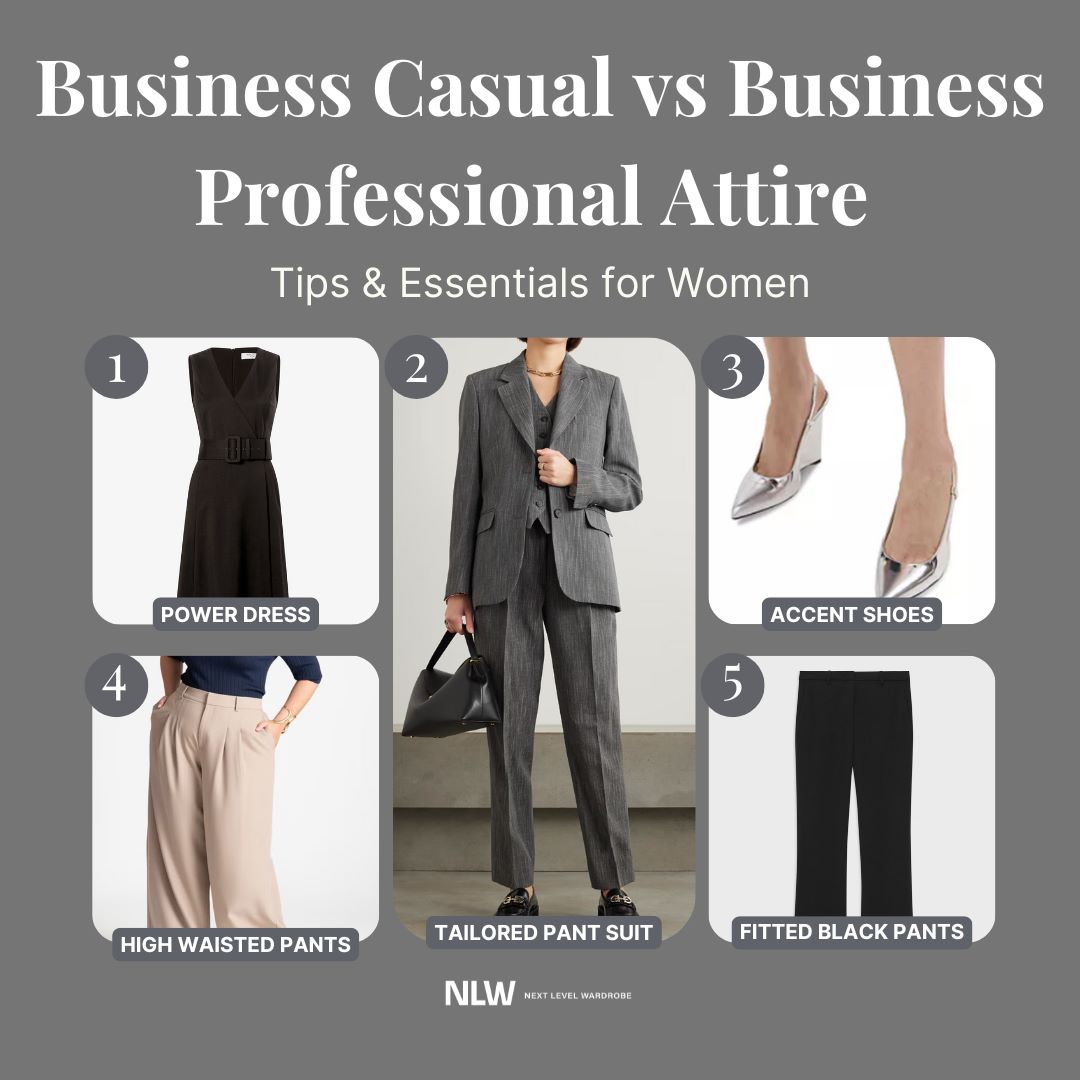
Credit: nextlevelwardrobe.com
How To Build Your Business Casual Wardrobe
A smart business casual wardrobe doesn’t have to be expensive.
- Start with neutral basics: White, navy, gray.
- Buy collared shirts and simple blouses.
- Add dress pants and skirts.
- Choose closed-toe shoes.
- Add a sweater or blazer for layering.
- Avoid logos and bright patterns.
Buy clothes that fit well, even if they’re simple. Mix and match items to create more outfits. For example, two pairs of pants and three shirts can give you six different looks.
Don’t forget to check your clothes for stains or worn spots regularly. Replace old items so your wardrobe always looks fresh.
How To Build Your Business Professional Wardrobe
Business professional clothes require more planning.
- Invest in a matching suit set (jacket and pants/skirt).
- Choose plain dress shirts or blouses.
- Buy simple ties and accessories.
- Select leather dress shoes.
- Keep everything clean and pressed.
Stick to classic colors: black, navy, gray. These always look professional. Buy one or two high-quality suits and rotate them with different shirts and ties.
Don’t forget to use a garment bag when traveling or storing your suit. This keeps it looking new and helps it last longer.
Insider Tips Most People Miss
Many beginners make mistakes because they miss details.
- Fit matters more than price. Even cheap clothes look sharp if they fit well.
- Pay attention to grooming. Neat hair and clean nails matter in both dress codes.
- Watch for seasonal changes. Business casual may allow lighter fabrics in summer, but business professional stays consistent.
- Know your company’s exceptions. Some companies have special rules (like “no jeans ever”).
- Shoes can make or break your look. Scuffed shoes ruin a business professional outfit.
- Always check for missing buttons or loose threads before leaving home.
- For business casual, keep a blazer or cardigan at your desk for surprise meetings.
- For business professional, carry a lint roller to keep your suit clean.
Real Data: Dress Code Preferences In The Workplace
Research shows how dress codes affect employee attitudes.
- A survey by OfficeTeam found that 50% of managers prefer business casual for daily office wear.
- 33% of employees said business professional makes them feel more confident in important meetings.
- Companies with business casual dress codes see higher job satisfaction, but not always higher productivity.
- Employees in strict business professional offices report feeling more stress about their appearance.
For more details, see SHRM's dress code research.

Credit: www.boltstaffing.com
How To Communicate About Dress Codes
Clear communication helps everyone follow the right dress code.
- Managers should explain dress code rules during orientation.
- HR should send reminders before events.
- Employees should ask questions if unsure.
If you make a mistake, correct it quickly. Most companies are flexible if you learn and improve. Share dress code guides with new team members to help them fit in faster.
Dressing For Success: Tips For Interviews And Promotions
First impressions matter, especially for interviews and promotions.
Interview Tips
- Always choose business professional unless told otherwise.
- Prepare your outfit ahead of time.
- Make sure clothes are clean and pressed.
- Practice sitting and moving in your outfit, so you look comfortable.
Promotion Tips
- Dress for the job you want, not just the one you have.
- Show attention to detail in your outfit.
- Avoid risky choices (like bold colors or casual shoes).
- Ask for feedback from trusted colleagues.
Frequently Asked Questions
What Is The Safest Choice If I’m Unsure About The Dress Code?
If you are not sure, always choose business professional. It's better to be a little overdressed than underdressed. You can remove a tie or jacket if needed.
Can I Wear Jeans In Business Casual?
Sometimes, but only if they are dark, clean, and without holes. Some companies never allow jeans, even on casual days. Always check the company's rules.
How Do I Transition From Business Casual To Business Professional?
Start by adding a blazer or suit jacket. Swap casual shoes for leather dress shoes. Wear a tie and choose more conservative colors. Practice wearing your outfit to get comfortable.
Are Accessories Allowed In Business Professional?
Yes, but keep them minimal and classic. For men, a watch or simple cufflinks. For women, small earrings or a necklace. Avoid bold, colorful accessories.
What If My Company’s Dress Code Is Unclear?
Ask your manager or HR for guidance. Look at what others wear. If still unsure, dress more formally until you learn the rules.
Final Thoughts
Business casual and business professional are more than just clothing styles—they shape how people see you at work. Choosing the right dress code helps you fit in, feel comfortable, and make a strong impression. While business casual gives you more freedom and comfort, business professional ensures you look reliable and ready for big moments.
Always pay attention to your workplace, role, and event. With the tips and examples in this article, you can dress smart and confidently, every day. Taking extra care with details—from shoe choice to ironing your shirt—can make all the difference in how others see you and how you feel about yourself in the workplace.
:max_bytes(150000):strip_icc()/business-casual-attire-2061335-final-5bc641a9c9e77c005143e687.png)
Credit: www.poseidonion.com
