

What is Business Casual Attire Looks Like: A Complete Guide
Business casual attire is one of the most common dress codes in modern offices, but it’s also one of the least understood. Many people feel confused when they hear “business casual. ” Is it a suit without a tie? Is it jeans with a blazer?
The line between formal and casual can be blurry, and the rules can change depending on the workplace, industry, or even the country. Understanding what business casual attire looks like can help you feel confident, comfortable, and professional at work.
This guide breaks down business casual for both men and women, explains why it matters, shows you what to wear (and what to avoid), and helps you navigate common challenges. You’ll also find practical tips, real examples, and answers to frequently asked questions.
Whether you’re starting a new job, attending a business event, or just want to upgrade your wardrobe, this article will help you master business casual style.
What Is Business Casual Attire?
Business casual is a dress code that combines professional clothing with a more relaxed look. It’s less formal than traditional business wear (like suits), but it’s not as casual as jeans and T-shirts. The goal is to appear polished and neat, but also comfortable and approachable. Business casual is popular in many industries, especially in offices where employees interact with clients, partners, or customers.
The definition of business casual can vary depending on the company, the region, and even the day of the week. For example, some tech companies allow jeans, while financial firms may require dress pants. In general, business casual means skipping the suit and tie, but still wearing clothes that are clean, pressed, and appropriate for the workplace.
Key Elements Of Business Casual
- No suits or ties required (except sometimes for women’s blazers)
- Collared shirts, blouses, or tops that look professional
- Dress pants, chinos, skirts, or dresses
- Closed-toe shoes (not sneakers or sandals)
- Simple accessories and neutral colors
- Jackets or cardigans can add a touch of professionalism
Why Business Casual Matters
Business casual is more than just a style—it’s a way to balance comfort and professionalism. Companies use this dress code to promote a relaxed culture, boost morale, and encourage creativity. Employees can express their personality, but still look ready for meetings and presentations.
Studies show that the way you dress at work can influence how others see you. For example, a survey from LinkedIn found that 73% of professionals believe clothing affects their confidence and productivity. Dressing business casual helps you make a positive impression, build trust with clients, and feel comfortable all day.
Business casual also helps companies attract talent. Many younger workers prefer a flexible dress code, and employers use business casual to show they value work-life balance. At the same time, business casual is a safe choice for interviews, networking events, and conferences, because it fits most settings.
Business Casual For Men
Business casual attire for men is about looking neat without being too formal. You don’t need a full suit, but you do need clothes that are clean, well-fitted, and appropriate for the office. Let’s look at the main items and how to combine them.
Shirts
Collared shirts are the base of business casual for men. You can wear:
- Button-down shirts (solid colors or subtle patterns)
- Polo shirts (especially in summer)
- Dress shirts without a tie
Avoid shirts with loud prints, slogans, or bright colors. Stick to neutral shades like white, blue, gray, or pastels. Shirts should be ironed and tucked in.
Pants
Choose pants that look professional, but feel comfortable:
- Dress pants (wool, cotton, or blends)
- Chinos (khaki, navy, gray)
- Dark jeans (only if your company allows)
Jeans are tricky. Some companies allow them, but only if they’re dark, clean, and free of rips or decorations. Avoid baggy pants, shorts, or sweatpants.
Jackets And Sweaters
A jacket or sweater can help you look polished:
- Blazers (optional, but add a professional touch)
- Cardigans (good for cooler weather)
- V-neck sweaters over a collared shirt
Avoid hoodies or flashy sportswear. Choose simple designs and neutral colors.
Shoes
Shoes should be closed-toe and professional:
- Dress shoes (leather, suede)
- Loafers or Oxfords
- Brogues or Derby shoes
Sneakers, sandals, or flip-flops are not business casual. Clean your shoes regularly, and avoid worn-out pairs.
Accessories
Keep accessories simple:
- Leather belts
- Watches (classic styles)
- Ties (optional, but not required)
- Pocket squares (if you wear a blazer)
Avoid hats, flashy jewelry, or anything that distracts from your outfit.
Men’s Business Casual Outfit Examples
Here are three classic combinations:
- Navy chinos, white button-down shirt, gray cardigan, brown loafers
- Charcoal dress pants, pale blue dress shirt, navy blazer, black Oxfords
- Khaki chinos, light gray polo shirt, brown belt, tan brogues
Business Casual For Women
Women’s business casual attire offers more choices, but the rules are similar: look neat, professional, and comfortable. You can mix and match tops, bottoms, dresses, and accessories. Here’s what works best.
Tops
Women can wear:
- Blouses (solid or subtle patterns)
- Button-down shirts
- Knit tops (simple designs)
- Sweaters or cardigans
Avoid tops with loud prints, low necklines, or exposed shoulders. Sleeveless tops are allowed if they’re not too revealing.
Bottoms
Choose bottoms that fit well and look polished:
- Dress pants (black, navy, gray, beige)
- Chinos or tailored trousers
- Knee-length skirts (pencil, A-line)
- Dark jeans (if permitted)
Skirts and dresses should not be too short. Avoid leggings, shorts, or ripped jeans.
Dresses
Dresses are a great option for business casual, as long as they’re not too tight or short. Look for:
- Sheath dresses
- Wrap dresses
- Shift dresses
Choose solid colors or simple prints. Pair with a cardigan or blazer if needed.
Shoes
Shoes should be comfortable and closed-toe:
- Flats
- Low heels
- Loafers
- Boots (in winter)
Avoid high heels, sandals, or sneakers. Keep shoes clean and well-maintained.
Accessories
Women can add:
- Simple jewelry (stud earrings, small pendants)
- Belts
- Scarves (neutral colors)
- Handbags (structured, not oversized)
Avoid large, flashy accessories or bright colors.
Women’s Business Casual Outfit Examples
Three smart combinations:
- Black dress pants, cream blouse, gray cardigan, black flats
- Navy pencil skirt, pale pink button-down shirt, navy blazer, nude pumps
- Khaki trousers, white knit top, brown belt, tan loafers
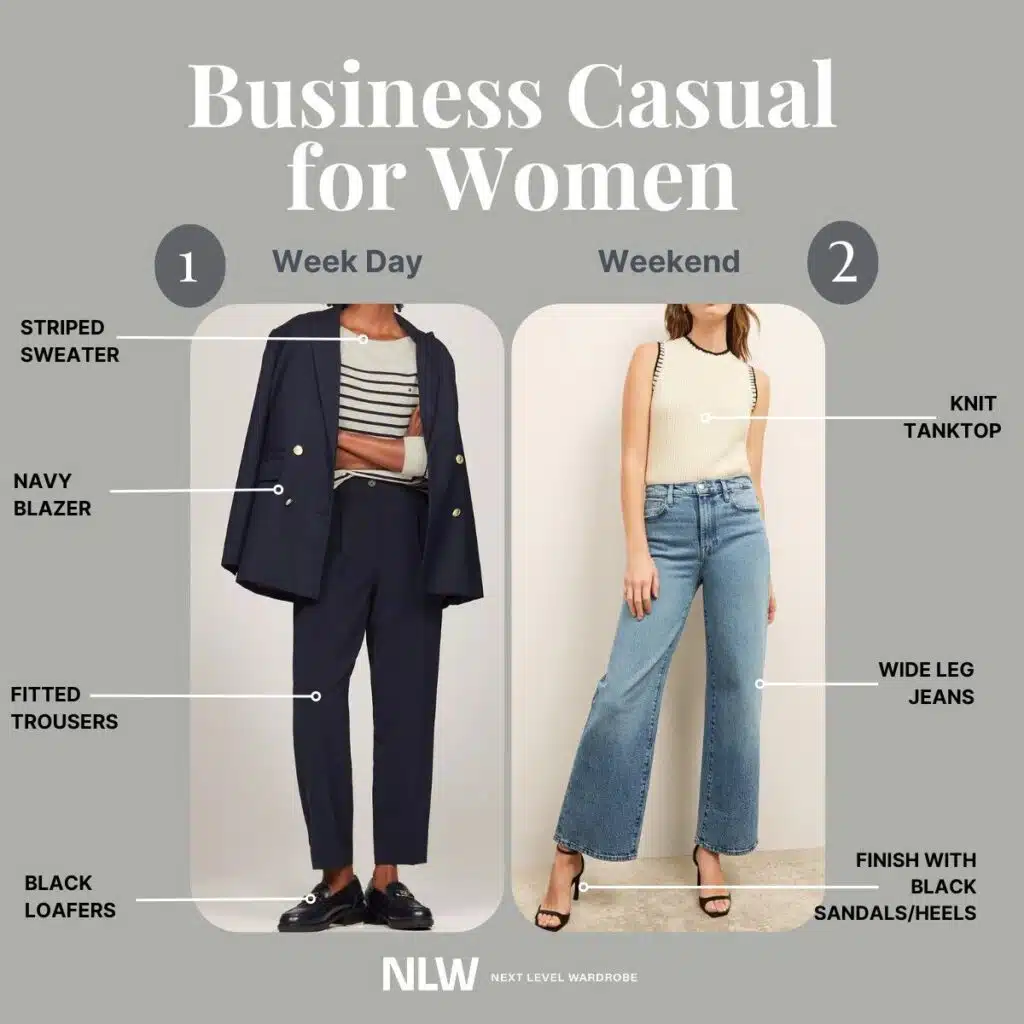
Credit: nextlevelwardrobe.com
Business Casual Vs. Other Dress Codes
Business casual is not the only dress code in offices. It sits between formal and casual. Understanding the differences helps you avoid mistakes.
Here’s a simple comparison:
| Dress Code | Typical Clothing | Level of Formality |
|---|---|---|
| Formal Business | Suit, tie, dress shoes | Very high |
| Business Casual | Collared shirt, chinos, blouse, skirt, closed-toe shoes | Medium |
| Casual | Jeans, T-shirts, sneakers | Low |
Business casual is popular because it’s flexible. You can dress up with a blazer, or dress down with a sweater. But always check your company’s policy.
Business Casual Around The World
Business casual is not the same everywhere. In North America, it’s common to see chinos and polo shirts. In Europe, people often wear tailored pants and blazers. In Asia, business casual may be more formal, with button-down shirts and dress pants.
For global companies, the dress code may change depending on location. It’s smart to ask HR or colleagues about local expectations. Some cultures value modesty, while others prefer creativity.
Here’s a quick look at how business casual varies:
| Region | Common Business Casual | Key Differences |
|---|---|---|
| North America | Chinos, polos, blouses, cardigans | More relaxed, jeans sometimes allowed |
| Europe | Tailored trousers, blazers, dress shirts | More structured, fitted clothing |
| Asia | Button-down shirts, dress pants, skirts | More formal, modest styles |
Non-obvious insight: If you travel for work, pack versatile pieces like a neutral blazer and dress pants. They fit most business casual environments.
Common Mistakes In Business Casual
Many people make mistakes when dressing business casual. Some errors are easy to fix, but others can harm your professional image. Here are the most frequent issues:
1. Wearing Clothes That Are Too Casual
Items like ripped jeans, sneakers, or graphic T-shirts are not business casual. Even if your office feels relaxed, avoid clothes you’d wear on weekends.
2. Poor Fit
Baggy pants, tight shirts, or long sleeves look sloppy. Clothing should fit your body without being restrictive. Tailoring is a good investment.
3. Loud Colors And Patterns
Bright colors or bold prints can distract. Stick to neutral tones and simple designs, especially for interviews or meetings.
4. Neglecting Grooming
Wrinkled shirts, dirty shoes, or unkempt hair can ruin your look. Always iron your clothes, clean your shoes, and keep your hair tidy.
5. Over-accessorizing
Too much jewelry, large handbags, or flashy belts are not business casual. Keep accessories simple and understated.
6. Ignoring Company Policy
Every company has its own rules. Some allow jeans, others don’t. Always check the dress code before making changes.
Non-obvious insight: Many beginners forget to check if their socks match their shoes and pants. Visible white sports socks can look unprofessional, even if the rest of your outfit is perfect.
How To Build A Business Casual Wardrobe
Building a business casual wardrobe doesn’t mean buying dozens of clothes. Instead, focus on quality pieces that you can mix and match. Here’s how to start:
1. Invest In Basics
Buy a few collared shirts, dress pants, blouses, and skirts in neutral colors. These items form the foundation of your wardrobe.
2. Choose Versatile Items
Pick clothes that work together. For example, a navy blazer can be worn with gray pants or a khaki skirt. This saves money and space.
3. Add Layers
Sweaters, cardigans, and jackets help you adapt to weather and meetings. Choose simple styles that fit over shirts and blouses.
4. Pick Comfortable Shoes
Business casual doesn’t mean painful shoes. Find flats, loafers, or low heels that you can wear all day.
5. Keep Accessories Minimal
A leather belt, classic watch, and structured handbag are enough. Avoid buying too many trendy items.
6. Edit Regularly
Review your wardrobe every few months. Remove clothes that are worn out or no longer fit. This keeps your style fresh.
Building your wardrobe takes time. Start with a few pieces, and add as you learn what works for your office.

Credit: www.youtube.com
Business Casual For Different Body Types
Business casual looks good on everyone, but some styles work better for certain body types. Here are practical tips:
Men
- Tall men: Choose jackets with structured shoulders and pants with a longer inseam.
- Short men: Wear pants that break just above the shoe, and avoid oversized shirts.
- Broad build: Look for shirts with wider collars and jackets with room in the chest.
Women
- Curvy figures: A-line skirts and wrap dresses flatter curves without being tight.
- Petite women: Cropped pants and fitted blazers add height.
- Athletic build: Sheath dresses and straight-leg trousers create shape.
Non-obvious insight: Many people forget that fabrics matter. Cotton blends and wool hold their shape better than linen, which wrinkles easily. Choose fabrics that look fresh all day.
Business Casual In Different Industries
Business casual is not the same in every industry. Here’s how the dress code changes:
Tech
Tech companies often allow jeans, T-shirts, and sneakers. Business casual means clean jeans, polos, and casual blazers. Avoid formal suits.
Finance
Finance firms prefer dress pants, button-down shirts, and blazers. Jeans are rarely allowed. Conservative colors are best.
Creative
Advertising, design, and media offices are more flexible. You can wear brighter colors, trendy shoes, or statement accessories, but keep the base professional.
Education
Teachers and professors often wear khakis, sweaters, and blouses. Comfort matters, but avoid overly casual styles.
Healthcare
Administrative staff wear dress pants, blouses, and cardigans. Scrubs are for medical staff only.
Understanding your industry helps you fit in and avoid mistakes. If in doubt, ask colleagues or managers.
Business Casual For Remote Work
Remote work has changed office dress codes. Many people now work from home, but virtual meetings still require a professional look. Here’s how to dress business casual online:
- Wear a collared shirt or blouse for video calls
- Keep colors neutral (bright colors can look odd on camera)
- Avoid pajamas or workout clothes
- Choose comfortable pants (even if not visible)
- Groom hair and makeup for a polished appearance
Non-obvious insight: Lighting affects how your outfit looks online. Test your clothes in front of your webcam before important meetings.
Business Casual And Sustainability
Many people want to build a business casual wardrobe that’s eco-friendly. Here’s how:
- Buy fewer, better-quality pieces that last longer
- Choose sustainable fabrics like organic cotton or recycled polyester
- Shop secondhand for blazers, pants, and shoes
- Avoid fast fashion (clothes that wear out quickly)
Some companies offer clothing swaps or recycling programs for employees. This reduces waste and saves money.
Business Casual For Plus Sizes
Finding business casual clothes in plus sizes can be challenging, but many brands now offer stylish options. Look for:
- Stretch fabrics that fit comfortably
- Tailored cuts that flatter your shape
- Layering pieces like blazers and cardigans
- Professional shoes in wider sizes
Online stores often have more choices. Try clothes on before buying, and invest in tailoring if needed.
Business Casual For Summer And Winter
Adapting your business casual wardrobe for different seasons helps you stay comfortable.
Summer
- Lightweight fabrics (cotton, linen blends)
- Short-sleeve shirts or blouses
- Loafers or flats
- Avoid shorts or sandals
Winter
- Wool or knit sweaters
- Blazers and cardigans
- Dress boots
- Layer with scarves and gloves
Weather can change quickly. Keep a jacket or umbrella handy.
Business Casual For Interviews And Events
Business casual is a safe choice for interviews, conferences, and business events. Here’s how to stand out:
- Wear a blazer for extra polish
- Choose solid colors (navy, gray, black)
- Keep accessories minimal
- Groom hair and nails
Research the company’s dress code before the interview. When in doubt, dress slightly more formal.
Business Casual For Young Professionals
Young professionals often struggle with business casual. Here are tips to build confidence:
- Start with basics: Buy 2-3 pairs of pants, 4-5 shirts, a blazer, and shoes
- Mix and match: Try different combinations to see what fits
- Ask mentors: Get feedback from colleagues
- Learn from mistakes: Adjust as you go
Style evolves with experience. Focus on fit and comfort.
How Business Casual Evolved
Business casual started as a way to relax strict office dress codes. It grew in popularity as companies wanted happier, more creative employees. Today, business casual is common in most offices, but the rules keep changing.
Some companies now allow jeans, sneakers, or even T-shirts, while others stick to classic business casual. The trend is toward flexibility and comfort, but professionalism still matters.
For more background on business dress codes, you can read about it at Wikipedia.
Business Casual: Real-life Data
Surveys show that business casual is the most popular dress code in US offices. According to a Gallup poll, 43% of employees say their workplace is business casual, while only 18% report a formal dress code.
Employees report higher satisfaction and productivity with business casual. HR managers say it helps attract talent and retain staff.
Non-obvious insight: Many companies use “casual Fridays” to test new dress codes. If you’re unsure about business casual, try dressing up one day and see how people respond.

Credit: www.merricksart.com
Business Casual Checklist
Before you leave for work, check these points:
- Are your clothes clean and pressed?
- Do your shoes match your outfit?
- Are your accessories simple and professional?
- Is your hair neat?
- Does your outfit fit your company’s policy?
- Are you comfortable for the whole day?
A quick mirror check can prevent mistakes.
Frequently Asked Questions
What Is Not Business Casual?
Business casual does not include shorts, ripped jeans, sneakers, T-shirts with logos, flip-flops, or hoodies. Avoid anything you’d wear to the gym or on weekends.
Can I Wear Jeans For Business Casual?
Dark, clean jeans may be allowed in some offices, but not all. If permitted, pair them with a collared shirt and blazer. Avoid light, distressed, or baggy jeans.
Are Sneakers Okay For Business Casual?
Sneakers are usually not business casual. Choose dress shoes, loafers, or flats instead. Some creative offices allow trendy sneakers, but always check company policy.
Do Women Need To Wear Heels?
Heels are not required. Flats, loafers, or low heels are all acceptable. Comfort is important—choose shoes you can wear all day.
How Can I Make My Business Casual Outfit Stand Out?
Add a blazer, scarf, or structured handbag for extra polish. Choose clothes that fit well and show your personality, but keep colors and accessories simple.
Final Thoughts
Business casual attire is a smart balance between formal and relaxed. It helps you look professional, feel comfortable, and fit in at work. The key is to choose clothes that are clean, well-fitted, and appropriate for your industry and company.
Start with basics, add a few layers, and keep accessories simple. Remember, business casual is about confidence and comfort. With the right wardrobe, you’ll always be ready for meetings, interviews, and everyday success.
