

Should You Wear Business Casual to an Interview: Expert Tips
Should You Wear Business Casual To An Interview
Making a good first impression at a job interview is often about more than your resume or your answers. What you wear can shape how your interviewer sees you before you even say hello. Many job seekers wonder if business casual is the right choice for interviews. The answer isn’t as simple as “yes” or “no.” It depends on the job, the company culture, and the expectations of the industry. Dressing appropriately can boost your confidence and show respect for the opportunity. But being underdressed or overdressed can hurt your chances. This article will help you decide whether business casual is right for your next interview, by exploring company standards, industry expectations, and practical tips. You’ll also learn how to avoid common mistakes and make a smart wardrobe choice.
What Is Business Casual?
Business casual is a dress code that sits between formal business attire and everyday casual clothes. It’s meant to look polished but not stiff. For men, business casual often means collared shirts, slacks, dress shoes, and sometimes a blazer. For women, it can include blouses, skirts or slacks, closed-toe shoes, and simple accessories. Jeans, sneakers, and t-shirts are usually not considered business casual.
There is no single definition. What’s considered business casual in one company might not be the same in another. For example, some workplaces allow dressy jeans while others do not. The main idea is to look neat, tidy, and professional without being too formal.
Typical Business Casual Outfits
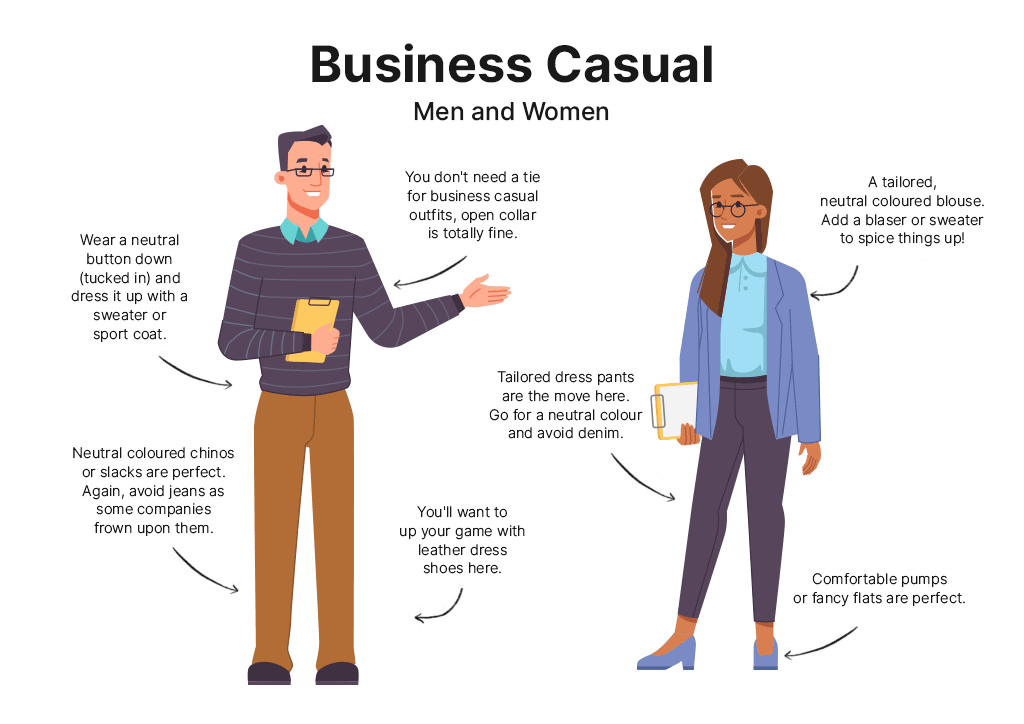
- Men: Dress pants or chinos, a button-down shirt or polo, optional blazer, leather shoes.
- Women: Knee-length skirt or tailored pants, blouse or sweater, cardigan or blazer, flats or modest heels.
Common Mistakes
- Wearing wrinkled or stained clothes
- Wearing flip-flops or sneakers
- Wearing overly bright colors or loud patterns
Business Casual Vs. Formal Attire
Let’s compare business casual and formal attire to clarify the difference.
| Business Casual | Formal Attire |
|---|---|
| Collared shirt, slacks, optional blazer | Suit and tie (men), tailored dress or suit (women) |
| Closed-toe shoes, simple accessories | Dress shoes, more formal accessories |
| No jeans or sneakers | No jeans, sneakers, or casual items |
| Comfortable but polished | Structured, very polished |
Why Interview Attire Matters
Interview attire sends a message about you before you speak. Employers notice if you look prepared, professional, and respectful. Studies show that first impressions are formed in seconds and are hard to change. Your clothes can influence how the interviewer sees your confidence and seriousness.
Data And Statistics
- Over 70% of employers say that what a candidate wears affects their hiring decision.
- About 60% of hiring managers have rejected a candidate based on their attire.
- People form judgments about trustworthiness and competence within the first 30 seconds.
These numbers highlight that dressing right is not just about style—it’s about strategy.
The Psychology Of Dressing Well
Dressing in business casual or formal attire can boost your own confidence. When you feel good in what you wear, it shows in your body language and attitude. Interviewers notice this. Being well-dressed also shows you care about the job and the company.
Industry Standards: When Is Business Casual Appropriate?
The right interview attire depends heavily on the industry. Some fields expect formal wear, while others are more relaxed. Here’s a look at common industries and their interview dress standards.
| Industry | Typical Interview Attire | Business Casual Accepted? |
|---|---|---|
| Finance/Banking | Formal (suit and tie) | No |
| Tech/Startup | Business casual | Yes |
| Law | Formal (suit) | No |
| Education | Business casual | Yes |
| Retail/Hospitality | Business casual | Yes |
| Creative (Design, Marketing) | Business casual or creative formal | Yes (sometimes) |
Examples
- Finance: Most banks expect formal suits. Business casual may look too relaxed.
- Tech: Many startups welcome business casual. Jeans with a nice shirt may even be okay.
- Education: Teaching jobs often accept business casual, but avoid clothes that are too casual.
- Creative industries: Personal style is valued, but it’s better to err on the side of business casual unless you know the company is very informal.
Non-obvious Insight
Some industries, like advertising or design, value creativity in attire. But even in these fields, being too casual can seem unprofessional. It’s wise to show personality but stay polished.
Company Culture: Researching The Dress Code
Knowing the company’s dress code is key. Don’t guess—research before your interview. Visit the company’s website, check their social media, or ask someone who works there. Look for photos of staff or events. These clues show what’s normal.
Practical Steps
- Check the “About Us” page or team photos.
- Search for company posts on LinkedIn or Instagram.
- Ask your recruiter or HR contact about the expected attire.
- Look at review sites like Glassdoor for employee comments.
If you can’t find clear information, choose business casual. It’s safer than too casual, and less stiff than formal.
Common Mistake
Many candidates don’t do enough research. They assume business casual is always safe. But some companies expect formal wear, especially for client-facing roles.
Business Casual Vs. Overdressing And Underdressing
Should you aim to be slightly overdressed or match the company style? Both approaches have risks.
Overdressing
Wearing formal clothes to a casual office can make you look out of touch. You might seem rigid or uncomfortable. Some interviewers may think you didn’t learn about the company culture.
Underdressing
Wearing casual clothes to a formal office is a bigger risk. It can make you seem unprepared or not serious. Interviewers may feel you don’t respect the opportunity.
Balanced Approach
Choose business casual if you’re unsure. It’s usually safe, but adjust based on your research. For higher-level jobs, err on the side of formal. For entry-level or creative roles, business casual is often enough.
Real Example
A candidate for a tech startup wore a suit and tie. The team wore jeans and t-shirts. He felt uncomfortable, and the team thought he was too formal. Another candidate wore business casual—slacks and a nice shirt. He fit in better and got the job.
How To Build A Business Casual Interview Outfit
Creating a smart business casual look is easy with a few basics. Choose items that are clean, well-fitted, and neutral in color.
For Men
- Shirt: Button-down or polo, no bright patterns
- Pants: Slacks or chinos, pressed and neat
- Blazer: Optional, adds polish
- Shoes: Leather or dressy loafers, no sneakers
- Accessories: Simple belt, watch
For Women
- Blouse: Solid color or simple pattern
- Pants/Skirt: Tailored slacks or knee-length skirt
- Blazer/Cardigan: Optional, adds structure
- Shoes: Flats or low heels, closed-toe
- Accessories: Minimal jewelry
Pro Tips
- Avoid too much perfume or cologne.
- Keep makeup and hair natural.
- Iron your clothes the night before.
- Check for missing buttons or loose threads.
Non-obvious Insight
Fit matters more than brand. Wearing well-fitted clothes, even if they are not expensive, looks better than expensive but poorly-fitted items.
Adjusting Business Casual For Different Types Of Interviews
Interviews come in many forms—phone, video, in-person, panel, or group. Your outfit should fit the interview type.
Phone Interviews
You won’t be seen, but dressing up helps you feel confident. Wear business casual to get in the right mindset.
Video Interviews
Dress as you would for in-person. Camera quality can make colors look brighter or duller. Stick to neutral shades and avoid busy patterns.
In-person Interviews
Follow the company’s standards. Business casual is safe for many roles, but check your research.
Panel Or Group Interviews
You’ll meet several people. Dress business casual unless you know the company is formal.
Practical Example
For a video interview at a tech company, a candidate wore a navy shirt and beige chinos. He looked smart on camera and avoided distracting patterns.
Business Casual For Different Seasons And Locations
Weather and location can affect your outfit. Hot summers or cold winters require adjustments.
Summer
- Choose lightweight fabrics like cotton or linen.
- Avoid shorts or sandals.
- Light colors are fine, but keep them neutral.
Winter
- Layer with sweaters or blazers.
- Wear closed-toe shoes or boots.
- Darker colors are acceptable.
Location
- Urban companies often expect sharper business casual.
- Rural or small-town offices may be more relaxed.
Pros And Cons Of Wearing Business Casual To An Interview
Understanding the benefits and risks can help you decide.
| Pros | Cons |
|---|---|
| Comfortable, easy to move | May look too relaxed for formal roles |
| Shows adaptability | Can be confusing if company standards are unclear |
| Looks professional but not stiff | Risk of being underdressed |
| Easy to personalize | May not fit all industries |
Non-obvious Insight
Some companies use interview attire as a test. They look to see if you understand their culture. Wearing business casual shows you did your research and can adapt.
How To Ask About Interview Dress Code
If you’re unsure, it’s okay to ask. It shows you care about making a good impression.
How To Ask
- Email your recruiter: “Could you please advise on the expected attire for the interview?”
- Call the HR department: “I want to make sure I dress appropriately. Can you share the dress code for interviews?”
- Mention your concern: “I’d like to look professional, but fit in with your company culture.”
Most companies are happy to help. It’s better to ask than guess.
Common Business Casual Interview Mistakes
Many candidates make simple mistakes that cost them the job.
- Wearing clothes that don’t fit—too loose or too tight.
- Ignoring company culture—dressing too casual or too formal.
- Over-accessorizing—big jewelry or flashy items.
- Using strong perfume or cologne.
- Wearing dirty or wrinkled clothes.
How To Avoid Mistakes
- Try on your outfit a day before.
- Keep accessories simple.
- Check shoes for scuffs.
- Avoid strong scents.
Real-life Examples: Success And Failure
Stories can teach more than theory. Here are real cases where business casual helped or hurt.
Success
A candidate for a teaching position wore pressed slacks, a neat blouse, and flats. The principal said she looked “professional but approachable. ” She got the job.
Failure
A candidate for a law firm wore khakis and a polo. The interviewer expected a suit. The candidate seemed too relaxed and didn’t get the offer.
Lesson
Match your outfit to the job and company. Business casual is often safe, but not always.
Business Casual For Different Age Groups
Age can influence how business casual looks. Young candidates may need to add polish, while older candidates should avoid dated styles.
For Young Candidates
- Avoid trendy items like ripped jeans.
- Add a blazer or structured shirt.
For Older Candidates
- Avoid old-fashioned prints or cuts.
- Choose modern, simple styles.
Accessories And Grooming For Business Casual Interviews
Accessories and grooming are part of your overall impression.
Accessories
- Choose a simple watch or bracelet.
- Avoid large, flashy jewelry.
- Use a neat bag or folder.
Grooming
- Keep hair tidy and clean.
- Trim nails.
- Shave or trim facial hair.
Practical Tip
Less is more. One or two accessories are enough. Too much can distract from your professionalism.
Business Casual For Internal Interviews
If you’re interviewing for a promotion or transfer within your company, business casual is usually safe.
Internal Interviews
- Dress slightly better than your usual work attire.
- Show you respect the process.
- Avoid being too casual, even if you know everyone.
Example
An employee interviewing for a manager role wore business casual with a blazer. She looked ready for more responsibility.
Should You Wear Business Casual For Second Or Third Interviews?
Later interviews may be more relaxed, but don’t drop your standards.
Second Interviews
- Business casual is usually fine unless told otherwise.
- Ask if the dress code changes.
Third Interviews
- If meeting higher-ups, consider more formal attire.
- Business casual with a blazer is safe.
Business Casual For Different Genders
Business casual isn’t one-size-fits-all. It can be adapted for all genders and preferences.
Tips
- Choose clothes that fit your style and identity.
- Focus on neatness and professionalism.
- Avoid clothes that are too revealing or too casual.
What If You Don’t Own Business Casual Clothes?
Not everyone has business casual items. If you don’t, there are solutions.
Solutions
- Borrow from friends or family.
- Buy basic items from affordable stores.
- Visit thrift shops for good-quality finds.
Tip
You don’t need a full wardrobe. One shirt, one pair of pants, and clean shoes are enough.
The Role Of Color And Pattern In Business Casual
Color and pattern can affect how you’re seen.
Safe Colors
- Navy, black, gray, beige, white
Patterns
- Simple stripes or checks are fine.
- Avoid loud or busy prints.
Tip
Stick to two or three colors. Too many can look messy.
Should You Wear Business Casual For Remote Interviews?
Remote interviews are common. Business casual still matters.
Why Dress Up For Remote?
- Shows you take the interview seriously.
- Helps you get in the right mindset.
- Interviewers notice your effort.
How To Prepare Your Business Casual Outfit
Preparation is key.
Steps
- Try on your outfit and check the fit.
- Iron clothes and polish shoes.
- Set out your outfit the night before.
- Check for stains or wrinkles.
Business Casual For Group Interviews
Group interviews require a balanced look.
Tips
- Avoid standing out with flashy clothes.
- Choose business casual that blends in.

Credit: www.youtube.com
When To Avoid Business Casual
Sometimes business casual is not enough.
When To Avoid
- High-level roles (executive, management)
- Formal industries (law, banking)
- Client-facing jobs
In these cases, choose formal attire.
How Business Casual Reflects Your Personality
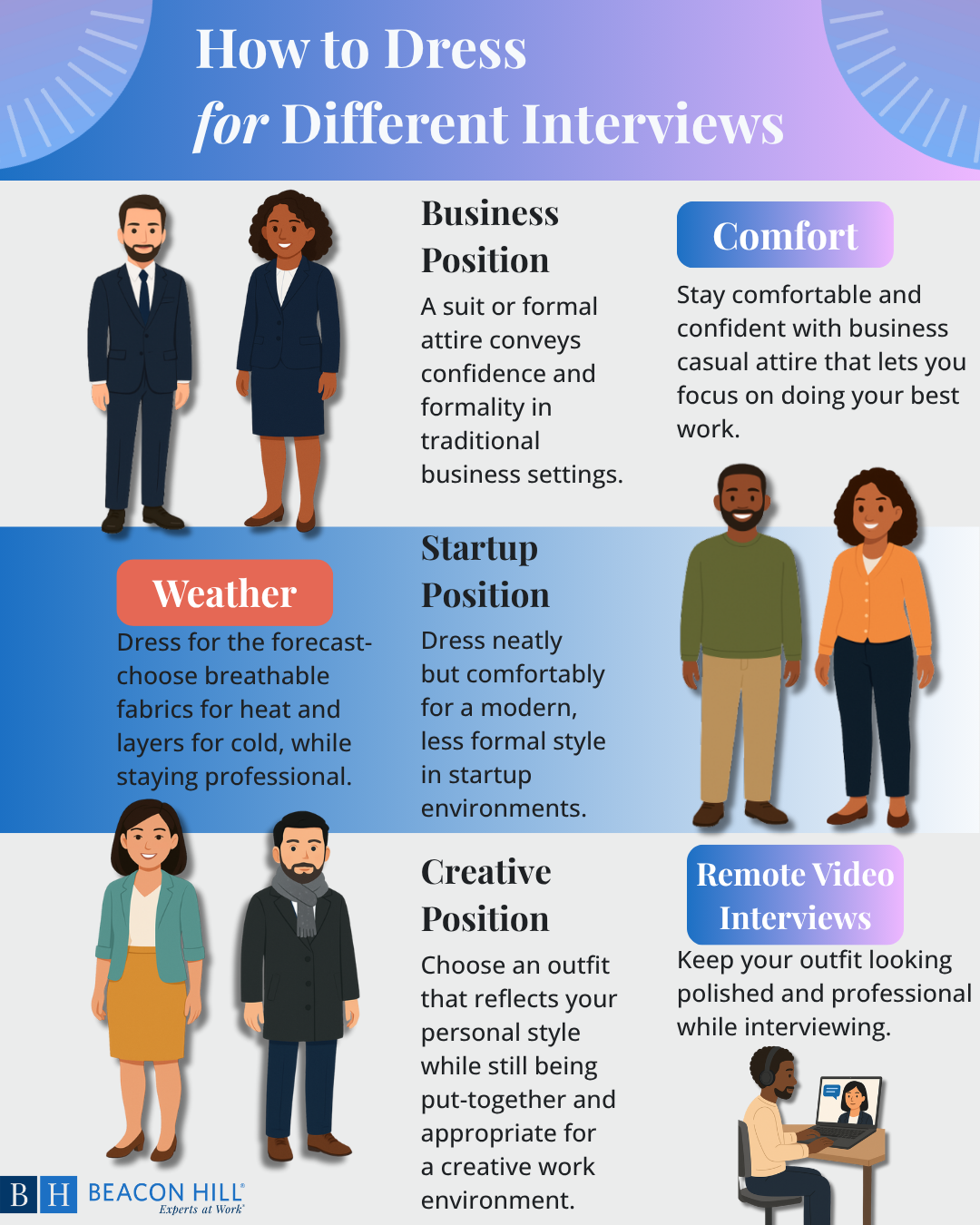
Business casual lets you show your style, but keep it professional.
Ways To Add Personality
- Choose a colorful accessory.
- Wear a patterned shirt or scarf.
- Pick shoes that show your taste.
Credit: bhsg.com
How Business Casual Has Changed Over Time
Business casual used to mean khakis and polos. Now, it’s more flexible. Some companies allow jeans, others don’t. The main idea is to look neat and professional.
Business Casual And Diversity
Business casual can work for all cultures and backgrounds. Choose clothes that fit your tradition, but keep them professional.
Expert Opinions: What Hr Managers Say
HR managers often say it’s better to be slightly overdressed than underdressed. They notice when candidates make an effort. But being too formal can seem rigid.
Quote
“Business casual is safe for most interviews. But always research the company first,” says a senior recruiter at a major tech company.
Frequently Asked Questions
What Is Business Casual For A Job Interview?
Business casual means neat, professional clothes that are less formal than a suit. For men, it’s often slacks, a collared shirt, and dress shoes. For women, it’s tailored pants or a skirt, a blouse, and closed-toe shoes.
Can I Wear Jeans To A Business Casual Interview?
Usually, no. Jeans are not business casual unless the company specifically allows them. If you’re unsure, choose slacks or a skirt.
How Do I Know If Business Casual Is Right For My Interview?
Research the company culture. Check their website, social media, or ask HR. If you can’t find clear information, business casual is usually safe for most roles except formal industries.
Should I Wear Business Casual For A Video Interview?
Yes. Dress as you would for an in-person interview. Looking professional helps your confidence and shows respect for the opportunity.
What Accessories Are Suitable For Business Casual Interviews?
Keep accessories simple. A watch, small earrings, and a neat bag are fine. Avoid large, flashy items that distract from your appearance.
Making the right choice about interview attire is a mix of research, common sense, and preparation. Business casual is often a safe bet, but always check company and industry standards. Your outfit should help you feel confident and show you respect the opportunity. With the right approach, you’ll make a positive first impression and increase your chances of getting the job. For more guidance on workplace dress codes, visit The Balance Careers.
Credit: www.larraurimadrid.com
