

Should I Wear Scrubs or Business Casual to Interview? Expert Guide
Should I Wear Scrubs Or Business Casual To Interview
First impressions can change your career path. When you walk into an interview, your clothes speak before you do. This is especially true in the healthcare field, where the question often comes up: Should I wear scrubs or business casual to interview? The answer isn’t always simple. The right outfit depends on your role, the employer’s culture, and how you want to be seen. Many candidates worry about looking professional yet practical. Choosing between scrubs and business casual is more than a style issue—it’s a sign of your respect for the company, the position, and yourself.
In this article, you’ll find clear guidance for deciding what to wear. You’ll learn how employers interpret your clothing, how expectations differ between roles, and what mistakes to avoid. By the end, you’ll feel confident walking into any healthcare interview, knowing you’re dressed to impress.
Understanding Healthcare Interview Expectations
Healthcare is unique. Interviews can feel formal or relaxed, depending on the role and setting. What you wear signals your understanding of the industry’s standards. Employers notice your outfit, especially if you’re applying for jobs like nurse, physician assistant, medical technician, or receptionist.
What Employers Want To See
Most healthcare employers want to see you as someone who fits their culture. For clinical roles, they may appreciate your practical side, but they also value professionalism. For administrative or non-clinical jobs, business casual is usually expected. Wearing the right clothes shows you’ve researched the company and respect their values.
Scrubs Vs Business Casual: Why It Matters
Scrubs are comfortable and practical. They say, “I’m ready for hands-on work. ” Business casual says, “I’m polished and professional. ” The choice isn’t just about comfort. It’s about matching the employer’s expectations. Wearing scrubs to a hospital interview might make sense if you’re applying for a clinical job.
But for a corporate healthcare office, business casual is usually safer.
The Role Of First Impressions
Studies show that first impressions are formed within seven seconds. Your outfit is one of the first things interviewers notice. According to a survey by CareerBuilder, 49% of employers say that dressing inappropriately is a common interview mistake. In healthcare, this can mean wearing scrubs when business attire is expected, or vice versa.
When To Wear Scrubs
Scrubs are the uniform for many healthcare workers. But they’re not always the best choice for an interview. There are times when scrubs are appropriate, and times when they’re not.
Clinical Roles
If you’re interviewing for a role that requires you to wear scrubs every day—like nurse, medical assistant, surgical technologist, or radiology technician—scrubs can make sense. They show you understand the job’s demands and are ready for hands-on work.
Key Points for Scrubs:
- Choose clean, new scrubs (not faded or stained)
- Avoid wild colors or patterns; stick to neutral or hospital-approved shades
- Pair with simple, closed-toe shoes
- Keep accessories minimal
Practical Example
Imagine you’re applying for a nurse position at a hospital. The interview is followed by a practical skills assessment in the simulation lab. Wearing scrubs saves time and shows you’re prepared. In this case, scrubs are not just acceptable—they’re expected.
Exceptions
If the interview is purely verbal and takes place in an office, some managers prefer business casual. Always ask if you’re unsure. One non-obvious tip: Call the HR department and ask, “Is it okay to wear scrubs to the interview?” This shows initiative and prevents mistakes.
When To Wear Business Casual
Business casual is the safe choice for most interviews, especially outside clinical settings. It’s professional but not too formal. Employers see business casual as a sign of respect and readiness.
Non-clinical And Administrative Roles
If you’re applying for a position like medical receptionist, office manager, billing specialist, or HR coordinator, business casual is expected. Even for clinical roles, if the interview is in an office, business casual is often preferred.
Key Points for Business Casual:
- Wear slacks or a knee-length skirt, not jeans
- Choose a button-up shirt or blouse, not T-shirts
- Wear dress shoes, not sneakers or sandals
- Avoid flashy jewelry or strong perfumes
Data Comparison
Let’s compare expectations for different roles:
| Role | Recommended Attire | Reason |
|---|---|---|
| Nurse (Hospital) | Scrubs or Business Casual | Depends on interview format (skills vs office) |
| Medical Receptionist | Business Casual | Front-desk position, non-clinical |
| Lab Technician | Scrubs | Hands-on demonstration often required |
| Healthcare Administrator | Business Casual | Professional image needed |
| Physician Assistant | Business Casual | Interview usually in office, not clinical setting |
What Counts As Business Casual?
Business casual can mean different things depending on the employer. For men, it often means slacks, a collared shirt, and dress shoes. For women, it can be dress pants, a blouse, or a modest dress. Avoid jeans, sneakers, and flashy prints.
Factors That Influence Your Choice
Choosing between scrubs and business casual isn’t only about your role. Other factors can change what’s appropriate. Sometimes, these are overlooked by beginners.
Company Culture
Some healthcare organizations are very formal. Others are relaxed. Check the company’s website, social media, or employee reviews. Look for photos of staff and managers. If everyone wears scrubs—even in meetings—scrubs are safe. If you see business attire, follow that lead.
Interview Format
Is the interview practical or verbal? Will you be tested on your skills or only answering questions? For practical interviews, scrubs are often preferred. For verbal interviews, business casual is safer.
Location
Hospital interviews are usually less formal than corporate healthcare offices. If you’re interviewing in a hospital, scrubs might be fine. In an office or conference room, business casual is usually expected.
Communication With Hr
Don’t be shy to ask. Email or call the HR department: “Is there a preferred dress code for the interview?” This question shows professionalism and helps avoid mistakes. Many candidates skip this step and regret it later.
External Events
Sometimes, interviews include a tour or shadowing session. If you’ll be entering clinical areas, scrubs are practical. For meetings with executives or managers, business casual is best.
Pros And Cons: Scrubs Vs Business Casual
Both scrubs and business casual have advantages and disadvantages. Understanding these helps you decide.
| Attire | Pros | Cons |
|---|---|---|
| Scrubs |
|
|
| Business Casual |
|
|
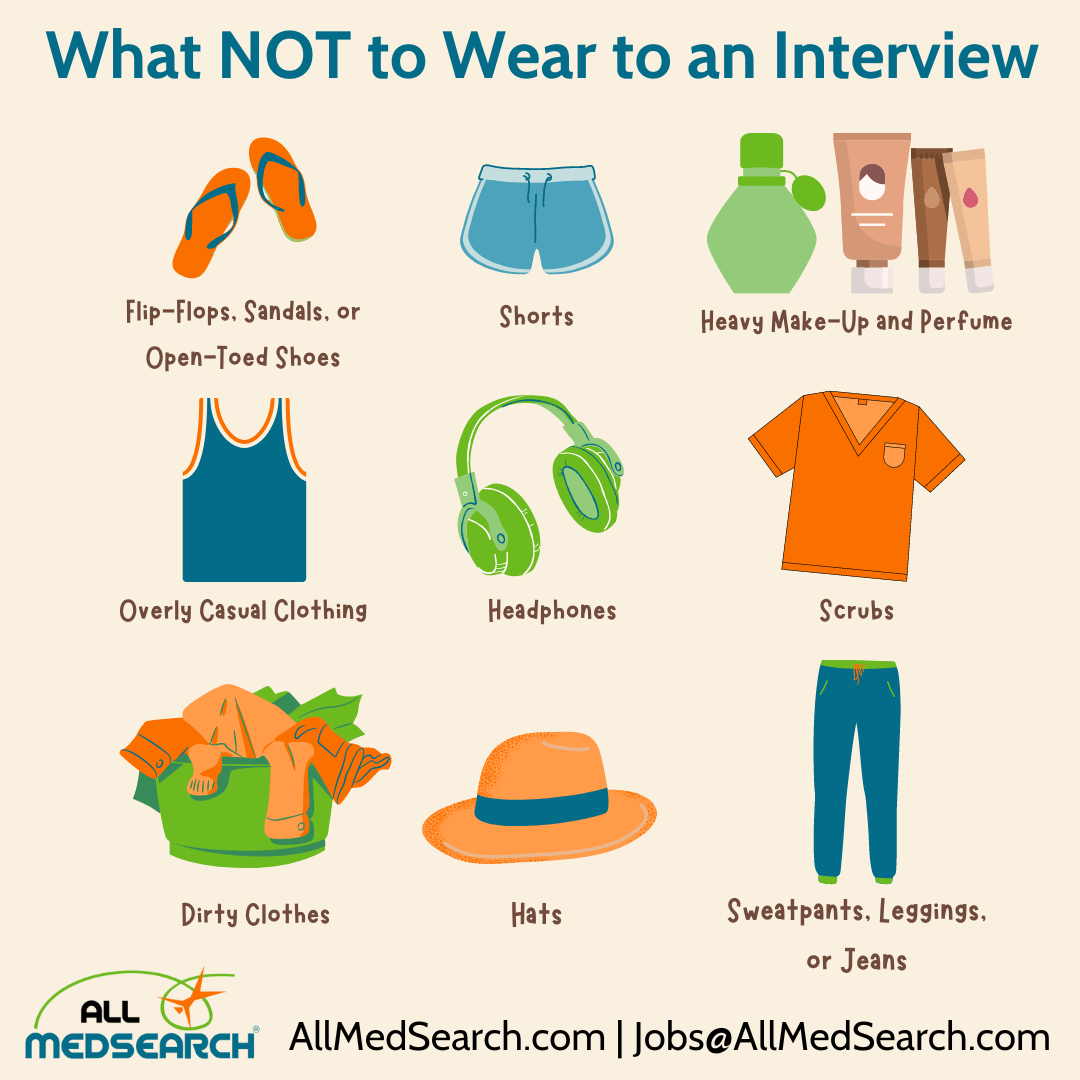
Mistakes To Avoid
Many candidates make simple mistakes that hurt their chances. Here are some you should watch for:
- Wearing dirty or wrinkled scrubs: Always wear fresh, clean scrubs if you choose them. Stains and wrinkles signal you don’t care about details.
- Too casual business attire: Avoid jeans, hoodies, and sneakers, even if the office seems relaxed.
- Ignoring the company culture: Research the employer’s dress code. Don’t assume all hospitals are the same.
- Not asking HR about dress code: Most companies welcome questions. It’s better to ask than guess wrong.
- Over-accessorizing: Keep jewelry and perfume light. Strong scents can bother interviewers.
- Assuming scrubs are always safe for clinical roles: Some hospitals expect business casual for interviews, even for nurses and techs.
- Wearing flashy scrubs: Avoid cartoon prints, bright colors, or trendy styles unless the employer specifically allows them.
Credit: www.allmedsearch.com
How To Prepare Your Outfit
Preparation is key. Don’t wait until interview day to decide what to wear. Start early and follow these steps.
Step 1: Research The Employer
Look at the company’s website and social media. Check employee photos and job descriptions. If you see staff in scrubs, that’s a clue. If staff wear business attire, follow that lead.
Step 2: Ask About Dress Code
Contact HR or your recruiter. Ask, “Is there a preferred dress code for interviews? ” This simple question can save you embarrassment.
Step 3: Choose Your Outfit
Pick scrubs or business casual based on your research. Make sure your clothes are clean, pressed, and fit well.
Step 4: Plan Accessories And Shoes
Keep shoes simple. Closed-toe is safest. Avoid sneakers unless you’re wearing scrubs. Accessories should be minimal.
Step 5: Try Your Outfit On
Wear your chosen outfit for a few hours at home. Make sure you feel comfortable and confident. This reduces stress on interview day.
Real-life Examples
Hearing from people who faced this decision can help. Here are two real-life examples:
Example 1: Nurse Interview At A Large Hospital
Maria applied for a nurse job at a busy hospital. The interview included a tour of the clinical unit and a skills test. She wore navy blue scrubs, simple shoes, and kept her jewelry minimal. The manager told her, “You look ready for work.
” Maria felt comfortable during the practical test and got the job.
Example 2: Medical Receptionist Interview At Clinic
James applied for a receptionist job at a private clinic. He wore slacks, a button-up shirt, and dress shoes. When he arrived, he noticed all staff wore business casual. His outfit matched the office culture. The interviewer said, “You look professional.
” James was hired.
Data And Trends In Healthcare Interview Attire
Healthcare hiring has changed. Many employers now expect candidates to dress professionally, even for clinical roles. According to a survey by The Society for Human Resource Management, 62% of healthcare managers prefer business casual for interviews. Only 18% said scrubs were acceptable.
Another trend: Younger candidates are more likely to wear scrubs, while experienced professionals tend to choose business casual. Managers report that business casual creates a stronger first impression.
How Attire Affects Interview Outcomes
Your outfit can affect your confidence and the interviewer’s opinion. Studies show that people who dress professionally feel more confident and perform better in interviews. Interviewers often rate well-dressed candidates higher on communication skills and professionalism.
Non-obvious insight: In group interviews, the most professionally dressed candidate is often remembered more clearly. This can help you stand out among many applicants.
Special Situations
Sometimes interviews don’t follow the usual rules. Here’s what to do in special cases.
Virtual Interviews
For online interviews, business casual is best. Avoid scrubs unless the interviewer specifically requests them. Make sure your background is tidy and free of distractions.
Second Or Follow-up Interviews
If your first interview was in business casual and the second is a clinical skills test, switch to scrubs. Always ask the recruiter if you’re unsure.
Shadowing Or On-site Assessments
If you’ll be shadowing staff or entering clinical areas, scrubs are practical. Bring a change of clothes if the interview includes both office and clinical segments.
Tips For Standing Out
You want to be remembered for the right reasons. Here are ways to stand out:
- Arrive early and greet everyone politely
- Dress cleanly and neatly, regardless of your outfit choice
- Bring a folder with your resume and references
- Prepare smart questions for the interviewer
- Smile and maintain good eye contact
Non-obvious insight: Many candidates overlook shoe choice. Interviewers notice shoes—clean, closed-toe shoes signal attention to detail.

Credit: www.reddit.com
Comparison: Scrubs Vs Business Casual Across Healthcare Roles
Let’s look at how attire fits different healthcare jobs:
| Role | Scrubs | Business Casual |
|---|---|---|
| Nurse | ✔️ | ✔️ |
| Medical Assistant | ✔️ | ✔️ |
| Receptionist | ❌ | ✔️ |
| Lab Technician | ✔️ | ❌ |
| Healthcare Administrator | ❌ | ✔️ |
| Pharmacist | ❌ | ✔️ |
Preparing For Different Types Of Healthcare Employers
Healthcare employers vary. Here’s how to prepare for three main types:
Hospitals
Hospitals are usually practical. Clinical roles may allow scrubs. Administrative roles expect business casual. Always check before the interview.
Private Clinics
Private clinics are often smaller and more formal. Business casual is usually preferred. Receptionists and admin staff should avoid scrubs.
Corporate Healthcare Offices
Corporate offices expect business attire. Even clinical professionals should wear business casual to interviews. Dressing well here shows you understand the corporate environment.
What To Do If You’re Still Unsure
If you’re not sure which outfit to choose, business casual is the safest option. It’s professional and fits most settings. If scrubs are expected, the employer will usually tell you.
Practical tip: Bring scrubs in a bag, just in case. If the interview includes a skills test or clinical demonstration, you can change quickly.
Frequently Asked Questions
Can I Wear Scrubs To A Healthcare Interview If I’m Not Sure?
If you’re not sure, choose business casual. Scrubs are only safe when the employer or HR department confirms it’s acceptable. For most interviews, business casual is the safest choice.
What Colors Should I Choose For Scrubs Or Business Casual?
For scrubs, pick neutral or hospital-approved colors (navy, black, gray). Avoid bright or patterned scrubs unless allowed. For business casual, use subtle colors (white, blue, beige) and avoid flashy prints.
Do Shoes Matter In Healthcare Interviews?
Yes, interviewers notice shoes. Wear closed-toe, clean shoes. For business casual, choose dress shoes. For scrubs, simple sneakers or clogs are fine, but they should be in good condition.
Should I Wear A Lab Coat With Scrubs?
Unless the employer requests it, do not wear a lab coat to the interview. Lab coats can make you seem too clinical and may not fit the interview’s tone.
What If The Interview Includes Both Office And Clinical Segments?
Bring both outfits. Start in business casual for the office segment. Change into scrubs for clinical demonstrations if needed. Confirm with HR or your recruiter to avoid confusion.

Credit: www.healinghandsscrubs.com
Final Thoughts
Choosing between scrubs and business casual for a healthcare interview isn’t just about style. It’s about understanding the employer’s culture, the role’s demands, and the interview format. By researching, asking questions, and preparing your outfit carefully, you show respect and professionalism. Remember, business casual is safe for most interviews, but scrubs are practical for clinical skills assessments. If you’re unsure, ask HR or your recruiter. Dressing right gives you confidence and helps you make the best first impression. For more guidance, check resources from SHRM. Make your outfit count—and let your skills shine.
