

Can Jeans Be Used for Business Casual? Style Tips and Guidelines
Can Jeans Be Used For Business Casual
When you think of business casual, jeans might not be the first item that comes to mind. For many, business casual means khakis, slacks, button-down shirts, and blazers. But as office culture changes, so do dress codes. More workplaces are moving away from strict rules, allowing employees to express their style. This shift brings an important question: Can jeans be used for business casual? The answer depends on several factors, including workplace expectations, the type of jeans, and how you style them.
In this article, you’ll find everything you need to know about wearing jeans in a business casual setting. We’ll look at what makes jeans acceptable, how to choose the right pair, and practical styling advice. You’ll also see real-life examples, data, and tips that will help you dress confidently at work.
By the end, you’ll have a clear understanding of how to make jeans work for business casual, without breaking any rules or looking out of place.
What Is Business Casual?
To decide if jeans fit in, you first need to understand business casual. The term is used in offices worldwide, but its meaning can change depending on the company or country. At its core, business casual is a blend of professional and relaxed clothing. It allows more comfort than formal business attire, like suits, but still keeps a polished look.
Business casual usually includes:
- Dress pants or khakis
- Collared shirts (button-downs, polos)
- Blouses
- Sweaters
- Blazers
- Dress shoes or loafers
Items often excluded are:
- T-shirts
- Athletic wear
- Flip-flops
- Torn or faded clothing
The goal is to look professional without being too formal. Appearance matters because it affects how you’re seen by coworkers, managers, and clients. Business casual helps employees feel comfortable but also maintains a sense of professionalism.
Why Dress Codes Matter
Dress codes are more than rules. They help set expectations and create a company image. Companies with strict dress codes often work with clients or want to show authority. Those with relaxed codes may value creativity or teamwork. Knowing your company’s dress code is key before adding jeans to your business casual wardrobe.
Are Jeans Acceptable For Business Casual?
The big question: Are jeans allowed? The answer is not simple. Some offices welcome jeans; others see them as too casual. According to a survey by the Society for Human Resource Management (SHRM), about 59% of workplaces allow jeans at least some of the time. This number is growing as companies try to attract younger talent and adapt to modern trends.
Factors That Influence Acceptance
- Industry: Creative fields like tech, marketing, and design are more open to jeans. Law firms and finance companies usually stick to traditional business attire.
- Company Culture: Startups and small businesses often allow jeans. Larger corporations may require approval or limit jeans to Fridays.
- Location: Workplaces in big cities tend to be more relaxed, while rural or conservative areas might be stricter.
- Role and Responsibility: Client-facing roles often require more formal attire. If you don’t meet clients, you may have more freedom.
Real-world Examples
- Tech companies like Google and Microsoft often allow jeans, even in meetings.
- Banks and law offices usually expect dress pants or skirts.
- Casual Fridays are common, letting employees wear jeans once a week.
Always check your company’s dress code or ask HR if you’re unsure.
Choosing The Right Jeans For Business Casual
Not all jeans are equal when it comes to business casual. The style, color, and fit can make a big difference. Wearing the wrong jeans can look sloppy or unprofessional, but the right pair can blend in perfectly.
What Makes Jeans Business Casual?
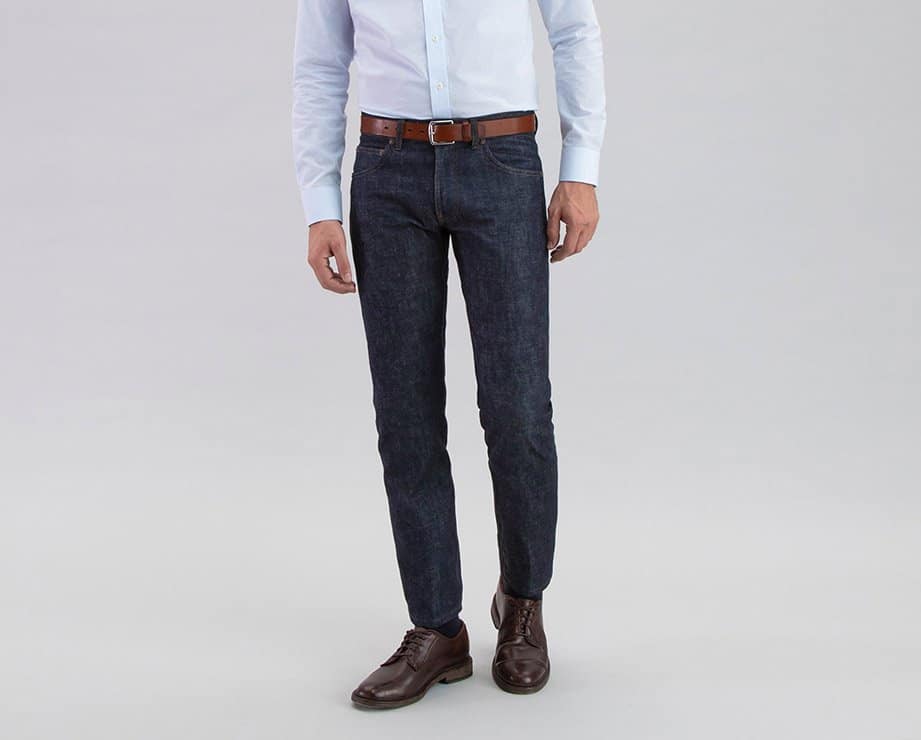
- Dark wash: Deep blue or black jeans look polished and hide stains.
- No distressing: Avoid rips, holes, or heavy fading. These look too casual.
- Straight or slim fit: Skinny jeans can be too tight, and baggy jeans are too relaxed. Aim for a tailored look.
- Minimal details: Skip flashy stitching, logos, or extra pockets.
Jeans To Avoid
- Light wash or acid wash jeans
- Jeans with rips, patches, or heavy distressing
- Baggy, loose, or overly tight jeans
- Jeans with bold designs, embroidery, or embellishments
Visual Comparison
Here’s a simple table to help you see the difference between business casual jeans and those that don’t fit the dress code:
| Feature | Business Casual Jeans | Too Casual Jeans |
|---|---|---|
| Color | Dark blue, black | Light wash, faded |
| Fit | Straight, slim | Baggy, skinny |
| Details | Minimal | Rips, patches |
| Finish | Clean, pressed | Wrinkled, distressed |
Styling Jeans For Business Casual
Wearing jeans to work is only half the battle. How you style them is just as important. The right outfit can turn simple jeans into a professional look.
Tops To Pair With Jeans
- Button-down shirts: Crisp and classic, these are always safe.
- Blouses: Great for women who want a softer look.
- Sweaters: Neutral colors work best.
- Blazers: Instantly elevate jeans to a more professional level.
Avoid T-shirts, graphic tops, or hoodies. These make jeans look too casual.
Choosing The Right Shoes
Your shoes can make or break your business casual look. Pair jeans with:
- Loafers
- Dress shoes
- Ankle boots
- Ballet flats
Skip sneakers, sandals, and flip-flops. These are best left for weekends.
Accessories And Finishing Touches
- Belts: A simple leather belt adds polish.
- Watches: Classic styles look more professional.
- Minimal jewelry: Keep it understated.
The goal is to look neat and intentional. Don’t overdo accessories.
Example Outfit Ideas
- Dark wash jeans, white button-down, navy blazer, brown loafers
- Black jeans, pale blue blouse, gray sweater, black flats
- Slim-fit jeans, beige turtleneck, black boots
Common Mistakes When Wearing Jeans To Work
Even if your office allows jeans, there are mistakes you should avoid. These errors can make you look unprofessional or out of place.
- Ignoring company policy: Always check the dress code before wearing jeans.
- Choosing the wrong fit: Baggy or tight jeans look messy.
- Wearing distressed jeans: Rips and holes are rarely business casual.
- Skipping ironing: Wrinkled jeans look sloppy.
- Pairing with casual tops: T-shirts and hoodies make jeans look even more relaxed.
- Too many accessories: Keep it simple.
- Dirty or faded jeans: Always wear clean, fresh-looking jeans.
How To Know If Jeans Are Appropriate In Your Workplace
Even within the same industry, rules can change from one company to another. Here are practical ways to know if jeans are right for your office:
- Read the dress code: Most companies have guidelines. Look for specific details about jeans.
- Ask HR or management: If you’re unsure, it’s better to ask than guess.
- Observe colleagues: See what your peers are wearing. If jeans are common, you’re probably safe.
- Try on casual Fridays: Start with jeans on a casual day, then see how people respond.
- Test in less formal settings: If you’re not client-facing, jeans may be more acceptable.

Credit: www.cottoncashmerecathair.com
Data And Trends: Jeans In Modern Workplaces
Workplace dress codes are changing fast. Jeans are becoming more common, especially in creative and tech industries. Let’s look at some statistics:
- A survey by LinkedIn found that 44% of professionals say their office allows jeans most days.
- SHRM reports that 59% of employers permit jeans, especially in casual or creative fields.
- In a Glassdoor study, 52% of employees prefer relaxed dress codes.
These numbers show a shift toward flexibility. Companies want their staff to feel comfortable and express themselves. But remember: what’s true for one office may not be true everywhere.
Why Are Jeans Becoming More Popular?
- Comfort: Employees want to feel at ease during long workdays.
- Culture: Startups and tech companies value creativity and informality.
- Recruitment: Flexible dress codes attract younger workers.
- Productivity: Some studies suggest employees work better when comfortable.
Downsides To Relaxed Dress Codes
- Professional image: Too much relaxation can hurt a company’s reputation.
- Confusion: Vague rules lead to mistakes and misunderstandings.
- Respect: Some managers worry that casual dress means less respect for authority.
The key is finding a balance between comfort and professionalism.
Comparing Jeans With Other Business Casual Options
You might wonder how jeans compare to other business casual staples, like khakis or dress pants. Here’s a simple comparison:
| Feature | Jeans | Khakis | Dress Pants |
|---|---|---|---|
| Comfort | High | Medium | Medium |
| Professionalism | Medium | High | High |
| Durability | High | Medium | Medium |
| Versatility | Medium | High | Medium |
| Care needed | Low | Medium | High |
Jeans offer great comfort and durability, but khakis and dress pants are usually seen as more professional. Jeans can work for business casual, but only when styled correctly.
Tips For Making Jeans Look More Professional
There are ways to make jeans look sharper and more polished for the office. Here are practical tips:
- Choose dark colors: Dark blue or black always looks smarter.
- Get the right fit: Tailored jeans create a neat silhouette.
- Iron or steam: Keep jeans wrinkle-free.
- Pair with formal tops: Button-downs, blouses, and blazers.
- Add classic shoes: Loafers, boots, or flats.
- Keep accessories simple: Less is more.
- Wear a belt: A clean, leather belt adds structure.
- Avoid over-washing: Jeans fade if washed too often.
- Check for stains: Always wear clean jeans.
- Layer smartly: Cardigans and blazers add polish.
These tips help jeans fit better in a business casual environment.
The Psychological Impact Of Wearing Jeans At Work
What you wear affects how you feel and perform. Studies show that comfortable clothing can lead to better focus and productivity. But there’s another side: dressing too casually can make you feel less motivated or confident.
- Comfort boosts productivity: Employees report feeling more relaxed and creative when allowed to wear jeans.
- Dress for the role: Dressing up can help you feel more professional and ready for important tasks.
- Perception matters: Coworkers and managers may judge based on appearance.
If you’re new to wearing jeans at work, start with days when you don’t have meetings or presentations. Build confidence as you get used to the new style.
Addressing Common Concerns
Some people worry that jeans aren’t professional enough for business casual. Here’s how to address those concerns:
Will Jeans Hurt My Image?
If you style jeans correctly, they won’t hurt your image. Dark, tailored jeans paired with a blazer look just as polished as dress pants. Avoid messy or distressed jeans.
Are Jeans Too Casual For Managers?
Many managers wear jeans if the company allows it. If you’re a leader, choose the best quality and style jeans. Pair them with formal tops and shoes.
What About Client Meetings?
For client-facing roles, stick to dress pants or khakis unless you know the client is comfortable with jeans. Some companies allow jeans if the client works in a creative industry.
How Do I Handle Negative Feedback?
If someone comments on your jeans, respond professionally. Explain that your jeans fit the dress code and are styled for business casual. If needed, ask HR for clarification.
Jeans For Men Vs. Women In Business Casual
Men and women face different challenges when picking jeans for business casual. Here’s a quick guide:
Men
- Slim or straight fit is best.
- Avoid baggy or skinny jeans.
- Pair with button-downs, sweaters, and blazers.
- Choose dark colors.
- Leather shoes or boots complete the look.
Women
- Straight, slim, or bootcut jeans work well.
- Avoid distressed or overly tight jeans.
- Blouses, sweaters, and structured jackets look great.
- Dark or black jeans are easiest to style.
- Flats, loafers, or ankle boots are ideal.
Men and women should avoid flashy details and keep the look clean.
Jeans In Different Business Casual Situations
Business casual can mean different things depending on the event or occasion. Here’s how to handle jeans in various settings:
Office Days
If jeans are allowed, pick dark, tailored pairs. Avoid anything too casual.
Casual Fridays
Most companies allow jeans on Fridays. This is a good time to experiment and see how your colleagues dress.
Meetings
For internal meetings, jeans can work if styled well. For client meetings, consider dress pants unless jeans are specifically allowed.
Company Events
Check the event invite. Jeans may be fine for team outings but not for formal dinners.
Job Interviews
Unless the company is known for casual dress, avoid jeans. First impressions matter.
How To Build A Business Casual Wardrobe With Jeans
Want to make jeans a regular part of your work wardrobe? Here’s how to build a flexible, business casual collection:
- Start with two pairs: One dark blue, one black. Make sure they fit well.
- Add classic tops: White and light blue button-downs, neutral sweaters.
- Get one blazer: Navy or gray goes with most jeans.
- Pick professional shoes: Loafers, boots, or flats.
- Add a belt: Black or brown leather.
- Keep accessories simple: Small watch, minimal jewelry.
This basic wardrobe lets you mix and match outfits for the whole week.
Credit: toddshelton.com
Cost And Quality: Investing In Business Casual Jeans
Quality jeans can cost more, but they last longer and look better. Here’s a comparison of entry-level and premium jeans:
| Feature | Entry-Level Jeans | Premium Jeans |
|---|---|---|
| Price | $30–$60 | $100–$250 |
| Fabric | Basic denim | High-quality, stretch denim |
| Fit | Standard | Tailored, custom options |
| Durability | Medium | High |
| Appearance | May fade | Retains color |
Investing in premium jeans is smart if you wear them often. They keep their shape, color, and style longer.
Non-obvious Insights For Beginners
Many people miss these important tips when starting to wear jeans for business casual:
- Tailoring matters: Even basic jeans can look much better if tailored. Small adjustments at the waist or length create a professional look.
- Fabric weight: Thicker denim holds its shape and looks sharper. Avoid lightweight, stretchy jeans that can sag or look wrinkled.
- Seasonal choices: In warmer months, try lighter fabrics and colors. In cooler months, stick with dark, heavy denim.
- Rotation: Don’t wear the same jeans every day. Rotate pairs to keep them looking fresh and prevent wear.
How To Handle Transitioning To Jeans
If your company is shifting to a more relaxed dress code, the transition can feel awkward. Here’s how to handle it:
- Start slow: Try jeans once a week, then increase as you feel comfortable.
- Set an example: Dress well, even when wearing jeans. Others will follow your lead.
- Stay professional: Even with jeans, always look neat and polished.
- Give feedback: If you notice issues (like too-casual jeans), talk to HR or managers.
Change takes time. Be patient and adapt your style as the office changes.
Frequently Asked Questions
Can I Wear Jeans To A Job Interview?
In most cases, it’s better to avoid jeans for interviews. First impressions count, and dress pants show you’re serious. Only wear jeans if the company is known for a casual dress code and you’re sure it’s allowed.
What Color Jeans Are Best For Business Casual?
Dark blue and black jeans are safest. They look clean and professional. Avoid light colors, heavy fading, or bright designs.
Are Ripped Jeans Ever Okay For Business Casual?
No. Ripped or distressed jeans are always too casual for business settings. Stick to clean, undamaged pairs.
How Do I Make Jeans Look More Formal?
Pair jeans with a blazer, button-down shirt, and classic shoes. Choose a tailored fit and keep accessories simple. Iron or steam jeans to remove wrinkles.
Can Women Wear Skinny Jeans For Business Casual?
Skinny jeans can work if they’re not too tight and are styled well. Avoid overly tight or flashy pairs. Straight or slim fits are usually safer.

Credit: www.hockerty.com
Final Thoughts
Jeans can be used for business casual, but only if you follow the right guidelines. Always choose dark, tailored jeans without distressing. Pair them with formal tops and shoes. Check your company’s dress code, observe your colleagues, and ask HR if you’re unsure. With careful styling, jeans can help you look professional and feel comfortable at work. Remember, confidence comes from knowing you look good and fit in. If you want more details on dress codes, the Society for Human Resource Management offers helpful guidance.
Business casual is evolving, and jeans are becoming a new staple. With the right approach, you can wear jeans confidently and professionally in almost any modern workplace.
