

Should I Wear Scrubs or Business Casual to a Nursing Interview?
Should I Wear Scrubs Or Business Casual to a Nursing Interview
First impressions matter, especially in the world of nursing. The moment you walk into a nursing interview, your appearance speaks before you do. Many candidates wonder about the right outfit: scrubs or business casual? Both have their reasons, and the choice isn’t always as simple as it seems. Your clothing can show your professionalism, respect for the workplace, and your understanding of hospital culture. But it can also send the wrong signal if you misread the situation.
In this article, we’ll help you make the right choice. You’ll learn what employers expect, what different nursing settings prefer, and how your outfit can boost your confidence and chances of success. We’ll break down the pros and cons of scrubs versus business casual, share real examples, and give you practical advice you can use.
By the end, you’ll know exactly how to dress for your next nursing interview—no guesswork needed.
Why Your Nursing Interview Outfit Matters
What you wear to a nursing interview isn’t just about style. It’s about professional image and showing that you understand the workplace. Health care is a field where appearance connects to trust, safety, and respect. Here’s why your outfit choice is so important:
- First impressions: Studies show people form opinions in seconds based on clothing and grooming. In health care, this can mean the difference between being seen as prepared or not.
- Fitting in with culture: Hospitals and clinics have their own expectations. Some value tradition, while others are more relaxed. The right outfit shows you did your homework.
- Signaling attention to detail: Clean, well-chosen clothes show you care about details—a key skill for nurses.
- Confidence: The right outfit helps you feel comfortable and strong. When you know you look appropriate, it’s easier to focus on your answers.
According to a survey by the American Nurses Association, over 80% of nurse managers say a candidate’s appearance influences their hiring decision. This doesn’t mean you need expensive clothes, but it does mean you need to match the setting.
Understanding Nursing Interview Settings
Not all nursing interviews are alike. Your outfit should match the type of facility, the role you’re applying for, and the culture of the workplace. Let’s look at the main settings and what they expect.
Hospitals
Most hospitals are formal. Nurse managers and HR staff often expect business casual dress for interviews. This shows you understand professional boundaries. Even though nurses wear scrubs on the job, interviews are usually an exception.
Clinics And Private Practices
Clinics can be less formal than hospitals. However, most still expect a business casual approach for interviews, especially for entry-level roles or new grad positions. Scrubs may be acceptable if you’re told to “come as you are” or if you’re shadowing on the same day.
Long-term Care And Rehabilitation Centers
These places often have a family feel. Some are more relaxed, but interviews are still a time for business casual unless told otherwise. Showing respect for residents and staff starts with a neat, professional look.
Specialty Offices (e.g., Dental, Dermatology, Pediatrics)
Specialty offices can be more flexible, especially if the work is hands-on or involves an immediate skills test. Still, it’s safest to choose business casual unless the office gives specific instructions.
Home Health Agencies
Some home health agencies prefer scrubs, especially if you’re visiting clients right after your interview. But for office-based interviews, business casual is usually right.
Virtual Interviews
Even if the interview is online, your top half should look business casual. The camera shows your upper body, so a neat shirt or blouse is the safest choice.
Business Casual For Nursing Interviews
Business casual is the safest, most common choice for a nursing interview. But what does that really mean? Let’s break it down.
What Is Business Casual?
Business casual means looking polished and professional without being overly formal. It avoids jeans, athletic wear, and flashy accessories. For nursing interviews, the goal is simple, clean, and tidy.
For Women
- Dress slacks or modest skirt
- Blouse, dress shirt, or sweater
- Blazer or cardigan (optional)
- Closed-toe shoes (flats or low heels)
- Minimal jewelry and makeup
For Men
- Dress slacks or khakis
- Collared shirt (button-up or polo)
- Blazer or sweater (optional)
- Dress shoes
- Belt and simple watch
What To Avoid
- Jeans, leggings, or yoga pants
- Sneakers or sandals
- T-shirts or graphic tops
- Heavy perfume or cologne
- Large, distracting jewelry
- Wrinkled or stained clothing
Why Business Casual Works
Business casual tells the employer you respect the interview process. It shows you can follow professional norms and understand the difference between patient care and professional meetings. Even if you’ll wear scrubs on the job, business casual sends the message that you’re adaptable.
Non-obvious Insights
- Neutral colors work best: Stick to navy, black, gray, or soft pastels. Bright colors or busy patterns can be distracting.
- Fit matters as much as style: Even a simple outfit looks sharp if it fits well. Too-tight or too-loose clothing can make you look less prepared.
Wearing Scrubs To A Nursing Interview
Now, what about scrubs? Nurses spend most of their workday in scrubs, so it seems logical to wear them to a nursing interview. But is it really the best idea?
When Scrubs Might Be Appropriate
There are a few situations where scrubs can be the right choice:
- The employer tells you to wear scrubs
- You’re doing a working interview (shadowing or skills test) right after your interview
- The facility has a very relaxed or practical culture
- You’re interviewing for a role where you’ll go straight from the interview to patient care
Benefits Of Wearing Scrubs
- Shows you’re ready for hands-on work
- Signals that you understand the job’s realities
- Can help you feel more comfortable if you’re nervous
Risks Of Wearing Scrubs
- Can seem too casual for a formal interview
- May look like you didn’t make an effort
- Could be seen as a misunderstanding of professional boundaries
When To Avoid Scrubs
If you’re not sure, it’s safer to avoid scrubs. Most nurse recruiters and managers expect business casual unless you’re told otherwise. Scrubs are practical, but they don’t always show your best side in an interview setting.
Non-obvious Insights
- Clean, new-looking scrubs matter: If you do wear scrubs, they should look fresh and professional—not faded or stained from past shifts.
- Scrub color can send a message: Some facilities use color codes for different roles. Wearing the wrong color could confuse your interviewer or make you look out of place.
Comparing Scrubs And Business Casual: Key Differences
It helps to see the differences clearly. Here’s a side-by-side look at how scrubs and business casual stack up for nursing interviews.
| Aspect | Scrubs | Business Casual |
|---|---|---|
| Formality | Casual/Practical | Professional/Polished |
| First Impression | Ready for work, but may seem too relaxed | Respects the process, understands boundaries |
| When Appropriate | Working interviews, employer request | All traditional interviews |
| Risk Level | Higher unless specified | Very low |
| What It Shows | Prepared for care, comfort-focused | Professionalism, adaptability |
Real-world Examples
Learning from real stories can help you decide what’s best. Here are a few scenarios from actual nursing interviewees.
Example 1: Hospital Interview
Maria, a new graduate, had her first interview at a large hospital. Unsure what to wear, she chose business casual—navy slacks, a white blouse, and flats. The nurse manager later told her, “You looked like you belonged in our team from day one.
” Maria got the job.
Example 2: Pediatric Clinic
Jordan interviewed at a busy pediatric office. The recruiter said, “You’ll shadow for an hour after your interview, so come in scrubs. ” Jordan wore clean, bright-blue scrubs with a neat ponytail. The staff appreciated that he was ready for hands-on tasks.
Example 3: Long-term Care Center
Lily applied for a night shift at a small long-term care home. She wore business casual, but when she arrived, every staff member wore scrubs—even the director. She felt a bit overdressed but still made a good impression by looking neat and friendly.
What Can You Learn?
- Follow instructions: If the employer tells you what to wear, do it.
- When in doubt, dress up: It’s better to be a bit too formal than too casual.
- Adapt to the setting: Not every facility is the same.
How To Decide: Questions To Ask Yourself
Choosing the right outfit can be stressful. Ask yourself these questions before your next nursing interview:
- Did the invitation mention a dress code?
- Will you be shadowing or doing a skills test?
- Is the facility known for being formal or relaxed?
- Have you checked the company website or social media for staff photos?
- Can you call or email HR to ask about dress expectations?
If you can’t find a clear answer, business casual is always safe.
How Hiring Managers View Your Outfit
Nurse managers and recruiters see dozens of candidates. Here’s what they notice:
- Effort: Wearing clean, pressed clothes shows you care.
- Understanding of culture: Outfits that match the workplace show you’ve done your research.
- Readiness: If you’re asked to do hands-on tasks, having scrubs ready is smart.
- Confidence: When you look the part, it’s easier for the manager to picture you on their team.
A survey by CareerBuilder found that 49% of hiring managers have rejected candidates for unprofessional dress—even in fields where uniforms are standard.
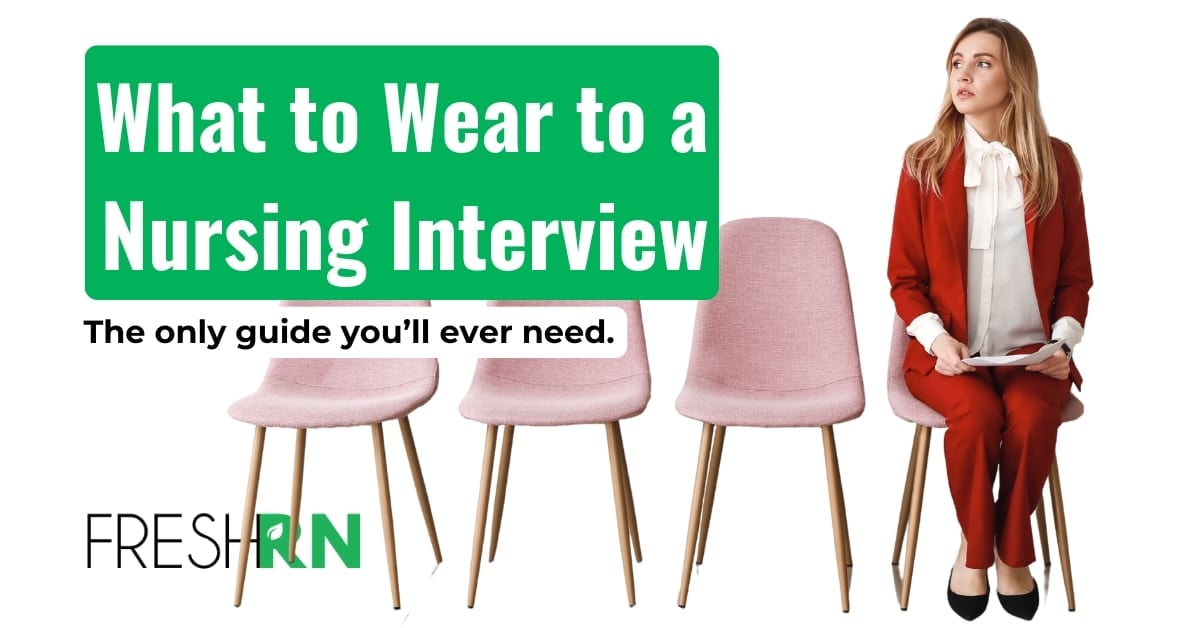
Credit: www.freshrn.com
Common Mistakes To Avoid
Even smart candidates make outfit mistakes. Here’s what to watch for:
- Assuming scrubs are always okay: They may be normal for work, but not for interviews.
- Overdressing (formal suits): In most cases, a full suit is too much for a nursing role.
- Ignoring grooming: Clean hair, nails, and shoes are as important as your clothes.
- Forgetting a backup plan: If you’re not sure, bring scrubs in a bag in case you’re asked to shadow.
- Wearing strong scents: Many facilities are fragrance-free.
Practical Steps: How To Prepare Your Interview Outfit
Ready to get dressed? Here’s how to make sure you look your best:
- Lay out your clothes the night before.
- Check for stains, wrinkles, and missing buttons.
- Choose simple, neat accessories.
- Test your outfit for comfort—can you sit, stand, and walk easily?
- Polish your shoes.
- Pack a spare set of scrubs if you think you might need them.
- Keep makeup and hairstyles tidy and professional.
The Role Of Body Language And Grooming
Your outfit is just part of your overall impression. Body language and grooming matter too:
- Sit up straight and make eye contact.
- Smile and greet everyone politely.
- Keep nails trimmed and hands clean.
- Avoid chewing gum or eating before you enter.
- Bring a folder for your resume, not a large bag or backpack.
Gender, Age, And Cultural Considerations
No matter your background, your interview outfit should show respect for the workplace and for yourself. But there are a few extra things to keep in mind:
For Women
- Skirts should be knee-length or longer.
- Avoid low-cut tops.
- Pantyhose or tights are optional, but legs should look neat.
For Men
- Tuck in your shirt.
- Facial hair should be clean and trimmed.
- Avoid heavy aftershave.
For All Genders
- Dress for the role you want, not just the one you have.
- Adapt for religious or cultural dress as needed, but keep it neat.
- If you’re unsure, ask HR for advice—they’ve heard every question before.
What If You Make A Mistake?
Nobody’s perfect. If you arrive and realize you’re too casual or too formal, don’t panic. Focus on your skills, attitude, and answers. Most employers will notice your effort and give you credit for trying. If you’re asked to shadow and you didn’t bring scrubs, apologize politely and offer to reschedule if needed.
How To Ask About Dress Code (without Worry)
If you’re nervous about asking, keep your question simple. Here’s an example email:
> “Hello, I’m looking forward to my interview. Can you please advise on the expected dress code? I want to be sure I respect your workplace. ”
Most HR staff appreciate the question and will answer quickly. It shows you care about details.
Outfit Planning For Different Interview Types
Nursing interviews can happen in many formats. Here’s how to plan for each one:
| Interview Type | Best Outfit Choice | Special Tips |
|---|---|---|
| In-Person (Hospital) | Business Casual | Bring scrubs in a bag in case of shadowing |
| In-Person (Clinic) | Business Casual or Scrubs (if told) | Check with HR; look at staff photos online |
| Working Interview | Scrubs | Wear neat, clean scrubs; bring ID badge if you have one |
| Virtual | Business Casual (top half) | Check lighting and background before starting |
| Panel Interview | Business Casual | Dress slightly more formal if unsure |
Trends In Nursing Interview Attire
Nursing has changed over time, and so have expectations about interview dress. While scrubs are the daily uniform, interview attire is trending toward business casual. As more hospitals join large networks, they prefer candidates who show a polished, adaptable image.
Newer trends include:
- Simple, modest fashion: Less is more. Clean lines and neutral colors stand out.
- Eco-friendly fabrics: Some candidates choose outfits made from sustainable materials.
- Comfort that looks sharp: With long interview days, comfortable shoes and clothing matter.
- Personal branding: Small touches like a signature pin or neat hairstyle can help you stand out—just don’t overdo it.
The best outfit is one that matches the employer’s style while letting you be yourself.

Credit: www.healinghandsscrubs.com
What To Bring Besides Your Outfit
A great outfit is only part of your preparation. Bring these items to your interview:
- Extra copies of your resume
- A list of references
- Pen and notepad
- Photo ID
- Any certifications (CPR, BLS, etc.)
- A small bottle of water
- Breath mints (use before you enter)
If you might need scrubs for shadowing, pack them neatly in a bag.
How Your Outfit Affects Your Confidence
Wearing the right outfit can change how you feel about yourself. When you look good, you feel good. This confidence shows in your handshake, your smile, and your answers. Studies in psychology show that people who feel comfortable in their clothes do better in interviews.
Try on your outfit ahead of time. Practice walking, sitting, and even answering questions in it. This helps you feel natural and ready for anything.
Credit: www.freshrn.com
Final Tips For Success
- Always check instructions from the employer first.
- When in doubt, business casual is safest.
- Bring backup scrubs if you might need them.
- Keep everything neat, simple, and professional.
- Focus on showing your best self—your skills, attitude, and readiness.
If you want to see more guidance from nursing professionals, the American Nurses Association offers trusted career advice on their official site.
Frequently Asked Questions
What Should I Do If The Interview Invitation Doesn’t Mention A Dress Code?
If there’s no dress code mentioned, choose business casual. It’s the safest option for nearly all nursing interviews. You can also call or email the HR department to politely ask. It’s better to ask than to guess and risk making a mistake.
Is It Ever Okay To Wear Jeans To A Nursing Interview?
No, jeans are not appropriate for nursing interviews. They are too casual and can make you look unprepared. Even in relaxed settings, choose dress pants or a simple skirt instead of jeans.
Can I Bring My Scrubs With Me To The Interview?
Yes, bringing scrubs in a bag is a smart idea if you think you might be asked to shadow or do a working interview. Arrive in business casual, and change into scrubs if needed.
What If I Have Visible Tattoos Or Piercings?
Check the employer’s policy first. Cover visible tattoos and remove extra piercings for the interview, unless you know the facility allows them. Show that you respect their rules and can adapt.
Should I Dress Differently For A Virtual Nursing Interview?
Dress business casual on your top half, since that’s what the camera will show. Make sure your background is tidy and your lighting is good. Even online, your appearance matters.
Your outfit is your first answer to every interview question—even before you speak. With the right choice, you’ll show that you’re not just ready for the job, but you understand and respect the profession. Dress smart, walk in with confidence, and let your skills and attitude shine through.
