

How to Wash Gym Clothes for Odor-Free, Long-Lasting Freshness
Washing gym clothes might seem simple, but doing it right takes more than just tossing them in the machine. Activewear faces heavy use: sweat, bacteria, and body oils quickly build up in the fabric. If you don’t wash your gym clothes properly, odors linger, fabrics wear out faster, and you might even get skin irritation. Many people think washing activewear is the same as washing regular clothes, but there are key differences. This guide will show you exactly how to wash gym clothes, remove stubborn smells, protect technical fabrics, and keep your workout gear looking and smelling fresh.
Why Gym Clothes Need Special Care
Gym clothes are designed differently from regular clothing. Most are made from synthetic fabrics like polyester, nylon, and spandex. These materials wick moisture, stretch with movement, and dry quickly. However, they also trap sweat and bacteria more easily. Standard washing habits—hot water, heavy detergent, and high heat drying—can damage these fabrics, causing them to lose their stretch, fade, or hold onto odors.
Sweat and bacteria also create the perfect environment for smells to develop. If not washed properly, these odors set in and are hard to remove. Plus, body oils and skin cells can clog the fabric’s tiny fibers, making your gym clothes less effective over time. That’s why proper washing is so important.
Preparing Gym Clothes For Washing
Before you wash, take a few steps to make cleaning more effective and protect your activewear.
1. Separate From Regular Laundry
Gym clothes should be washed separately from towels, jeans, or cotton t-shirts. This prevents lint transfer and allows you to use the right settings for technical fabrics.
2. Turn Clothes Inside Out
Sweat and bacteria collect on the inside. Turning your clothes inside out exposes the dirtiest part to the wash, helping to clean more thoroughly.
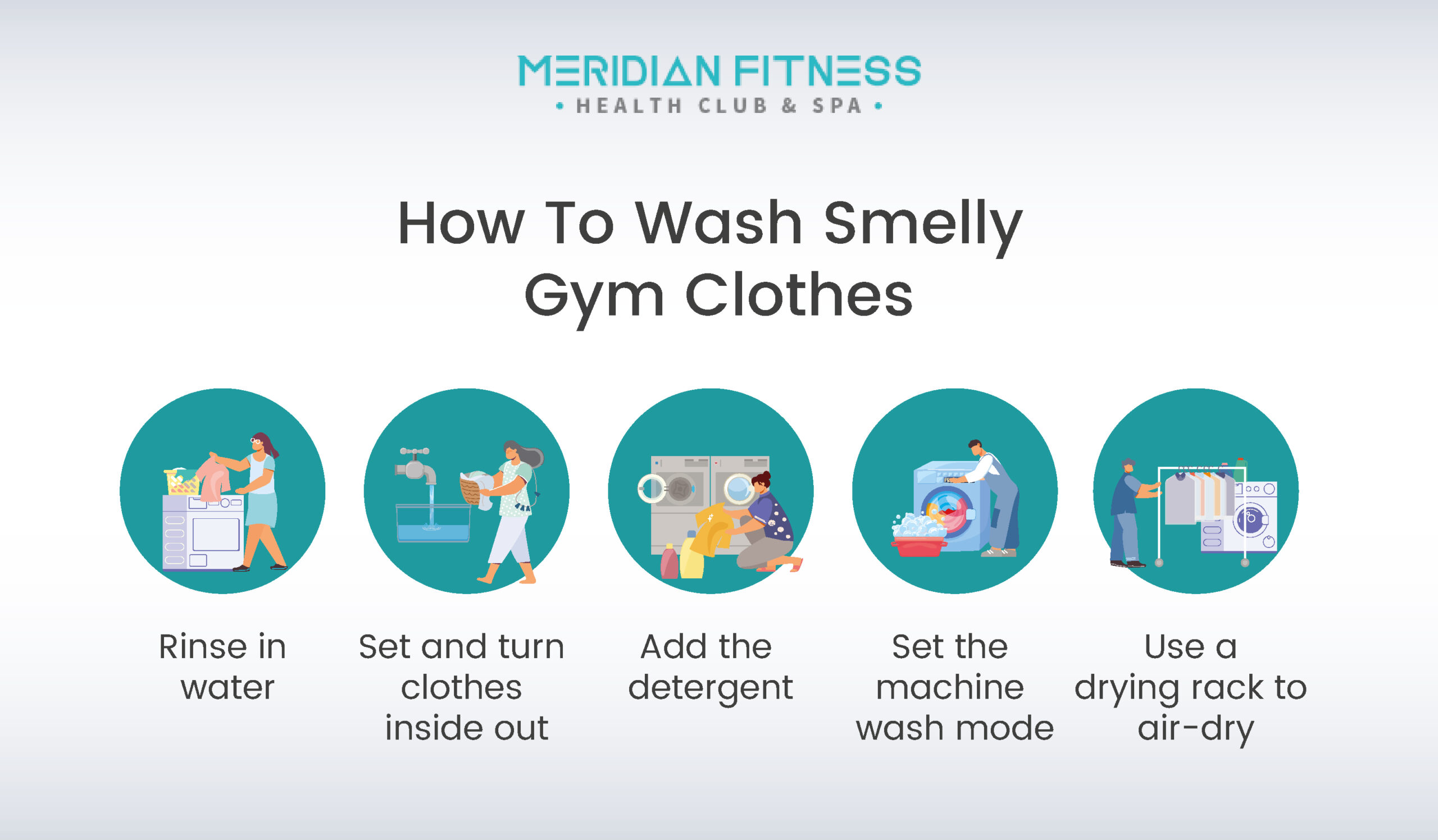
3. Rinse After Working Out
If you can’t wash your gym clothes immediately, at least rinse them in cold water. This removes some sweat and prevents bacteria from multiplying.
4. Avoid Leaving Them In A Gym Bag
Don’t let sweaty clothes sit for hours. Moisture and darkness encourage bacteria growth and strong odors.
5. Check Care Labels
Read the washing instructions on each garment. Some items may require gentle cycles or air drying.
Choosing The Right Detergent
Not all detergents are suitable for gym clothes. Here’s what matters most:
- Low residue formulas: Regular detergents often leave behind residue, which builds up in synthetic fibers and traps odors. Choose a detergent labeled for “high-efficiency” or “sportswear.”
- No fabric softeners: These coat fibers and reduce moisture-wicking ability.
- Odor-fighting enzymes: Some detergents contain special enzymes to break down sweat and body oils.
How much detergent?
Use less than you think. Extra detergent doesn’t clean better—it just leaves more residue. For most loads, half the usual amount is enough.
Washing Gym Clothes: Step-by-step
Follow these steps to get your activewear truly clean:
1. Load The Washer Correctly
Don’t overload the machine. Gym clothes need space to move so water and detergent can reach every fiber. Wash similar colors together to avoid dye transfer.
2. Choose Cold Water
Always use cold water. Hot water can damage elastic fibers, fade colors, and set in odors. Cold water is gentler and effective at removing sweat and bacteria.
3. Select A Gentle Cycle
Use the gentle or delicate cycle. These cycles use slower agitation and spin speeds, which are safer for stretchy and lightweight fabrics.
4. Skip Fabric Softeners And Bleach
Fabric softeners reduce the effectiveness of performance fabrics by coating them. Bleach can break down fibers and cause discoloration.
5. Add Detergent Properly
Pour the detergent into the dispenser, not directly onto the clothes. This helps it dissolve evenly.
6. Consider An Extra Rinse
If your clothes still smell after washing, add an extra rinse cycle. This helps remove any leftover detergent and sweat.
How To Remove Stubborn Odors
Sometimes, gym clothes still smell after washing. Here are proven solutions:
1. Soak In Vinegar
Mix one part white vinegar with four parts cold water. Soak clothes for 30 minutes before washing. Vinegar neutralizes bacteria and odors.
2. Use Baking Soda
Add half a cup of baking soda to the wash cycle. It helps absorb odors.
3. Try Sport-specific Detergents
Look for detergents made for athletic wear. These target sweat and bacteria more effectively.
4. Don’t Let Clothes Sit Wet
Wash as soon as possible after wearing. The longer sweat sits, the harder it is to remove smells.
5. Sun-dry When Possible
Sunlight is a natural deodorizer and kills bacteria. Hang clothes outside if you can.
Drying Gym Clothes The Right Way
Drying is just as important as washing. Here’s what you need to know:
Air Drying Vs. Machine Drying
| Method | Pros | Cons |
|---|---|---|
| Air Drying | Protects elastic, saves energy, prevents shrinkage | Takes longer, needs space |
| Machine Drying | Fast and convenient | Can damage fabric, reduce elasticity, set odors |
Best practice: Air drying is safest for gym clothes. Lay them flat or hang them up, but avoid direct sunlight for dark colors (it can fade them).
Tips For Faster Air Drying
- Spread clothes out. Don’t let them pile up.
- Use a fan or open window to improve airflow.
- Turn clothes inside out so the thickest part dries first.
If You Must Use A Dryer
- Choose the lowest heat setting (“air dry” or “tumble dry low”).
- Remove clothes while still slightly damp to prevent over-drying.
- Never dry with towels or heavy fabrics, as this increases friction and wear.

Credit: blog.beactivewear.com.au
Special Care For Different Types Of Gym Clothes
Not all activewear is the same. Here are some tips for common gym clothing items:
Sports Bras
- Fasten hooks before washing to prevent snagging.
- Use a mesh laundry bag for extra protection.
- Lay flat to dry to keep their shape.
Leggings And Tights
- Wash inside out to protect prints and color.
- Avoid high heat to preserve elasticity.
Compression Gear
- Always air dry; heat damages compression fibers.
- Avoid wringing out, as it can stretch the material.
Socks
- Turn inside out for deep cleaning.
- Use a gentle detergent to protect fibers.
Shoes
- Remove insoles and laces before washing.
- Clean by hand with mild soap and a brush.
- Air dry completely before wearing again.
How Often Should You Wash Gym Clothes?
Wash gym clothes after every workout. Sweat and bacteria build up quickly, even if you don’t see stains. Washing after each use keeps odors away and protects your skin. Some items, like outer layers or jackets, can be worn more than once if they didn’t get sweaty.
Common Mistakes To Avoid
Many people unknowingly damage their activewear. Here’s what to watch out for:
1. Overloading The Washer
Clothes can’t move freely, so they don’t get clean.
2. Using Too Much Detergent
More soap means more residue, not cleaner clothes.
3. Washing With Towels Or Jeans
Rough fabrics cause pilling and wear.
4. Ignoring Care Labels
Every brand may have different recommendations.
5. Leaving Clothes Wet For Too Long
Smells set in and bacteria multiply.
How To Store Clean Gym Clothes
Proper storage helps keep your gym clothes in good shape:
- Make sure clothes are fully dry before folding or hanging.
- Store in a cool, dry place to prevent mildew.
- Use breathable bags for travel, not plastic ones.
If you have limited space, consider rolling instead of folding to save room and reduce wrinkles.
How Washing Frequency Affects Activewear Lifespan
Washing too often or incorrectly can shorten the life of your gym clothes. However, not washing enough leads to bacteria buildup and stubborn odors. Here’s a comparison of how washing habits affect fabric lifespan:
| Washing Habit | Effect on Fabric | Odor Control |
|---|---|---|
| Washing after every use, proper care | Longer lifespan, strong fibers | Excellent |
| Washing after every use, harsh methods | Faster wear, color fading | Good (but fabric may stretch out) |
| Washing infrequently | Odors set in, bacteria grow | Poor |
The key is balance: wash after each use, but use gentle methods.
Understanding Fabric Technologies In Gym Clothes
Modern gym clothes often use special fabric technologies. Here’s what you might find:
- Moisture-wicking: Pulls sweat away from the skin.
- Anti-odor: Uses silver ions or other treatments to fight bacteria.
- Compression: Supports muscles and improves blood flow.
- Stretch fabrics: Added spandex or elastane for flexibility.
Each of these technologies needs gentle care. For example, anti-odor coatings can wear off with harsh detergents or high heat.
Tips For Extending The Life Of Gym Clothes
1. Rotate Several Sets
Having multiple outfits means less wear on each item.
2. Pre-treat Stains Quickly
Use a gentle stain remover as soon as possible.
3. Use Mesh Laundry Bags
These protect small or delicate items in the washer.
4. Skip The Iron
Most gym clothes don’t need ironing and high heat can damage them.
5. Refresh Between Washes
If you need to re-wear something quickly, hang it in fresh air or use a fabric spray.
How To Wash Gym Bags And Accessories
Don’t forget your gym bag, headbands, and other accessories. These can also trap sweat and bacteria.
- Gym bags: Wipe down with disinfectant wipes or wash by hand.
- Headbands and wristbands: Wash with gym clothes or by hand.
- Yoga mats: Clean with a mild soap solution and let dry completely.
Dealing With Persistent Odors: Advanced Techniques
If you’ve tried everything and your gym clothes still smell, consider these advanced methods:
- Enzyme soaks: Use an enzyme-based cleaner and soak clothes for several hours.
- Oxygen bleach: Safer than chlorine bleach and effective on odors (check label for safety).
- Professional ozone treatment: Some gyms or cleaners offer ozone treatments to kill bacteria and remove smells.
Remember, persistent odors are often a sign of detergent buildup or bacteria deep in the fabric. Deep cleaning once in a while helps keep your clothes fresh.
Eco-friendly Washing Tips
Caring for your gym clothes can also be eco-friendly:
- Wash full loads: Saves water and energy.
- Skip the dryer: Air drying reduces your energy use.
- Choose eco detergents: Look for biodegradable formulas.
- Cold water washes: Use less energy and are gentler on fabrics.
These habits help the environment and protect your activewear at the same time.
Special Considerations For Sensitive Skin
If you have sensitive skin, gym clothes that aren’t washed properly can cause irritation or breakouts. Here’s what helps:
- Use fragrance-free or hypoallergenic detergents.
- Double rinse your clothes to remove all detergent.
- Avoid fabric softeners and dryer sheets.
If you notice skin issues, try switching detergents or adding an extra rinse cycle.
Signs It’s Time To Replace Your Gym Clothes
Even with the best care, gym clothes don’t last forever. Watch for these signs:
- Loss of stretch: The fabric feels loose or baggy.
- Persistent odors: Smells remain even after washing.
- Visible wear: Holes, thinning, or heavy pilling.
- Loss of function: Moisture-wicking or compression no longer works.
If you notice any of these, it may be time to invest in new activewear.
Credit: www.meridian-fitness.co.uk
Gym Clothes Washing Myths
Let’s clear up a few common misunderstandings:
- “Hot water is best for cleaning.”
False. Hot water can damage synthetic fibers and set in odors.
- “More detergent means cleaner clothes.”
False. Too much detergent leads to buildup and more odors.
- “Fabric softener keeps clothes feeling good.”
False. It reduces moisture-wicking and can irritate skin.
- “You can wash all gym clothes together.”
False. Different fabrics and colors may need different care.
Knowing the truth behind these myths helps your gym clothes last longer and perform better.
Non-obvious Insights Most Beginners Miss
Most people know to use cold water and gentle detergent, but two expert tips make a big difference:
- Let gym clothes dry completely before putting them in the hamper.
If you throw damp clothes in with the rest of your laundry, mold and mildew can start, causing stubborn odors that washing can’t remove.
2. Periodically “reset” Your Activewear With A Deep Clean.
Every month or two, soak gym clothes in a solution of white vinegar and cold water before washing. This removes detergent buildup and refreshes the fabric, keeping it feeling and smelling new.
Credit: rockay.com
Frequently Asked Questions
How Do I Stop My Gym Clothes From Smelling Bad?
Odors are usually caused by bacteria and detergent buildup. Wash gym clothes after every use, use less detergent, and try soaking in white vinegar before washing. Air drying in sunlight also helps remove smells.
Can I Wash Gym Clothes With Regular Laundry?
It’s best to wash gym clothes separately. Mixing them with towels or jeans increases wear and can transfer lint. Use a gentle cycle and cold water for the best results.
Is It Safe To Use Bleach On Gym Clothes?
Avoid bleach on activewear. Bleach can damage synthetic fibers, cause fading, and reduce elasticity. If you need extra cleaning power, use oxygen bleach or a sport-specific detergent instead.
How Do I Wash Gym Clothes By Hand?
Fill a basin with cold water and a small amount of gentle detergent. Soak the clothes for 15–30 minutes, gently agitate by hand, then rinse thoroughly. Squeeze out excess water (don’t wring) and air dry.
What’s The Best Detergent For Washing Gym Clothes?
Choose a detergent made for activewear or labeled as “high-efficiency. ” These leave less residue and are better at breaking down sweat and oils. Avoid fabric softeners, and use only the recommended amount.
For more on fabric care and technical information, you can also visit this Consumer Reports guide.
Washing gym clothes the right way keeps them fresh, comfortable, and long-lasting. A little extra care pays off, so your gear performs at its best—just like you.
