

How to Fix Gym Leggings: Quick Tips for Seamless Repairs
How To Fix Gym Leggings
Gym leggings are a favorite for exercise, yoga, running, and daily wear. Their tight fit, flexible fabric, and stylish look make them essential in many wardrobes. But after months of workouts, stretching, and washes, even the best leggings can start to show problems.
You might see holes, loose seams, pilling, or stretching. Fixing gym leggings quickly can save money, keep your favorite pairs in rotation, and help you avoid buying new ones too often.
This article will guide you step-by-step to repair gym leggings, from simple fixes to more complex solutions. Whether you have a small tear or want to restore the shape, you’ll learn practical methods. You’ll also discover which fixes last, which tools to use, and how to avoid making mistakes that ruin the fabric.
With the right approach, you can keep your leggings looking and feeling new.
Common Problems With Gym Leggings
Gym leggings are made to stretch and move. This makes them comfortable, but also means they face a lot of stress. Here are some frequent issues you may find:
- Small holes: Often found around the knee, thigh, or seat area.
- Ripped seams: Usually at the crotch or along the sides.
- Pilling: Tiny fabric balls caused by friction, especially between the legs.
- Stretching out: Waistbands and knees lose shape after heavy use.
- Stains: Sweat, oils, and gym equipment can leave marks.
- Snags or runs: Threads pulled loose, leaving visible lines or gaps.
- Faded color: Washing and sunlight can dull the fabric.
Understanding these problems helps you pick the right repair method. Some issues are easy to fix at home, while others may need professional help.
Tools And Materials You Need
Before you start fixing your leggings, gather the right tools. Most repairs need simple supplies:
- Needle and thread: Choose thread that matches your leggings’ color.
- Fabric glue: Good for quick fixes, especially for small holes or loose labels.
- Iron-on patches: Useful for covering larger holes.
- Scissors: For trimming loose threads or cutting patches.
- Seam ripper: Helps remove damaged stitches without tearing the fabric.
- Pins: Hold fabric in place while you sew.
- Thimble: Protects your fingers during hand sewing.
- Tweezers: For picking out small pieces of thread or fabric.
- Lint remover: Helps with pilling and surface fuzz.
- Mild detergent: For pre-cleaning before repairs.
Having these supplies ready makes the process faster and prevents mistakes.
How To Fix Small Holes And Tears
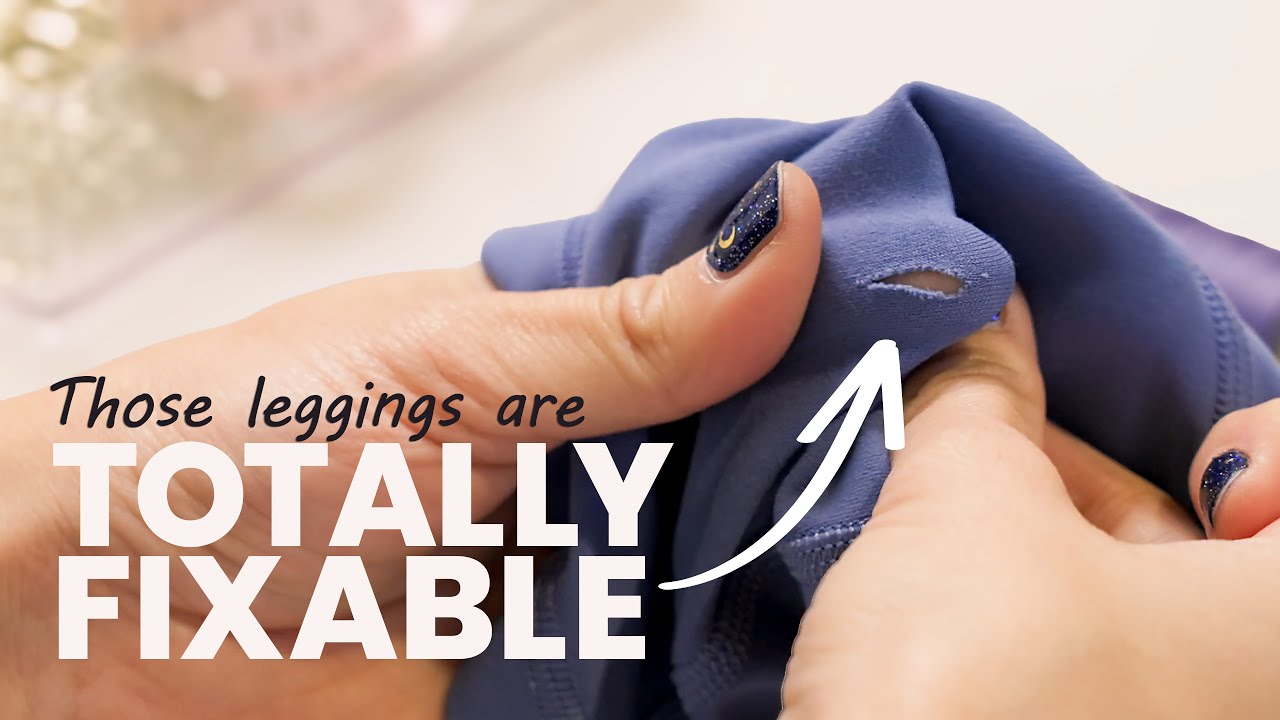
Small holes are the most common problem in gym leggings. They often appear after snagging on equipment or from stretching. Fixing them quickly stops the hole from getting bigger.
Hand Sewing Small Holes
If you have a tiny hole (smaller than a dime), hand sewing is the best solution.
- Clean the area: Wash and dry your leggings to remove sweat and dirt.
- Trim loose threads: Use scissors to cut frayed edges around the hole.
- Thread the needle: Pick a thread color close to your leggings.
- Stitch the hole: Use a simple “whip stitch” or “ladder stitch.” Start on one side of the hole, poke the needle through both edges, and pull tight. Repeat until the hole is closed.
- Tie off the thread: Knot the end securely so the stitches don’t unravel.
This method works for holes up to half an inch wide. For bigger holes, a patch may be needed.
Using Fabric Glue
Fabric glue is quick and easy for tiny holes or frayed seams.
- Lay leggings flat: Smooth out the area around the hole.
- Apply glue: Dab a small amount on the edges.
- Press together: Hold the fabric until the glue sets (about 30 seconds).
- Let dry: Wait at least 24 hours before wearing or washing.
Fabric glue is best for fixes near the hem or waistband, where sewing is tricky.
Iron-on Patches For Larger Tears
For holes bigger than a quarter, iron-on patches work well.
- Cut a patch: Make sure it’s about half an inch bigger than the hole.
- Place the patch: Put it over the hole on the inside of your leggings.
- Iron carefully: Follow patch instructions. Usually, you press with a hot iron for 20–30 seconds.
- Check edges: Make sure the patch sticks all around.
Iron-on patches are strong and flexible. They work best on thick leggings, not thin fabrics.
Repairing Ripped Seams
Seams are often the first part to break, especially in the crotch or along the inner thighs. Fixing a seam is easier than fixing a hole, because you follow the original stitch line.
Re-sewing A Seam
- Turn leggings inside out: Find the ripped seam.
- Pin the fabric: Align the edges and hold them together with pins.
- Thread the needle: Use strong thread.
- Sew along the seam: Use a “backstitch” for strength, following the old stitch holes.
- Knot the thread: Tie securely at the end.
A backstitch mimics the original sewing machine line, making your fix strong and flexible.
Using A Sewing Machine
If you have a sewing machine, use a “stretch stitch” or “zigzag stitch. ” This lets the seam move with your body.
- Set machine to stretch stitch: Adjust tension for stretchy fabrics.
- Sew slowly: Keep the fabric taut but not stretched.
- Finish edges: Trim excess thread.
A machine fix is stronger and less noticeable, but hand sewing is fine for small repairs.
Dealing With Pilling
Pilling makes leggings look old and worn. It's caused by friction between the legs or against gym equipment.
Removing Pills
- Use a lint remover: Gently rub over the surface to collect pills.
- Try a fabric shaver: For heavy pilling, electric fabric shavers work well.
- Avoid razor blades: They can cut the fabric and make holes.
Pilling is mostly a cosmetic issue. Removing pills makes leggings look newer, but doesn't fix structural problems.
Preventing Pilling
- Wash leggings inside out.
- Use mild detergent and avoid fabric softener.
- Air dry instead of using a dryer.
These steps keep the fabric smooth and reduce future pilling.
Restoring Shape And Stretch
Leggings lose their shape over time. Waistbands get loose, knees sag, and the fit changes.
Shrinking Waistbands
If your waistband has stretched, try these steps:
- Wash in warm water: Avoid hot water, which can damage synthetic fibers.
- Dry on high heat: The heat can shrink elastic fibers.
- Check fit: If still loose, consider adding new elastic.
Replacing Elastic
- Open the waistband seam: Use a seam ripper.
- Remove old elastic: Pull it out gently.
- Cut new elastic: Match the length to your waist size.
- Insert and sew: Slide the new elastic in, sew closed.
This fix restores the tight fit and prevents leggings from slipping during exercise.
Credit: www.youtube.com
Fixing Stains
Stains can ruin the look of gym leggings. Sweat, oils, and dirt are common culprits.
Removing Stains
- Pre-treat with mild detergent: Rub gently on the stain.
- Soak in cold water: Helps loosen tough marks.
- Wash as normal: Use gentle cycle and avoid hot water.
- Air dry: Heat can set stains permanently.
If stains remain, try a stain remover designed for synthetic fabrics. Avoid bleach, which can damage spandex and polyester.
Preventing Stains
- Wash leggings soon after workouts.
- Avoid sitting on dirty gym benches or mats.
- Use sweat-wicking liners if needed.
These steps protect the fabric and keep colors bright.
Fixing Snags And Runs
Snags happen when leggings catch on sharp objects. Runs (long lines where threads pull loose) can spread quickly.
Repairing Snags
- Use a needle or tweezers: Gently pull the loose thread back into the fabric.
- Do not cut: Cutting snags can create holes.
- Smooth fabric: Rub gently with your finger.
Fixing Runs
- Apply clear fabric glue: Dab on the run to stop it from spreading.
- Let dry: Wait several hours before wearing.
- Avoid stretching: Runs can grow if you pull on the fabric.
Snags and runs are easier to fix early. Waiting can lead to larger tears.
Faded Color Repair
Leggings fade after washing, sunlight, or heavy use. While you can't always restore original color, some tricks help.
Restoring Color
- Wash with color-safe detergent: Helps prevent fading.
- Use fabric dye: For severe fading, dye your leggings with products for synthetic fabrics.
- Follow instructions: Mix dye carefully, soak leggings evenly, rinse well.
Fabric dye can refresh the look, but results vary based on material. Always test a small area first.
Preventing Fading
- Avoid sunlight when drying.
- Wash in cold water.
- Use gentle cycles.
These habits keep colors bright longer.
When To Seek Professional Help
Some repairs are too complex or risky for home fixes. Consider professional help if:
- The tear is larger than your palm.
- The fabric is very thin or delicate.
- You want invisible repairs for expensive leggings.
- You lack sewing skills or tools.
Tailors and dry cleaners offer repair services. They use industrial machines and techniques for a clean finish.

Credit: happiestcamper.com
Comparing Repair Methods
To help you choose, here is a comparison of common repair methods:
| Repair Method | Best For | Strength | Visibility |
|---|---|---|---|
| Hand Sewing | Small holes, ripped seams | High (if stitched well) | Low to medium |
| Fabric Glue | Tiny holes, quick fixes | Medium | Medium |
| Iron-On Patch | Larger holes | High | Medium |
| Sewing Machine | Long seams, waistband | Very high | Low |
| Fabric Dye | Faded color | N/A | Low |
Choosing the right method depends on the problem and your skill level.
Mistakes To Avoid When Fixing Leggings
Fixing leggings is simple, but a few common mistakes can ruin your repairs:
- Using the wrong thread: Stretchy fabrics need strong, flexible thread.
- Sewing too tight: Stitches that are too close can cause fabric to tear when stretched.
- Ignoring fabric type: Synthetic fabrics like spandex and polyester need special care.
- Applying too much glue: Excess glue hardens and makes leggings uncomfortable.
- Washing too soon: Repairs need time to set before washing.
Avoiding these mistakes keeps your fixes strong and comfortable.
Practical Tips For Long-lasting Repairs
To make your repairs last longer:
- Always wash leggings before fixing. Dirt weakens repairs.
- Use stretch stitches for seams.
- Reinforce patches with extra stitching.
- Test repairs before wearing to the gym.
These steps add durability and prevent future problems.
Repair Vs Replace: When Is It Worth Fixing?
Not all leggings are worth fixing. Here’s how to decide:
- Cost of repair vs new leggings: If repairs cost more than a new pair, consider replacing.
- Sentimental value: If you love the leggings or they fit perfectly, repairs make sense.
- Severity of damage: Small holes and seams are easy to fix. Large tears or worn-out fabric may not be worth it.
- Brand quality: High-quality leggings usually last longer after repair.
This decision is personal. Some people prefer to fix favorite pairs, others buy new.
How Gym Leggings Wear Out: Data & Examples
Gym leggings face a lot of stress. Here’s some data about common wear patterns:
| Problem | Average Time to Appear | Common Location |
|---|---|---|
| Pilling | After 15–20 wears | Inner thighs |
| Small holes | After 30–40 wears | Knees, seat |
| Loose waistband | After 50–60 wears | Waistband |
| Ripped seams | After 25–35 wears | Crotch, side seams |
This shows why regular checks and early repairs are important.
Advanced Fixes For Difficult Legging Problems
Sometimes leggings have bigger or more complex issues. Here are solutions for advanced problems.
Reinforcing High-stress Areas
If your leggings always tear in the same spot (like the crotch or knees), try adding reinforcement:
- Sew a small patch on the inside: Choose thin, stretchy fabric.
- Use zigzag stitches: This allows the patch to stretch.
- Test for comfort: Make sure the patch doesn’t rub or chafe.
Fixing See-through Fabric
Some leggings become thin and see-through after wear.
- Add a lining: Sew a thin, stretchable fabric on the inside.
- Use double-layered patches: For knees or seat.
- Avoid thick materials: They can change the fit and look.
Repairing Decorative Elements
Some leggings have zippers, mesh panels, or pockets.
- Replace broken zippers: Use a sewing kit or visit a tailor.
- Fix mesh tears: Patch with similar mesh fabric, sew carefully.
- Reattach pockets: Sew with stretch thread for durability.
These fixes require more skill, but keep your leggings unique.
Choosing The Right Thread And Fabric
Picking the right materials for repair is crucial. Here’s a quick guide:
| Material | Best Thread Type | Repair Method |
|---|---|---|
| Spandex | Polyester thread | Stretch stitch, fabric glue |
| Polyester | Polyester thread | Machine or hand sewing |
| Nylon | Nylon thread | Iron-on patch, sewing |
| Cotton blend | Cotton or polyester thread | Hand sewing |
Always match thread and repair method to your leggings’ material for best results.
Sustainable Legging Repairs
Fixing leggings is not just good for your wallet—it’s also good for the environment. The fashion industry creates a lot of waste. Repairing instead of replacing reduces landfill and saves resources.
- Upcycle old leggings into headbands or shorts.
- Donate repaired leggings you no longer need.
- Choose eco-friendly repair supplies.
These steps support sustainability and help build a greener wardrobe.
Credit: girlfriend.com
How To Prevent Future Damage
Prevention is the best fix. Here’s how to protect your leggings:
- Rotate pairs: Wearing the same leggings every day speeds up wear.
- Follow care instructions: Always check the label.
- Avoid rough surfaces: Gym benches and equipment can snag fabric.
- Store leggings properly: Fold instead of hanging to avoid stretching.
- Wash gently: Use mesh laundry bags for protection.
These habits keep your leggings in top shape.
Frequently Asked Questions
How Do I Fix Holes In Gym Leggings Without Sewing?
You can use fabric glue or iron-on patches for holes. Fabric glue is quick for small holes; iron-on patches work for bigger ones. Make sure the area is clean and dry before applying.
Can I Fix Pilling On Leggings Permanently?
Pilling can be removed with a lint remover or fabric shaver, but it may come back after more use. To prevent pilling, wash leggings inside out and avoid high heat in the dryer.
Is It Safe To Use Fabric Dye On Gym Leggings?
Yes, as long as you use dye made for synthetic fabrics. Always follow the instructions and test a small area first to check for color change and fabric reaction.
How Do I Fix Stretched Out Waistbands?
Replace the elastic inside the waistband. Open the seam, remove the old elastic, insert new elastic, and sew it closed. This brings back the tight fit.
Should I Repair Or Replace My Leggings?
Repair small issues like holes, seams, and pilling. Replace leggings if the fabric is thin, see-through, or has large tears. Consider cost, sentimental value, and quality when deciding.
Taking care of your gym leggings means more than just quick fixes. With these steps, you can repair, restore, and protect your favorite pairs, saving money and reducing waste. For deeper sewing advice, visit Sewing.org. This approach keeps your workout wardrobe strong, stylish, and sustainable.
