

How to Business Casual Women: Stylish Outfit Ideas for Success
How To Business Casual Women
Business casual is one of the most confusing dress codes for women. It’s not strict like formal wear, but it’s also not relaxed like weekend clothes. Many workplaces use business casual, but the rules are not always clear. If you’re new to office dressing or want to update your wardrobe, this guide will help you dress confidently and comfortably.
You’ll learn what business casual means, what to wear, what to avoid, and how to build a versatile wardrobe. By the end, you’ll understand how to look professional without feeling overdressed or uncomfortable.
What Does Business Casual Mean For Women?
Business casual is a style that blends professional and comfortable clothing. It lets you look polished without needing a suit or formal dress. The goal is to show respect for your workplace and job, while still feeling relaxed.
Business casual often includes:
- Trousers or skirts instead of jeans
- Blouses or tops instead of T-shirts
- Closed-toe shoes instead of sneakers
- Simple accessories and neat hair
But there’s no single “business casual” outfit. Different companies have different rules. For example, some offices allow dark jeans, while others don’t. In some places, sleeveless tops are fine; in others, they are not.
If you’re not sure, look at what your coworkers wear. Ask your HR team or manager if you need guidance. When in doubt, choose a more professional look. It’s better to be slightly overdressed than too casual.
Core Elements Of Business Casual For Women
Let’s break down the main pieces in a business casual wardrobe. Each item plays a role in creating a polished, comfortable look.
Tops
Blouses, shirts, and tops are the foundation of business casual. Choose options that are neat, wrinkle-free, and not too revealing.
Popular choices:
- Button-down shirts
- Blouses with simple prints or solid colors
- Sweaters (fine knit, not chunky)
- Shell tops or sleeveless blouses (if allowed)
- Polo shirts in some creative workplaces
Avoid:
- T-shirts with logos or slogans
- Tank tops and spaghetti straps (unless layered)
- Deep necklines
Bottoms
Business casual bottoms should look tidy and professional. They are usually more formal than jeans, but more relaxed than suit pants.
Examples:
- Tailored pants
- Chinos
- Pencil skirts
- A-line skirts
- Dressy culottes
- Dark, clean jeans (if allowed)
Avoid:
- Shorts and mini skirts
- Ripped or faded jeans
- Leggings (unless worn under a long top or dress)
Dresses
Dresses are a simple way to create a business casual look. Choose styles that cover your shoulders and are not too short.
Best options:
- Sheath dresses
- Wrap dresses
- Shift dresses
- Knit dresses
Make sure the dress is at least knee-length, and avoid loud prints or overly tight styles.
Blazers And Jackets
Adding a blazer makes almost any outfit look more professional. It’s not always required, but a blazer can help you feel confident and ready for meetings.
Good choices:
- Structured blazers
- Cardigans
- Light jackets
Avoid:
- Oversized denim jackets
- Hoodies and casual zip-ups
Shoes
Business casual shoes should be comfortable but polished.
Common options:
- Loafers
- Flats
- Pumps
- Block heels
- Dress boots
Avoid:
- Sneakers (unless office allows)
- Flip-flops
- Platform shoes
Accessories
Keep accessories simple and neat. They add personality but shouldn’t distract.
Examples:
- Small earrings
- Watches
- Delicate necklaces
- Scarves
Avoid:
- Large statement jewelry
- Excessive bracelets
- Bright, flashy colors
Building A Business Casual Wardrobe
Building a wardrobe for business casual doesn’t mean buying expensive clothes. Instead, focus on quality, fit, and versatility. Start with a few key pieces and mix and match.
- Choose basics in neutral colors. Black, navy, gray, white, beige, and pastels work well.
- Invest in good bottoms. Two or three pairs of pants and one or two skirts are enough for most women.
- Select versatile tops. Shirts, blouses, and sweaters can be worn with any bottom.
- Add one blazer. A classic blazer can upgrade any outfit.
- Pick comfortable shoes. One pair of flats, one pair of heels, and one pair of boots cover most situations.
- Accessorize wisely. Small pieces can make your outfit pop without looking too casual.
If you’re just starting, buy a few pieces and build slowly. Choose items that fit well and can be worn in different ways.
Business Casual Vs. Other Dress Codes
Understanding how business casual compares to other dress codes can help you avoid mistakes. Here’s a quick comparison:
| Dress Code | Allowed Items | Not Allowed |
|---|---|---|
| Formal/Business Professional | Suit, dress shirt, dress shoes | Jeans, sneakers, casual tops |
| Business Casual | Trousers, skirts, blouses, sweaters, flats, blazers | Shorts, ripped jeans, T-shirts, sneakers |
| Casual | Jeans, T-shirts, sneakers, casual dresses | Suit, formal dress, high heels (sometimes) |
Business casual is in the middle. It’s more relaxed than formal, but more polished than casual.
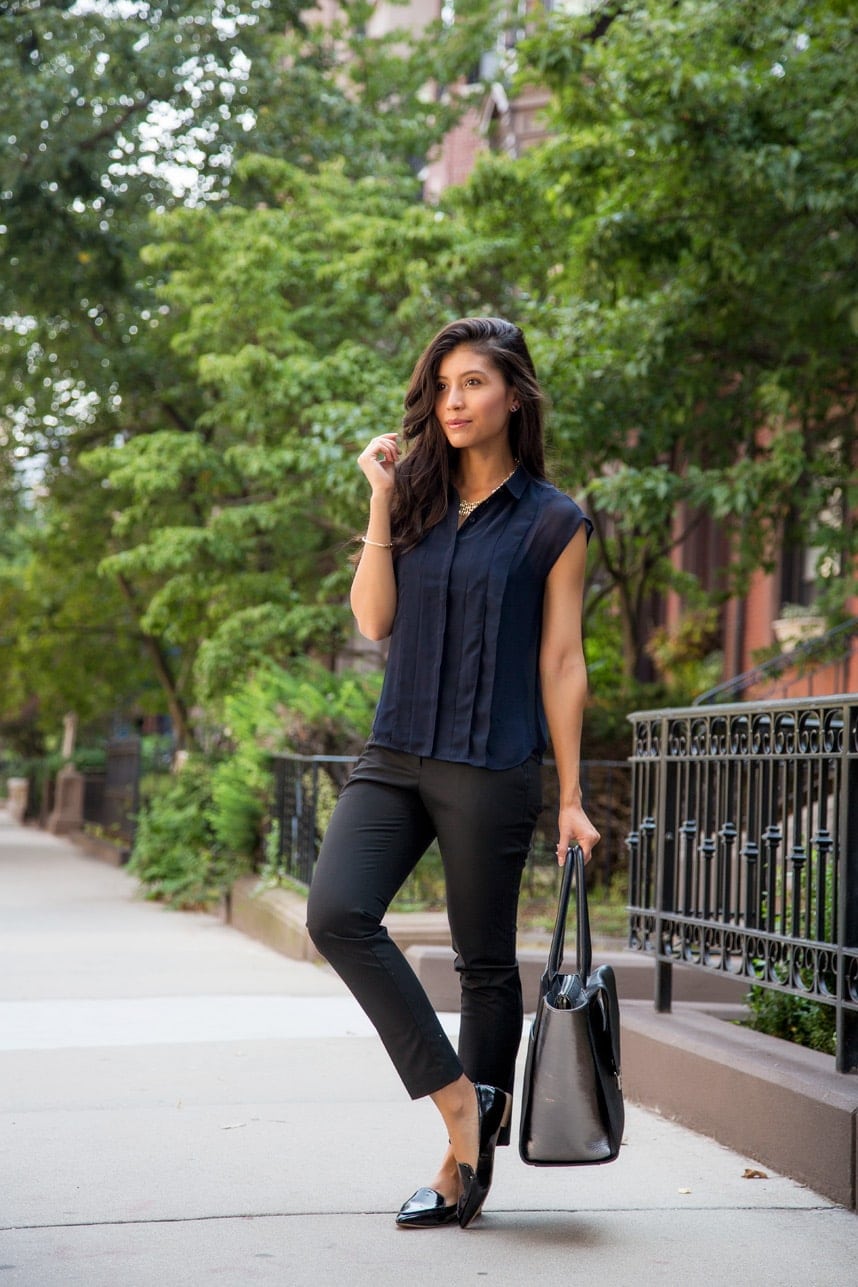
Credit: stylishlyme.com
How To Choose Business Casual Outfits For Different Workplaces
Every workplace is different. Some offices are strict, others are relaxed. Here’s how to adjust your business casual style:
Corporate Offices
In corporate settings, business casual is closer to formal. Wear tailored pants, blouses, and a blazer. Choose closed-toe shoes and avoid jeans.
Creative Workplaces
Creative companies (like tech or media) may allow more color and relaxed styles. You can wear patterned tops, dark jeans, and flats.
Startups
Startups often have a very relaxed dress code. You might be able to wear smart jeans, simple sweaters, and comfortable shoes. Still, avoid anything too informal.
Remote Work
Even if you work from home, business casual is helpful for video calls. Wear a neat top and simple accessories. If you need to stand up or move, make sure your bottoms are also appropriate.
Common Mistakes Women Make With Business Casual
Many women struggle with business casual because the rules are unclear. Here are mistakes to avoid:
- Too casual: Wearing sneakers, T-shirts, or ripped jeans.
- Too formal: Wearing a suit or evening dress when it’s not needed.
- Poor fit: Clothing that is too tight, too loose, or wrinkled.
- Loud prints: Bright colors or big patterns can distract.
- Inappropriate length: Skirts or dresses that are too short.
- Over-accessorizing: Too much jewelry or big statement pieces.
- Ignoring company culture: Not checking what’s normal in your workplace.
- Neglecting grooming: Messy hair or chipped nails can ruin your look.
A non-obvious insight: Many beginners forget that business casual also includes your grooming and overall appearance. Clean hair, neat nails, and light makeup help complete your look.
How To Mix And Match Business Casual Pieces
Mixing and matching lets you create many outfits from a few items. This saves money and time, and helps you look fresh every day.
- Stick to a color palette. Choose colors that work well together.
- Layer smartly. Add a blazer or cardigan to change a look.
- Swap shoes. Flats for comfort, heels for meetings.
- Accessorize for variety. Change necklaces or scarves.
- Use patterns carefully. Pair one patterned item with solids.
Example: A navy blazer, white blouse, and black trousers work together. Swap the blouse for a pastel sweater, or the trousers for a skirt.
A second non-obvious tip: Invest in wrinkle-resistant fabrics. This keeps your outfits looking fresh, even after a long day.
Dressing Business Casual For Different Seasons
Business casual doesn’t mean you have to wear the same clothes all year. Adjust your wardrobe for the weather:
Spring
- Light blouses, pastel colors
- Lightweight trousers and skirts
- Flats or low heels
Summer
- Sleeveless tops (if allowed)
- Knee-length dresses or skirts
- Open-toe shoes (if permitted)
- Linen fabrics
Fall
- Long-sleeve shirts and sweaters
- Darker colors
- Ankle boots
- Layering with cardigans
Winter
- Warm sweaters, turtlenecks
- Wool trousers
- Knee-high boots
- Scarves
Always check your office policy before wearing open-toe shoes or sleeveless tops.
Business Casual For Special Occasions
Sometimes, you need to dress business casual for special events like presentations, job interviews, or office parties.
- Presentations: Add a blazer, choose classic colors, keep accessories minimal.
- Interviews: Dress slightly more formal than the company standard.
- Office parties: Choose a fun accessory or brighter color, but keep the base professional.
Practical Shopping Tips For Business Casual
Shopping for business casual clothes can be tricky. Here are tips to make it easier:
- Try clothes on before buying. Fit is important for a neat look.
- Check fabric quality. Avoid see-through or easily wrinkled materials.
- Read reviews online. See how clothes fit other women.
- Buy in layers. Cardigans and blazers add versatility.
- Look for sales. Quality basics often go on discount.
A smart move is to buy one or two “statement” pieces (like a unique blazer or patterned skirt) to mix with basics.
Business Casual For Plus Size Women
Business casual is for everyone, but plus-size women sometimes face extra challenges. Focus on fit and comfort. Tailored clothes are better than loose or baggy items. Choose vertical stripes, dark colors, and structured fabrics for a slimming effect.
Don’t hide your shape—embrace it with clothes that fit well. Brands now offer more business casual options for all sizes.
Business Casual For Petite Women
Petite women should avoid oversized clothes. Choose high-waisted skirts and pants to make your legs look longer. Wear fitted tops and avoid too many layers. Simple accessories and small bags also help balance your look.

Credit: www.wikihow.com
Color And Print Choices In Business Casual
Choosing the right colors and prints can boost your confidence.
- Neutral colors: Black, navy, gray, white, beige
- Pastels: Soft blues, pinks, greens
- Classic prints: Stripes, small checks, polka dots
Avoid neon colors, large prints, or anything too flashy. If you want to add color, use accessories like scarves or jewelry.
How To Maintain Your Business Casual Clothes
Keeping your clothes fresh and neat is important. Here’s how:
- Wash with care. Follow label instructions.
- Iron or steam regularly. Wrinkle-free clothes look professional.
- Store properly. Hang blouses and trousers, fold sweaters.
- Repair quickly. Fix buttons, hems, and loose threads.
A helpful tip: Use a lint roller to keep your clothes looking clean, especially if you wear dark colors.

Credit: www.youtube.com
Sustainable And Ethical Business Casual Options
Many women care about the environment and ethics. Today, more brands offer sustainable business casual clothes.
Look for:
- Organic cotton, bamboo, or recycled fabrics
- Ethical manufacturing practices
- Brands with transparent policies
Choosing quality over quantity reduces waste and saves money in the long run. If you want more information about sustainable brands, check out Good On You.
Business Casual Outfit Examples
Here are some practical outfit ideas for business casual:
- Classic look: Black trousers, white blouse, navy blazer, black pumps
- Spring style: Beige chinos, pastel sweater, loafers
- Creative touch: Patterned skirt, solid top, flats, small necklace
- Winter warmth: Wool trousers, turtleneck sweater, ankle boots
- Interview outfit: Pencil skirt, button-down shirt, structured blazer, low heels
Each outfit can be changed with accessories or different shoes.
Comparison Of Business Casual Brands
Some brands are known for their business casual options. Here’s how a few compare:
| Brand | Style | Price Range | Size Range |
|---|---|---|---|
| Banana Republic | Classic, tailored | $$ | Regular, petite, plus |
| Ann Taylor | Elegant, feminine | $$ | Regular, petite |
| Uniqlo | Minimalist, modern | $ | Regular, some plus |
| Nordstrom | Wide variety | $$$ | All sizes |
| J.Crew | Classic, versatile | $$ | Regular, petite, tall |
Choose brands based on your budget, style, and size needs.
Business Casual Outfit Planning For A Week
Planning your outfits saves time and stress. Here’s a sample week:
| Day | Outfit |
|---|---|
| Monday | Black trousers, white blouse, navy blazer, black flats |
| Tuesday | Beige skirt, pastel sweater, loafers |
| Wednesday | Dark jeans (if allowed), striped top, cardigan, pumps |
| Thursday | Patterned dress, belt, ankle boots |
| Friday | Chinos, shell top, light jacket, flats |
Mix and match pieces for variety.
Business Casual For Travel
If you travel for work, business casual is important. Choose wrinkle-resistant fabrics and comfortable shoes. Pack layers that can be worn in different climates. A scarf or shawl adds warmth and style.
Tip: Always pack one extra blouse in case of spills or unexpected meetings.
Grooming And Appearance
Business casual includes more than clothes. Grooming matters. Keep hair neat, nails clean, and makeup simple. Perfume should be light and not overpowering.
A subtle insight: Many beginners forget that shoes must be clean and polished. Scuffed shoes can ruin an otherwise perfect outfit.
Handling Dress Code Changes
Sometimes, dress codes change. If your office switches to formal or casual, adjust your wardrobe. Keep a few flexible pieces (like blazers or sweaters) to bridge the gap.
Ask HR or managers for guidance if you’re unsure.
Business Casual And Cultural Differences
Different countries and cultures have different ideas about business casual. In some places, bright colors are fine. In others, neutral tones are better. Always learn about local customs before traveling or starting a new job abroad.
Business Casual For Women: Key Takeaways
- Business casual is a balance between professional and comfortable.
- Choose neat, well-fitted clothes in neutral colors.
- Mix and match to create variety.
- Avoid clothes that are too tight, short, or revealing.
- Pay attention to grooming and accessories.
- Adjust your style to your workplace and season.
- Shop smart and maintain your wardrobe.
Business casual is not about expensive clothes. It’s about looking confident, polished, and ready for work. With these tips, you’ll never feel confused about what to wear again.
Frequently Asked Questions
What Is The Main Difference Between Business Casual And Formal Dress?
Business casual is more relaxed than formal dress. Formal means suits, ties, and dress shoes. Business casual lets you skip the suit and wear comfortable, neat clothing like blouses, skirts, and flats.
Can I Wear Jeans In A Business Casual Office?
You can wear dark, clean jeans in some business casual offices, but not all. Always check your company rules. Avoid ripped, faded, or casual jeans.
Are Open-toe Shoes Allowed In Business Casual?
Some offices allow open-toe shoes like sandals or peep-toe heels. Others do not. If you’re unsure, choose closed-toe shoes or ask HR for guidance.
How Can I Make My Business Casual Look More Interesting?
Add accessories, use a mix of colors, or try patterned skirts and blouses. Layering with blazers or cardigans also helps. Just keep the overall look neat and professional.
What Should I Avoid In Business Casual?
Avoid T-shirts with logos, ripped jeans, shorts, mini skirts, flip-flops, and loud jewelry. Stick to simple, polished, comfortable clothes that fit well.
Business casual for women can be simple and stylish. With the right choices, you’ll feel ready for anything your workday brings.
