

How Should Gym Shorts Fit for Maximum Comfort and Performance
How Should Gym Shorts Fit
Finding the right fit for gym shorts can make a huge difference in your workouts. The perfect pair supports movement, prevents distraction, and keeps you comfortable, whether you’re lifting weights, running, or stretching. But how should gym shorts fit? Many people buy shorts based on style or size alone and end up with gear that rides up, restricts movement, or feels awkward during activity.
This guide will help you understand what makes a proper fit, what to avoid, and how to choose the best gym shorts for your body and your sport.
Why Fit Matters For Gym Shorts
Gym shorts are not just about looks. A good fit helps you move naturally and avoids problems like chafing, restricted motion, or embarrassing slips. Too-tight shorts can cut into your waist or thighs and limit your stride. Shorts that are too loose may shift, bunch up, or even fall during movement.
A proper fit also helps with sweat management and temperature control. If gym shorts hug the body in the wrong places or leave gaps in others, they can trap heat or moisture, making workouts uncomfortable and even leading to skin issues.
The right fit supports confidence and lets you focus on your training, not on fixing your clothes.
Key Factors That Affect Gym Shorts Fit
Several important factors influence how gym shorts should fit:
- Waistband
- Length
- Leg Opening
- Rise
- Fabric and Stretch
- Lining
- Activity Type
Each of these can change how a pair of shorts feels and performs. Let’s look at each one in detail.
Waistband: The Foundation Of Fit
The waistband is where everything starts. A good waistband should feel secure but not tight. It should stay in place during movement, without digging into your skin or rolling down.
There are three main types of waistbands:
- Elastic Waistbands – Most gym shorts use these. They stretch to fit your waist and are comfortable for most people.
- Drawstring Waistbands – These allow for adjustment. You can tie them tighter or looser based on your comfort.
- Hybrid Waistbands – Combine elastic and drawstring for a secure, customized fit.
A proper waistband should sit just above your hip bones—high enough that the shorts do not slide down, but low enough to avoid compressing your stomach. A common mistake is choosing shorts with an overly tight waistband, which can restrict breathing or cause discomfort during bending or twisting exercises.
Non-obvious insight: Try to test the waistband by doing a few squats or jumps. If it stays in place and doesn’t feel too tight, it’s likely a good fit for you.
Length: Finding The Right Inseam
The length of gym shorts is measured by the inseam—the distance from the crotch to the end of the shorts. The right inseam depends on your activity, height, and personal style.
Common inseam lengths for gym shorts:
- 5 inches or less: Short, above mid-thigh. Great for running, cardio, or those who prefer maximum mobility.
- 7 inches: Mid-thigh. Offers a balance between coverage and freedom of movement. Suitable for most gym activities.
- 9 inches or more: Just above the knee. More coverage, preferred by those who want modesty or do heavy lifting.
Shorts that are too long can restrict your knee movement, especially during exercises like squats or lunges. Shorts that are too short may ride up or expose more than you want.
Here’s a quick comparison:
| Inseam Length | Best For | Potential Issue |
|---|---|---|
| 5 inch or less | Running, HIIT | May ride up, less coverage |
| 7 inch | General gym, CrossFit | May still be short for taller users |
| 9 inch or more | Weightlifting, modesty | Can restrict motion |
Non-obvious insight: Your leg length matters as much as your height. Someone with long thighs may find a 7-inch inseam looks shorter than on someone with shorter legs.
Leg Opening: Too Tight Or Too Loose?
The leg opening affects both comfort and appearance. A good gym short should have a leg opening that allows your thighs to move freely without the fabric bunching or riding up.
- Too tight: Shorts may grip your thighs, restrict blood flow, or roll up when you sit or squat. This is a common problem for people with muscular legs.
- Too loose: May cause the shorts to flare out, exposing underwear or leading to chafing as the fabric moves against your skin.
For most people, the leg opening should be loose enough to slide a couple of fingers between your thigh and the fabric, but not so loose that the shorts “bell out” or look baggy.
Rise: Where Shorts Should Sit
The rise is the distance from the crotch seam to the top of the waistband. Low-rise shorts sit below the hips, while high-rise shorts reach above the belly button.
Most gym shorts are mid-rise. This style sits just above the hip bones and offers a secure feel without restricting the core or digging into the stomach during movement.
- Low-rise: May look fashionable but often slide down during intense activity.
- High-rise: Offers extra support for the core, popular in women’s athletic shorts. Can be less common in men’s designs.
Choose a rise that matches your comfort level and body shape. If you have a longer torso, a higher rise may prevent shorts from slipping.
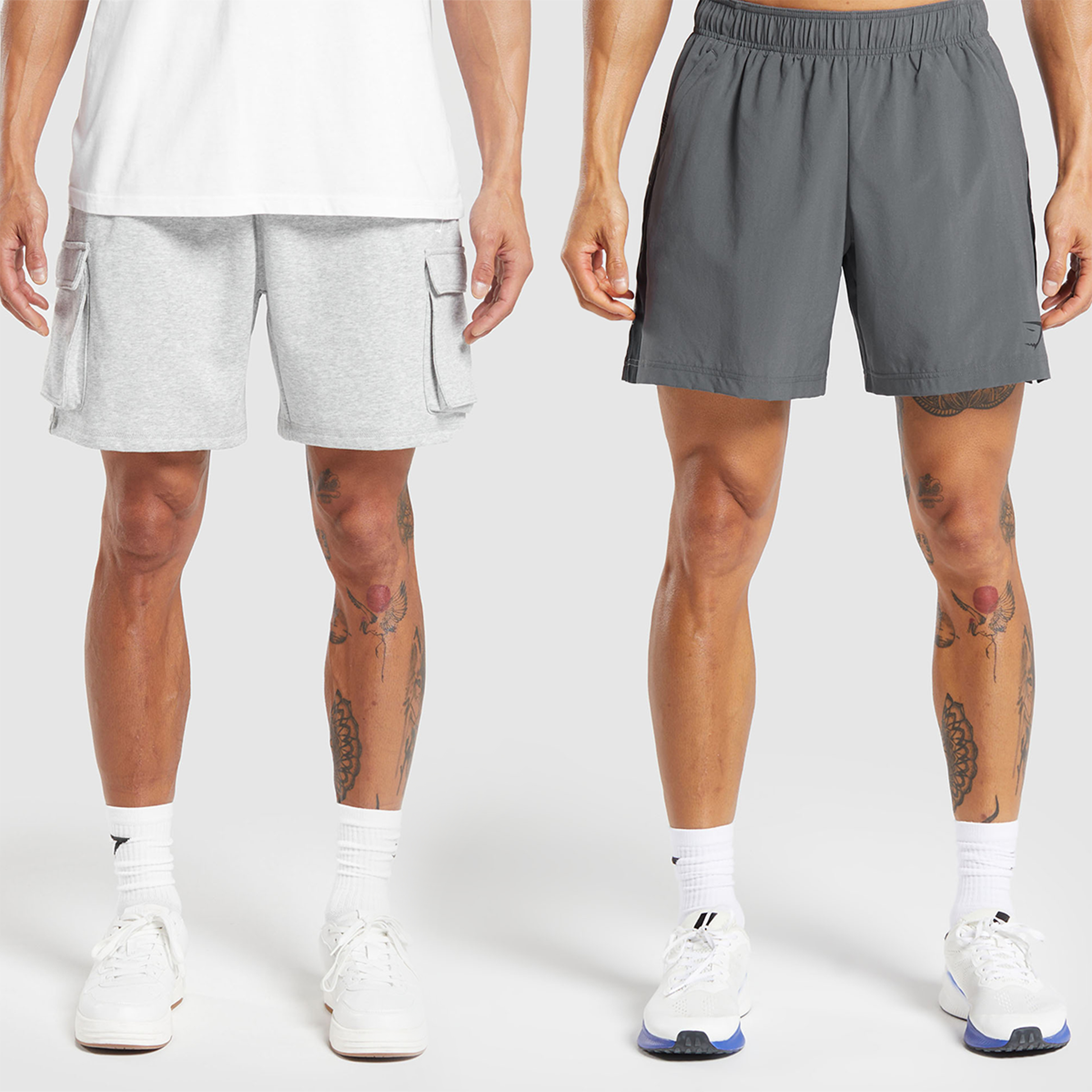
Credit: row.gymshark.com
Fabric And Stretch: What Materials Fit Best
Material makes a huge difference in how gym shorts fit and feel. Most gym shorts are made from polyester, nylon, spandex, or blends. Each fabric behaves differently:
- Polyester: Durable, lightweight, dries fast. Often used for running shorts.
- Nylon: Very strong and flexible. Good for high-movement sports.
- Spandex (or elastane): Extremely stretchy. Added to shorts for extra flexibility.
A good pair of gym shorts should offer at least some stretch, especially if you do exercises that require a wide range of motion, like squats, lunges, or yoga. If the shorts are 100% cotton, they may lose shape after washing and may not allow enough movement.
Practical tip: Try to look for “4-way stretch” fabric—this stretches in every direction, making the shorts adapt to your movements.
Lining: Built-in Support Or Not?
Some gym shorts come with a built-in liner. This thin layer acts like underwear, providing support and preventing chafing. Others have no liner, so you need to wear your own underwear.
- Lined shorts: Good for running, cardio, or sports with lots of movement. They reduce friction and wick moisture.
- Unlined shorts: Better for those who want more freedom in choosing their base layer, or who prefer compression shorts underneath.
If you choose lined gym shorts, the liner should fit snugly but not cut into your skin. For unlined shorts, make sure there’s enough room for your chosen underwear without feeling tight.
Activity Type: Matching Fit To Your Workout
The perfect gym shorts for one activity may not work for another. Consider what you’ll use them for:
- Weightlifting: Choose shorts with a flexible waistband, medium inseam (7 to 9 inches), and enough room in the thighs for squatting. Avoid shorts that are too baggy or too short.
- Running: Lightweight, shorter inseam (5 to 7 inches), and preferably a built-in liner. The fabric should wick sweat quickly.
- Yoga or Stretching: Shorts with 4-way stretch, medium rise, and a comfortable waistband. Avoid zippers or bulky pockets.
- Team Sports: Look for durability, enough length to cover thighs during movement, and a secure waistband. Breathable material is a plus.
- HIIT/Functional Training: Shorts that balance coverage with mobility. Medium inseam, stretchy fabric, and secure waistband.
Matching the shorts’ features to your activity prevents problems during your workout.
How To Measure Yourself For Gym Shorts
To find the best fit, you need to know your measurements. Here’s how to measure key areas:
- Waist: Use a soft tape measure. Wrap around your natural waist, just above your hip bones. Don’t suck in your stomach; stand naturally.
- Hips: Measure around the widest part of your hips and buttocks.
- Thigh: Wrap the tape around the largest part of your thigh.
- Inseam: Measure from the top of your inner thigh (crotch) to the point you want the shorts to end.
Write down these numbers. Compare them with sizing charts from brands, as sizing can vary widely.
Here’s a sample measurement table for reference:
| Size | Waist (inches) | Hip (inches) | Inseam (inches) |
|---|---|---|---|
| Small | 28-30 | 34-36 | 5-7 |
| Medium | 31-33 | 37-39 | 7-9 |
| Large | 34-36 | 40-42 | 9-11 |
| X-Large | 37-39 | 43-45 | 11-12 |
Remember, these are general guidelines. Always check the brand’s own chart before buying.

Credit: www.youtube.com
Trying On Gym Shorts: What To Look For
When you try on gym shorts, do more than just stand in front of a mirror. Move around. Do squats, high knees, or lunges. This helps you see how the shorts behave during real movement.
Check for:
- Waistband comfort: Should not pinch or roll.
- Leg mobility: Can you lift your knee high without restriction?
- No chafing: The inner thigh should not rub.
- Coverage: Make sure the shorts don’t ride up or expose too much.
- Pockets: If you need pockets, check they do not bounce or shift during movement.
Expert tip: Try the shorts with the underwear or compression shorts you plan to wear for workouts. This gives you the most accurate sense of fit.
Common Fit Problems And How To Fix Them
Even with careful shopping, you might face some fit problems. Here’s how to solve them:
- Shorts ride up: This usually means the leg opening is too tight or the inseam is too short. Try a longer inseam or a looser fit.
- Waistband slips down: The shorts are too loose or the waistband has lost elasticity. Try sizing down or choosing a style with a drawstring.
- Fabric bunches in the crotch: Shorts are too loose in the rise or too long in the inseam. Try a different cut or a shorter inseam.
- Chafing or irritation: Choose lined shorts, seamless designs, or apply anti-chafe products. Synthetic fabrics wick sweat better than cotton.
- Too tight in thighs: Look for athletic or relaxed-fit shorts, or ones with more spandex for stretch.
Gym Shorts For Different Body Types
Everyone’s body is different, so what fits one person well may not work for another. Here’s how to pick gym shorts based on body shape:
Athletic/muscular Build
If you have large thighs or glutes, regular shorts may feel tight. Choose shorts with extra room in the leg, a generous inseam, and stretch fabric. Avoid slim-fit shorts.
Slim Build
Slim people may find regular shorts look baggy. Try tailored cuts or shorts with a drawstring to adjust the waist. Shorter inseams can give the appearance of longer legs.
Plus Size
Look for brands that offer plus-size gym shorts with a wide, supportive waistband. Avoid shorts with narrow elastic bands that may dig in. Choose medium to long inseams for coverage.
Tall Or Short Height
Tall people may need longer inseams to avoid shorts looking too short. Shorter individuals can try 5-inch inseams to avoid baggy appearance.
Insider tip: Some brands offer “tall” or “short” versions of their shorts to help you find the perfect fit.
Women’s Vs Men’s Gym Shorts: Fit Differences
Men’s and women’s gym shorts are designed differently to suit body shapes.
- Women’s shorts: Often have a higher rise, more curve at the hips, and a built-in liner. Shorter inseams are common.
- Men’s shorts: Usually have a straighter cut, longer inseam, and a roomier front.
Women may also find unisex shorts that work well, especially for activities like running or CrossFit. Always check the sizing—women’s shorts tend to run smaller for the same stated size.

Credit: www.gymshark.com
Special Features That Affect Fit
Some gym shorts come with extra features that change how they fit:
- Zippered pockets: Add security but may create bulk if placed poorly.
- Side splits: Allow greater range of motion, especially for runners.
- Compression underlayer: Some shorts have a built-in compression layer for support and to prevent chafing.
- Reflective elements: Useful for night workouts, but may add stiffness to the fabric.
Try these features for your workout style and check they don’t interfere with comfort or movement.
Caring For Your Gym Shorts: Maintaining Fit
Good care helps your shorts keep their shape and fit. Here’s how to make them last:
- Wash in cold water: Hot water can shrink synthetic fabrics.
- Avoid fabric softeners: These can reduce moisture-wicking ability.
- Air dry when possible: High heat from dryers can damage elastic and stretch.
- Check the care label: Always follow specific instructions from the brand.
If you notice the waistband losing stretch or the fabric changing shape, it’s time to replace your shorts.
How Gym Shorts Should Fit: Quick Checklist
Use this checklist when shopping or trying on gym shorts:
- Waistband is snug, not tight
- Shorts stay up without adjusting
- No pinching or rolling at the waist
- Freedom of movement in thighs and hips
- Inseam is appropriate for your activity
- No chafing at inner thighs
- If lined, the liner fits comfortably
- No excessive bunching or “ballooning”
- Pockets (if any) do not shift or bounce
If the shorts pass these checks, you’ve likely found a good fit.
Brands And Sizing: Don’t Trust Just The Tag
Sizing varies between brands and even between different shorts from the same brand. For example, a “Medium” in one brand may fit like a “Large” elsewhere. Always check the size chart and, if possible, read user reviews for tips on fit.
Some popular athletic brands, like Nike, Adidas, and Lululemon, each have their own sizing quirks. For detailed sizing and fit advice, it’s helpful to consult resources like the Wikipedia entry on shorts.
The Role Of Underwear With Gym Shorts
What you wear under your gym shorts can also affect fit and comfort.
- Compression shorts: Provide support, reduce chafing, and improve muscle recovery. Best for high-intensity workouts.
- Briefs or boxers: Choose moisture-wicking fabrics to prevent sweat buildup.
- No underwear: Many runners wear lined shorts with no underwear. Make sure the liner offers enough coverage and support.
Test your gym shorts with different underwear options to see what works best for your body and activity.
Adjusting Fit: Simple Fixes Without Buying New Shorts
If your gym shorts are almost perfect but not quite, you can try:
- Adding a drawstring if the waistband is loose.
- Hemming the shorts for a shorter inseam.
- Using a fabric-safe elastic band to tighten the waistband.
- Wearing compression shorts underneath for extra support if the liner is too loose.
These small adjustments can help you get more life out of your favorite shorts.
When To Replace Your Gym Shorts
Even with good care, gym shorts will wear out over time. Signs you need a new pair:
- Waistband is stretched out and won’t stay up.
- Fabric is thin, torn, or has lost stretch.
- Liner is loose or no longer supports.
- Permanent stains or odor, even after washing.
- Shorts no longer fit your body as it changes.
Don’t keep uncomfortable shorts—invest in new ones that fit well and boost your workout.
Frequently Asked Questions
How Tight Should Gym Shorts Be?
Gym shorts should be snug around the waist but loose enough in the legs and hips for full movement. They should not pinch, cut off circulation, or ride up during squats or stretching.
Should I Size Up Or Down If Between Sizes?
If you’re between sizes, consider the activity and fabric. For stretchy shorts, size down for a secure fit. For non-stretch fabrics, size up for comfort and mobility. Always check the brand’s sizing guide.
Are Compression Shorts Better Than Regular Gym Shorts?
Compression shorts are designed to support muscles and reduce chafing. They are good for running, cycling, and HIIT. Regular gym shorts offer more airflow and are better for general gym workouts.
Do I Need To Wear Underwear With Lined Gym Shorts?
No, the built-in liner in gym shorts replaces underwear for most people. It helps with moisture control and prevents chafing. However, personal comfort matters most—try both ways to see what works for you.
How Can I Prevent Gym Shorts From Riding Up?
To prevent riding up, choose shorts with a wider leg opening, a longer inseam, or 4-way stretch fabric. Avoid shorts that are too tight in the thighs. Some people use anti-chafe products for added comfort.
Finding the right gym shorts is about more than just style or price. The perfect fit supports your movement, protects your skin, and helps you focus on your workout, not your clothes. With the tips above, you can confidently choose gym shorts that work as hard as you do.
