

Business Casual Women vs Business Professional: Key Differences
Business Casual Women Vs Business Professional
What you wear at work often says a lot about you—even before you speak. For women, deciding between business casual and business professional attire can be tricky. Both styles have rules, and both can impact your confidence, respect, and how others see you in the office. But the differences go deeper than just “dress pants vs. suit.” Understanding what each style really means, when to use it, and how to make smart choices can help you build a wardrobe that fits your career goals and daily needs.
This article explores the real differences, practical examples, and hidden details most beginners miss. You’ll learn how these dress codes work in modern offices, how to avoid common mistakes, and how to blend your personality into professional style. We’ll also compare each style side-by-side, show you how to shop wisely, and answer the most frequent questions women ask about business attire.
What Is Business Casual For Women?
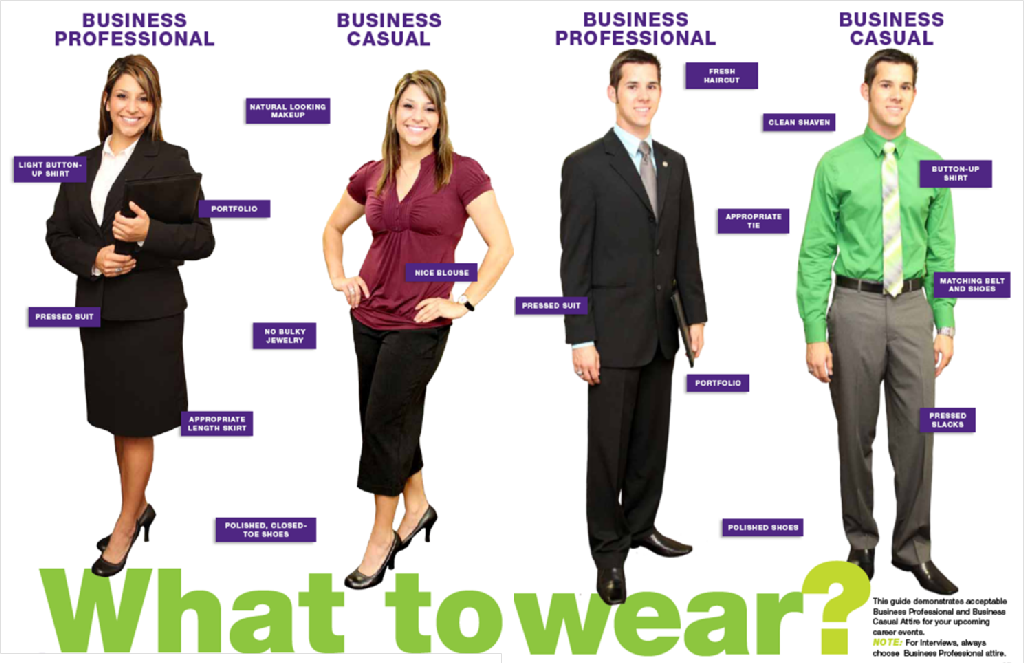
Business casual is a popular dress code in many offices today. It offers more freedom than strict professional wear. But that doesn’t mean “anything goes. ” The goal is to look neat, polished, and ready for work—without the formality of a full suit.
Key Elements Of Business Casual
- Tops: Blouses, knit shirts, button-downs, simple sweaters, and cardigans.
- Bottoms: Dress pants, skirts (knee-length or longer), tailored capris, and sometimes dark jeans (if allowed).
- Shoes: Flats, loafers, low heels, clean boots.
- Layers: Blazers are optional, not required.
- Accessories: Simple jewelry, belts, scarves; avoid flashy or oversized items.
Color choices are wider in business casual. Soft prints, muted patterns, and classic colors like navy, gray, and beige are common. Bright colors can work if styled carefully.
What Not To Wear
- T-shirts with graphics
- Short skirts
- Ripped jeans
- Sport shoes
- Exposed shoulders or midriff
Even in relaxed offices, avoid anything too casual or revealing. Business casual is still professional, just less formal.
Real-world Examples
- A navy cardigan over a white blouse, paired with gray dress pants and black flats.
- A simple shift dress with a belt, neutral heels, and a light scarf.
- Tailored ankle pants, a silk top, and a soft blazer for extra polish.
Many companies give guidelines, but often leave room for personal style. The challenge is to look sharp and comfortable without crossing the line into “weekend wear. ”
What Is Business Professional For Women?
Business professional is the classic dress code for offices with higher standards—law firms, banks, government, and corporate headquarters. This style demands a more formal, polished look.
Essential Pieces
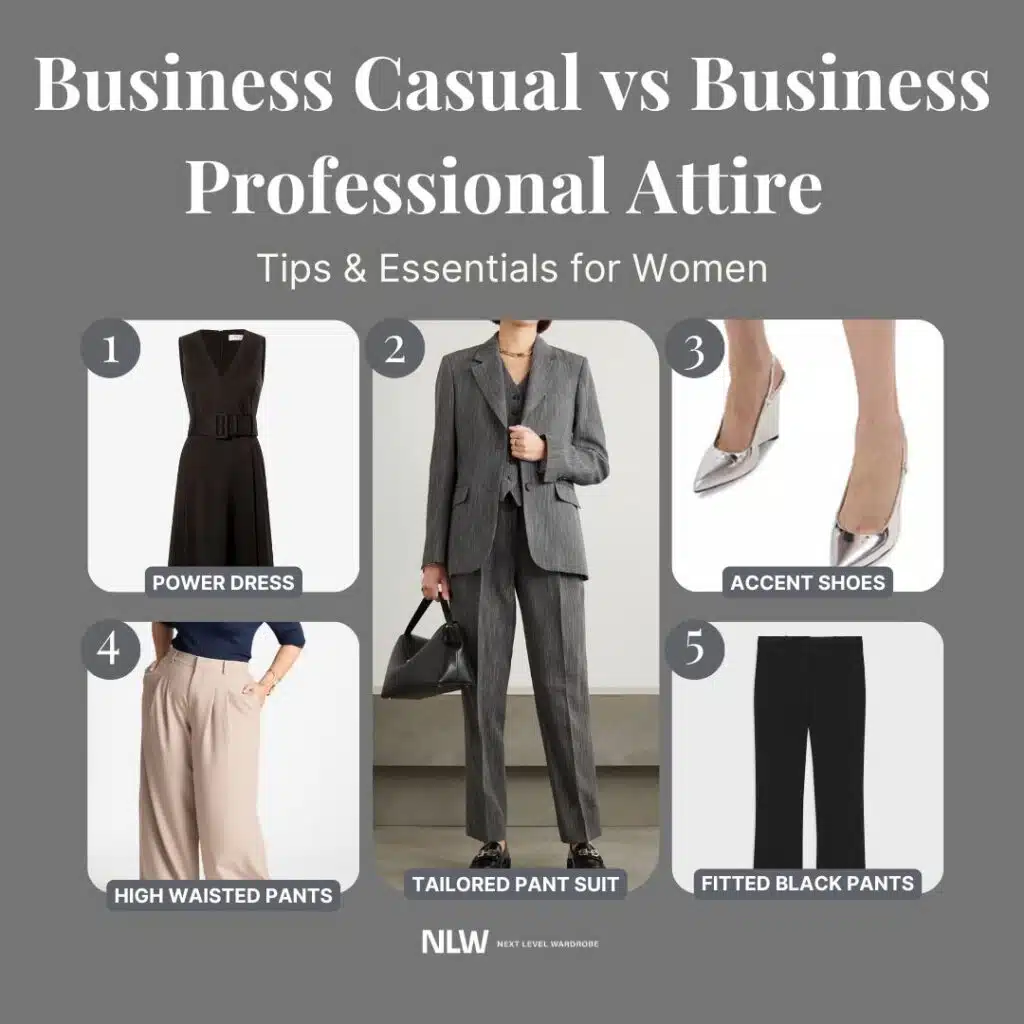
- Suits: Matching blazer and skirt/pants. Neutral colors like black, navy, or gray.
- Blouses: Plain, high-quality fabrics. Usually white, cream, or light blue.
- Skirts: Pencil skirts or A-line, always knee-length or longer.
- Dress pants: Tailored, matching suit sets.
- Shoes: Closed-toe pumps or low heels in dark colors.
- Accessories: Minimal—small earrings, simple watch, thin belt.
Patterns are rare, and colors are almost always conservative. The fit should be perfect—no wrinkles, baggy clothes, or visible tags. Business professional is all about looking reliable, serious, and ready for high-stakes meetings.
What Not To Wear
- Bright colors
- Casual shoes
- Anything sleeveless without a blazer
- Bold prints
- Large jewelry
Every detail matters in business professional. Even nail polish is usually neutral or clear. The goal: nothing distracts from your skills or message.
Real-world Examples
- A charcoal skirt suit, cream blouse, black pumps, and a leather tote.
- Navy pantsuit, pale blue shirt, minimal jewelry.
- Black blazer with matching pants, white button-down, closed-toe heels.
Some companies add strict rules—like requiring stockings with skirts or banning visible tattoos. Always check your company’s dress code before shopping.
Credit: www.morganhunter.com
Side-by-side Comparison: Business Casual Vs Business Professional
It’s easy to confuse these styles, especially when office rules are unclear. Here’s a direct comparison of the main features.
| Feature | Business Casual | Business Professional |
|---|---|---|
| Main Colors | Wide range, soft prints allowed | Mostly neutral (black, navy, gray) |
| Required Items | No suit needed, optional blazer | Suits required, matching pieces |
| Accessories | Simple, more freedom | Minimal, conservative |
| Shoe Style | Flats, loafers, low heels | Closed-toe pumps only |
| Allowed Patterns | Soft prints, muted stripes | Plain or very subtle |
| Fit & Finish | Tailored but comfortable | Perfect fit, crisp finish |
When Should Women Wear Business Casual Or Business Professional?
Choosing the right dress code depends on your role, industry, and company culture.
Typical Settings For Business Casual
- Tech companies
- Creative agencies
- Marketing and advertising firms
- Startups
- Universities (non-teaching staff)
These workplaces value comfort and individuality. Business casual lets you express your style, as long as you remain polished.
Typical Settings For Business Professional
- Law offices
- Banks and financial institutions
- Consulting firms
- Corporate headquarters
- Government agencies
Here, trust and authority matter. Business professional attire signals reliability and seriousness.
How To Decide
If you’re unsure, look at what your manager or senior leaders wear. When in doubt, start with business professional—it’s better to be slightly overdressed than underdressed.
Building A Business Casual Wardrobe: Practical Tips
Starting a business casual wardrobe can be confusing. Here’s how to make smart choices, avoid waste, and stay comfortable.
1. Choose Neutral Basics
Buy several pairs of dress pants in black, navy, and gray. These colors match almost any top and last longer than trendy shades.
2. Mix And Match
Select blouses and knit tops with simple patterns or soft colors. Aim for pieces you can pair in different ways. A white blouse works with almost any pants or skirt.
3. Layer Smartly
Add a few cardigans and an optional blazer. Layering helps you adjust to changing office temperatures and meetings.
4. Comfortable Shoes
Invest in flats or low heels that you can walk in all day. Avoid sandals or sneakers.
5. Simple Accessories
Stick to small earrings, thin belts, and a classic watch. Scarves add color without looking too casual.
Common Mistakes
- Buying too many trendy items that don’t match.
- Choosing jeans that are too casual (ripped, faded).
- Wearing shoes that look like sportswear.
Keep your wardrobe simple and flexible. Quality matters more than quantity.
Building A Business Professional Wardrobe: Step-by-step Guide
Business professional requires careful planning. Here’s a step-by-step guide for women starting out.
1. Start With Suits
Buy at least two good suits in neutral colors. Skirt and pants versions are best for flexibility. Spend more on these—they last longer and always look sharp.
2. Blouses And Shirts
Pick plain blouses in white, cream, or pale blue. Avoid ruffles, bright colors, or large prints.
3. Skirts And Dress Pants
Choose skirts that are knee-length or longer. Dress pants should be tailored and match your blazer.
4. Shoes
Get closed-toe pumps in black or navy. Avoid peep-toe or open-back shoes.
5. Minimal Accessories
Select a simple watch, small stud earrings, and a thin leather belt.
Common Mistakes
- Choosing ill-fitting suits (too baggy or tight).
- Wearing bold colors or patterns.
- Skipping the blazer (unless your company allows).
Always check your company’s rules before buying.
Credit: nextlevelwardrobe.com
How Business Casual And Professional Impact Your Career
Dress codes are not just about rules—they affect how people see you. Studies show that professional attire boosts confidence and can improve how others judge your competence.
The Power Of First Impressions
Research suggests people form opinions about your trustworthiness and skills within seconds. In formal settings, business professional signals reliability. In creative settings, business casual can show adaptability and openness.
Case Study
A survey by the Society for Human Resource Management found that 65% of managers believe dress codes affect office culture. Women who dress appropriately for their role are more likely to be considered for promotions.
Hidden Insights
- Many companies use dress codes to judge “fit” for leadership roles.
- In mixed dress code offices, dressing slightly more professional than average can help you stand out.
Adapting To Company Culture
Every company interprets business casual and business professional in its own way. Some allow dark jeans, others require blazers even on casual days.
How To Read The Culture
- Observe what leaders and HR wear.
- Check official policies, but also note how people actually dress.
- Ask your manager if unsure.
Adjusting Your Wardrobe
Keep a blazer or suit jacket at your desk for unexpected meetings. If the company is more relaxed, add color and pattern—but keep your overall look neat.
Data Insight
According to a LinkedIn survey, 52% of employees say dress codes are changing and becoming more relaxed. Still, dressing well remains important for respect and advancement.
Women’s Dress Codes Around The World
Business casual and professional mean different things in different countries.
| Country | Business Casual | Business Professional |
|---|---|---|
| United States | Wide variety, jeans sometimes allowed | Suit, neutral colors, minimal accessories |
| Japan | Muted colors, no jeans | Black or navy suit, white blouse, closed shoes |
| France | Fashion-forward, stylish but modest | Elegant suits, classic colors, silk scarves |
| India | Traditional dress allowed, modest cuts | Formal sarees or western suits, covered shoulders |
Always learn local norms if you work internationally.
How To Shop For Business Attire Without Wasting Money
Buying work clothes can be expensive. Here’s how to shop smart and avoid common mistakes.
1. Invest In Quality Basics
Buy a few high-quality suits, dress pants, and blouses. They last longer and always look sharp.
2. Avoid Trendy Splurges
Don’t spend much on trendy colors or cuts. Stick to classic styles.
3. Watch For Sales
Many stores offer discounts on business attire during certain seasons. Plan your purchases around these sales.
4. Try Second-hand Options
Thrift stores and online resellers often have barely used business clothes for half the price.
5. Check Fit Carefully
Ill-fitting clothes can ruin your look—even expensive ones. Tailor your suits and pants if needed.
Hidden Insights
- Some brands use “vanity sizing”—double-check measurements before buying online.
- Accessories like scarves and belts can update your look cheaply.
Personalizing Your Business Attire
You don’t have to hide your personality to look professional. Here’s how to add your own touch.
Business Casual
- Add a colorful scarf or statement necklace.
- Choose blouses with subtle prints.
- Try stylish shoes, but keep them neat.
Business Professional
- Use silk scarves in classic patterns.
- Pick a unique but subtle watch.
- Choose small, elegant jewelry.
Just remember: in business professional, keep personalization minimal.
Common Mistakes And How To Avoid Them
Even experienced professionals make errors. Here are the most frequent mistakes—and how to fix them.
1. Ignoring Fit
Baggy or tight clothes look sloppy. Always check fit and tailor if needed.
2. Mixing Dress Codes
Wearing casual shoes with a suit or a graphic tee with dress pants breaks the rules. Stick to one code at a time.
3. Overdoing Accessories
Big earrings, chunky necklaces, or flashy belts distract from your message. Keep it simple.
4. Underestimating Shoes
Dirty or worn-out shoes ruin your look. Clean and polish your shoes often.
5. Forgetting Company Culture
What works in one office may not work in another. Always check the local dress code.
The Role Of Dress Codes In Remote And Hybrid Work
As more women work remotely or in hybrid settings, dress codes are changing. Some companies still expect business casual or professional attire for video meetings.
Tips For Remote Work
- Wear a simple blouse or sweater for video calls.
- Avoid noisy jewelry that can distract on camera.
- Keep your background tidy to match your professional look.
Hybrid Work Environments
- Have a blazer or suit jacket ready for office days.
- Use business casual for most days, but switch to professional for meetings or presentations.
Data shows that 37% of remote workers feel more confident when dressed for work—even at home.
How To Transition Between Styles
Sometimes you need to move from business casual to professional quickly—like for a surprise meeting.
Quick Change Tips
- Keep a blazer at your desk.
- Wear neutral pants and top, so you can add layers easily.
- Have a pair of closed-toe pumps ready.
Planning Ahead
Choose outfits that can shift with minor changes. A classic blouse and pants can become professional with a jacket and heels.
The Influence Of Fashion Trends
Business attire changes slowly, but trends still affect what’s popular. For example, ankle pants, midi skirts, and soft blazers are now common in business casual.
How To Use Trends Safely
- Try new colors or cuts in small ways (like scarves or shoes).
- Avoid trendy pieces for business professional outfits.
- Watch what leaders wear—if they use a trend, it’s likely safe.
Real-life Success Stories
Many women have advanced their careers by mastering dress codes.
Case Example
A marketing manager noticed her company’s leaders wore business professional, even on casual days. She switched from casual jeans to tailored pants and blazers. Within months, she was asked to join higher-level meetings.
Hidden Insights
- Dressing well can signal readiness for leadership.
- Sometimes, small changes—like better shoes or a blazer—can open doors.

Credit: www.boltstaffing.com
Faq: Common Questions About Business Casual And Professional For Women
Frequently Asked Questions
What Is The Difference Between Business Casual And Business Professional For Women?
Business casual is less formal, allowing more colors, prints, and comfortable shoes. Business professional requires a suit, neutral colors, and minimal accessories. The key difference is formality—business professional is stricter and more traditional.
Can Women Wear Jeans In Business Casual?
In some offices, dark, tailored jeans are allowed in business casual. But always check your company’s policy. Avoid ripped, faded, or casual jeans.
What Accessories Are Appropriate For Business Professional Attire?
Stick to small stud earrings, a thin belt, and a classic watch. Avoid bold jewelry, large necklaces, or flashy items. Keep everything simple and subtle.
How Can I Dress For Business Casual Without Looking Too Informal?
Choose tailored pants, simple blouses, and clean shoes. Add a cardigan or blazer for extra polish. Avoid T-shirts, sport shoes, and short skirts.
What Should I Do If My Company’s Dress Code Is Unclear?
Observe what managers wear, read any official guidelines, and ask HR if unsure. When in doubt, start with business professional—it's safer to be slightly overdressed.
Final Thoughts
Choosing between business casual and business professional attire is more than following rules—it’s about matching your look to your goals, company culture, and daily tasks. The right wardrobe can boost your confidence, help you stand out, and support your career growth.
Remember, dress codes change over time and between companies. Pay attention to fit, quality, and local norms. With smart choices, you can create a wardrobe that’s both stylish and professional, making every workday a step toward success.
If you want to learn more about dress codes and workplace culture, you can explore Wikipedia’s dress code page for deeper insights.
