

Business Casual Dress Ideas for Men: Elevate Your Work Style
Business Casual Dress Ideas For Men
What does “business casual” mean for men today? For many, it is a confusing mix of formal and relaxed clothing. You want to look sharp, but not overdressed. You want comfort, but you also want respect. Business casual is now a popular dress code in offices, meetings, and networking events.
It is a balance between style and practicality.
This guide will help you understand business casual, choose the right pieces, and avoid common mistakes. You’ll find clear examples, practical advice, and even a few insights that most beginners miss. By the end, you’ll feel confident dressing business casual for any situation.
What Is Business Casual For Men?
Business casual is not one fixed set of clothes. It is a style that blends professional clothing with more relaxed items. You can wear business casual in many modern offices, at networking events, or for client meetings. The goal is to look smart, but not too formal.
There are no strict rules, but most business casual looks share these features:
- No suits or ties required
- Collared shirts are common
- Dress pants or chinos instead of jeans
- Clean, closed-toe shoes (not sneakers)
- Layers like sweaters or blazers
It’s important to check your company’s dress code. Some offices are more relaxed, others expect a sharper look. If you’re unsure, aim for a safe middle ground. It’s easier to dress down if needed than to dress up suddenly.
Key Pieces For Business Casual Outfits
Let’s break down the main items that make up a business casual wardrobe. You don’t need to buy everything at once. Start with essentials and add more as you learn your style.
Shirts
Collared shirts are the backbone of business casual. You have several options:
- Dress shirts: Classic, button-down, often white or light blue. Avoid bold patterns.
- Oxford shirts: Slightly thicker, less formal than a dress shirt. Works well alone or under a sweater.
- Polo shirts: Good for warmer days and relaxed offices. Avoid logos and bright colors.
Non-obvious tip: Many men forget that short-sleeve dress shirts are rarely business casual. Stick to long sleeves even in summer, and roll them up neatly if needed.
Pants
The right pants set the tone for your outfit:
- Chinos: A top choice. Comfortable, comes in many colors, and looks polished.
- Dress pants: More formal, usually darker colors. Perfect for conservative offices.
- Dark jeans: Allowed in some workplaces, but they must be slim, clean, and without rips.
Practical insight: Avoid pants with cargo pockets. They look too casual and messy.
Shoes
Footwear matters more than most men realize. Shoes signal how serious you are.
- Leather loafers: Classic and comfortable. Brown or black work best.
- Derby shoes: Slightly formal, but not as strict as oxfords.
- Brogues: Decorative holes, stylish but still professional.
- Chelsea boots: Great in cooler months.
Many beginners wear sneakers because they are comfortable. This is a common mistake. Even if allowed, sneakers rarely look business casual.
Layering Pieces
Adding a layer can elevate your look and help with temperature changes.
- Blazers: Not as formal as a suit jacket. Navy or gray blazers work well.
- Sweaters: Crew neck or V-neck, worn over a collared shirt. Avoid hoodies.
- Cardigans: A softer option, good for relaxed offices.
Non-obvious tip: A blazer does not need to match your pants. Mixing colors adds style.
Accessories
Keep accessories simple and functional.
- Belts: Match the color to your shoes.
- Watches: Metal or leather band, nothing flashy.
- Socks: Solid color or subtle pattern, avoid white athletic socks.
Avoid hats, bracelets, or large rings. They distract from your professional image.
Business Casual Outfit Examples
Let’s look at practical combinations for different situations. This helps you visualize how pieces work together.
Classic Office Look
- Light blue dress shirt
- Navy chinos
- Brown leather loafers
- Matching belt
- Simple watch
This outfit fits most offices. It is safe, comfortable, and easy to wear.
Creative Workplace
- Patterned Oxford shirt (check or stripe)
- Slim-fit dark jeans
- Gray blazer
- Black Chelsea boots
You look stylish but still professional. Patterns show personality, but keep them subtle.
Meeting Or Presentation
- White dress shirt
- Dark gray dress pants
- Navy blazer
- Black Derby shoes
A bit more formal, but still business casual. Choose darker colors for important events.
Warm Weather Option
- Pale blue polo shirt
- Khaki chinos
- Brown loafers
Stay cool and comfortable. Polos are best for casual offices or summer events.
Cold Weather Layer
- White Oxford shirt
- Navy chinos
- Charcoal crew neck sweater
- Brown brogues
Sweaters add warmth and depth. Layering keeps you ready for changing temperatures.
Common Business Casual Mistakes
Many men make simple mistakes that hurt their professional look. Here’s what to avoid:
- Wearing athletic shoes: Even clean sneakers look too casual.
- Ignoring fit: Baggy or tight clothes ruin your style. Always check fit in the shoulders, waist, and length.
- Bold colors or patterns: Stick to neutral or subtle shades. Bright red or neon is distracting.
- Short-sleeve shirts: Long sleeves are the norm. Roll up sleeves if needed.
- Untucked shirts: Most business casual shirts should be tucked in. Exception: tailored polos.
Not-so-obvious insight: Many men skip ironing. Wrinkled clothes look sloppy and careless. Always iron shirts and pants, even if they’re “easy care”.
How To Choose The Right Business Casual Pieces
Selecting business casual clothing is not just about buying basics. You need to focus on fit, material, and versatility.
Fit
The fit of your clothes is more important than the brand or price. Well-fitted clothes make you look confident and professional.
- Shirts: The shoulder seam should sit at your shoulder. Sleeves should end at your wrist.
- Pants: Waist should fit comfortably, not too loose or tight. Length should touch your shoes without pooling.
If you’re unsure, visit a tailor. Many stores offer free or low-cost adjustments.
Material
Choose fabrics that breathe and hold their shape. Cotton, wool, and blends are best.
- Avoid synthetic materials like polyester for shirts. They often look shiny and cheap.
- For pants, cotton chinos are comfortable. Wool dress pants are great for winter.
Non-obvious tip: Many men buy thick sweaters but forget layering is key. Thin, high-quality sweaters look better and work in more seasons.
Versatility
Aim for clothes that mix well together. Neutral colors like navy, gray, and white match easily.
- Buy two shirts and two pants in basic colors. You’ll have four different outfits.
- Add a blazer and you double your choices.
Beginners often buy trendy pieces that don’t match anything else. Build your wardrobe slowly and always check if new items fit with your current clothes.
Color And Pattern Choices
Color is important in business casual. You want your outfit to look clean and coordinated.
Safe Color Combinations
- Navy and white
- Gray and blue
- Khaki and light blue
- Black and gray
Use one bright item only if your office allows it. For example, a blue shirt with gray pants.
Patterns
Patterns can add interest but keep them small and subtle.
- Thin stripes
- Small checks
- Simple dots
Avoid loud prints or big graphics. They make you look less serious.
Mixing Colors And Patterns
You can mix colors and patterns if you keep balance.
- If your shirt has a pattern, wear plain pants.
- If your pants are colored, keep the shirt neutral.
Non-obvious tip: Socks are a good place to show personality. Try a subtle pattern or color that matches your outfit.

Credit: southerntide.com
Seasonal Business Casual Ideas
Business casual changes with the weather. You need to adapt your clothing for comfort and style.
Spring And Summer
- Lightweight cotton shirts
- Chinos or light dress pants
- Polo shirts for casual days
- Loafers or brogues
Choose lighter colors like pale blue, white, or khaki. Avoid heavy fabrics.
Fall And Winter
- Wool or cotton sweaters
- Layer shirts under sweaters or blazers
- Darker colors like navy, charcoal, or olive
- Chelsea boots or leather shoes
Add a scarf or gloves if needed, but keep them simple.
Rain And Bad Weather
- Waterproof blazer or light jacket
- Dark, sturdy shoes
- Avoid light pants in rain
Non-obvious tip: Keep an umbrella at work. Arriving wet can ruin even the best outfit.
Business Casual Vs. Other Dress Codes
Many men confuse business casual with other dress codes. Here’s a quick comparison to help you understand the differences.
| Dress Code | Key Features | Typical Items |
|---|---|---|
| Business Casual | No tie, mix of formal and relaxed pieces | Collared shirts, chinos, loafers, blazers |
| Business Formal | Full suit and tie, polished shoes | Suits, ties, dress shirts, oxfords |
| Smart Casual | Flexible, stylish, less formal than business casual | Polo shirts, jeans, fashionable sneakers |
| Casual | No rules, comfort is key | T-shirts, jeans, sneakers |
Business casual sits between formal and casual. You have freedom, but you must show respect for the workplace.
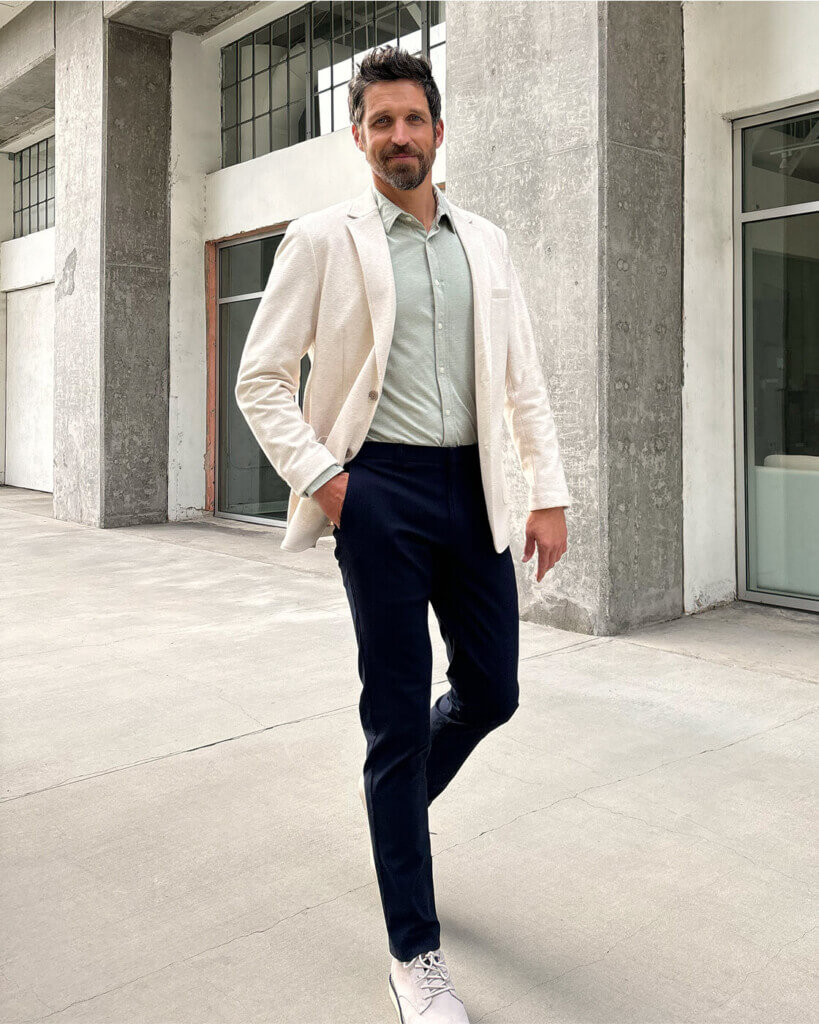
Credit: www.stitchfix.com
How To Build A Business Casual Wardrobe
Many men waste money buying clothes that don’t match or fit. Here’s a step-by-step plan to build your business casual wardrobe without overspending.
Step 1: Start With Basics
Buy two collared shirts (white and light blue), two pairs of pants (navy and khaki chinos), and one pair of brown loafers.
Step 2: Add Layers
Add a navy blazer and a gray sweater. These pieces work for most offices and seasons.
Step 3: Expand With Versatile Items
Add another shirt (patterned Oxford) and a pair of dark dress pants. Buy a belt that matches your shoes.
Step 4: Accessorize Smartly
Buy a simple watch and two pairs of socks in solid colors.
Step 5: Check Fit And Adjust
Try everything on. Visit a tailor if needed. Well-fitted clothes last longer and look better.
Non-obvious insight: Many men forget to buy a second pair of shoes. Rotating shoes keeps them fresh and shows attention to detail.
Business Casual For Special Situations
Business casual is not just for offices. You may need to dress business casual for these occasions:
Networking Events
Aim for a sharp but approachable look. A blazer and chinos work well. Avoid flashy accessories.
Job Interviews
Business casual is often safe for interviews in tech, media, and startups. Choose a clean shirt, dark pants, and polished shoes.
Client Meetings
Dress slightly more formal. Add a blazer and make sure your clothes are freshly ironed.
Company Parties
You can relax your look a bit. Try a patterned shirt and smart jeans. Avoid shorts or sandals.
Non-obvious tip: For video meetings, focus on your top half. A crisp shirt and blazer look professional online.
How Business Casual Affects Your Career
Your clothing choices send a message. In a study by the Society for Human Resource Management, 61% of managers said dress influences how employees are seen in the workplace.
- Well-dressed men are seen as more reliable and confident.
- Careless outfits can hurt your reputation, even in casual offices.
Non-obvious insight: Dressing business casual helps you stand out during promotions or client pitches. You show respect and attention to detail.
Top Brands For Business Casual Clothing
You don’t need to spend a fortune. Many brands offer quality business casual pieces.
| Brand | Strengths | Price Range |
|---|---|---|
| Brooks Brothers | Classic shirts and pants | Mid to high |
| Banana Republic | Modern fits, good chinos | Mid |
| Uniqlo | Affordable basics | Low to mid |
| J.Crew | Stylish sweaters, versatile blazers | Mid |
| Nordstrom | Wide selection, various brands | Low to high |
Choose brands that fit your budget and style. Avoid buying everything at once—test one or two items before committing.

Credit: nilds.gov.ng
Business Casual For Different Body Types
Every man is different. Business casual can work for all shapes if you pay attention to fit and style.
Slim Build
- Choose slim-fit shirts and pants.
- Avoid oversized jackets or baggy clothes.
- Layering helps add depth.
Athletic Build
- Look for shirts with stretch.
- Avoid tight pants that restrict movement.
- Blazers with a bit of room in the shoulders.
Larger Build
- Choose straight-fit pants.
- Shirts with a bit of extra length.
- Avoid thin fabrics; they cling to the body.
Non-obvious tip: Many larger men avoid blazers, but a structured blazer can slim your silhouette.
Caring For Your Business Casual Clothes
To keep your clothes looking sharp, you need to care for them properly.
- Wash shirts in cold water to prevent shrinking.
- Hang pants and shirts after washing; avoid the dryer for delicate items.
- Polish leather shoes every month.
- Store sweaters folded, not hung, to prevent stretching.
Non-obvious insight: Many men wash all clothes together. Separate dark and light items to keep colors fresh.
Saving Money On Business Casual
You can look great without overspending. Here are practical ways to save:
- Buy during sales or off-season.
- Shop at outlet stores.
- Focus on basics, not trends.
- Use tailoring to improve cheap clothes.
You don’t need a large wardrobe. Five shirts, three pants, two pairs of shoes, and one blazer cover most needs.
Business Casual In Different Cultures
Business casual is not the same everywhere. In some countries, dress codes are more formal or relaxed.
- In the US, chinos and shirts are standard.
- In Europe, darker colors and dress pants are common.
- In Asia, some offices expect a tie with business casual.
Always ask local colleagues or check company guidelines if you travel or work internationally.
Frequently Asked Questions
What Colors Are Best For Business Casual?
Neutral colors like navy, gray, white, and khaki are safest. These match easily and look professional. You can add a subtle pattern or a muted color if your office allows it.
Can I Wear Jeans For Business Casual?
Yes, but only dark, slim-fit jeans without rips or fading. Pair them with a collared shirt and blazer. Avoid light or baggy jeans.
Do I Need A Tie For Business Casual?
No, ties are not required for business casual. If you want to wear one, keep it simple and avoid bold prints. Most offices prefer no tie with business casual outfits.
Are Sneakers Allowed In Business Casual?
Usually not. Choose leather loafers, derby shoes, or brogues. Sneakers are too casual for most workplaces. Some creative offices allow clean, minimalist sneakers.
How Do I Know If My Clothes Fit Well?
Check the shoulder seam of shirts—it should sit on your shoulder. Pants should fit at the waist without pinching. Sleeves and pant legs should end at your wrist and ankle. Try everything on and ask a friend or tailor for feedback.
Final Thoughts
Business casual is about balance. You want to look confident, comfortable, and professional. Focus on fit, choose neutral colors, and keep your look simple. Avoid common mistakes like sneakers or untucked shirts. Build your wardrobe slowly and pay attention to details like ironing and shoe care.
Remember, your clothing shows respect for your workplace and yourself. With these tips, you can master business casual and make a strong impression every day. For more ideas and trends, you can explore guides from GQ Magazine.
