

Business Casual Does It Include Jeans? Your Ultimate Style Guide
Business Casual: Does It Include Jeans?
Navigating the world of business casual can feel tricky. You want to look professional, but not too formal. Comfort matters, but so does making a good impression. One question comes up in almost every conversation about this dress code: Do jeans count as business casual? The answer is not as simple as yes or no. Workplace culture, industry standards, and even the cut and color of the jeans all play a part. In this guide, you'll learn what business casual really means, how jeans fit in, and how to make smart wardrobe choices for work.
Understanding Business Casual: More Than Just Clothes
The term "business casual" can sound confusing. Some people think it means dress pants and blouses. Others imagine polo shirts and khakis. The truth is, business casual sits between formal business wear and everyday casual clothing. It's about finding a balance: looking polished without being stiff.
Why do companies choose business casual? The main reason is to make people feel comfortable while still looking professional. It allows more flexibility and personal style, which can boost morale and creativity. But it also sets standards for what’s appropriate at work.
Key features of business casual:
- Clean, well-fitting clothes
- No flashy or distracting designs
- Professional, but not formal, shoes
- Options for layering (like cardigans or blazers)
Business casual is not the same everywhere. A tech startup may accept sneakers and T-shirts, while a law firm may expect button-down shirts and dress shoes. That’s why it’s important to understand your company’s culture.
The Evolution Of Business Casual
Business casual hasn't always been around. In the past, most offices expected suits and ties. Over time, companies relaxed dress codes to attract younger talent and promote creativity. Silicon Valley played a big role in this shift, making casual clothes the norm in tech.
Now, business casual is common across many industries. Even banks and consulting firms, once very strict, have started allowing more relaxed styles. This change reflects how work itself has evolved—people want to express themselves and feel comfortable, not just follow old rules.
But with this change comes confusion. What’s okay in one office may be too casual in another. That’s especially true for jeans.

Credit: www.cottoncashmerecathair.com
Where Do Jeans Fit In?
Jeans are one of the most debated pieces of clothing in the business casual world. Some see them as too informal. Others argue that dark, well-fitted jeans can look sharp and professional. The answer depends on several factors:
- Industry norms: Creative fields (like marketing or design) are more likely to allow jeans. Finance or law firms may still see them as too casual.
- Company policy: Some companies clearly list jeans as acceptable in their dress code. Others ban them, or only allow them on certain days.
- Type of jeans: Not all jeans are the same. The style, color, and fit make a big difference.
Here’s a quick comparison of how jeans are viewed in different settings:
| Industry | Jeans Allowed? | Typical Jeans Style |
|---|---|---|
| Tech | Often | Dark, slim or straight |
| Creative (Design, Media) | Usually | Varied, but neat |
| Finance | Rarely | Classic, if at all |
| Law | Almost never | N/A |
| Retail/Customer Service | Sometimes | Depends on brand image |
As you can see, context matters. If you’re unsure, always check your company’s policy or observe what leaders wear.
Types Of Jeans: Which Ones Work For Business Casual?
Not all jeans are created equal. Some styles are perfect for a smart-casual look. Others scream "weekend" or "night out. " Understanding the details can help you avoid common mistakes.
Best Jeans For Business Casual
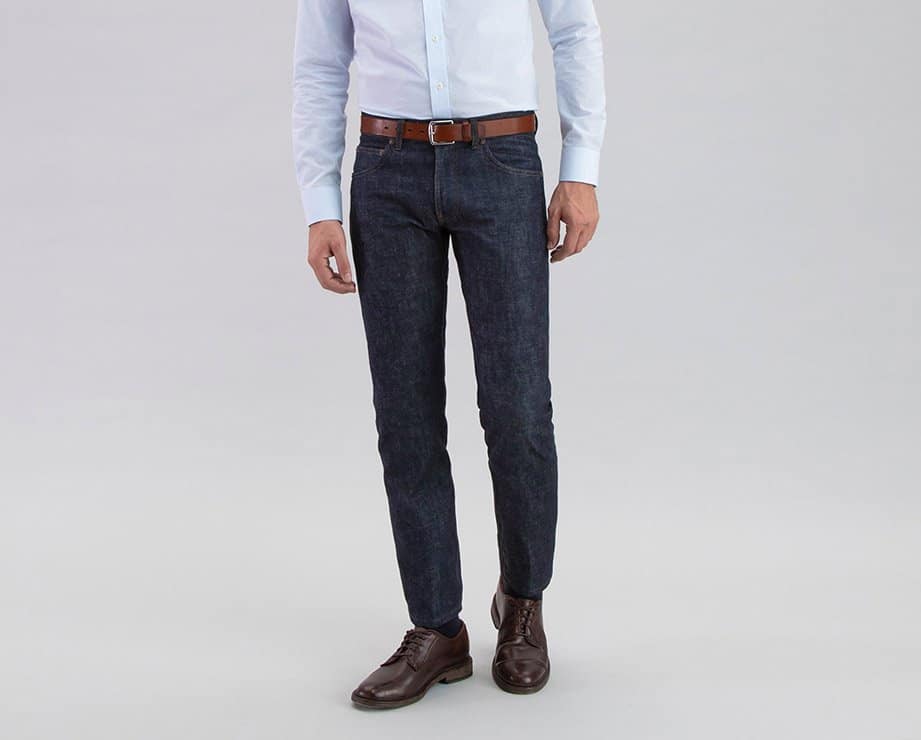
- Dark wash: Deep blue or black jeans look more polished than faded or light-wash denim.
- No rips or distressing: Holes, frayed hems, or heavy fading make jeans look too casual.
- Straight or slim fit: These shapes look neat and work well with shirts or blouses.
- Minimal details: Avoid heavy stitching, bold logos, or flashy buttons.
- Proper length: Jeans should not drag on the ground or bunch up around your ankles.
Jeans To Avoid
- Baggy or skinny jeans: Too loose or too tight is rarely office-appropriate.
- Distressed or ripped styles: Save these for the weekend.
- Light washes: Very pale denim often looks too casual for work.
- Jeans with bold embellishments: Rhinestones, patches, or loud embroidery aren’t business casual.
Here’s a breakdown of popular jeans styles and their business casual fit:
| Jeans Style | Business Casual Friendly? | Notes |
|---|---|---|
| Dark straight-leg | Yes | Best for most offices |
| Black slim-fit | Yes | Works well with blazers |
| Light-wash denim | No | Too informal |
| Distressed/ripped | No | Unprofessional appearance |
| Baggy/relaxed fit | Rarely | Can look sloppy |
Insight: Many people forget that the fit of the jeans is just as important as the color. Well-fitted jeans can look more professional than poorly-fitted dress pants.
Building A Business Casual Outfit With Jeans
Wearing jeans in a business casual setting isn’t just about the pants. The rest of your outfit matters too. Jeans need to be balanced with other, more "business" pieces to look polished.
For Men
- Pair with a button-down shirt: Choose a crisp, tucked-in shirt for a smart look.
- Add a blazer: A tailored blazer instantly makes jeans look more professional.
- Choose leather shoes: Opt for loafers, brogues, or clean dress sneakers (if allowed).
- Avoid graphic tees or hoodies: These make the outfit too casual.
For Women
- Wear with a blouse or smart top: Flowy blouses, silk shirts, or structured tops work well.
- Layer with a cardigan or blazer: Adds a touch of formality.
- Pick simple, elegant footwear: Flats, loafers, ankle boots, or low heels are good choices.
- Accessorize minimally: Keep jewelry and bags sleek and understated.
Here’s an example of a balanced business casual outfit with jeans for both men and women:
- Men: Dark straight-leg jeans, light blue button-down shirt, navy blazer, brown leather loafers.
- Women: Black slim-fit jeans, white silk blouse, gray cardigan, black ankle boots, simple silver earrings.
Non-obvious tip: Iron your jeans before wearing them to work. Crisp jeans look much more professional than wrinkled ones.
How To Tell If Jeans Are Acceptable At Your Workplace
Even with all these tips, the final decision depends on your specific workplace. If you’re new or unsure, here are steps to follow:
- Read the dress code: Many companies have detailed employee handbooks. Look for keywords like "denim," "jeans," or "casual Fridays."
- Observe your managers and coworkers: Pay attention to what leaders wear. If your boss wears jeans, it’s usually a safe bet.
- Ask HR or your manager: If in doubt, a quick email or conversation can clear things up.
- Test on casual days: Many companies allow jeans on Fridays or special occasions. Try wearing jeans on those days first.
- Start conservative: Wear dark, neat jeans with a formal shirt or blazer. If no one comments, you can relax your style over time.
Common mistake: Some people assume that because one person wears jeans, everyone can. But sometimes, only certain roles or senior staff have more freedom.
Pros And Cons Of Wearing Jeans As Business Casual
Like any wardrobe choice, jeans have their upsides and downsides in a business setting.
Pros
- Comfort: Jeans are often more comfortable than dress pants.
- Versatility: They pair well with many tops, shoes, and accessories.
- Modern look: Jeans can make you look current and approachable.
- Easy care: Denim is durable and often easier to clean.
Cons
- Risk of looking too casual: The wrong style or wash can break the dress code.
- Limited acceptance: Not all industries or roles allow jeans.
- Potential for negative judgment: Some people still see jeans as unprofessional.
Balancing these factors is key. If you choose jeans, make sure the rest of your outfit is sharp.
Comparing Jeans With Other Business Casual Pants
If you’re unsure about jeans, there are many other options. Each type of pants sends a different message. Here’s a quick comparison:
| Pants Type | Professionalism | Comfort | Business Casual Fit |
|---|---|---|---|
| Jeans (dark, neat) | Medium | High | Often |
| Chinos | High | High | Yes |
| Dress pants | Very high | Medium | Yes |
| Corduroy pants | Medium | High | Sometimes |
| Khakis | High | High | Yes |
| Leggings (for women) | Low | Very high | Rarely |
Insight: Chinos offer a safe alternative to jeans and work in almost every business casual setting.
Gender Differences In Business Casual Jeans
Men and women both wear jeans at work, but expectations can be different.
For Men
- Stick to classic cuts: Straight, slim, or regular.
- Avoid trendy styles like overly skinny or wide-leg jeans.
- Pair with collared shirts or sweaters.
- Leather shoes or clean sneakers (if allowed) look best.
For Women
- More styles are accepted: Skinny, straight, ankle-length, or bootcut.
- High-waisted jeans can look especially polished with tucked-in blouses.
- Avoid flashy details or very tight fits.
- Heels, flats, or ankle boots can all work.
Practical advice: If you’re unsure, start with the most conservative style. Over time, you’ll learn what fits your office culture.
What About Colored Jeans?
Not all jeans are blue or black. Some people like to wear colored denim—gray, white, or even red. But is this business casual?
- Gray jeans: Dark gray can work, especially in creative fields.
- White jeans: Tricky—acceptable in some offices, especially in summer. Make sure they’re not see-through and pair with a structured top.
- Bright colors: Usually too bold for most offices.
If you try colored jeans, keep the rest of your outfit neutral and simple.
Non-obvious tip: Colored jeans show stains and wrinkles more easily. Always check them before leaving home.
The Role Of Footwear With Business Casual Jeans
Shoes can make or break your outfit. Even the best jeans can look sloppy with the wrong shoes.
Best shoes to wear with jeans:
- Loafers
- Oxfords
- Brogues
- Ankle boots
- Classic flats
- Clean, minimalist sneakers (if company allows)
Shoes to avoid:
- Flip-flops
- Running shoes
- Sandals (unless allowed)
- Very high heels or flashy styles
Shoes should always be clean and in good condition.
Accessories And Outerwear: Completing The Look
Accessories can add personality and polish to a business casual outfit. But less is often more.
For both men and women:
- Simple belts
- Classic watches
- Neutral bags or briefcases
Outerwear:
- Blazers and cardigans are perfect over jeans.
- Avoid hoodies, denim jackets (too much denim), or athletic jackets.
Pro tip: A structured blazer can upgrade even basic jeans for meetings or presentations.
When Jeans Are Never Business Casual
Some situations always call for more formal attire, no matter how relaxed your office is.
- Job interviews: Unless you know the company is very casual, choose dress pants or a skirt.
- Client meetings: Especially with new clients or in traditional fields.
- Presentations: When representing your company to outsiders.
- Special company events: Award ceremonies, board meetings, or formal dinners.
When in doubt, dress up. It’s easier to remove a blazer if you feel overdressed than to apologize for looking too casual.
The Impact Of Remote Work On Business Casual And Jeans
Remote work has changed dress codes around the world. Many people now work from home, leading to even more relaxed standards. Video calls often show only the top half of your outfit, so people focus on tops and sometimes neglect the rest.
But dressing up, even at home, can help you feel more productive and professional. If you choose to wear jeans for remote work, make sure they’re comfortable and in good condition.
Some companies are now adopting a “virtual business casual” code, allowing jeans as long as the overall look is neat.
Cultural Differences: Business Casual And Jeans Around The World
Business casual does not mean the same thing everywhere. In some countries, jeans are never accepted at work. In others, they are common in offices.
For example:
- United States and Canada: Jeans are common in many workplaces.
- Europe: Varies by country—northern Europe is more relaxed, southern Europe is more formal.
- Asia: Japan and South Korea are generally more formal; China is becoming more casual in tech sectors.
- Australia: Many offices allow jeans, especially in creative industries.
If you work in a multinational company, check the local office norms.
Common Mistakes To Avoid With Business Casual Jeans
- Wearing ripped or frayed jeans: No matter how expensive, they look unprofessional.
- Ignoring fit: Baggy or tight jeans don’t work, even if the color is right.
- Choosing the wrong top: A T-shirt and jeans rarely look business casual.
- Forgetting about shoes: Sneakers can be okay, but only if clean and minimalist.
- Over-accessorizing: Big jewelry or flashy belts can make your outfit look unbalanced.
Extra tip: If your jeans start to fade or lose their shape, replace them. Worn-out jeans never look business casual.
What Data Says: Jeans And Business Casual Trends
Surveys show that more companies are relaxing their dress codes. According to a Gallup poll, over 50% of employees say their workplace has a casual or business casual dress code. In tech and creative industries, the number is even higher.
A study by OfficeTeam found that:
- 32% of managers say jeans are always acceptable in their office.
- 50% say jeans are okay, but only on certain days (like Fridays).
- 18% say jeans are never appropriate.
This shows that while jeans are becoming more common, they are not accepted everywhere.
What Fashion Experts Say
Many style experts agree: dark, well-fitted jeans can be business casual if paired with the right items. But they warn against trendy styles, light washes, or distressed looks.
For example, the editors at Business Insider suggest that jeans work best when everything else is polished. That means shirts, shoes, and accessories matter as much as the jeans themselves.
Credit: toddshelton.com
Adapting Your Style Over Time
Workplaces change, and so do dress codes. If your company starts allowing jeans, you may need to adjust your wardrobe. Here’s how to make the transition smoothly:
- Start with one pair of dark, classic jeans.
- Pair them with your usual business casual tops and shoes.
- Pay attention to feedback and how others dress.
- Gradually add more styles if you feel confident.
Always keep a pair of dress pants at your desk or in your bag for unexpected meetings.
Final Thoughts: Confidence And Common Sense
The debate about jeans in business casual will likely continue. But one thing is clear: context matters most. If you choose the right style, fit, and pair your jeans with polished pieces, you can look both professional and comfortable. When in doubt, observe, ask, or start conservative. Your clothes should support your career, not create doubts about your professionalism.

Credit: www.cottoncashmerecathair.com
Frequently Asked Questions
Can I Wear Jeans To A Job Interview If The Company Has A Business Casual Dress Code?
It’s best to avoid jeans for job interviews, even if the company is business casual. First impressions matter, and dressing slightly more formally shows respect. Choose dress pants or a skirt unless you know for sure that jeans are the norm.
Are Black Jeans More Acceptable Than Blue Jeans For Business Casual?
Yes, black jeans are often seen as more formal than blue jeans, especially in offices with stricter codes. They pair well with blazers and dress shoes, making them a safer choice.
What Kind Of Shoes Go Best With Business Casual Jeans?
Leather loafers, oxfords, brogues, classic flats, and ankle boots work well. Clean, minimalist sneakers are okay in some creative or tech offices. Avoid running shoes or sandals unless your company allows them.
Can Women Wear Skinny Jeans As Business Casual?
Skinny jeans can be business casual if they are dark, not overly tight, and paired with a smart top and shoes. Avoid ripped or flashy styles, and make sure the overall outfit looks polished.
Do All Companies Allow Jeans As Part Of Business Casual?
No, not all companies allow jeans. It depends on the industry, company culture, and dress code policy. Always check your company’s rules or observe what leaders wear before choosing jeans for work.
