

Best Way to Store Tank Tops: Clever Tips for Organized Closets
Storing tank tops might sound simple, but anyone who owns more than a handful knows the real struggle: tangled straps, endless piles, wrinkles, and wasted closet space. With so many styles, fabrics, and uses—workouts, layering, casual days—finding the best way to store tank tops can actually make your mornings smoother and your wardrobe last longer. If you’re tired of the daily hunt or folding and refolding, you’re in the right place. This guide will show you how to keep your tank tops neat, accessible, and in good shape, whether you have a walk-in closet or just a small dresser drawer.
Why Proper Tank Top Storage Matters
Tank tops are unique compared to other tops. Their thin straps tangle easily, and the lightweight fabric wrinkles fast. Simply tossing them in a drawer or piling them on a shelf leads to frustration and damage over time. Proper storage can:
- Extend the life of your clothes by reducing stretching and wrinkling.
- Save time finding the right tank top.
- Maximize your space, especially if you have a small closet or dresser.
- Make your wardrobe look more organized and inviting.
Let’s explore the main storage methods and tips, so you can choose the system that fits your space, lifestyle, and wardrobe size.
Main Storage Methods For Tank Tops
Different people have different spaces and routines, so there isn’t a single “best” way for everyone. Here are the most effective methods, with details to help you choose.
Hanging Tank Tops
Hanging is popular because it keeps tops visible and wrinkle-free. But not all hanging methods are equal.
Standard Hangers
You can use regular hangers for tank tops, but the straps often slip off, leading to a pile on your closet floor. If you want to use regular hangers, look for ones with notches designed for straps. Velvet or rubber-coated hangers also help prevent slippage.
Multi-tier Tank Top Hangers
Multi-tier hangers are designed specifically for storing many tank tops on a single hanger. They usually have multiple horizontal bars or hooks. This saves space and keeps tops separate so they don’t tangle.
For example, a typical multi-tier hanger holds 8-12 tank tops. This is ideal if you have a small closet but a large collection.
S-hooks
S-hooks are inexpensive and can be used with a standard closet rod. Just hook one end over the rod and hang the tank top by its straps on the other end. This method is flexible—you can adjust the spacing and add or remove hooks easily.
Hanging Closet Organizers
Fabric organizers with cubby holes or pockets hang from the closet rod. Each pocket can hold a folded or rolled tank top. This keeps them visible and separated.
Folding Tank Tops
Some people prefer to fold their tank tops, especially if closet space is limited or if they use a dresser.
File Folding
File folding (also called vertical folding) is a method made popular by organization experts. Instead of stacking tank tops flat, you fold them into small rectangles and stand them upright in a drawer or box. This way, you can see all your tops at once and pull one out without disturbing the others.
Rolling
Rolling tank tops saves space and minimizes wrinkles. It works well for travel or for deep drawers where file folding isn’t practical. Simply lay the tank top flat, fold in the sides, and roll from the bottom up.
Stacking
The traditional way is to fold tank tops and stack them flat in a drawer or on a shelf. This can work if you only have a few, but with larger collections, the stack topples easily and you can’t see what’s at the bottom.
Using Storage Bins And Boxes
If you have more tank tops than space, storage bins or boxes can help. Clear bins let you see what’s inside. Use dividers to separate tops by color, style, or use (e.g., gym, casual, dressy). Label bins for even easier access.
Specialized Tank Top Organizers
Some products are made just for tank tops. Examples include hanging organizers with individual loops for each strap or drawer inserts with adjustable slots. These can be pricier but offer top-level organization.
Comparing The Most Popular Storage Methods
To help you decide, here’s a comparison of the main methods:
| Method | Space Used | Visibility | Wrinkle Prevention | Best For |
|---|---|---|---|---|
| Standard Hanger | Medium | High | Good | Small collections |
| Multi-Tier Hanger | Low | Medium | Good | Medium to large collections |
| File Folding | Low | High | Fair | Drawer storage |
| Rolling | Low | Medium | Good | Travel, small spaces |
| Storage Bin | Low | Low | Fair | Seasonal storage, overflow |
Step-by-step: How To File Fold Tank Tops
File folding is a favorite for those with dresser drawers. Here’s a simple, step-by-step approach:
- Lay the tank top flat, facing down.
- Fold each side toward the center, tucking in the straps.
- Fold the bottom up to the middle.
- Fold the top down to create a rectangle.
- Stand the folded tank top vertically in your drawer.
This method works best if you group by color or style, so you can grab what you need fast. One insight most beginners miss: the key to file folding is consistent sizing. Use a magazine as a template to get neat, uniform folds.
Step-by-step: Using S-hooks For Hanging
If you want to try S-hooks, follow these steps:
- Buy medium-sized S-hooks (metal or plastic).
- Hook one end over your closet rod.
- Hang the tank top by one strap or both straps on the lower end.
- Keep some space between hooks so tops don’t overlap.
S-hooks are especially useful for delicate or slippery fabrics. Also, they’re great for renters or students—no permanent installation is needed.
How To Choose The Right Storage System
Consider these factors before picking your method:
- Closet space: Hanging methods are best if you have enough rod space. Drawers work better for folded or rolled storage.
- Number of tank tops: More tops require space-saving solutions like multi-tier hangers or file folding.
- Fabric type: Delicate fabrics do better hung up. Stretchy or athletic fabrics can be rolled or folded.
- Lifestyle: If you change outfits often, keep tank tops visible and accessible. If you store off-season clothes, use bins.
Most people use a combination of methods—hanging their best or most-used tank tops and folding or boxing the rest.
Common Mistakes When Storing Tank Tops
Many people make these mistakes without realizing it:
- Overcrowding: Packing too many tank tops together stretches fabric and causes wrinkles.
- Ignoring fabric care: Some fabrics (like silk or modal) should never be hung by thin straps, which can stretch them out. For these, fold or lay flat.
- Stacking too high: With traditional stacking, the pile collapses or makes it hard to find what you want.
- Using wire hangers: Thin wire hangers can leave marks or even rust. Use padded or velvet hangers instead.
- Not sorting by use: Mixing gym, casual, and dress tank tops wastes time. Organize by type or frequency of use.
Organizing Tank Tops By Use Or Style
Sorting tank tops by use helps you dress faster and keeps your wardrobe efficient.
- Workout tank tops: Keep these together, either hung near your gym gear or rolled in a drawer.
- Casual tank tops: Store where you can see them easily, since you’ll wear these most often.
- Dressy or layering tank tops: Hang these with blouses or sweaters, or use a dedicated section.
Adding color coding (grouping by color) or style (cropped, long, spaghetti strap, racerback) makes it even easier to find the perfect top.
Seasonal Tank Top Storage
If you live in a climate with changing seasons, you might not wear tank tops all year. Off-season storage keeps your current wardrobe uncluttered.
Storing For The Season
- Wash and dry all tank tops before storing.
- Fold or roll the tops. Avoid hanging for long-term storage, as straps can stretch.
- Place in a breathable storage bin with a lid.
- Add a cedar block or lavender sachet to keep clothes fresh and prevent moths.
- Store in a cool, dry place—avoid attics or basements.
Rotating Tank Tops Seasonally
At the start of each season, rotate your tank tops to the front of your closet or top drawer. This keeps your wardrobe fresh and ensures you wear everything you own.
How To Store Tank Tops When Traveling
Traveling with tank tops is easy if you use the right method.
- Rolling: The best space-saver for suitcases. It also helps avoid wrinkles and keeps tank tops compact.
- Packing cubes: These small zippered bags keep tank tops separated from other clothes, so you can unpack quickly.
- Plastic bags: For wet or sweaty tops (after the gym or beach), use a resealable bag to keep moisture away from your clean clothes.
A quick tip: always pack a few tank tops in your carry-on. They’re lightweight, and you can layer them if your destination’s weather changes.
Organizing Tank Tops In Small Spaces
Not everyone has a walk-in closet. If you live in a dorm, share a closet, or just have a tiny apartment, you need creative solutions.
Back-of-door Storage
Use a hanging shoe organizer with clear pockets. Slide a folded or rolled tank top into each pocket. This uses vertical space and keeps tops visible.
Under-bed Storage
Shallow plastic bins or fabric zip bags fit under most beds. Roll or file fold tank tops and label each bin. This is great for seasonal or overflow storage.
Wall Hooks Or Pegs
Install a row of hooks or pegs on an empty wall. Hang tank tops by their straps. This is both functional and decorative if you group by color.
Data: How Many Tank Tops Fit In Different Storage Solutions?
To get a clear picture, here’s a look at how many tank tops you can usually store in each method:
| Storage Method | Average Capacity | Best For |
|---|---|---|
| Standard Hanger | 1-2 | Favorites, delicate tops |
| Multi-Tier Hanger | 8-12 | Bulk storage, small closets |
| File Folded Drawer | 12-25 | Large collections, deep drawers |
| Shoe Organizer (door) | 12-20 | Small rooms, easy access |
| Storage Bin (medium) | 20-30 | Seasonal/off-season storage |
You might notice that file folding and multi-tier hangers give you the most capacity for the space used.
Tips For Keeping Tank Tops Fresh And Wrinkle-free
Tank tops often wrinkle or take on odors, especially when packed tightly. Here’s how to keep them at their best:
- Leave some space between each tank top, whether hanging or folded.
- Add a small sachet with dried lavender or cedar in drawers or bins to keep things smelling fresh.
- Don’t store tank tops in direct sunlight, which can fade bright colors.
- For delicate fabrics, use acid-free tissue paper between layers.
- If you notice wrinkles, a quick steam or a few minutes in a hot shower room can help smooth them out.
Upgrading Your Storage Over Time
Your tank top collection and available space may change. It’s smart to review your system every few months:
- Donate or recycle tops you no longer wear.
- Adjust your storage as your collection grows or shrinks.
- Try new products as they become available—some folding boards, drawer dividers, or hanging organizers can make a big difference.
A non-obvious tip: If you struggle to keep tank tops organized, sometimes the problem isn’t your storage—it’s owning more than you need. Regular editing keeps your system efficient.
Maintenance: Keeping Your Storage System Working
Even the best system needs a little ongoing effort:
- Refold or rehang tank tops after laundry day.
- Re-sort every season to keep frequently worn items in front.
- Clean storage bins and organizers occasionally to prevent dust and odors.
One insight: don’t be afraid to mix storage methods. Many people find that hanging their favorites and file folding the rest is the perfect balance.
Clever Storage Products For Tank Tops
Some products can make a big difference, especially if you’re struggling with space or organization.
- Velvet hangers with notches: Prevent slipping and keep straps in place.
- Tank top hangers with loops: Each tank top gets its own loop—no more tangled straps.
- Drawer dividers: Adjustable, easy to install, and keep file-folded tops upright.
- Shelf risers: Add levels to closet shelves for more usable space.
- Clear storage bins: Let you see contents at a glance and make seasonal rotation easier.
When shopping, check user reviews for real-life results and durability.

Credit: joyfulhomemaking.com
Example: Real-life Tank Top Storage Setup
Let’s look at how someone with a medium-sized closet and a large tank top collection might organize:
- Daily-wear tank tops: File folded in the top dresser drawer, sorted by color.
- Special occasion or layering tank tops: Hung on velvet hangers with notches, in a dedicated closet section.
- Workout tank tops: Rolled and kept in a fabric bin near the laundry hamper for quick access.
- Out-of-season tank tops: Folded with tissue paper and stored in a labeled plastic bin on a closet shelf.
This multi-method system keeps everything easy to find, wrinkle-free, and in good condition.
Environmental And Fabric Care Considerations
Some tank tops are made from delicate or sustainable fabrics (like bamboo, silk, or organic cotton). These need a little extra care:
- Store in cool, dry spaces. High humidity can cause mold or mildew, especially on natural fibers.
- Avoid plastic bags for long-term storage; use cotton or linen bags instead.
- For vintage or hand-wash-only tops, avoid hanging by straps, as this can cause stretching.
For more on garment care, check out resources like the Clothing Care Label page on Wikipedia.
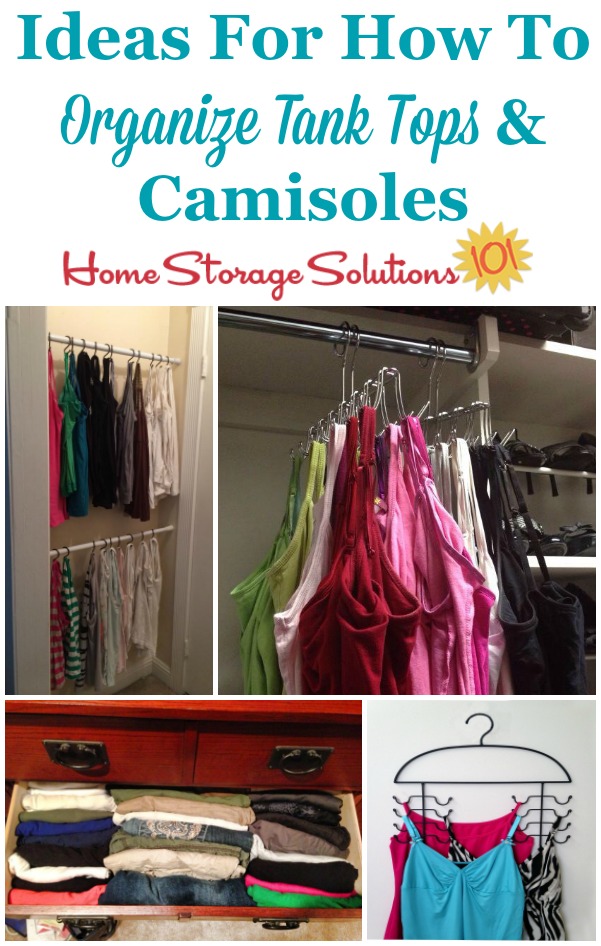
Credit: www.home-storage-solutions-101.com
Table: Pros And Cons Of Each Storage Method
To help you decide which method or combination is right for you, here’s a quick comparison:
| Method | Pros | Cons |
|---|---|---|
| Hanging (standard) | Easy access, prevents wrinkles | Can slip off, uses more space |
| Multi-tier hanger | Space-saving, keeps tops visible | May tangle if overfilled |
| File folding | Maximizes drawer space, easy to see all tops | Requires effort to maintain neatness |
| Rolling | Great for travel, minimizes wrinkles | Not as visible, may shift in drawer |
| Storage bins | Good for off-season, keeps tops clean | Less accessible for daily use |
The Extra Mile: Personalizing Your Storage
A truly effective system isn’t just about space—it’s about what works for you. Here are two advanced tips:
- Use labels or tags for bins or sections, especially if you share space with family or roommates.
- Try a quick photo inventory with your phone. Snap a picture of your organized drawer or bin. If you forget what’s inside, you have a visual reminder.
Personalizing your system means you’ll actually stick with it, and it will keep working over time.

Credit: www.reddit.com
Frequently Asked Questions
What Is The Best Way To Store Tank Tops In A Small Room?
Use vertical space—hang a shoe organizer behind your door or install wall hooks. File folding in shallow drawers also saves room. Rolling tank tops in bins that fit under your bed is another great option for very tight spaces.
How Do I Keep Tank Top Straps From Slipping Off Hangers?
Choose hangers with notches or a velvet/rubber coating. For regular hangers, add small elastic bands to the ends to create grip. Multi-tier hangers with loops are specially designed to hold straps securely.
Is It Better To Fold Or Hang Delicate Tank Tops?
Delicate tank tops, especially those made from silk or thin cotton, should be folded and stored flat to prevent stretching and strap damage. Use acid-free tissue paper between layers to avoid creasing.
How Can I Organize Tank Tops By Color Or Style?
Group tank tops by color, type (like racerback or spaghetti strap), or use (casual, workout, dressy). In drawers, file fold and arrange by shade. On hangers, use colored tabs or dividers to separate groups for easy access.
What Should I Do With Tank Tops I Don’t Wear Often?
For rarely worn tank tops, wash and fold them, then store in a labeled bin or box. Keep these bins on a high shelf or under the bed to free up everyday space. Review the collection every few months to donate or recycle tops you no longer want.
A smart storage system for tank tops can make a real difference in your daily routine and extend the life of your wardrobe. With these tips and examples, you’ll find a method—or combination—that fits your space, style, and needs. Try out a few ideas, and enjoy a more organized, stress-free closet experience.
