

Words of Affirmation: Transform Your Life with Positive Self-Talk
Every day, the words we choose shape the world around us. A single phrase can brighten someone’s morning, heal a wounded heart, or inspire confidence that lasts for years. This power is at the center of what many call words of affirmation—a simple, yet profound way to connect, support, and build trust with others. Whether you want to deepen a relationship, raise a child’s self-esteem, or bring positivity to your workplace, understanding and using words of affirmation can change lives—including your own.
Many people have heard the term, but few truly understand how these words work or why they matter. If you sometimes wonder, “Why do kind words matter so much?” or “How can I use affirmations in my daily life?”—you’re in the right place. This article covers everything you need to know about words of affirmation: their science, their impact, how to use them well, and practical tips for making them part of your everyday routine.
What Are Words Of Affirmation?
Words of affirmation are positive, encouraging, and supportive phrases you say to yourself or others. They can be as simple as “I’m proud of you” or “You did a great job.” These words go beyond basic compliments; they are about recognizing someone’s value, effort, or feelings.
This type of communication is part of the five love languages, a concept developed by Dr. Gary Chapman. Out of all the ways people give and receive love, many feel especially cared for when they hear kind, affirming words.
Affirmations can be:
- Spoken aloud: “You handled that situation well.”
- Written: A note saying, “Thank you for your hard work.”
- Texted: “Thinking of you. You’re amazing!”
No matter the method, the goal is the same: to lift, reassure, and connect.
Why Words Of Affirmation Matter
Kind words do more than just sound nice. They have real effects on the mind and heart. When you use words of affirmation, you can:
- Boost confidence
- Reduce stress
- Strengthen relationships
- Build trust
- Encourage growth
Research shows that hearing positive feedback can actually change the brain. When someone feels seen and valued, their brain releases chemicals like dopamine and oxytocin, which create feelings of happiness and connection. This is why a simple “I believe in you” can mean so much.
In difficult times, affirmations help people stay strong. After setbacks, encouraging words remind us of our abilities. Over time, these messages become part of our inner voice, shaping how we see ourselves.
The Science Behind Affirmations
It’s not just about being nice—affirmations are backed by science. Studies in psychology show that regular positive statements can help people:
- Reduce negative thoughts
- Improve problem-solving
- Handle stress better
- Increase motivation
One study found that students who practiced self-affirmation before exams performed better than those who didn’t. Another found that employees who received positive feedback felt more engaged and loyal at work.
The self-affirmation theory explains why this happens. When people remind themselves (or are reminded by others) of their strengths and values, they feel more secure and capable. This makes it easier to face challenges and try new things.
Different Types Of Words Of Affirmation
Words of affirmation come in many forms. Here are the main types:
Personal Affirmations
These are messages you say to yourself. They help build self-esteem and a positive mindset.
Examples:
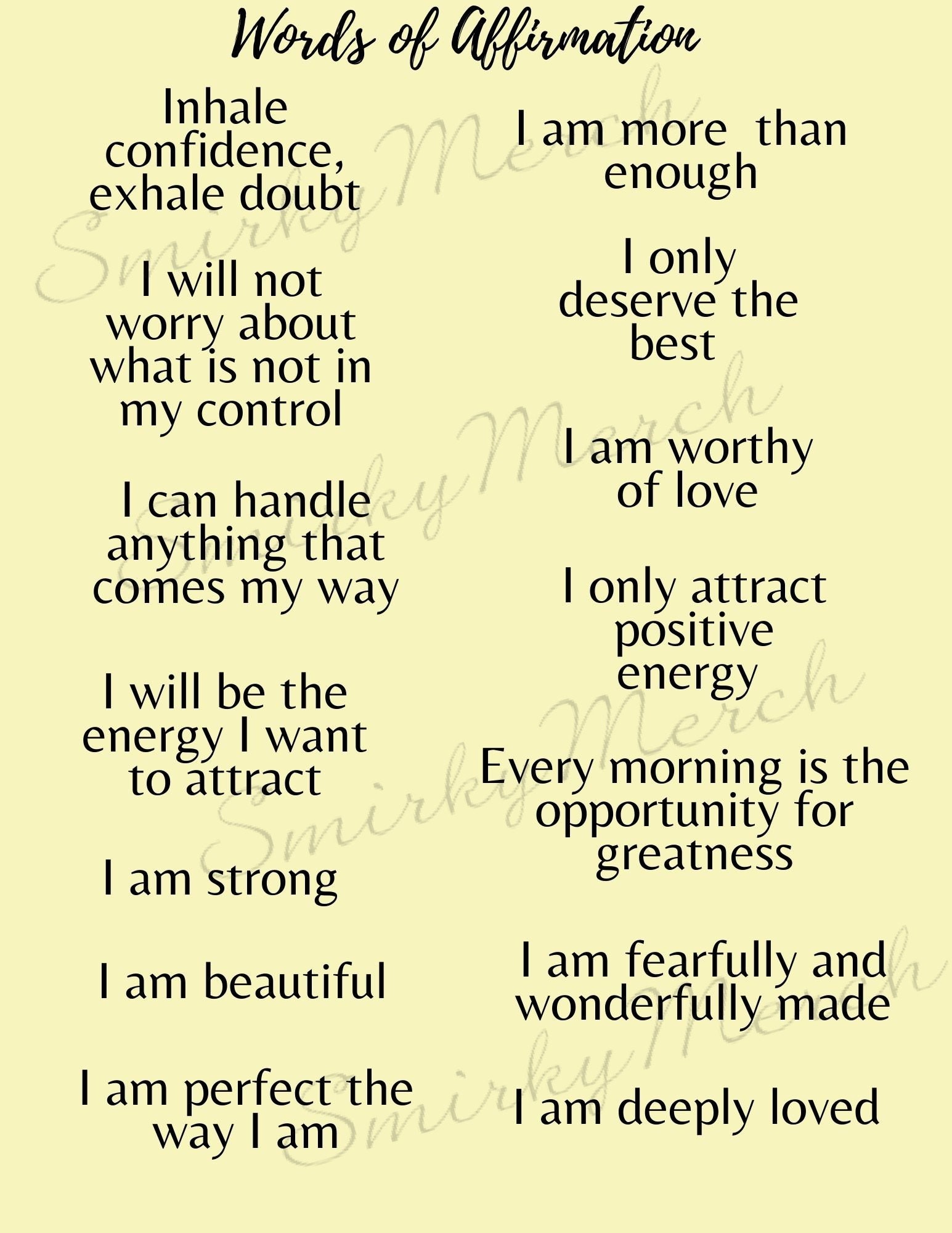
- “I am capable of learning new things.”
- “I am worthy of respect.”
Relationship Affirmations
These are words you share with friends, partners, or family. They show appreciation and love.
Examples:
- “I’m grateful for your support.”
- “You make my life better.”
Achievement Affirmations
Used to encourage effort and celebrate success.
Examples:
- “You worked hard and it paid off.”
- “I’m proud of your progress.”
Future-oriented Affirmations
These focus on goals and possibilities.
Examples:
- “I will face today with courage.”
- “You have what it takes to succeed.”
Credit: www.etsy.com
How Words Of Affirmation Strengthen Relationships
In personal relationships—romantic, family, or friendship—affirming words play a key role. Many people need to hear love and appreciation to feel secure.
Some reasons words of affirmation are so powerful in relationships:
- They show you notice and value the other person.
- They create emotional safety.
- They repair hurt feelings after a conflict.
- They motivate people to keep trying, even when things are hard.
People who hear regular, sincere affirmation tend to be more open, honest, and loving in return. It’s a cycle: the more you affirm, the stronger the bond grows.
Words Of Affirmation As A Love Language
For some people, words of affirmation are not just nice—they are essential. If this is your love language, you feel happiest and most loved when you hear encouraging, kind words from people close to you.
Signs that words of affirmation are your love language:
- You remember compliments for a long time.
- Negative words hurt you deeply.
- You often give praise to others.
- You feel closest to people who express themselves verbally.
If you have a partner, friend, or child with this love language, regular affirming words can be life-changing for them.
Using Words Of Affirmation In Daily Life
It’s easy to forget to say kind things when life is busy. But making affirmations a habit can make your home, workplace, or classroom a better place for everyone.
Here are some practical ways to use words of affirmation every day:
- Start small. Try a simple “Thank you” or “I’m glad you’re here.”
- Be specific. Instead of “Good job,” say “You explained your idea clearly in that meeting.”
- Make it personal. Use the person’s name or mention something unique to them.
- Write notes. Leave sticky notes, send texts, or write emails with affirming words.
- Say it in public. Praise someone in front of others to boost their confidence.
- Be consistent. Make affirmations part of your routine, not just for special occasions.
- Listen well. Sometimes, just repeating back what someone said (“You worked really hard on that”) can be powerful.
Examples Of Words Of Affirmation For Different Situations
Knowing what to say can be hard at first. Here are examples you can use or adapt:
For Partners
- “I appreciate everything you do for us.”
- “You make me a better person.”
- “I love spending time with you.”
For Children
- “I’m proud of how hard you tried.”
- “You are important to me.”
- “You make a difference in our family.”
For Friends
- “You always know how to make me laugh.”
- “I trust your advice.”
- “Thanks for being there when I need you.”
For Coworkers
- “Your ideas help our team succeed.”
- “I admire your work ethic.”
- “You handled that challenge really well.”
For Yourself
- “I am learning and growing every day.”
- “I can handle anything that comes my way.”
- “I deserve kindness and respect.”
Tips For Making Affirmations Effective
Not all words of affirmation have the same impact. Here’s how to make yours truly matter:
- Be genuine. People know when you’re not sincere. Only say what you mean.
- Be timely. Give affirmations soon after the action or event.
- Focus on effort and qualities. Instead of just results, praise hard work, honesty, or creativity.
- Use positive language. Avoid backhanded compliments or sarcasm.
- Repeat important messages. Sometimes people need to hear encouragement more than once.
A common mistake is only giving affirmation when things go perfectly. Remember to affirm effort, progress, and character—not just achievements.
Common Mistakes To Avoid
While affirmations are simple, people often get them wrong. Some mistakes include:
- Being vague: “You’re great” is nice, but “I admire how you listen to others” is better.
- Overusing the same phrase: If you always say “Good job,” it can lose meaning.
- Praising only results: This can make people fear failure. Celebrate effort and learning, too.
- Ignoring cultural differences: In some cultures, public praise is uncomfortable. Be aware of what feels right for the person.
- Being insincere: Empty words do more harm than good.
The Power Of Self-affirmation
It’s easy to focus on affirming others, but don’t forget yourself. Self-affirmation is the practice of reminding yourself of your own strengths, values, and worth.
Benefits include:
- Less stress
- Better focus
- Increased motivation
To start, write down three things you like about yourself. Repeat them each morning. Over time, you may notice a shift in your mood and confidence.
Words Of Affirmation In Parenting
Parents who use affirming words help their children build strong self-esteem and emotional health. Children who hear positive feedback are more likely to try new things, recover from mistakes, and treat others with kindness.
Practical tips for parents:
- Praise effort: “You tried your best, and that’s what matters.”
- Notice small things: “I saw how you shared your toys. That was kind.”
- Encourage honesty: “Thank you for telling me the truth, even when it was hard.”
- Show unconditional love: “I love you no matter what.”
Avoid comparing children to others. Focus on their unique strengths and progress.
Words Of Affirmation At Work
A positive workplace isn’t just about good pay or benefits. Recognition and affirmation can boost morale, productivity, and loyalty.
Ways to use affirmations at work:
- Publicly praise team achievements.
- Write thank-you emails for extra effort.
- Give feedback that highlights strengths.
- Encourage during tough projects.
Managers who practice regular affirmation see lower turnover and higher job satisfaction. Employees who feel valued are more likely to go the extra mile.
Here’s a comparison of the effects of affirmation in different workplace settings:
| Workplace Type | With Affirmation | Without Affirmation |
|---|---|---|
| High-pressure office | Lower stress, higher motivation | Burnout, disengagement |
| Creative team | More innovation, better teamwork | Fear of sharing ideas |
| Retail/service | Better customer service, less turnover | Low morale, high staff turnover |
Cultural Differences In Using Words Of Affirmation
Not all cultures use affirming words in the same way. In some places, open praise is common. In others, it’s more subtle or even avoided.
For example:
- In Western cultures, direct praise is normal and expected.
- In many Asian cultures, modesty is valued, and public praise can feel uncomfortable.
- In some African and Middle Eastern cultures, affirmation may come through actions rather than words.
When giving affirmations, pay attention to what feels natural for the person. Sometimes a private word or a written note is better than public praise.
The Role Of Technology In Sharing Affirmations
Technology has made it easier to share kind words, no matter the distance. Messages, emails, and social media all offer new ways to affirm others.
Some ideas:
- Send a morning text to start someone’s day positively.
- Share a photo with a kind caption on social media.
- Use workplace chat tools to give quick shout-outs.
- Record a voice message for a more personal touch.
However, digital words can sometimes feel less personal. Whenever possible, add a unique detail or say something only you would know about the person.
Words Of Affirmation For Different Age Groups
Affirmations are not just for adults. People of all ages benefit, but the style and words may change.
| Age Group | Effective Affirmations | Notes |
|---|---|---|
| Young children | "You tried so hard!", "I love your creativity." | Simple, direct, often repeated |
| Teens | "Your ideas matter.", "I trust your judgment." | Avoid sounding patronizing |
| Adults | "You make a difference.", "I appreciate your support." | Make it specific, genuine |
| Seniors | "Your wisdom helps us.", "We value your experience." | Recognize history, contributions |

Credit: dandyworldwide.com
Words Of Affirmation In Education
Teachers who use affirming words help students feel safe, motivated, and eager to learn. This leads to better grades, fewer behavior problems, and higher self-esteem.
Effective teacher affirmations:
- “I see you working hard.”
- “It’s okay to make mistakes; that’s how we learn.”
- “Your question was thoughtful.”
Teachers should avoid generic praise like “Good job.” Instead, be specific: “You made a smart connection between the two ideas.”
Building A Habit Of Affirmation
Making affirmations a regular part of your life doesn’t happen overnight. Here are steps to build the habit:
- Set reminders. Use your phone or sticky notes as prompts.
- Keep a gratitude journal. Each day, write down something positive you noticed about someone.
- Practice reflection. At the end of the day, think of three affirmations you gave or received.
- Start meetings with praise. Open work or family meetings by affirming someone’s contribution.
- Encourage others to join. Share the benefits and invite friends or coworkers to do the same.
Over time, affirming words will become natural. You’ll notice more good things about yourself and others.
Data And Statistics On Affirmations
Numbers can help show just how powerful affirmations are:
- Studies show that people who receive regular affirmation at work are 31% more productive.
- Children who hear positive feedback at home are more likely to have high self-esteem and succeed in school.
- Couples who practice affirming communication report higher satisfaction in their relationships.
Here’s a summary of key research findings:
| Area | With Affirmations | Without Affirmations |
|---|---|---|
| Work performance | Higher engagement, less burnout | Lower morale, higher stress |
| Child development | Greater confidence, better grades | More anxiety, lower achievement |
| Relationships | Stronger bonds, more trust | More conflict, less intimacy |
Non-obvious Insights About Words Of Affirmation
Many people miss these important points:
- Negative words have a stronger effect than positive ones. One harsh comment can erase several kind ones. This means you need to be consistent with affirmations and careful with criticism.
- Personal affirmations work best when they match your true values. If you say things you don’t believe, your brain resists them. The most powerful affirmations are honest and meaningful to you.
Another detail: the way you say words of affirmation—your tone, eye contact, and body language—matters as much as the words themselves. A warm, sincere voice makes even a simple message powerful.
When Words Of Affirmation Don’t Work
Sometimes, affirmations don’t have the effect you hope for. Reasons might include:
- The person doesn’t trust you yet.
- Your words don’t match your actions.
- The affirmation is too vague or generic.
- The person prefers another love language, such as acts of service.
If you notice your words aren’t landing, ask the person how they like to receive support. Adjust your approach to fit their needs.
Practicing Affirmations During Tough Times
When life is hard, affirmations can be a lifeline. But it’s important to be sensitive. Avoid false cheer (“Everything will be fine”) if someone is struggling. Instead, focus on genuine encouragement:
- “I see how hard you’re trying.”
- “You’re not alone in this.”
- “It’s okay to feel upset. I’m here for you.”
During grief, illness, or failure, honest, caring words matter most.
Credit: www.etsy.com
Creating Your Own Affirmations
You don’t need to rely on ready-made phrases. Creating personal affirmations is simple:
- Think of a quality or value you admire (in yourself or someone else).
- Use present tense (“I am patient” or “You are caring”).
- Be specific (“I handle challenges calmly”).
- Repeat regularly.
If you’re stuck, ask a friend what they appreciate about you—or think about compliments you’ve received in the past.
Affirmations And Mental Health
Affirmations are not a cure for deep emotional pain or mental illness, but they can be a helpful tool. People struggling with anxiety or low self-esteem often benefit from daily positive statements.
If you or someone you know is dealing with ongoing sadness or negative thoughts, consider combining affirmations with professional support. Many therapists use affirmation techniques in their work.
For more on the science of affirmations, visit the Wikipedia article on self-affirmation.
Frequently Asked Questions
What Are Some Examples Of Words Of Affirmation?
Simple examples include “I’m proud of you,” “You make a difference,” “I appreciate your help,” and “You have great ideas. ” The best affirmations are specific and genuine.
How Often Should I Use Words Of Affirmation?
There’s no set number, but regular, sincere affirmations are most effective. Try to notice and mention positive things every day, both at home and at work.
Can Words Of Affirmation Help Improve Self-esteem?
Yes. Regular, honest affirmations—especially those focused on effort and personal strengths—can help build self-worth and reduce negative thinking.
What If Someone Doesn’t Respond Well To My Affirmations?
Not everyone likes the same kind of affirmation. Some people prefer written notes, others like private words instead of public praise. Ask how they like to receive encouragement.
Are Words Of Affirmation Only For Romantic Relationships?
No. Words of affirmation can strengthen all types of relationships—friends, family, coworkers, and even your relationship with yourself.
Using words of affirmation is a simple but powerful way to support the people around you and yourself. Whether spoken, written, or sent digitally, these words can lift spirits, build confidence, and create bonds that last. With mindful practice, you can make affirmation a natural part of your life, spreading positivity wherever you go.
