

How to Affirmations Help Boost Confidence and Achieve Goals
How Do Affirmations Help? The Complete Guide
Daily life can be stressful. Negative thoughts often come without warning. Many people struggle with self-doubt, low confidence, or anxiety. But what if there was a simple mental tool that could help? Affirmations are short, positive statements you repeat to yourself. They may sound simple, but their power goes deeper than most people realize.
Affirmations are more than just wishful thinking. They reshape how your mind works. Used correctly, they can boost confidence, help manage stress, and even improve performance at work or school. But how does this happen? And is there real science behind these positive phrases?
This guide explores how affirmations work, why they matter, and how you can use them effectively. You’ll discover practical examples, surprising research findings, and expert tips. If you want to make real changes in your mindset, read on.
What Are Affirmations?
Affirmations are positive statements that focus on what you want to believe or achieve. People repeat them to themselves, sometimes out loud, sometimes quietly in their minds. The goal is to replace negative thoughts with positive beliefs.
For example, instead of thinking “I’m not good enough,” you might say “I am capable and strong. ” Over time, these words can influence your feelings and actions.
There are two main types of affirmations:
- Self-affirmations: These focus on your values, strengths, or qualities. Example: “I am a caring friend.”
- Goal-oriented affirmations: These are about something you want to achieve. Example: “I am becoming more confident each day.”
Both types help you build a positive self-image and can change how you react to challenges.
How Do Affirmations Work In The Brain?
Repeating affirmations is not just about saying nice words. There is a process happening in your mind. Here’s how it works:
- Activating Reward Centers: When you say positive statements about yourself, it lights up certain areas in your brain. These are the same centers that respond to rewards.
- Changing Self-Perception: Over time, affirmations can shift how you see yourself. Negative beliefs can fade, replaced by more positive ones.
- Building New Habits: Your brain forms connections through repetition. When you use affirmations often, positive thinking becomes more natural.
A study using brain scans found that self-affirmations can increase activity in the ventromedial prefrontal cortex—an area linked to self-worth and value. This is why affirmations are more than just words.
The Science Behind Affirmations
Some people are skeptical. They wonder, “Can repeating words really change anything? ” Science suggests the answer is yes—if you use them correctly.
- Research from Carnegie Mellon University: People who practiced affirmations showed less stress and better problem-solving skills.
- A study in the journal Social Cognitive and Affective Neuroscience: Affirmations activated parts of the brain related to reward and self-processing.
- Meta-analyses: Reviews of many studies show affirmations can help with stress, health behaviors, and academic performance.
But there’s an important detail: affirmations work best when they are believable and used regularly. If you repeat something you don’t believe at all, it can backfire.
Why Do Affirmations Help?
Affirmations help by addressing the root of negative thinking. Here’s why they make a difference:
- They challenge limiting beliefs: Many people carry old, negative ideas about themselves. Affirmations help break these patterns.
- They focus your attention: The more you repeat a positive idea, the more your mind looks for proof of it in your life.
- They create emotional safety: When you affirm your strengths, you feel more secure. This makes it easier to face challenges.
- They build resilience: Repeating positive statements can help you bounce back from setbacks.
Benefits Of Using Affirmations
People use affirmations for many reasons. Here are some of the most common benefits:
- Reduced Stress: When you face stress, positive self-talk helps you stay calm and focused.
- Greater Self-Esteem: Regular use of affirmations can make you feel better about yourself.
- Better Performance: Athletes, students, and professionals use affirmations to boost their confidence and results.
- Improved Health Habits: Studies show affirmations can help people stick to exercise, eat healthier, or quit smoking.
- More Optimism: Affirmations encourage a positive outlook, even when things are tough.
These benefits don’t happen overnight. Like any skill, affirmations need practice.
Common Myths About Affirmations
There are many misunderstandings about affirmations. Let’s clear up a few:
- Myth 1: Affirmations are just wishful thinking.
- In reality, they help rewire negative thought patterns.
- Myth 2: You have to believe them 100% right away.
- It’s normal if it feels awkward at first. Belief grows with practice.
- Myth 3: Affirmations solve all problems.
- They are a tool, not a magic fix. Real change comes from combining affirmations with action.
How To Create Effective Affirmations
Not all affirmations work equally well. Here’s how to make yours more powerful:
- Keep them positive: Focus on what you want, not what you want to avoid. For example, say “I am confident” instead of “I am not afraid.”
- Use present tense: Phrase your statement as if it’s already true. “I am successful,” not “I will be successful.”
- Make them personal: Use “I” statements. They should feel like they belong to you.
- Keep them realistic: Choose affirmations you can believe or grow into. If it’s too far from your current reality, adjust it.
- Be specific: “I am a good student” is better than “I am great.”
Here are some examples:
- “I handle challenges with grace.”
- “I am learning and growing every day.”
- “I trust myself to make good decisions.”
When And How Often Should You Use Affirmations?
There is no single “right” time to use affirmations, but these moments can be especially helpful:
- Morning: Start your day with a positive mindset.
- Before stressful events: Calm nerves before a test, interview, or meeting.
- During tough times: Remind yourself of your strengths when life is hard.
- At bedtime: End the day on a positive note.
Most experts suggest repeating affirmations at least once or twice daily. Some people write them out, others say them out loud, and some use both methods.

Credit: www.affirmations.online
Step-by-step: How To Practice Affirmations
Here’s a simple way to get started:
- Choose Your Affirmation: Pick one that fits your situation or goal.
- Find a Quiet Space: Remove distractions for a few minutes.
- Repeat Slowly: Say the affirmation out loud or in your mind. Focus on the words.
- Feel the Meaning: Imagine what your life would be like if the statement were true.
- Practice Daily: Make it a habit, like brushing your teeth.
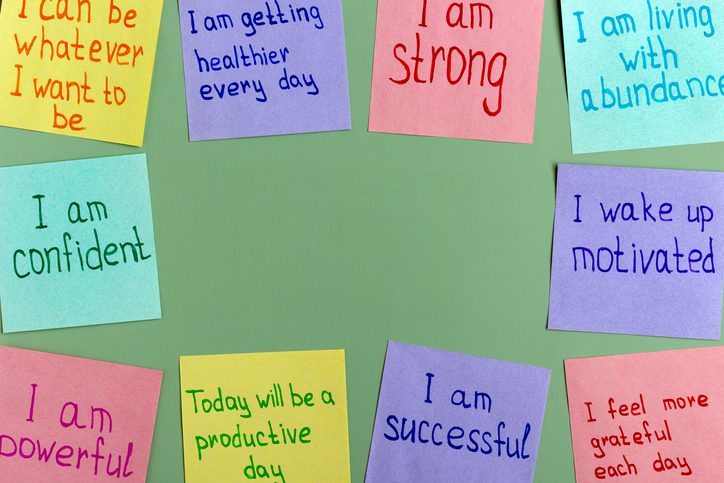
A helpful tip: Write your affirmation on a sticky note and place it where you’ll see it often—like your mirror or computer.
Affirmations For Different Needs
Affirmations are not one-size-fits-all. Here are some examples for various situations:
For Confidence
- “I believe in myself and my abilities.”
- “I am worthy of respect and kindness.”
For Stress
- “I am calm and centered, no matter what happens.”
- “I let go of what I cannot control.”
For Success
- “I am focused and persistent in reaching my goals.”
- “I attract opportunities that help me grow.”
For Relationships
- “I am a loving and caring friend.”
- “I communicate honestly and openly.”
For Health
- “I make healthy choices for my mind and body.”
- “I am strong and full of energy.”
You can create your own or adapt these to fit your life.
Real-life Examples: How Affirmations Change Lives
Many people have experienced real change from using affirmations. Here are a few stories:
- Sarah, a student: She used affirmations to overcome fear before exams. “I am prepared and capable,” she’d say. Her grades improved, and she felt less anxious.
- James, a manager: James struggled with self-doubt at work. By repeating “I am an effective leader,” he became more confident in meetings. His team noticed his new energy.
- Priya, recovering from illness: Priya used health-focused affirmations during recovery. “My body is healing every day.” She says it helped her stay positive and motivated.
These stories show affirmations work best when combined with action—studying, leading, or healthy habits.
Mistakes People Make With Affirmations
Even with the best intentions, it’s easy to use affirmations in ways that don’t help. Watch out for these common mistakes:
- Choosing statements that feel fake: If you pick an affirmation too far from your reality, your mind may reject it.
- Not repeating often enough: Occasional use won’t create lasting change.
- Ignoring negative thoughts: Affirmations work best when you notice and gently challenge your negative beliefs, not just cover them up.
- Skipping visualization: Just saying words is less effective than feeling and imagining the outcome.
- Lack of patience: Change takes time. Some people quit before affirmations have a chance to work.
A practical solution: Start with small, believable statements and build up as your confidence grows.
Data: What Do Studies Say About Affirmations?
Many studies have measured the impact of affirmations. Here is a quick comparison of outcomes from different groups:
| Group | Result with Affirmations | Result without Affirmations |
|---|---|---|
| College Students (Stress Test) | Lower stress, better performance | Higher stress, more errors |
| Employees (Workplace) | Greater confidence, better teamwork | More anxiety, less cooperation |
| Patients (Health Goals) | More exercise, healthier choices | Less motivation, missed goals |
These findings show that affirmations can make a real difference in many areas of life.
How Affirmations Compare To Other Self-help Tools
Affirmations are one tool among many. How do they stack up against other methods?
| Method | Main Benefit | Limitation |
|---|---|---|
| Affirmations | Boost self-image, reduce stress | Need regular practice, work best with belief |
| Meditation | Calms mind, improves focus | Takes time to learn, some find it hard to sit still |
| Journaling | Clarifies thoughts, tracks growth | Needs consistency, can stir up tough feelings |
| Therapy | Deep healing, expert support | Cost, finding the right therapist |
Often, the best results come from combining affirmations with other tools, not choosing just one.
Credit: canyonvista.com
Advanced Tips: Take Your Affirmations Further
Once you’re comfortable with the basics, try these tips to deepen your practice:
- Record and listen: Make a voice note of your affirmations and listen while walking or relaxing.
- Write them out: Writing by hand can make affirmations feel more real.
- Use visual reminders: Create posters or wallpapers with your favorite statements.
- Pair with breathing: Say your affirmation while taking slow, deep breaths for extra calm.
- Share with a friend: Encourage each other and make it a team effort.
A non-obvious tip: Try using affirmations during “in-between” moments—like waiting for a bus or standing in line. These small pockets of time add up.
What If Affirmations Don’t Seem To Work?
Sometimes, people say affirmations but don’t see results. Here’s what to check:
- Are you repeating them often enough?
- Do you believe the statement, even a little?
- Are you taking positive actions too?
- Are you addressing negative thoughts when they come up?
It can help to adjust your affirmation. For example, instead of “I am confident,” try “I am learning to be more confident. ” This small change can make the statement feel true and easier for your mind to accept.
Cultural Differences In Affirmation Use
Affirmations are used around the world, but there are cultural differences in how people approach them.
- In some cultures, talking about your strengths feels normal and encouraged.
- In others, people may feel shy or uncomfortable praising themselves.
If affirmations feel awkward, try focusing on values or actions instead of just qualities. For example, “I value hard work” or “I am doing my best today.”
The Link Between Affirmations And Self-compassion
Affirmations are not just about confidence—they also build self-compassion. This means being kind to yourself, especially when you make mistakes.
When you use affirmations, you practice seeing yourself in a positive light. Over time, this can reduce harsh self-criticism and increase your ability to recover from setbacks.
Research shows self-compassion is linked to greater happiness, less anxiety, and better relationships. Affirmations are a simple way to start building this important trait.
Are There Risks Or Downsides?
Affirmations are safe for most people, but there are a few things to keep in mind:
- If you use statements that feel completely untrue, you might feel worse, not better.
- Affirmations are not a replacement for therapy or medical help if you’re dealing with serious mental health issues.
- For some, focusing only on positive statements can lead to ignoring real problems.
The best approach is to use affirmations as one part of your personal growth, not the only tool.
Using Technology To Support Affirmations
Technology can make it easier to build new habits. Here are some ways to use it for affirmations:
- Apps: Many apps send you daily affirmation reminders.
- Smartphones: Set your affirmation as a lock screen or alarm name.
- Social media: Follow accounts that share positive statements.
- Voice assistants: Program your device to say your affirmation at certain times.
Just remember: technology can remind you, but the real power comes from your own practice.
Affirmations And Children
Affirmations are not just for adults. Children can benefit too:
- They build confidence during school or social challenges.
- They help with handling mistakes and setbacks.
- They encourage healthy self-talk from a young age.
For kids, keep statements simple and fun. For example, “I am a good friend” or “I can try new things. ”
How Long Does It Take To See Results?
Change doesn’t happen overnight. For most people, it takes a few weeks of regular practice to notice a difference. The key is consistency.
Think of affirmations like exercise for your mind. A single workout won’t change much, but steady practice leads to real results. If you stick with it, you may notice:
- More positive thoughts during stressful times
- Increased confidence in new situations
- A greater sense of calm and control

Credit: mindbodycoop.com
Non-obvious Insights For Success
Beginners often miss these important points:
- Combine affirmations with action: Saying “I am healthy” works best when paired with healthy choices.
- Adjust as you grow: As your mindset changes, update your affirmations to match your new reality.
- Track your progress: Keep a journal of your thoughts and feelings. This makes changes easier to notice.
Small steps add up. Even if you feel silly at first, keep going. Many people are surprised by how much they change over time.
Where To Find More About Affirmations
If you want to go deeper, check out resources like books, podcasts, and research articles. One good place to start is Wikipedia’s page on affirmations, which includes history and links to studies.
Frequently Asked Questions
What Is The Best Way To Use Affirmations For Beginners?
Start by picking one or two positive statements that feel believable. Repeat them each morning and evening, either aloud or in your mind. Write them where you will see them often. Most importantly, connect the words with real feelings and actions.
Can Affirmations Help With Anxiety Or Depression?
Affirmations can reduce stress and help you manage negative thoughts. But if you have severe anxiety or depression, use them along with professional support. They are not a replacement for therapy or medical care.
Do I Have To Say Affirmations Out Loud?
No. You can repeat them silently, write them down, or even listen to recordings. The key is to focus on the meaning and use them regularly.
How Long Before Affirmations Start Working?
Most people notice small changes within a few weeks if they practice daily. For deeper changes, it may take a few months. Consistency is more important than speed.
Can Children Use Affirmations?
Yes, affirmations are helpful for children. They boost confidence and help kids handle challenges. Use simple, age-appropriate statements and make it a fun habit together.
Affirmations are a simple, powerful tool. With patience and regular practice, they can help you change your mindset and your life. Start small, stay consistent, and see how positive words can shape your future.
