

Why is Affirmation So Important? Unlocking Its True Power
Why Is Affirmation So Important
Most people have days when they doubt themselves or feel unsure. Sometimes, life’s challenges make us question our abilities. In these moments, a few kind words or a gentle reminder can make a big difference. This is where the power of affirmation comes in. Affirmation is much more than just saying something positive; it’s about shaping the way we see ourselves and the world.
You might wonder why affirmation matters so much. Is it just about feeling good? Or is there more to it? In fact, affirmation plays a key role in our mental health, confidence, relationships, and even our success. When used properly, it can change negative thinking into positive action.
Let’s explore why affirmation is so important, how it works, and how you can use it in your own life to grow stronger, happier, and more confident.
Understanding Affirmation
Affirmation means saying or thinking positive statements about yourself or others. These statements support, encourage, and strengthen beliefs. For example, telling yourself, “I am capable,” is an affirmation. When others say, “You did a great job,” that is also an affirmation.
There are two main types:
- Self-affirmation: Positive statements you say to yourself.
- Interpersonal affirmation: Positive feedback or encouragement given to others.
Both types help build self-esteem and promote a healthy mindset.
The Science Behind Affirmation
Researchers have found that affirmations can affect the brain. When you repeat positive statements, parts of your brain linked to self-worth become more active. This helps to change the way you think about yourself. For example, a study using MRI scans showed that people who practiced self-affirmation had less stress and were better at solving problems.
Affirmation isn’t just wishful thinking. It’s a proven method to support mental health and personal growth.
The Role Of Affirmation In Mental Health
Mental health problems like anxiety, depression, and stress are common in modern life. Many people struggle with negative self-talk, which can make these problems worse. Affirmation offers a simple but powerful way to fight these negative thoughts.
Reducing Negative Self-talk
Negative self-talk means thinking things like “I’m not good enough” or “I always fail.” This type of thinking can become a habit, and over time it damages self-esteem. Using affirmations helps you challenge and replace these thoughts. For example, if you catch yourself thinking, “I can’t do this,” you can replace it with, “I will give it my best effort.”
A study in the journal Social Cognitive and Affective Neuroscience found that people who practiced self-affirmation had lower levels of cortisol, a stress hormone. This means affirmation can help reduce stress and improve emotional well-being.
Supporting Emotional Resilience
Life is full of ups and downs. Emotional resilience means being able to handle setbacks and keep going. People who use affirmations often are better at bouncing back from difficulties. They see challenges as opportunities to grow, not as proof of failure.
One non-obvious insight is that affirmations work best when they are specific. Instead of saying, “I am good,” try, “I handled today’s meeting well.” This makes the affirmation more believable and more effective.

Credit: www.etsy.com
Affirmation And Confidence Building
Self-confidence is key to success in many areas of life. Confident people try new things, take risks, and learn from mistakes. Lack of confidence can hold you back.
How Affirmation Builds Confidence
When you repeat positive statements about your abilities, you start to believe them. This belief changes how you act. For example, if you tell yourself, “I can learn new skills,” you are more likely to try new things at work or school.
Here’s a simple comparison:
| Without Affirmation | With Affirmation |
|---|---|
| Doubt your abilities | Believe in your abilities |
| Avoid challenges | Face challenges |
| Fear of failure | See failure as learning |
Confidence grows with practice. The more you affirm your strengths, the stronger your confidence becomes.
Affirmation In Action
Athletes often use affirmations before competitions. For example, a runner might say, “I am strong and fast. ” This helps them focus and perform better. You can use the same technique before a big test, job interview, or presentation.
Another insight: Affirmation is not about ignoring weaknesses. It’s about recognizing strengths while accepting areas for growth. This balanced approach is key to real confidence.
Improving Relationships Through Affirmation
Affirmation is not just for individuals. It also plays a major role in healthy relationships. When people feel valued and appreciated, they are happier and more connected.
Giving Affirmation To Others
Simple words like “Thank you,” “You did great,” or “I appreciate you” can strengthen bonds. Partners, friends, and colleagues all need affirmation. Research shows that couples who regularly affirm each other feel closer and more satisfied in their relationship.
The Cycle Of Positive Communication
Affirmation creates a cycle of positivity. When you affirm someone, they are more likely to affirm you back. This builds trust and goodwill.
For example, in a workplace:
| With Affirmation | Without Affirmation |
|---|---|
| Team feels motivated | Team feels ignored |
| Better teamwork | Poor cooperation |
| More innovation | Less creativity |
Affirmation is a simple tool, but its effect on group dynamics is powerful.
Affirmation And Personal Growth
Personal growth means becoming a better version of yourself. This could involve learning new skills, setting goals, or changing habits. Affirmation supports this process in several ways.
Setting And Achieving Goals
When you set a goal, affirmation helps you stay focused and motivated. For example, if your goal is to exercise more, saying “I am committed to my health” each morning can help you stick to your plan.
A non-obvious tip: Link your affirmations to your values. If you value honesty, an affirmation like “I speak the truth kindly” will feel more meaningful. This makes it easier to stay motivated.
Overcoming Self-doubt
Many people have a “critical inner voice” that doubts their progress. Affirmation is a way to answer back. When you say, “I am making progress,” you remind yourself that growth takes time.
Personal growth requires patience and self-kindness. Affirmation is an important tool for both.
The Impact Of Affirmation In The Workplace
A positive work environment is built on trust, respect, and encouragement. Affirmation plays a key role in creating this atmosphere.
Employee Motivation And Morale
Employees who feel appreciated are more engaged and productive. According to a survey by Gallup, workers who receive regular recognition are more satisfied and perform better. Affirmation can be as simple as a manager saying, “Great job on that project.
” This small effort leads to big results.
Reducing Workplace Stress
Work can be stressful. Affirmation helps reduce tension and build resilience. Teams that support and affirm each other handle challenges better.
A helpful tip: Public recognition increases the power of affirmation. Praise given in front of others boosts morale even more.
Encouraging Innovation
When employees feel safe and valued, they are more likely to share new ideas. Affirmation tells people their input matters. This leads to more creativity and better solutions.

Credit: www.thegoodtrade.com
Affirmation And Physical Health
You may not expect positive words to affect your body, but they can. Research has linked affirmation to better physical health in several ways.
Lower Stress And Better Recovery
Affirmations help lower stress, which is good for your heart and immune system. People who practice positive self-talk recover faster from illness or surgery.
For example, a study published in Health Psychology found that people using self-affirmation before a medical procedure had less anxiety and healed faster.
Encouraging Healthy Habits
Affirmation can also support healthy choices. If you affirm, “I care for my body,” you may be more likely to eat well, exercise, and avoid harmful habits.
An important insight: Affirmation is not a magic cure, but it is a helpful support for a healthy lifestyle.
Affirmation For Children And Teens
Children and teens are still developing their sense of self. Affirmation from parents, teachers, and friends is essential during these years.
Building Self-esteem Early
Kids who hear positive statements about their abilities are more confident. For example, telling a child, “You are a good friend,” helps them believe in their social skills.
Handling Peer Pressure
Adolescents face pressure to fit in. Affirmations like “I am proud of my choices” can help them resist negative influences.
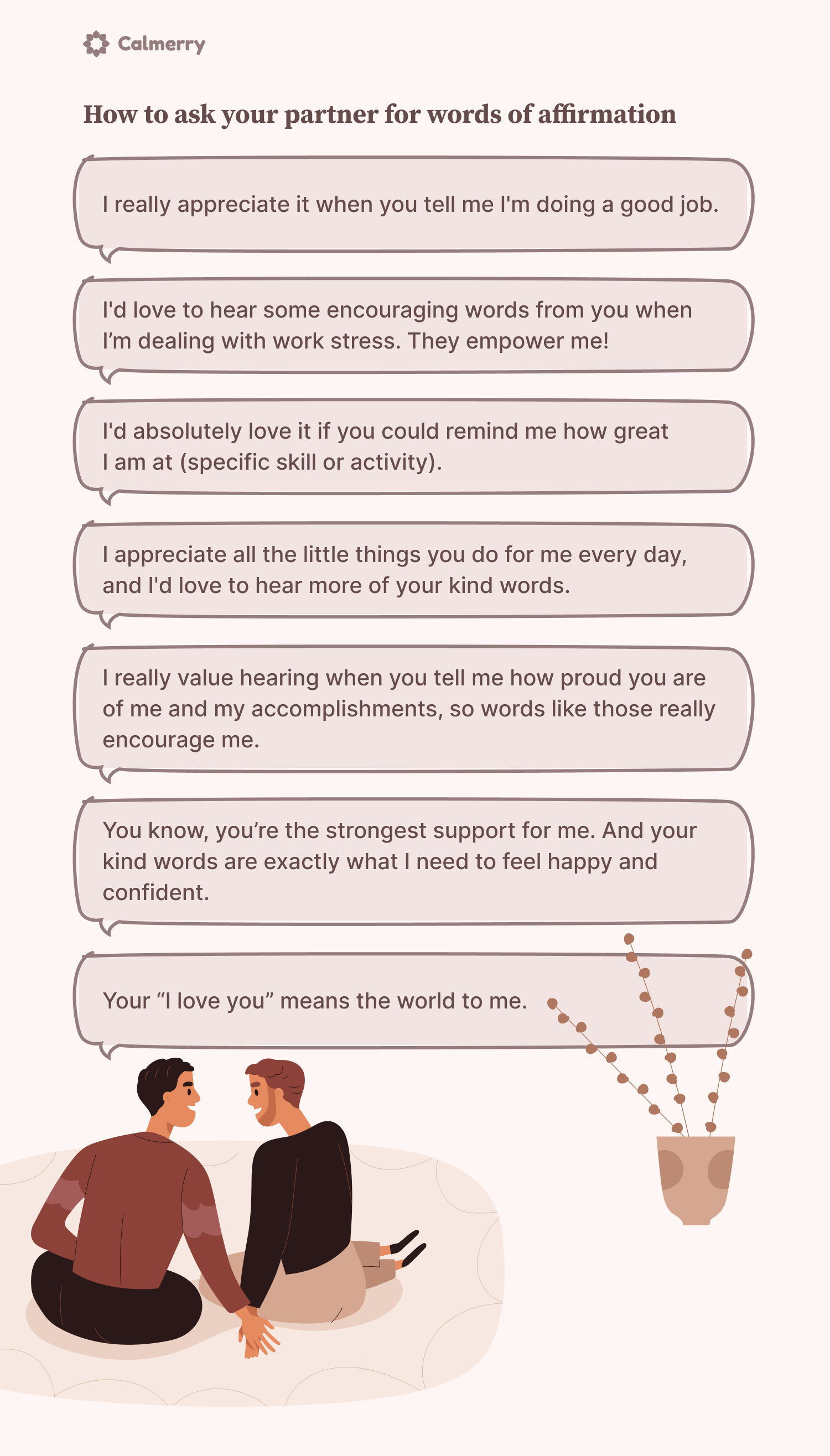
A tip for parents and teachers: Be specific with your praise. Instead of “Good job,” say, “You worked hard on your homework.” This helps children connect affirmation to their actions.
Credit: calmerry.com
The Dangers Of Lack Of Affirmation
Not everyone receives affirmation at home, work, or school. The absence of positive feedback can have serious effects.
Low Self-esteem And Insecurity
People who rarely hear encouraging words may doubt themselves. They might think, “If no one notices my efforts, maybe I’m not good enough. ” Over time, this can lead to low self-esteem and even depression.
Strained Relationships
Without affirmation, relationships can become cold or distant. Partners may feel unappreciated. Employees may feel invisible. This lack of connection reduces happiness for everyone involved.
Reduced Motivation
When effort is not noticed or valued, motivation drops. People may stop trying their best, leading to lower performance in school or work.
How To Practice Affirmation In Daily Life
Affirmation is simple, but it works best with practice and intention. Here’s how you can make it a regular part of your day.
Creating Personal Affirmations
- Use present tense: Say “I am strong,” not “I will be strong.”
- Be specific: Focus on real qualities or actions.
- Keep it positive: Avoid negative words.
- Make it believable: Choose statements you can accept.
Examples:
- “I am learning new things every day.”
- “I handle stress with calm and patience.”
- “I am a loyal friend.”
Saying Affirmations Aloud
Saying affirmations out loud, especially in front of a mirror, can make them more powerful. Your brain hears your voice and starts to believe the words.
Writing Affirmations Down
Writing your statements on paper, sticky notes, or in a journal helps you focus. You can put notes where you will see them often: on your desk, bathroom mirror, or fridge.
Including Affirmation In Groups
Use affirmation in meetings, family dinners, or team activities. Encourage group members to share positive feedback with each other.
Reviewing Progress
Check in with yourself regularly. Are your affirmations helping? Adjust your statements as your goals and needs change.
Common Mistakes With Affirmation
Affirmation is simple, but some people use it in ways that are less effective. Here are mistakes to watch out for:
Being Too Vague
Saying “I am great” is nice, but it doesn’t connect to real actions or qualities. Specific affirmations work better.
Ignoring Negative Feelings
Affirmation is not about pretending problems don’t exist. It’s about finding strengths even during tough times.
Not Believing Your Words
If you don’t believe your affirmation, it won’t help much. Start with small, believable statements and build from there.
Overusing Affirmation
Repeating affirmations all day without action can feel empty. Pair your statements with real efforts and steps toward your goals.
Examples Of Powerful Affirmations
To help you get started, here are some useful affirmations for different areas of life:
For Confidence
- “I trust my decisions.”
- “I am able to handle challenges.”
- “My ideas are valuable.”
For Stress Management
- “I am calm and centered.”
- “I let go of what I cannot control.”
- “I take care of my mind and body.”
For Relationships
- “I listen with empathy.”
- “I appreciate my loved ones.”
- “I express gratitude often.”
For Work And Study
- “I am focused and productive.”
- “I learn from every experience.”
- “I contribute to my team’s success.”
Affirmation Techniques From Around The World
Different cultures have developed their own affirmation practices. For example, in some traditions, people use daily mantras or prayers. In Japan, the concept of “kaizen” (continuous improvement) is often supported by positive self-talk. In Western countries, motivational quotes and self-help books are popular sources of affirmation.
You can create your own practice by combining ideas that fit your culture and personality.
Comparing Affirmation With Other Positive Practices
Affirmation is one of many tools for personal growth. How does it compare to other methods?
| Practice | Main Focus | Best For | Example |
|---|---|---|---|
| Affirmation | Positive self-talk | Building self-worth | “I am capable.” |
| Visualization | Mental imagery | Achieving goals | Picturing success |
| Gratitude | Thankfulness | Improving mood | “I am grateful for my friends.” |
| Meditation | Mindfulness | Reducing stress | Breathing exercises |
These practices can work together. For example, you might start your day with a short meditation, followed by affirmations and a gratitude list.
Real-life Stories: The Power Of Affirmation
Many famous people credit affirmation for their success. For example, Oprah Winfrey has spoken about using positive self-talk to overcome childhood challenges. Athletes, artists, and business leaders often share how affirmation helped them stay focused and positive.
But you don’t have to be famous to benefit. Everyday people use affirmation to build better habits, recover from setbacks, and improve their relationships. A parent might use affirmation to encourage a child. A student might use it to prepare for exams.
A worker might use it to face a tough project.
One non-obvious tip: Affirmation grows stronger when shared. Supporting others with positive words can deepen your own belief in those words.
The Long-term Benefits Of Affirmation
Affirmation is not a quick fix. It’s a habit that pays off over time. Here are some of the long-term benefits:
- Stronger self-esteem: You see yourself in a more positive light.
- Better relationships: You connect with others more easily.
- Greater resilience: You handle stress and setbacks better.
- More success: You are more likely to reach your goals.
- Improved health: Less stress means better physical well-being.
A key insight: Consistency matters more than intensity. Small, daily affirmations are more effective than rare, big statements.
Frequently Asked Questions
What Is The Best Way To Create A Personal Affirmation?
Start by thinking about your strengths and goals. Use positive, present tense language. Make your statement specific and believable. For example, instead of “I am perfect,” try “I improve a little every day. ”
How Many Times Should I Repeat Affirmations Each Day?
There is no fixed number. Most experts suggest repeating affirmations two or three times daily—when you wake up, during breaks, or before bed. The key is consistency over time.
Can Affirmation Help With Anxiety Or Depression?
Affirmation can support mental health, but it is not a replacement for medical treatment. It helps by reducing negative self-talk and building resilience. For serious anxiety or depression, always consult a professional. The National Institute of Mental Health offers more information on mental health resources: NIMH.
Is Affirmation Effective For Children?
Yes, children and teens respond well to affirmation. Positive words from adults help build self-esteem and confidence. Be specific in your praise and encourage children to use affirmations themselves.
What If I Don’t Believe My Affirmation At First?
It’s normal to feel unsure in the beginning. Start with small, believable statements. As you repeat them and see small successes, your belief will grow. Remember, affirmation is a habit that becomes stronger over time.
Affirmation is a simple, powerful tool that can change your mindset, relationships, and life. By making affirmation a daily practice, you open the door to growth, confidence, and lasting happiness. Whether you are encouraging yourself or others, remember that positive words can make all the difference.
