

How Often Should I Do Affirmations for Maximum Results?
How Often Should I Do Affirmations
Affirmations are simple statements you repeat to yourself to build a positive mindset. Many people use affirmations to help them feel more confident, reduce stress, or reach their goals. But one common question is, “How often should I do affirmations?
” The answer is not always clear, and different people give different advice. Some say you should do affirmations every morning. Others suggest repeating them all day. The truth is, the frequency depends on your goals, your schedule, and how your mind responds.
In this article, you’ll learn how often to do affirmations, the science behind them, and practical tips for making affirmations work for you. You’ll also discover mistakes to avoid, how to measure progress, and answers to common questions. If you want to use affirmations to change your life, this guide will help you find the right balance.
What Are Affirmations?
Affirmations are positive statements that you repeat to yourself. The goal is to help your mind focus on good thoughts and build new beliefs. For example, you might say, “I am confident” or “I can handle challenges.” When you repeat these statements, you train your brain to believe them.
People use affirmations for many reasons. Some want to feel happier. Others want to reduce anxiety or improve their self-esteem. Some use affirmations to reach goals like losing weight, finding a job, or building better relationships. The key is that affirmations help you focus on what you want, not what you fear.
How Affirmations Work In The Brain
When you say an affirmation, your brain starts to notice and accept the idea. This is called neuroplasticity—your brain changes and adapts based on what you think and say. If you repeat a positive statement many times, your brain builds new pathways to support that belief. Over time, affirmations can help you feel stronger, more confident, or more motivated.
Studies show that affirmations can reduce stress, improve performance, and help you reach goals. For example, research from the National Institutes of Health found that self-affirmation activates parts of the brain linked to reward and self-processing. This means affirmations can actually change how you feel and act.
How Often Should You Do Affirmations?
Finding the right frequency for affirmations is important. If you repeat them too little, they may not work. If you repeat them too much, you may feel bored or stressed. Here are the main factors to consider:
Daily Practice
Most experts suggest doing affirmations every day. Daily repetition helps your brain accept new beliefs. Many people do affirmations in the morning to start the day with a positive mindset. Others do them at night to let go of stress before sleep. Daily practice creates a habit that makes affirmations more effective.
Multiple Times A Day
Some people repeat affirmations several times a day. For example, you might say your affirmations in the morning, at lunch, and before bed. This can help you stay focused and remind your brain of your goals. However, doing affirmations too often can feel forced or tiring. The key is to find a balance that feels natural.
Weekly Practice
If daily practice feels too much, you can try weekly affirmations. This means setting aside time once or twice a week to focus on your statements. Weekly practice is better than nothing, but it may take longer to see results. For many people, daily or twice-daily practice works best.
Personalized Frequency
The best frequency depends on your needs. If you have a big goal or struggle with negative thoughts, you may need to repeat affirmations more often. If you feel comfortable and positive, you can use them less. Listen to your mind and adjust the frequency as needed.
Comparing Frequency Options
Here’s a simple comparison to help you decide:
| Frequency | Best For | Possible Drawbacks |
|---|---|---|
| Daily | Building habits, steady progress | Can feel repetitive |
| Multiple Times Daily | Big goals, fast change | May cause boredom or stress |
| Weekly | Busy schedules, low stress | Slower results |
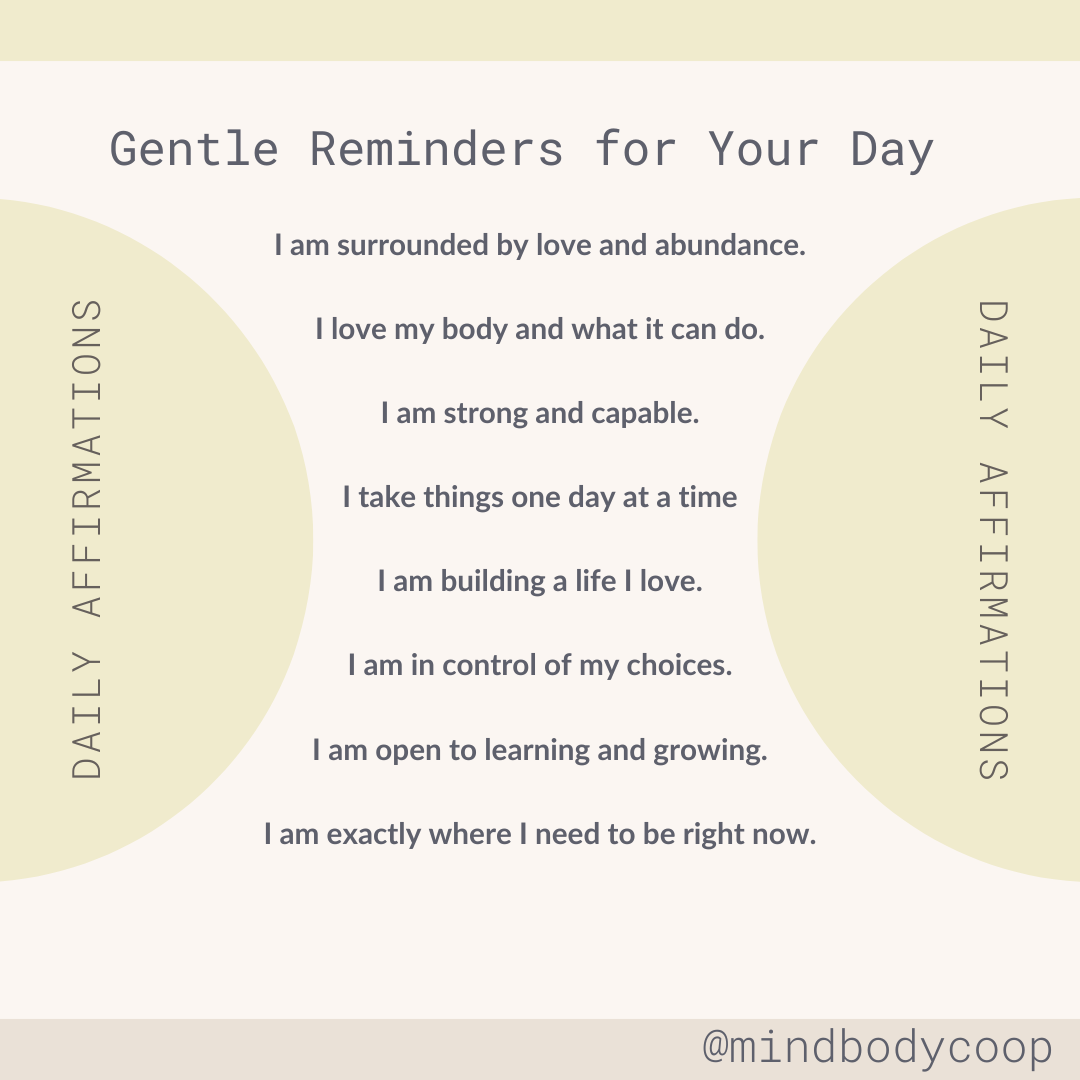
Credit: mindbodycoop.com
Factors That Affect Affirmation Frequency
Not everyone needs the same schedule for affirmations. Here are important factors that affect how often you should do them:
Your Goals
If you want to change a deep belief or reach a big goal, more frequent affirmations may help. For example, if you struggle with self-confidence, repeating your statement several times a day can help your mind shift faster. For smaller goals, daily practice may be enough.
Your Schedule
If you are busy, you may not have time for affirmations all day. It’s better to do affirmations once a day than to skip them completely. Choose a time that fits your routine—morning, lunch, or before bed.
Your Mindset
Some people accept new beliefs quickly. Others need more repetition. If you notice you are still thinking negative thoughts, increase your affirmation frequency. If you start to feel positive and confident, you can reduce your practice.
Your Environment
Your surroundings can help or hurt your affirmation practice. If you live in a stressful environment, you may need more frequent affirmations. If you are surrounded by positive people, you may need less.
Comparing Factors
Here’s a comparison of how these factors affect affirmation frequency:
| Factor | High Frequency Needed | Low Frequency Needed |
|---|---|---|
| Big Goals | Yes | No |
| Busy Schedule | No | Yes |
| Negative Mindset | Yes | No |
| Stressful Environment | Yes | No |
Morning Vs. Evening Affirmations
Many people wonder if it’s better to do affirmations in the morning or at night. Both times have benefits.
Morning Affirmations
Repeating affirmations in the morning helps you start your day with positive energy. You set the tone for the rest of the day. Morning affirmations can help you face challenges, feel confident, and stay focused on your goals.
Evening Affirmations
Doing affirmations at night helps you let go of stress and negative thoughts. You end the day with calmness and positivity. Evening affirmations can help you sleep better and wake up feeling refreshed.
Which Is Better?
Both morning and evening are good times for affirmations. Some people do affirmations at both times. The best time is when you feel comfortable and relaxed.
How Many Affirmations Should You Use?
The number of affirmations you use can affect how often you repeat them. Using too many statements can feel overwhelming. Using too few may not cover all your needs.
Fewer, Focused Statements
Most experts suggest using 3 to 5 affirmations at a time. This makes it easy to remember and repeat your statements. Focus on the most important areas of your life—confidence, health, relationships, or goals.
Too Many Affirmations
If you use 10 or more affirmations, you may forget some or lose focus. It’s better to choose a few that matter most and repeat them often.
Rotating Affirmations
Some people like to change their affirmations each week or month. For example, you might focus on confidence one week and health the next. Rotating affirmations can keep your practice fresh and interesting.
Tips For Making Affirmations Work
Affirmations are more than just words. To make them work, follow these tips:
1. Be Specific
Use clear, specific statements. Instead of “I am happy,” say “I feel calm and positive every morning.” Specific statements help your mind accept the idea.
2. Use The Present Tense
Say affirmations as if they are true now. For example, “I am confident” instead of “I will be confident. ” This tells your brain to act as if the belief is already real.
3. Repeat With Emotion
Speak your affirmations with feeling. If you just say the words, your mind may not accept them. Feel the emotion behind the statement.
4. Visualize Success
Imagine your affirmation coming true. See yourself feeling confident or reaching your goal. Visualization makes affirmations stronger.
5. Write Them Down
Writing affirmations helps you remember and focus. Keep a journal and write your statements every day.
6. Use Reminders
Set reminders on your phone or place sticky notes around your home. Reminders help you repeat affirmations throughout the day.
7. Track Your Progress
Monitor how you feel after repeating affirmations. If you notice positive changes, keep going. If not, adjust your statements or frequency.
8. Personalize Your Practice
Everyone is different. Try different times, frequencies, and statements until you find what works for you.
Common Mistakes With Affirmations
Affirmations can be powerful, but many people make mistakes. Here are common errors and how to avoid them:
Using Negative Words
Some people use negative words in their affirmations. For example, “I am not afraid. ” Instead, focus on positive statements like “I am brave. ”
Being Too General
General statements are less effective. “I am happy” is less powerful than “I feel peaceful and enjoy my life every day. ”
Not Repeating Enough
Repeating affirmations once is not enough. Your brain needs repetition to build new beliefs.
Ignoring Feelings
If you don’t believe your affirmation, it may not work. Start with statements you can accept, even if they are small.
Comparing Yourself
Don’t compare your progress to others. Everyone’s mind is different. Focus on your own growth.
How Long Does It Take For Affirmations To Work?
Many people ask how long affirmations take to show results. The answer depends on several factors:
Your Beliefs
If you already believe the statement, affirmations can work quickly. If the statement is very different from your beliefs, it can take longer.
Your Consistency
Repeating affirmations daily speeds up progress. If you skip days or change statements often, results may take longer.
Your Goals
Big goals or deep beliefs take more time. Small goals or simple statements may show results quickly.
Average Timeframes
Here’s a look at typical timeframes for affirmation results:
| Frequency | Goal Type | Average Time to See Results |
|---|---|---|
| Daily | Simple goals | 2-4 weeks |
| Daily | Deep beliefs | 1-3 months |
| Multiple times daily | Big goals | 2-6 weeks |
| Weekly | Any goal | 3-6 months |
These are average times. Some people see results faster, others slower. The key is to stay consistent and patient.
Examples Of Effective Affirmation Schedules
Here are some practical affirmation schedules to help you get started:
Daily Morning Practice
- Repeat 3 affirmations right after waking up.
- Write them in a journal.
- Visualize your day going well.
Morning And Evening Practice
- Repeat 2 affirmations in the morning.
- Repeat 2 affirmations before bed.
- Reflect on your progress each week.
Multiple Times Daily
- Repeat 1 affirmation every hour.
- Use reminders on your phone.
- Focus on urgent goals, like reducing anxiety.
Weekly Practice
- Set aside Sunday evening to repeat 5 affirmations.
- Review your week and adjust statements.
- Use this schedule for maintenance, not big changes.
Scientific Research On Affirmation Frequency
Research shows that affirmation frequency affects results. A study from Carnegie Mellon University found that daily self-affirmation reduced stress and improved performance in students. Another study in the journal “Personality and Social Psychology Bulletin” showed that frequent affirmations activate brain areas linked to reward and self-processing.
However, too much repetition can reduce impact. If you repeat the same statement all day, your brain may ignore it. The best results come from consistent, focused practice, not mindless repetition.
If you want to read more about the science behind affirmations, you can check this research article from NIH.

Credit: billionaireaffirmation.in
How To Know If Your Affirmations Are Working
It’s important to track your progress. Here’s how to know if your affirmations are helping:
Changes In Thoughts
You notice fewer negative thoughts and more positive ones. For example, you start thinking “I can do this” instead of “I might fail. ”
Changes In Behavior
You take more positive actions. Maybe you speak up in meetings or try new things.
Changes In Feelings
You feel more confident, calm, or happy. Your mood improves.
Feedback From Others
People notice and mention your positive changes. They may comment on your confidence or happiness.
Tracking Progress
Write down your feelings each week. Compare before and after starting affirmations. This helps you see real changes.
Advanced Tips: Going Beyond Basic Affirmations
Once you feel comfortable, you can try advanced techniques:
Combining Affirmations With Meditation
Meditation helps you relax and focus. Combining affirmations with meditation makes them stronger. Try repeating your statements during deep breathing.
Using Audio Or Visual Tools
Record your affirmations and listen to them. Or create visual reminders, like posters or digital backgrounds.
Group Affirmations
Join a group or community that practices affirmations together. Sharing affirmations can boost motivation.
Pairing With Action
Affirmations work best when paired with action. For example, repeat “I am healthy” and make healthy choices.
Affirmations For Different Goals
Affirmations can help with many goals. Here are examples:
Confidence
- “I am strong and believe in myself.”
Health
- “I make healthy choices every day.”
Relationships
- “I build positive connections with others.”
Success
- “I reach my goals with focus and energy.”
Choose the statements that fit your needs.
Frequently Asked Questions
What Is The Best Time Of Day To Do Affirmations?
The best time is when you feel relaxed and can focus. Many people choose morning or evening. Morning affirmations help start the day positively. Evening affirmations help you let go of stress. Try both times and see what works for you.
Should I Say My Affirmations Out Loud Or Silently?
Both methods work. Saying affirmations out loud can make them more powerful. Silent repetition is good if you are in public or want privacy. Some people write their affirmations, which also helps.
Can I Do Too Many Affirmations?
Yes. Using too many statements can feel overwhelming and reduce focus. It’s best to use 3 to 5 affirmations at a time. Choose the most important areas and repeat those often.
How Do I Know If My Affirmations Are Working?
You will notice changes in your thoughts, feelings, and actions. You may feel more confident, calm, or positive. Tracking your mood and actions each week helps you see progress.
What If I Don’t Believe My Affirmations?
Start with statements you can accept. For example, “I am learning to be confident” instead of “I am confident. ” As you repeat them, your belief will grow. Gradually increase the strength of your statements.
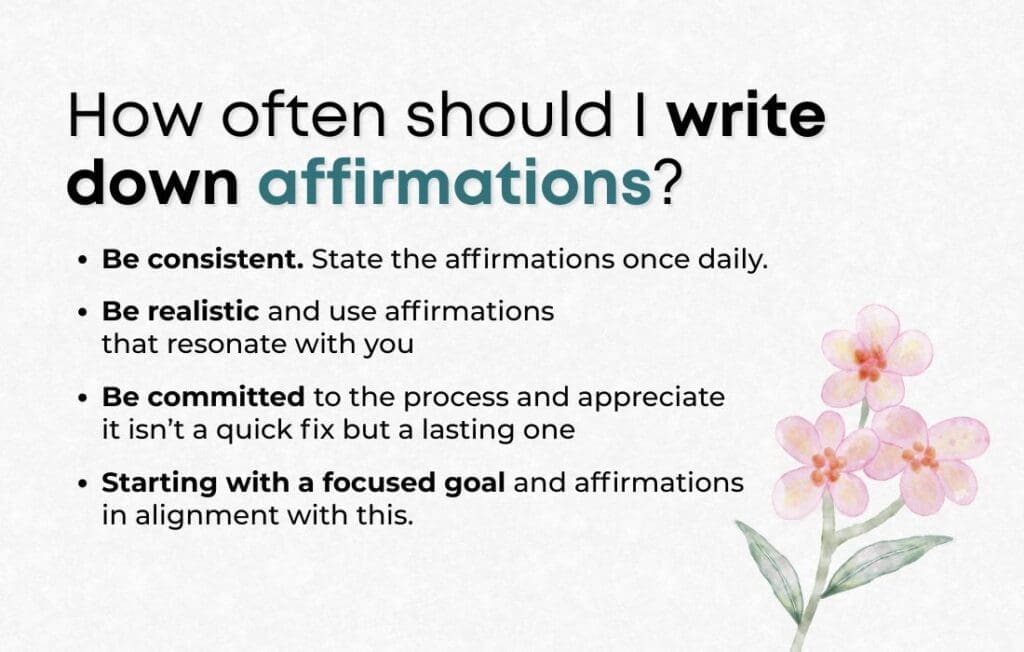
Credit: tiffanywoodfield.com
Final Thoughts
Affirmations are a simple but powerful tool for changing your mindset and reaching your goals. The right frequency depends on your needs, schedule, and how your mind responds. Most people see results with daily practice, but you can adjust as needed.
Remember to use specific, positive statements and repeat them with emotion. Track your progress and stay patient. If you want to make affirmations part of your life, try different times and frequencies until you find what works for you. With consistent practice, affirmations can help you build confidence, reduce stress, and create the life you want.
