

When Do Affirmations Start Working: Unlock Results Faster
When Do Affirmations Start Working
Many people have heard about affirmations—positive statements you repeat to yourself to change your thoughts and feelings. But a common question is, "When do affirmations actually start working?" You may have tried saying, "I am confident" or "I am worthy," but perhaps you did not see changes right away. Some people feel frustrated, thinking affirmations do not work or that they are wasting time. The truth is, affirmations can be powerful tools for changing your mindset, but the time it takes to notice results is not the same for everyone. There are important factors that influence how quickly you see changes, and understanding these can help you get the most from your practice.
This article explores the timeline of affirmations, what affects their effectiveness, and how you can make them work faster. You will learn about the science behind affirmations, hear real examples, and discover common mistakes to avoid. By the end, you will know what to expect and how to stay motivated on your journey.
What Are Affirmations?
Affirmations are short, positive sentences that you repeat to yourself. The purpose is to encourage a more positive mindset and change the way you think about yourself, your goals, or your life. For example, if you struggle with self-doubt, you might repeat, "I believe in myself." Over time, these statements can help replace negative thoughts with more supportive ones.
Affirmations are not magic spells. They do not change your life instantly. Instead, they help rewire your brain so that positive thoughts become more natural. This process is called neuroplasticity—your brain's ability to change and adapt.
How Affirmations Work In The Brain
When you repeat a positive statement, your brain starts to pay attention. At first, you may feel silly or awkward. But as you continue, your brain forms new connections. These connections make it easier to think and act in positive ways.
Scientific studies show that regular use of affirmations can:
- Lower stress levels
- Improve self-esteem
- Help manage anxiety and depression
- Increase motivation
One interesting insight is that affirmations work best when they are believable. If you say something that feels completely untrue, your brain may resist it. For example, saying "I am a millionaire" when you are struggling financially may not feel real. Instead, a statement like "I am learning to manage my money better" can feel more believable and still encourage change.
Typical Timeline: When Do Affirmations Start Working?
There is no single answer to how long affirmations take to work. The timeline depends on several factors, including your belief in the statements, how often you repeat them, and how consistent you are. However, most people fall into a general timeline:
Immediate Effects
Some people notice a small boost in mood right away. For example, repeating a positive statement in the morning can help you feel more focused or less anxious for the day.
Short-term (days To Weeks)
After one to two weeks of regular use, many people start to notice subtle changes. You might feel a little more confident in social situations or less likely to criticize yourself. These changes are often small and easy to miss if you are not paying attention.
Medium-term (3 To 6 Weeks)
With daily practice, the effects of affirmations become stronger. By the end of the first month, you may find that positive thoughts come more naturally. You might react differently to stressful situations, feeling calmer or more in control.
Long-term (2 Months And Beyond)
For deep, lasting change, affirmations often take two months or more of daily practice. At this stage, your beliefs about yourself may shift in a meaningful way. You could notice big changes in your confidence, relationships, or work performance.
Non-obvious insight: Most people give up too soon. They expect instant results, but true change takes patience. The brain needs time to build new habits and ways of thinking.
Key Factors That Affect How Fast Affirmations Work
Not everyone sees results at the same speed. Here are the main factors that influence how quickly affirmations work:
1. Consistency
Repeating affirmations once or twice is not enough. You need to practice every day, often several times a day, for the best results.
2. Emotional Involvement
Affirmations work better when you feel the words. If you simply repeat the statements without emotion, your brain does not take them seriously. Try to connect with the meaning of the affirmation.
3. Personal Relevance
Choose affirmations that are meaningful to you. Generic statements are less effective than affirmations that fit your personal goals or challenges.
4. Believability
As mentioned earlier, the affirmation should feel possible. If it feels too far from your current reality, adjust it so you can believe it at least a little.
5. Repetition
The more you repeat an affirmation, the stronger its effect. Saying your affirmation in the morning, at lunch, and before bed can help.
6. Supporting Actions
Affirmations work best when combined with action. For example, if you say "I am getting healthier," also make healthy choices during your day. This makes the affirmation more believable and effective.
7. Environment
Being in a supportive environment, or avoiding negative influences, can help affirmations work faster. If you are surrounded by people who are negative, it may slow your progress.
8. Existing Mindset
If you already have a lot of negative self-talk, it may take longer for affirmations to work. But do not give up—small changes add up over time.
9. Use Of Visualization
Combining affirmations with visualization (picturing yourself as the person you want to be) can speed up results.
10. Patience And Expectation
If you expect instant results, you may feel disappointed and stop. Realistic expectations help you stick with the practice long enough to see change.
The Science Behind Affirmations
Research shows that affirmations are more than just wishful thinking. They are based on principles of psychology and neuroscience.
One study found that self-affirmation activates the reward centers in the brain. This means that positive self-talk can actually make you feel good, like getting a small reward.
Another study showed that affirmations can protect people from the negative effects of stress. When people repeated positive statements, their bodies produced less of the stress hormone cortisol.
However, not all studies show strong effects. Sometimes, people with very low self-esteem find that affirmations make them feel worse at first. This is because the statements feel too far from their current beliefs. Over time, though, as the brain adjusts, affirmations can start to work.
For more details, you can read about the research on self-affirmation at Wikipedia.
How To Create Powerful Affirmations
Not all affirmations are created equal. Here is how you can make yours more effective:
- Keep it positive: Focus on what you want, not what you do not want.
- Be specific: Instead of "I am successful," try "I am confident speaking in meetings."
- Use the present tense: Say "I am" or "I have," not "I will be."
- Make it believable: Choose statements that feel possible right now.
- Add emotion: Use words that inspire you or make you feel good.
Here are some examples:
- "I am learning and growing every day."
- "I handle challenges with calm and strength."
- "I am becoming more confident in myself."
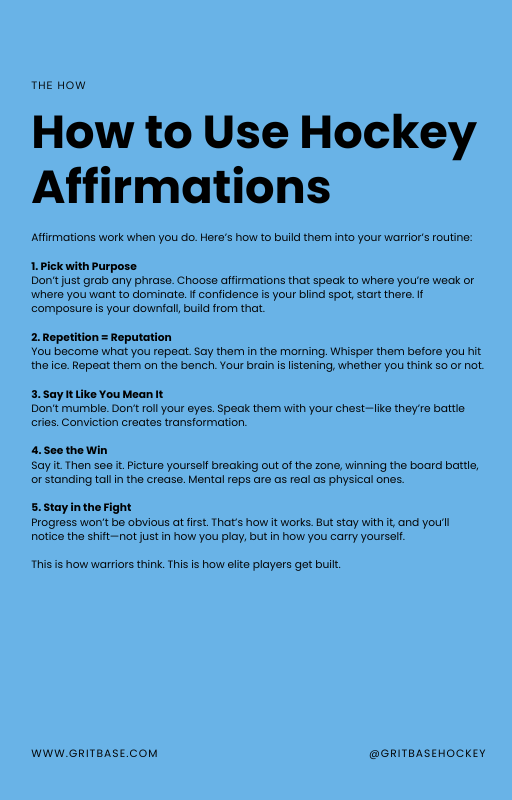
Credit: www.gritbase.com
Common Mistakes That Delay Results
Many people do not see results because they make small mistakes in their affirmation practice. Here are some of the most common:
Repeating Without Feeling
If you say your affirmations with no emotion, your brain does not respond as well. Try to feel the words as you say them.
Choosing Unrealistic Statements
If your affirmation feels impossible, your mind may reject it. Adjust the words until you can believe them.
Being Inconsistent
Skipping days or forgetting your affirmations will slow your progress. Build a routine that makes it easy to remember.
Ignoring Negative Thoughts
Affirmations are not meant to cover up negative feelings. If you notice negative thoughts, do not ignore them. Instead, acknowledge them and gently bring your focus back to your positive statement.
Expecting Instant Change
If you expect quick results, you may feel discouraged. Remember, real change takes time.
Examples From Real People
Let us look at how affirmations have worked for different people:
Example 1: Building Confidence
Maria was shy and afraid to speak in meetings. She started using the affirmation, "I am comfortable speaking up. " At first, she felt awkward. After three weeks, she noticed she raised her hand more often. By two months, she was leading small discussions.
For Maria, affirmations started to work after about one month, with bigger changes after two months.
Example 2: Reducing Stress
Jamal struggled with anxiety before exams. He used the statement, "I am calm and prepared. " In the first week, nothing changed. By the third week, he felt less nervous. After two months, he could focus better during tests.
Example 3: Improving Self-worth
Li felt unworthy at work. She started saying, "I am valuable and skilled. " In the first few days, she felt emotional, even sad. After a month of daily practice, she started to believe the words. By the third month, her boss noticed she was more assertive.
These stories show that affirmations can take weeks or even months, but with patience, real change happens.
How To Track Your Progress
Sometimes, it is hard to notice small changes. Tracking your progress can help you stay motivated. Here are some methods:
Journaling
Write down your thoughts and feelings each day. Look for patterns or changes over time.
Mood Tracking
Use a simple scale (1 to 10) to rate your mood before and after saying your affirmations.
Reflection Questions
Ask yourself questions like:
- Do I react differently to stress?
- Do I feel more confident?
- Have my actions changed?
Progress Table Example
Here is a simple table you can use to track your feelings over four weeks:
| Week | Confidence Level (1-10) | Notes |
|---|---|---|
| 1 | 4 | Feels awkward, not much change |
| 2 | 5 | Small positive thoughts appear |
| 3 | 6 | Less self-criticism, more calm |
| 4 | 7 | Confidence increasing in meetings |
Comparing Affirmation Practices
Some people wonder if it matters how you say your affirmations. There are several ways to practice:
| Method | How It Works | Pros | Cons |
|---|---|---|---|
| Speaking Aloud | Say affirmations out loud to yourself | Strong emotional impact | Can feel awkward if not alone |
| Writing | Write affirmations in a journal | Helps with focus, can track progress | Takes more time |
| Thinking Silently | Repeat affirmations in your mind | Easy to do anywhere | Less emotional effect for some people |
| Listening to Recordings | Play recordings of affirmations | Works while relaxing or working | Less personal if not your own voice |
You can choose the method that fits your lifestyle and preferences. For stronger results, combine two or more methods.

Credit: www.wondermind.com
How Long Should You Practice Affirmations?
There is no fixed end date for using affirmations. Many people find that they become part of their daily routine, like brushing their teeth or exercising. However, for most people, the minimum recommended period is one to three months. This allows enough time for your brain to build new patterns.
If you stop before this period, you may not see much change. If you continue longer, positive thinking becomes a natural part of who you are.
Practical tip: Set a reminder on your phone or post notes where you will see them. This helps you remember to practice every day.
Practical Tips For Faster Results
- Be consistent: Practice at the same time each day.
- Use triggers: Link your affirmations to daily habits, like brushing teeth or making coffee.
- Visualize: Picture yourself as the person in your affirmation.
- Record yourself: Listening to your own voice can be powerful.
- Say them with emotion: Smile or stand tall as you repeat your statements.
- Share with a friend: Practicing with someone can increase motivation.
Dealing With Setbacks
Change is not always a straight line. Some days, you may feel negative thoughts returning. This is normal. Do not judge yourself or give up. Instead:
- Notice the negative thought
- Gently return to your affirmation
- Remind yourself that change takes time
One non-obvious insight: Even when you do not feel like affirmations are working, your brain is still changing in the background. Small shifts add up over time.
The Role Of Affirmations In Personal Growth
Affirmations are one tool in your personal growth toolbox. They work best when combined with other healthy habits, such as:
- Regular exercise
- Healthy eating
- Enough sleep
- Mindfulness or meditation
- Setting and working toward goals
If you have deep emotional struggles, affirmations can help, but you may also need support from a therapist or counselor.

Credit: tiffanywoodfield.com
Measuring The Impact Of Affirmations
It can be hard to measure something as personal as a mindset shift. However, you can look for signs that affirmations are working:
| Sign | Description |
|---|---|
| Improved Mood | Feeling happier or more peaceful during the day |
| Positive Self-Talk | Notice yourself using kinder words with yourself |
| Better Reactions | Staying calm in stressful moments |
| Achieving Goals | Taking action toward what you want |
| Feedback From Others | Friends or colleagues notice you have changed |
You may not notice all these signs at once. Even small improvements are a sign that your affirmations are starting to work.
Frequently Asked Questions
How Many Times Should I Repeat Affirmations Each Day?
There is no perfect number, but most experts suggest at least twice a day—morning and evening. Repeating your affirmations three to five times each session is a good start. You can say them more often if you want faster results.
Can Affirmations Work For Everyone?
Affirmations can help most people, but the effects are different for each person. If you have very low self-esteem or strong negative beliefs, affirmations may take longer. In these cases, it helps to start with small, believable statements and combine affirmations with other forms of support.
What If I Do Not Believe My Affirmation?
If your affirmation feels impossible, adjust the words so you can believe them a little. For example, instead of "I am totally confident," try "I am becoming more confident every day." As your belief grows, you can make your affirmation stronger.
Should I Write, Speak, Or Think My Affirmations?
All methods can work, but speaking and writing tend to be more powerful because they involve more senses. Try different methods and see what feels best for you. Combining methods can give faster results.
Why Do Some People Say Affirmations Do Not Work?
Some people give up too soon or use affirmations that do not feel real. Others say the words without feeling or action. Affirmations are not magic—they are a tool for changing your mindset, but they need time, practice, and belief.
Change is possible. With patience and the right practice, affirmations can help you think and feel better about yourself and your life. Remember to be kind to yourself and stay committed. Your new mindset is just around the corner.
