

What is Affirmation in a Relationship? Unlock Deeper Connection
What Is Affirmation In A Relationship
Affirmation in a relationship is one of the most powerful ways to build trust, closeness, and happiness between partners. When two people share their lives, daily words and actions can have a big effect on how loved and secure each feels.
Many couples struggle with doubts, misunderstandings, or emotional distance—not because they do not care, but because they do not show their care in a way their partner can feel. Affirmation is the missing key for many.
What does affirmation really mean in a relationship? It goes beyond giving compliments or saying “I love you. ” True affirmation is about recognizing, appreciating, and expressing value for your partner as they are. It is about making someone feel seen, heard, and accepted.
This article will explain what affirmation in a relationship looks like, why it matters, and how couples can practice it to build a strong, lasting connection.
You’ll also learn about the science behind affirmation, examples from real life, common mistakes, and practical steps to make affirmation a habit. Whether you are just starting a relationship or have been together for years, understanding affirmation can help you avoid common problems and grow closer to your partner.
Let’s explore how simple words and actions can make love stronger every day.
Understanding Affirmation In Relationships
Affirmation is not just about saying nice things. In a relationship, affirmation means giving positive, honest feedback that helps your partner feel valued and supported. It includes words, actions, and even small gestures that show appreciation and respect.
For example, affirmation can be as simple as:
- Saying “Thank you for listening to me today.”
- Noticing your partner’s effort: “I saw how hard you worked.”
- Expressing gratitude: “I appreciate you making dinner.”
Affirmation is not flattery or empty praise. It is real and specific. It shows your partner that you pay attention and care about who they are—not just what they do for you.
Many people think affirmation is only about words, but it is also about body language, listening, and being present. Giving a genuine smile, a comforting touch, or making eye contact can all be forms of affirmation. The goal is to help your partner feel accepted and valued, especially during difficult times.
Why Affirmation Matters In A Relationship
Affirmation is important for many reasons. Research in psychology shows that people who feel affirmed by their partner are more satisfied and secure in their relationship. They trust each other more and are better at handling stress together.
Here are some key benefits of affirmation:
- Builds self-esteem: Hearing positive feedback helps people feel good about themselves.
- Reduces conflict: When both partners feel valued, they argue less and solve problems more easily.
- Strengthens trust: Affirmation shows that you are reliable and supportive, which builds trust over time.
- Increases emotional intimacy: Partners who affirm each other share more and feel closer.
Studies have found that couples who practice regular affirmation report higher levels of happiness and lower rates of separation. Feeling affirmed can even improve mental and physical health, as stress levels go down and positive emotions increase.
The Science Behind Affirmation
The impact of affirmation has been studied by many psychologists. When someone receives positive feedback from a partner, their brain releases chemicals like oxytocin and dopamine. These chemicals are linked to feelings of love, happiness, and bonding.
Researchers have also found that affirmation can:
- Lower blood pressure and heart rate during stressful moments
- Help people recover faster from arguments
- Make partners more willing to forgive mistakes
One study showed that couples who used daily affirmations were more likely to stay together and report satisfaction in their relationship. This effect was even stronger when both partners were stressed by work or family problems.
Different Types Of Affirmation
Affirmation comes in many forms. Not everyone feels loved in the same way, so it is important to understand the different types of affirmation.
1. Verbal Affirmation
This is the most direct type. It includes:
- Compliments (“You look great today.”)
- Encouragement (“I believe in you.”)
- Expressions of love (“I love being with you.”)
Verbal affirmation should be specific and honest. Generic words like “You’re nice” are less powerful than “I love how you always make me laugh. ”
2. Physical Affirmation
Touch can also communicate love and value. Examples include:
- Hugs or holding hands
- A gentle touch on the arm
- Sitting close together
Physical affirmation is especially important for people who feel loved through touch.
3. Acts Of Service
Doing something kind for your partner can be a strong form of affirmation:
- Making coffee in the morning
- Helping with chores
- Running an errand for them
These actions show that you pay attention to their needs.
4. Quality Time
Spending focused, undistracted time together is also affirming:
- Having a meaningful conversation
- Planning a date night
- Taking a walk together
Quality Time Tells Your Partner, “you Are Important To Me.”
5. Written Affirmation
Some people feel most loved through written words:
- Notes left on the fridge
- Loving messages by text
- Letters for special occasions
Writing allows partners to express feelings they might find hard to say out loud.
Examples Of Affirmation In Daily Life
Affirmation does not have to be dramatic or fancy. Here are everyday examples that make a big difference:
- “Thank you for always supporting me.”
- “I noticed how patient you were with the kids today.”
- “You always know how to make me smile.”
- “I love your sense of humor.”
- “I appreciate that you listened to my worries.”
- “You make our home a happy place.”
- “I admire your hard work.”
- “I am proud to be with you.”
- “You handled that situation so well.”
- “I love spending time with you.”
Simple, genuine words like these can change the whole mood of a day. They also remind your partner that you see their efforts and care about who they are.
How To Practice Affirmation In Your Relationship
Learning how to affirm your partner is a skill you can practice and improve. Here are steps to make affirmation a regular part of your relationship:
1. Notice The Good
Affirmation starts with paying attention. Watch for things your partner does well, their unique qualities, or moments when they make an effort.
If you struggle to notice positive things, try keeping a small notebook. At the end of each day, write down one thing you appreciated about your partner.
2. Be Specific
General praise is not as effective as specific affirmation. Instead of “You’re great,” say “I really appreciated how you helped me today. ” The more detailed you are, the more meaningful your words become.
3. Use Different Forms
People receive affirmation in different ways. Try mixing words, actions, and touch. If your partner loves hugs, use physical affirmation. If they like written notes, leave small messages for them.
4. Make It A Habit
Set a goal to affirm your partner at least once each day. Over time, this habit becomes natural. Morning or bedtime are good moments for a quick affirmation.
5. Affirm During Difficult Times
It is easy to affirm when things are going well. But affirmation is most powerful during stressful moments. A simple “I know you’re doing your best” can make a big difference when your partner is struggling.
Common Mistakes To Avoid With Affirmation
Affirmation is a skill, and it is easy to make mistakes. Here are some common problems and how to avoid them:
1. Being Inauthentic
If your words are not genuine, your partner will notice. Only affirm things you truly mean. Fake praise can hurt trust.
2. Using Affirmation To Get Something
Affirmation should not be a tool for manipulation. Avoid giving praise only when you want a favor in return. The purpose is to make your partner feel valued, not to control them.
3. Ignoring Your Partner’s Preferences
Some people value acts of service more than words. Others prefer quality time. Notice what makes your partner smile and respond to that.
4. Forgetting Non-verbal Affirmation
Words are important, but actions and body language matter too. Smiling, listening, and small gestures can be just as powerful.
5. Affirming Only During Good Times
Waiting for special occasions or good moods means you miss many chances to affirm. Daily, consistent affirmation is more impactful.
How Affirmation Differs From Other Positive Behaviors
Affirmation is not the same as kindness or politeness. While all are positive, affirmation has a unique role. It focuses directly on making your partner feel valued for who they are. Politeness is about manners; affirmation is about connection.
Here’s a comparison to make this clear:
| Behavior | Focus | Example |
|---|---|---|
| Affirmation | Value and appreciation | "I am proud of how you handled that meeting." |
| Kindness | Goodwill and support | Bringing your partner a cup of tea |
| Politeness | Respect and manners | Saying "please" and "thank you" |
Affirmation is the only one that directly supports a partner’s self-worth and emotional security.
The Role Of Affirmation In Conflict And Stress
Every relationship faces conflict and stress. How couples handle these moments can decide if they grow together or apart. Affirmation is especially important in hard times.
When your partner feels criticized or misunderstood, affirmation can help:
- Rebuild trust after a fight
- Lower defensiveness
- Show you are on the same team
For example, after a disagreement, saying “I still respect your opinion” or “I know you care about us” can calm strong emotions. It reminds both of you that the relationship is safe, even when you disagree.
Research shows that couples who use affirmation during conflict recover faster and feel more connected after arguments. This is because affirmation shifts the focus from blame to support.
Cultural Differences In Affirmation
Affirmation looks different in every culture. In some places, open verbal praise is common; in others, it might feel uncomfortable or even disrespectful. Physical touch, gift-giving, or acts of service may be more common ways to affirm a partner.
For example:
- In some Asian cultures, quiet acts of service or family support are seen as signs of love.
- In many Western cultures, direct words of affirmation are encouraged.
- In Mediterranean cultures, physical affection and passionate words are normal.
It is important to notice what affirmation looks like for your partner’s background. If you are not sure, ask them how they feel most loved. This avoids misunderstandings and shows respect for their needs.
Affirmation And The Love Languages
The “Five Love Languages” theory by Dr. Gary Chapman explains how people prefer to give and receive love. Affirmation is closely tied to the “Words of Affirmation” love language, but all love languages can involve affirmation.
The five love languages are:
- Words of Affirmation
- Acts of Service
- Receiving Gifts
- Quality Time
- Physical Touch
Understanding your partner’s top love language helps you give affirmation in the way they value most. For example, if your partner prefers gifts, a small, thoughtful present with a loving note can be more affirming than a long speech.
The Impact Of Affirmation On Relationship Longevity
Long-lasting relationships are built on more than attraction or shared interests. Studies show that regular affirmation is a key factor in couples staying together happily.
Here’s why:
- Affirmation keeps positive feelings strong, even after the “honeymoon phase.”
- Partners who feel valued are more likely to show patience, kindness, and forgiveness.
- Affirmation protects relationships from stress, criticism, and outside pressures.
One research study found that couples who affirmed each other at least once a day were more likely to stay together and less likely to feel lonely or disconnected.
Real-life Stories: Affirmation In Action
Hearing about real couples can help make affirmation more practical. Here are three stories:
- Maria and James struggled with work stress. James often felt ignored. When Maria started sending short texts during the day, like “Thinking of you” or “Thanks for all you do,” James felt seen. Their arguments dropped, and James became more affectionate.
- Priya and Arun rarely said “I love you.” Instead, Arun cooked Priya’s favorite meal after a long day, and Priya took over chores when Arun was tired. They both felt deeply loved, even without many words.
- Sarah and Ben were in a long-distance relationship. They wrote emails every week, sharing things they admired in each other. Even with physical distance, their emotional bond grew stronger.
These stories show that affirmation can be simple, creative, and adapt to any situation.
Affirmation And Self-affirmation
While affirmation from a partner is powerful, self-affirmation is also important. People who value themselves can accept affirmation more easily and do not depend entirely on others for self-worth.
Ways to practice self-affirmation include:
- Writing down your own strengths
- Reminding yourself of your achievements
- Being kind to yourself after mistakes
Partners can encourage each other’s self-affirmation by noticing each other’s growth and resilience.
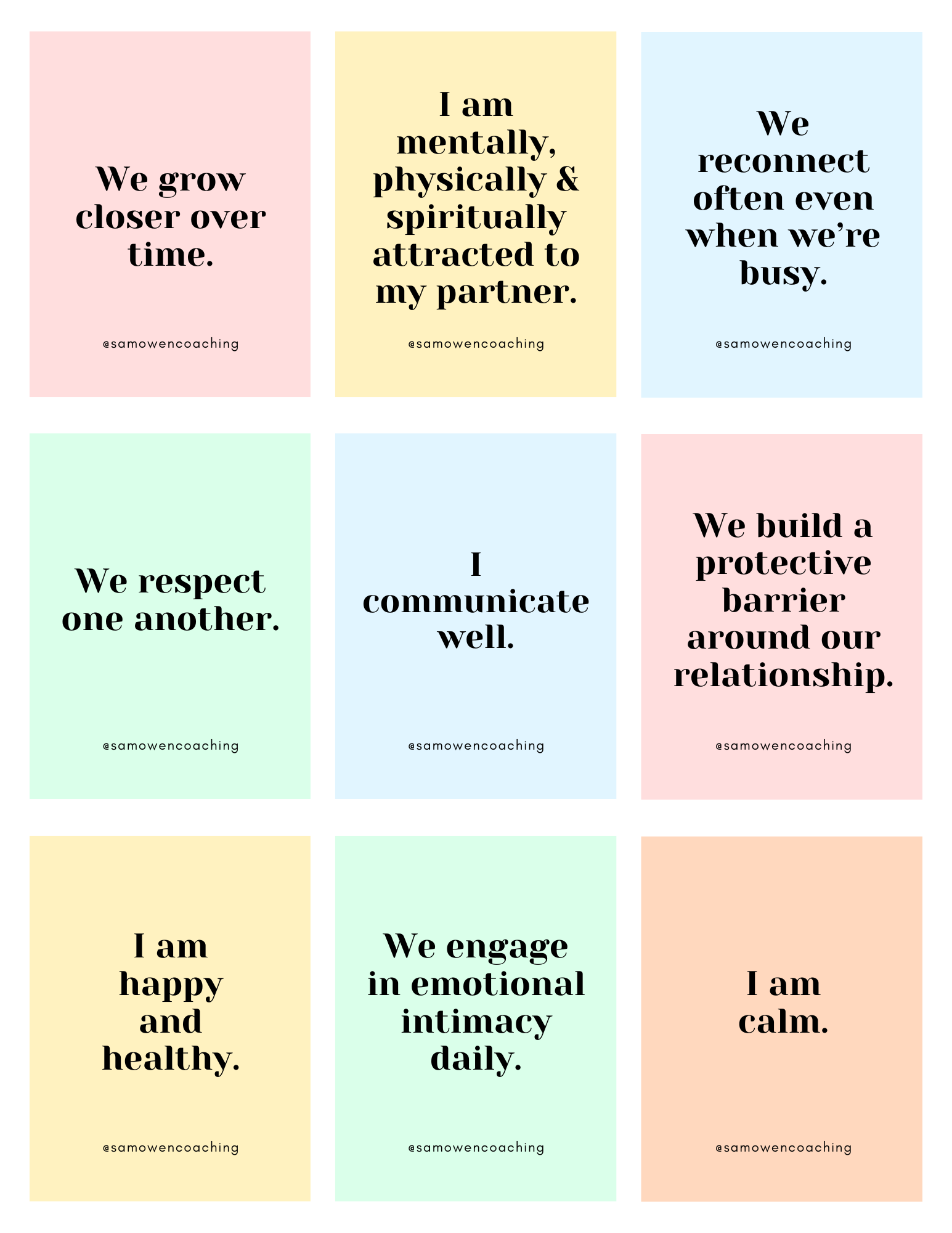
Credit: www.relationshipscoach.co.uk
Challenges In Giving And Receiving Affirmation
Some people find it hard to give or accept affirmation. This can be due to:
- Upbringing: If you grew up without much praise, it may feel strange to give or receive affirmation.
- Personal beliefs: Some people worry that affirmation will make them seem weak or needy.
- Fear of vulnerability: Accepting affirmation means letting someone see your real self.
If this is true for you or your partner, talk openly about it. Start with small, simple affirmations and notice how they feel over time. With practice, it becomes easier.
Making Affirmation Part Of Your Relationship Culture
Affirmation is most effective when it becomes part of your daily life, not just something you do during special moments. Here are ways to build an “affirmation culture” in your relationship:
- Have a daily gratitude ritual: Each evening, share one thing you appreciate about each other.
- Celebrate small wins: Notice and affirm even small achievements or efforts.
- Create an affirmation jar: Write down positive notes and place them in a jar to read when one of you needs encouragement.
- Use reminders: Set phone alarms to remind you to give a compliment or do a small act of kindness.
- Affirm in public and private: Compliment your partner in front of others, but also give private affirmations that only they hear.

Credit: healthyrelationshipsinitiative.org
How To Handle Negative Reactions To Affirmation
Sometimes, your partner may react negatively to affirmation. They may feel awkward, suspicious, or dismiss your words. This can happen for many reasons, including low self-esteem or past hurt.
Here’s what to do:
- Be patient and consistent. Over time, your partner may become more comfortable.
- Ask how they prefer to receive affirmation.
- Avoid forcing affirmation if your partner truly dislikes it. Focus on other forms of support.
- Check your own motives. Make sure your affirmation is not about changing your partner, but about appreciating them as they are.
Affirmation In Long-distance Relationships
Physical distance can make affirmation more difficult, but also more important. Here are ways to affirm your partner when you are apart:
- Send regular messages or emails with positive words
- Share photos or videos of your day
- Plan virtual date nights and express what you appreciate
- Mail small gifts or letters
Long-distance couples who use affirmation regularly report feeling closer and more secure, despite being apart.
Comparing Affirmation With Criticism
The balance between affirmation and criticism can decide the health of a relationship. Research suggests that couples should aim for at least five positive interactions for every one negative interaction to keep their relationship strong.
Here’s a comparison:
| Affirmation | Criticism |
|---|---|
| Builds trust and closeness | Creates distance and defensiveness |
| Encourages positive behavior | Focuses on mistakes |
| Improves self-esteem | Can lower self-worth |
Maintaining a high affirmation-to-criticism ratio helps your partner feel safe and motivated to grow.
Using Affirmation With Other Relationship Skills
Affirmation works best with other important relationship skills, such as:
- Active listening: Show you hear and value your partner’s feelings.
- Empathy: Try to understand their point of view.
- Honest communication: Be open about your needs and feelings.
- Healthy boundaries: Respect each other’s individuality.
Together, these skills create a strong foundation for a healthy, happy relationship.
When Affirmation Is Difficult
Sometimes, it is hard to affirm your partner—especially during conflict or if you are hurt. In these moments, try to focus on the bigger picture. Ask yourself:
- What qualities do I still value in my partner?
- Can I find one thing to appreciate, even now?
- Am I willing to rebuild trust through small, positive actions?
If you need help, couples therapy or relationship coaching can support you in building new habits.
Affirmation And Relationship Stages
Affirmation looks different as a relationship grows:
- Early stage: Affirmation builds attraction and excitement.
- Settled stage: Keeps the relationship fresh and prevents routine from causing distance.
- Challenging times: Reassures partners and helps them handle stress together.
- Long-term: Maintains emotional closeness and prevents drift.
Adjust your affirmation style as your relationship evolves.
Affirmation And Parenting
Couples with children often have less time for each other. Affirmation becomes even more important during busy parenting years. Affirming your partner in front of your children models healthy love and respect.
Some ways to do this:
- Thank your partner for their parenting efforts
- Compliment their patience or creativity with the kids
- Support each other’s need for rest or personal time
Children who see their parents affirm each other learn how to build positive relationships themselves.
The Risks Of Lack Of Affirmation
When affirmation is missing, relationships can suffer. Common problems include:
- Partners feeling ignored, unappreciated, or lonely
- Increased arguments and misunderstandings
- Higher risk of emotional or physical distance
If you notice these signs, start with small affirmations to rebuild connection.

Credit: www.sincro-online.es
How To Ask For More Affirmation
If you wish your partner would affirm you more, it is okay to ask. Try saying:
- “I feel happy when you notice my efforts.”
- “Could you tell me what you appreciate about me?”
- “I love when you compliment me.”
Being honest about your needs helps your partner support you better.
Affirmation In Modern Relationships
Modern life is busy, and many couples struggle to find time for each other. Technology, stress, and changing roles can make affirmation harder. But it is still possible:
- Use technology for positive messages, not just logistics
- Set aside “affirmation moments” during the day
- Remember that even small gestures count
Couples who make affirmation a priority report stronger, more satisfying relationships.
Frequently Asked Questions
What Is The Difference Between Affirmation And Compliments?
Affirmation is a deeper, more personal way to express value. It is often specific to your partner’s character or actions and is meant to build their confidence and sense of belonging. Compliments can be general or about appearance, while affirmation focuses on genuine appreciation and emotional support.
How Often Should I Affirm My Partner?
There is no perfect number, but daily affirmation is ideal. Even one small affirmation a day can improve your relationship. The key is consistency and sincerity, not quantity.
Can Affirmation Fix A Broken Relationship?
Affirmation alone may not fix deep problems, but it can help rebuild trust and connection over time. It works best with other healthy relationship skills, such as honest communication and empathy. For serious issues, consider professional help.
What If My Partner Does Not Respond To Affirmation?
Some people need time to feel comfortable with affirmation. Be patient and ask how they prefer to receive positive feedback. If they still do not respond, focus on other ways to show care and respect.
Where Can I Learn More About Affirmation In Relationships?
You can find more information and research on affirmation and relationship health at Psychology Today.
Affirmation is a simple but powerful tool for building a strong, loving relationship. By making it a natural part of your daily life, you can help both you and your partner feel seen, valued, and connected—no matter what challenges come your way.
