

Affirmation Cards Ideas: Creative Ways to Inspire Daily Positivity
Affirmation Cards Ideas
Affirmation cards have become a popular tool for building confidence, encouraging positive thinking, and supporting personal growth. Their simple messages can uplift your mood, help you tackle challenges, and even change how you see yourself. Whether you’re new to affirmations or looking for creative ways to make them part of your daily life, the possibilities are almost endless.
This guide will explore unique ideas for making and using affirmation cards, along with practical advice, design inspiration, and tips for getting the most from your affirmation practice.
What Are Affirmation Cards?
Affirmation cards are small cards that each contain a short, positive statement, usually written in the present tense. The idea is to read, say, or reflect on these statements regularly to build a more positive mindset. Many people use them to start or end the day, to find motivation, or to reduce stress.
The power of affirmation cards comes from their consistency and the way they help reframe negative thoughts.
You can buy ready-made sets, but making your own can be more personal and meaningful. Custom cards allow you to focus on your own goals, values, and needs.
Why Use Affirmation Cards?
Affirmation cards are simple, but their effects can be powerful. Here’s why so many people use them:
- Boost self-esteem: Repeating positive statements can help you believe in your strengths.
- Reduce stress: Focusing on affirmations can quiet negative thoughts.
- Support goals: Cards can remind you of what you want to achieve.
- Create routines: Using cards daily helps form healthy habits.
- Encourage mindfulness: Reading affirmations brings your attention to the present moment.
Many therapists, coaches, and educators suggest affirmation cards to support well-being and mental health. Studies show that positive self-talk can help improve motivation and resilience.
Creative Themes For Affirmation Cards
When making affirmation cards, choosing a theme can give your deck purpose and make it more focused. Here are some popular themes and how they work:
Self-love And Acceptance
These cards focus on building inner kindness and acceptance. They’re useful for people who struggle with self-criticism or want to feel more at peace with themselves.
Examples:
- “I am enough, just as I am.”
- “I deserve love and kindness.”
- “My worth is not based on others’ opinions.”
Confidence And Strength
Confidence cards help you remember your abilities and strengths, especially before challenging tasks or decisions.
Examples:
- “I trust myself to handle anything.”
- “I am strong and capable.”
- “I grow with every challenge.”
Gratitude
Gratitude cards remind you of the good things in life, making it easier to focus on what you have rather than what you lack.
Examples:
- “I am grateful for this moment.”
- “I notice and appreciate the little things.”
- “Gratitude fills my heart.”
Success And Achievement
These cards are perfect for people working toward goals or facing big projects.
Examples:
- “I am moving closer to my dreams every day.”
- “Every step forward is progress.”
- “Success is within my reach.”
Calm And Stress Relief
Calmness cards can help you relax during stressful moments. They’re useful for work breaks or before sleep.
Examples:
- “I am safe and at peace.”
- “With every breath, I feel calmer.”
- “I release what I cannot control.”
Healing And Recovery
For those facing illness, loss, or emotional pain, healing cards offer gentle support.
Examples:
- “I am healing a little more each day.”
- “It’s okay to take time to rest.”
- “My heart is open to healing.”
Growth Mindset
Growth mindset cards focus on learning and improvement, rather than perfection.
Examples:
- “Mistakes help me learn.”
- “I am always growing.”
- “Every challenge teaches me something new.”
Relationships And Connection
These cards support healthy relationships and self-awareness in connections with others.
Examples:
- “I communicate with honesty and kindness.”
- “I deserve healthy relationships.”
- “I attract caring and supportive people.”
How To Make Your Own Affirmation Cards
Making your own affirmation cards lets you personalize every detail. Here’s a step-by-step guide to help you get started.
1. Gather Materials
You don’t need expensive supplies. Here are some options:
- Blank index cards
- Cardstock paper
- Colored pens or markers
- Stickers, washi tape, stamps
- Scissors and glue
For digital cards, you can use design apps or websites.
2. Choose Your Affirmations
Write down statements that feel true or that you want to believe. Use present tense and keep them short.
Tips:
- Start with “I am,” “I can,” or “I have.”
- Focus on what you want to feel or become.
- Avoid negative words.
3. Design Your Cards
Decorate each card so it feels special. You can use colors, drawings, or patterns. Some people add symbols, like hearts or stars, for extra meaning.
4. Organize By Theme
Sort your cards into groups, such as “Morning Boost,” “Calm,” or “Self-Care. ” You can use color-coding or dividers.
5. Store And Display
Keep your cards in a box, pouch, or on a ring. Some people like to display one card each day on their desk or mirror.
Example Materials List
Here’s a quick comparison of materials you can use for DIY cards:
| Material | Durability | Cost | Best For |
|---|---|---|---|
| Index Cards | Medium | Low | Quick projects |
| Cardstock Paper | High | Medium | Gifts, keepsakes |
| Digital Design | Very High | Low to Medium | Sharing online |
Unique Ideas For Affirmation Cards
If you want your cards to stand out or fit your personality, try these creative twists.
1. Affirmation Cards With Art
Draw or paint small pictures on each card. Even simple doodles add a personal touch. You can also print out photos or cut images from magazines.
2. Interactive Cards
Make cards that ask a question or give a simple task, such as “Smile at yourself in the mirror” or “Write down three things you’re grateful for. ”
3. Affirmation Cards With Quotes
Mix your own affirmations with favorite quotes from books, leaders, or spiritual texts.
4. Themed Decks
Create mini-sets, like “Affirmations for Mondays,” “For Tough Days,” or “For Bedtime. ” This helps you find the right card for each moment.
5. Cards With Scent
Lightly spray cards with calming scents, like lavender or citrus. Scent can help link the affirmation with a relaxing feeling.
6. Affirmation Cards For Kids
Use simple language and add fun images. Cards can help children build confidence and manage emotions.
Examples:
- “I am a good friend.”
- “I am brave.”
- “I can solve problems.”
7. Cards With Movement
Add an action to each card, like “Take three deep breaths” or “Stretch your arms to the sky. ” Movement helps make affirmations more powerful.
8. Affirmation Card Calendar
Design cards for each day of the month. Flip one over each morning for a daily boost.
9. Hidden Message Cards
Write affirmations in invisible ink or under stickers for a surprise message.
10. Group Affirmation Cards
Make a set with friends or family. Each person adds their own affirmation, then you share the deck.
Using Affirmation Cards In Daily Life
It’s easy to start using affirmation cards, but making them part of your routine takes practice. Here are practical ways to use them:
Start Your Day
Pick a card when you wake up. Read it out loud and think about what it means for your day.
Work Or Study Breaks
Keep a card on your desk or in your notebook. Pause and focus on the card when you feel stressed or distracted.
Before Difficult Tasks
Choose a card that gives you confidence before meetings, tests, or other challenges.
Bedtime Routine
End your day by reflecting on an affirmation. This can help you sleep with a peaceful mind.
Self-care Moments
Use cards during meditation, yoga, or journaling. They can deepen your self-care practice.
With Family Or Friends
Share cards with others. This can spark meaningful conversations and support.
In Therapy Or Coaching
Many professionals use affirmation cards with clients. If you’re working with a therapist, ask how you can use cards together.
On The Go
Keep a few cards in your bag or wallet. Use them in public places to ground yourself.
Digital Reminders
Set digital affirmation cards as your phone wallpaper or schedule reminders to pop up during the day.
In Classrooms
Teachers can use affirmation cards to encourage students and build a positive classroom environment.

Credit: urgasa.com
Sample Affirmation Card Sets
If you want inspiration, here are some sample decks you could create or use:
Personal Growth Deck
- “I am always learning.”
- “My potential is unlimited.”
- “I am proud of my progress.”
Calmness Deck
- “I breathe in peace, I breathe out stress.”
- “I let go of what I cannot change.”
- “Calm fills my body and mind.”
Motivation Deck
- “I am focused and determined.”
- “I can do hard things.”
- “I am moving forward.”
Self-worth Deck
- “I am valuable.”
- “I deserve respect.”
- “My voice matters.”
Kindness Deck
- “I am kind to myself and others.”
- “I choose compassion.”
- “Kindness starts with me.”
Common Mistakes And How To Avoid Them
Even with simple tools, some common mistakes can stop you from getting the most out of affirmation cards. Here’s what to watch out for:
Using Negative Words
Affirmations should be positive. Avoid words like “not” or “never. ” For example, instead of “I am not afraid,” use “I am brave. ”
Making Affirmations Too Long
Short, clear statements are easier to remember and repeat. Long sentences lose impact.
Being Unrealistic
Affirmations work best when you can believe them, at least a little. If a card says, “I am perfect,” but you feel far from it, try “I am making progress every day. ”
Inconsistent Practice
Consistency is key. Try to use your cards every day, even if just for a minute.
Ignoring Emotions
If you feel nothing when you read a card, it might not be right for you. Adjust the words until they feel more true or possible.
Relying Only On Cards
Affirmations are tools, not magic. Use them with other self-care practices, like journaling, talking with friends, or exercise.
How Affirmation Cards Compare To Other Tools
Some people wonder how affirmation cards differ from other self-help tools. Here’s a comparison to help you see what makes them unique.
| Tool | Use | Best For | Interaction Level |
|---|---|---|---|
| Affirmation Cards | Read or reflect on positive statements | Daily mindset shifts | Active |
| Journaling | Write thoughts, feelings, goals | Self-reflection | Very Active |
| Meditation Apps | Listen to guided practices | Relaxation, mindfulness | Passive to Active |
| Vision Boards | Display visual goals | Long-term dreams | Active (creation), Passive (viewing) |
Tips For Creating Powerful Affirmations
If you want your cards to work better, focus on how you write each statement. Here are some best practices:
- Use the present tense. “I am confident” is more powerful than “I will be confident.”
- Keep it positive. Focus on what you want, not what you don’t want.
- Make it personal. Use “I” or “my.”
- Be specific. Instead of “I am happy,” try “I find joy in small moments.”
- Add action. For example: “I choose kindness every day.”
- Test your feelings. Read the affirmation out loud. If it feels good, it’s right for you.
- Start small if needed. If “I love myself” feels too hard, try “I am open to loving myself.”
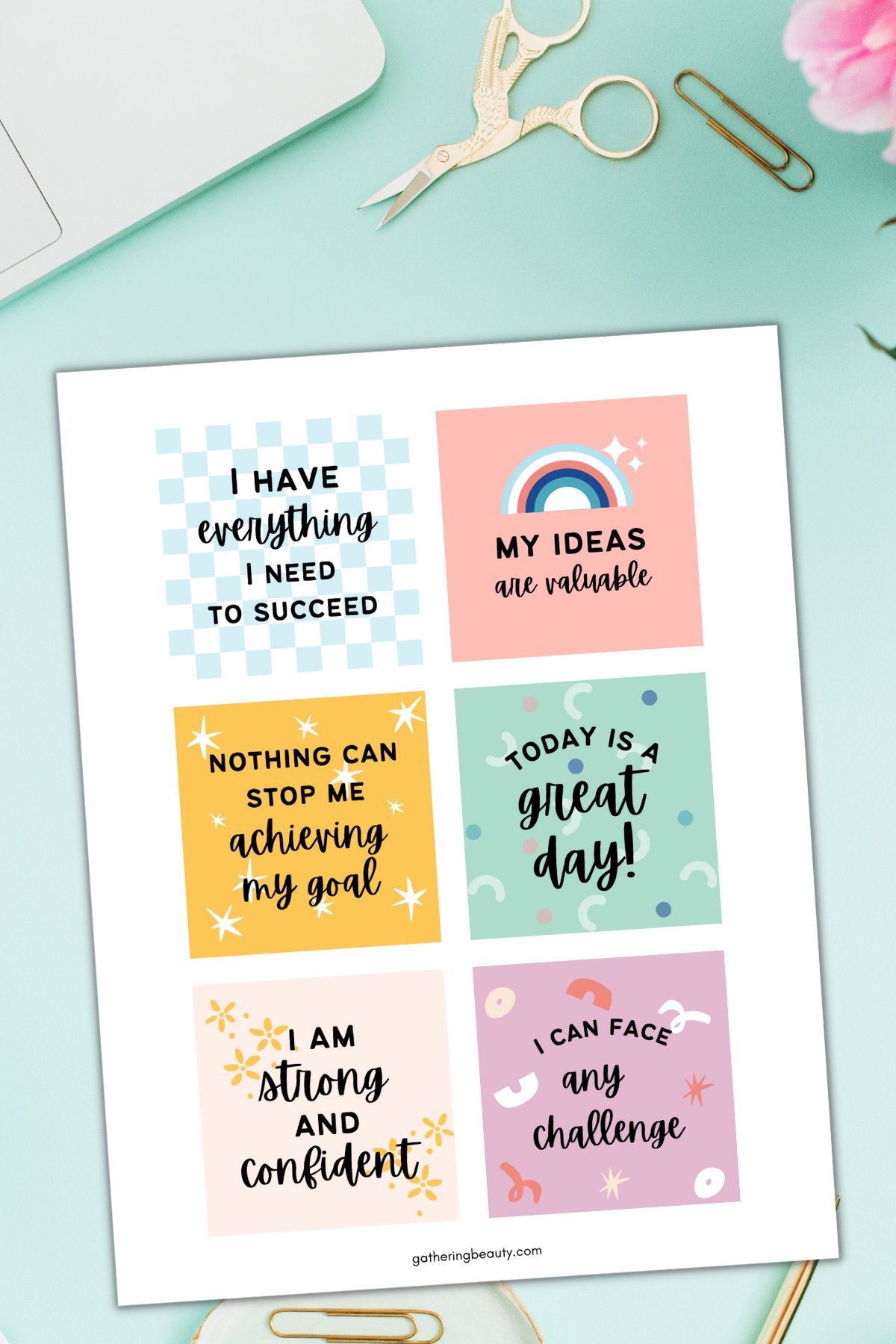
Credit: www.gatheringbeauty.com
Who Can Benefit From Affirmation Cards?
Affirmation cards are helpful for almost anyone, but they can be especially useful for:
- Students: To build confidence before tests or presentations.
- Professionals: To reduce work stress and boost motivation.
- Parents: To model positive thinking for children.
- People in recovery: To support healing and self-compassion.
- Therapists and coaches: To support clients’ growth.
- Anyone facing change: To stay positive during transitions.
Affirmation cards are also popular with children, seniors, and people who want an easy self-care tool.
Digital Vs. Physical Affirmation Cards
Both digital and physical cards have benefits. Here’s a quick look at the differences:
Physical cards:
- Tactile experience: Holding a card feels personal.
- Easier to decorate: You can add your own art.
- No screens required: Good for tech-free routines.
Digital cards:
- Portable: Always with you on your phone.
- Easy to share: Send to friends or post online.
- Customizable: Change colors, fonts, and images easily.
Some people use both—physical cards at home, digital on the go.
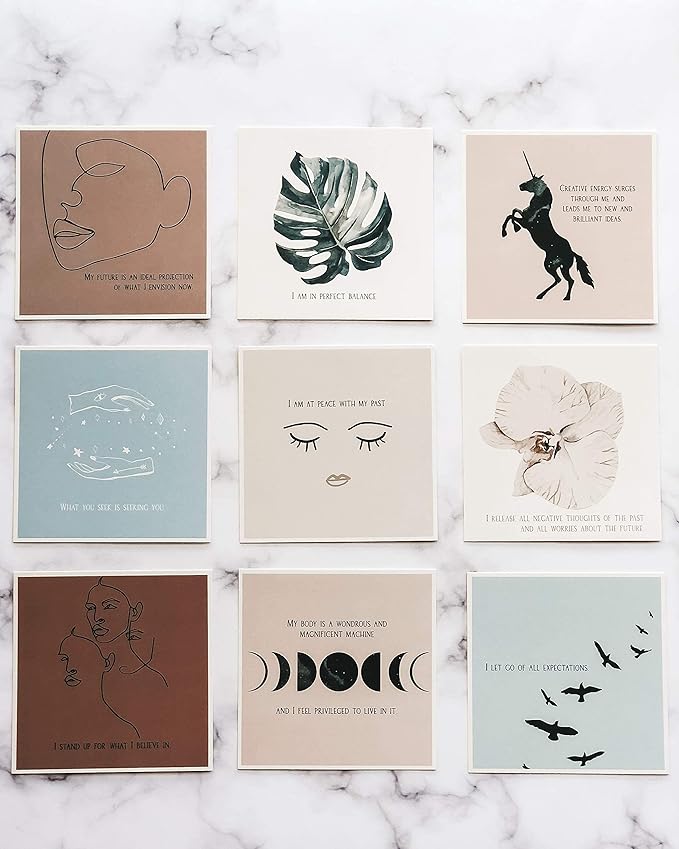
Credit: www.thebodydeli.com
Real-life Examples: Affirmation Cards In Action
Many people find creative ways to use affirmation cards. Here are a few true-to-life examples:
- A teacher puts an affirmation card on each student’s desk once a week. Students say it together at the start of the day.
- A nurse keeps cards in her locker. Before each shift, she picks one to remind herself to stay calm and kind.
- A parent and child make cards together, then choose one to read before bedtime.
- A group of friends mails affirmation cards to each other during tough times.
- A business team uses affirmation cards during meetings to set a positive tone.
These examples show that affirmation cards are flexible and can fit many situations.
Where To Find Inspiration For Affirmation Cards
If you’re not sure what to write, you can find inspiration from:
- Books about self-care or personal growth
- Mindfulness and meditation guides
- Quotes from favorite authors or leaders
- Spiritual texts or prayers
- Personal experiences and goals
You can even adapt affirmations you hear or see, making them more personal.
How To Keep Your Practice Fresh
Over time, affirmation cards can lose their impact if you always use the same ones. Here are ideas to keep things interesting:
- Update your cards every few months.
- Swap decks with a friend.
- Write new cards based on recent experiences.
- Add art or new decorations.
- Try saying affirmations in a different language.
- Use cards with music or movement.
The key is to keep your practice meaningful and enjoyable.
The Science Behind Affirmation Cards
Research suggests that positive affirmations can help change the brain’s response to stress and support healthier thinking patterns. This is called self-affirmation theory. When you repeat positive statements, you help your brain focus on your values and strengths, making it easier to handle challenges.
A study from the National Institutes of Health found that regular self-affirmation can reduce stress and improve problem-solving skills. The key is repetition and believing, even a little, in what you say.
Frequently Asked Questions
What Is The Best Way To Use Affirmation Cards Each Day?
Pick a time that works for you, such as morning or bedtime. Draw a card, read it out loud, and spend a moment thinking about its meaning. You can keep the card with you as a reminder or set it somewhere you’ll see it often.
Can Affirmation Cards Help With Anxiety Or Stress?
Yes, affirmation cards can help reduce anxiety by shifting your focus from worries to positive thoughts. They’re not a cure, but they can be a useful part of a larger self-care or mental health routine.
How Do I Choose The Right Affirmations For My Cards?
Think about what you want to feel or improve in your life. Use words and statements that feel true or inspiring. If you’re stuck, look for examples online or adapt affirmations from books or trusted sources.
Can Children Use Affirmation Cards?
Absolutely! Affirmation cards are great for children. Use simple language and add fun images. Reading them together can help build confidence and manage emotions.
How Many Affirmation Cards Should I Make?
There’s no set number. Some people start with 10–20 cards, while others make larger decks. It’s better to have a few meaningful cards than many that don’t feel personal.
Every affirmation card is a small step toward a kinder, stronger, and more positive mind. With a little creativity, you can make affirmation cards a powerful part of your daily life—one that supports growth, healing, and happiness.
