

What are the Most Powerful Affirmations to Transform Your Life
What Are The Most Powerful Affirmations
Affirmations are simple statements that you repeat to yourself to help change your thoughts, feelings, and actions. These phrases work as mental exercises, training your brain to focus on positive beliefs and possibilities. Many people use affirmations to build confidence, reduce stress, or reach goals.
But not all affirmations are equally strong. Some have a deeper impact because they touch core beliefs and guide your daily behavior. Understanding which affirmations are most powerful—and how to use them well—can transform your mindset and your life.
This article explains the science behind affirmations, what makes certain affirmations especially effective, and shares examples for different situations. You'll also see how to create your own powerful affirmations, common mistakes to avoid, and practical tips for lasting change. Whether you're new to affirmations or looking to deepen your practice, you'll find clear guidance and useful insights.
The Science Of Affirmations
Affirmations are not magic words. They change your thinking by working with your brain’s natural patterns. When you repeat positive statements, you start to believe them, which influences your emotions and actions. This process is called self-affirmation theory.
Research shows that affirmations can:
- Reduce stress and anxiety
- Improve performance at work or school
- Build self-esteem
- Help you stick to healthy habits
Your brain’s neuroplasticity means it can form new connections, even in adulthood. By repeating affirmations, you help your brain create new patterns for positive thinking.
How Affirmations Affect Your Brain
When you say an affirmation, your brain releases dopamine—the “feel good” chemical. This makes you more likely to repeat the positive behavior. It also lowers cortisol, the stress hormone. Over time, your brain starts to accept the affirmation as truth, which can change your actions.
For example, a person who says “I am confident” every morning may start to feel and act more confident. This is not just wishful thinking. Studies using MRI scans found that affirmations activate parts of the brain linked to self-processing and reward.
Another insight: affirmations can help with emotional regulation. When facing a stressful event, repeating a grounding phrase like “I am safe” helps your brain shift away from panic and towards calm thinking. This is why therapists sometimes suggest affirmations for managing anxiety or fear.
Why Some Affirmations Are More Powerful
Not every affirmation has the same effect. The most powerful affirmations:
- Feel believable to you
- Match your real goals and values
- Use present tense (“I am,” not “I will be”)
- Are specific rather than vague
If you say “I am happy,” but you don’t believe it, your brain may resist the statement. But if you say “I am learning to find joy in small moments,” it feels more real, so your brain accepts it more easily.
Another key point: powerful affirmations often use imagery or sensory detail. For example, “I breathe in calm and breathe out stress” uses physical sensations you can actually notice. This strengthens the effect because your brain links the phrase to your real experience.
What Makes An Affirmation Powerful?
A strong affirmation is more than a positive phrase. It works because it is:
- Personal – It speaks to your own life and needs.
- Present tense – It describes what is happening now.
- Emotionally charged – It stirs feelings, not just thoughts.
- Actionable – It suggests steps you can take.
Here’s a table comparing powerful vs. weak affirmations:
| Powerful Affirmation | Weak Affirmation |
|---|---|
| I am becoming more confident every day. | I hope to be confident someday. |
| I choose healthy foods that nourish my body. | I wish I could eat better. |
| I am worthy of love and respect. | I want people to like me. |
Notice how the powerful affirmations are active and present. They focus on growth, choice, and worth.
Another thing that sets strong affirmations apart is clarity. When your affirmation is clear and direct, it’s easier for your mind to understand and accept. For example, “I create balance in my life by setting healthy boundaries” is much clearer than “I want more balance.
”
Also, powerful affirmations often include a sense of progress. Words like “becoming,” “growing,” or “learning” help your brain see change as a process, not a single leap. This makes it easier to accept positive change, even if you are not there yet.
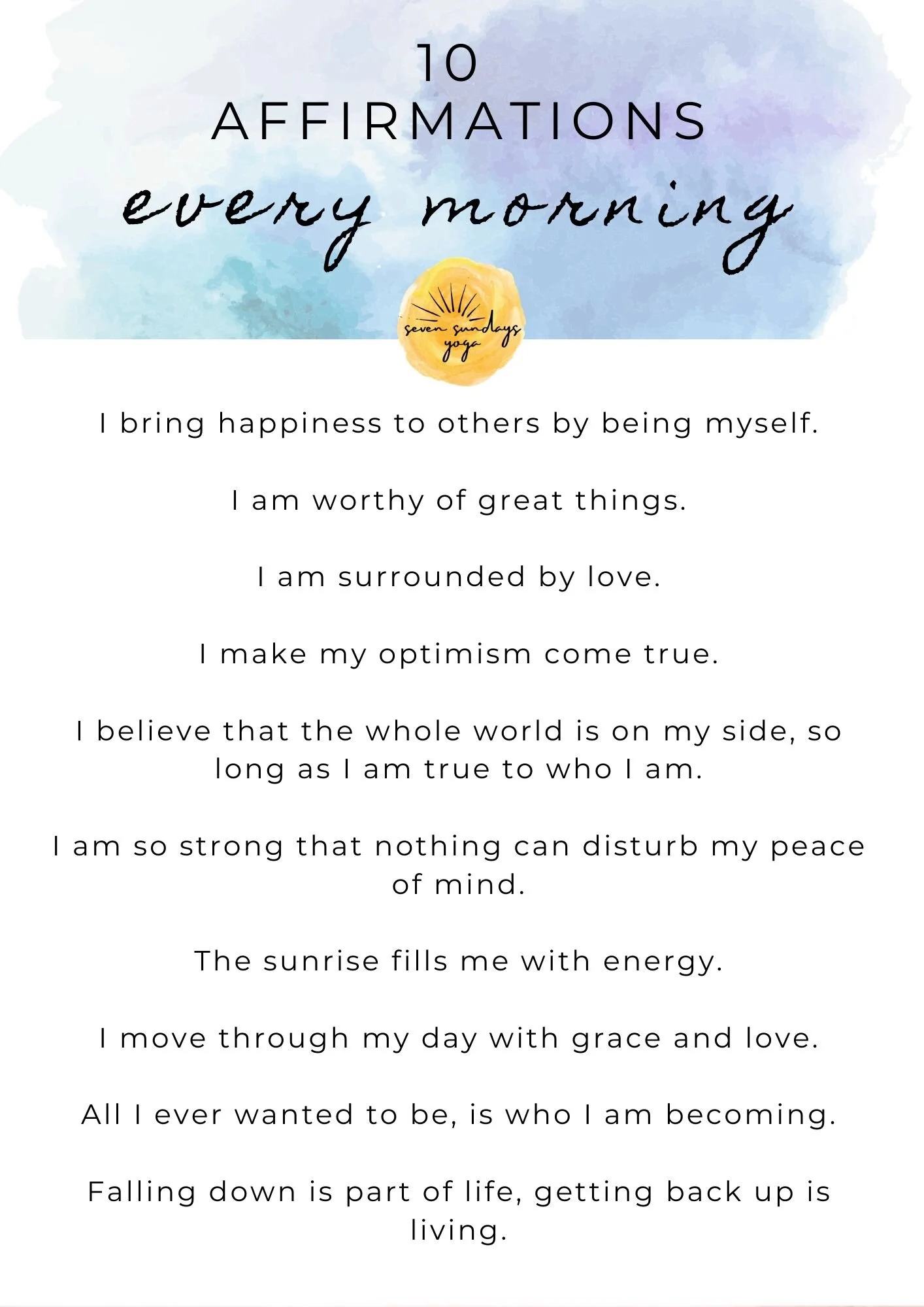
Credit: www.sevensundaysyoga.com
Examples Of The Most Powerful Affirmations
The strongest affirmations touch core areas of life—self-worth, health, relationships, work, and resilience. Here are examples for each:
Self-worth And Confidence
- I am enough just as I am.
- I am proud of who I am becoming.
- I accept myself fully and deeply.
These affirmations help you feel good about yourself, even when things are tough. They challenge negative self-talk and replace it with positive beliefs.
You can also adjust these for different situations. For example, before a difficult conversation, try: “I express myself with honesty and self-respect.” If you struggle with perfectionism, use: “I am worthy even when I make mistakes.”
Health And Wellbeing
- I honor my body by making healthy choices.
- My mind is calm, clear, and focused.
- I am strong and energized.
Health affirmations support both mental and physical wellness. They encourage you to care for your body and mind.
If you are dealing with recovery from illness or injury, you might try: “Every day, my body heals and grows stronger.” For mental wellness, “I give myself permission to rest” can help you slow down and recover.
Relationships And Love
- I attract healthy and loving relationships.
- I am open to give and receive love.
- I communicate with kindness and respect.
Relationship affirmations help you build trust, openness, and kindness. They also remind you of your value in connections with others.
For family situations, you might use: “I forgive and let go, so I can love freely.” Or, if you want to improve communication: “I listen deeply and speak with care.”
Success And Achievement
- I am capable of reaching my goals.
- I trust my skills and abilities.
- I am committed to growth and learning.
These affirmations boost motivation and focus. They guide you to take action and believe in your abilities.
For a challenging task, try: “I am focused and persistent in my efforts.” If you are starting a new job or project, “I adapt easily to new opportunities” can help you feel more confident.
Resilience And Overcoming Challenges
- I face difficulties with courage and strength.
- I learn from every experience.
- I am resilient and can handle whatever comes my way.
Resilience affirmations help you manage stress and bounce back after setbacks. They build inner strength and hope.
If you are going through loss, try: “I allow myself to grieve and heal at my own pace.” Or, if you are dealing with rejection: “I am valuable, regardless of others’ opinions.”
How To Create Your Own Powerful Affirmations
Crafting your own affirmation is more effective than using generic ones. Here’s how to build a statement that works for you:
- Identify your goal – What do you want to change or improve?
- Use positive language – Avoid negatives like “I don’t want to be sad.” Focus on what you want.
- Make it believable – If “I am rich” feels fake, try “I am learning to manage money well.”
- Keep it simple – Short statements stick better in your mind.
For example, if you struggle with stress, you might write: “I am learning to stay calm under pressure.”
Practical Steps For Writing Affirmations
- Write your affirmation in a notebook or on your phone.
- Use “I am” or “I choose.”
- Add a feeling word, like “peaceful,” “strong,” or “confident.”
- Repeat the affirmation out loud, every day.
Here’s another table showing the process:
| Step | Example |
|---|---|
| Identify goal | Reduce anxiety |
| Positive language | I am calm and relaxed |
| Believable | I am learning to stay calm |
| Simple | I am calm |
Another tip: make your affirmation personal by including your name. For example, “Maria, you are strong and capable.” Hearing your own name can make the affirmation feel even more real.
And don’t be afraid to update your affirmations as your needs change. What works for you now may change as you grow.
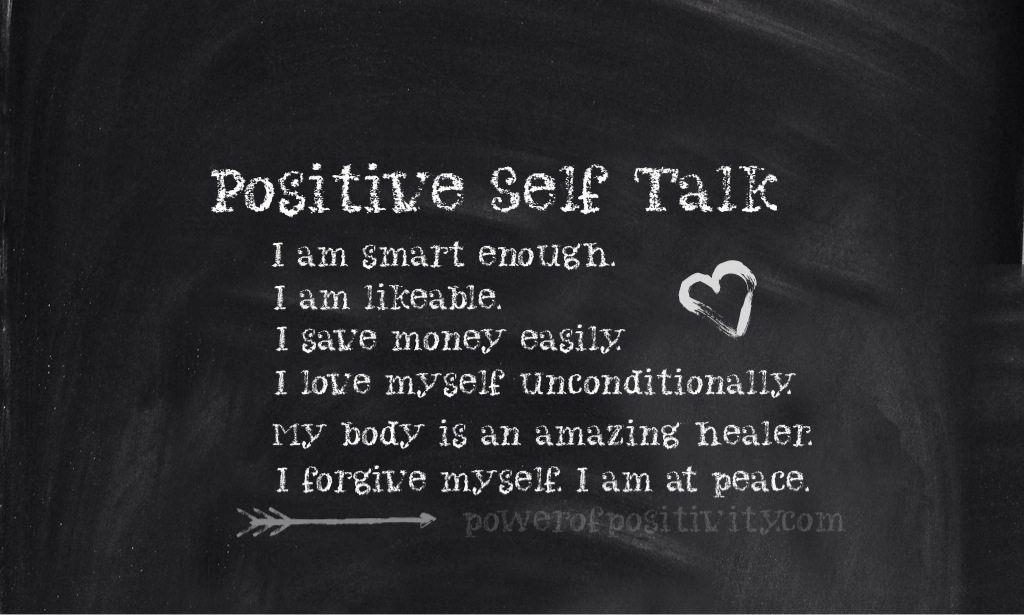
Credit: www.powerofpositivity.com
Using Affirmations Effectively
Repeating affirmations once is not enough. You must use them with intention and consistency. Here are ways to make affirmations part of your daily routine:
Morning Ritual
Start your day with three affirmations. Say them out loud, or write them in your journal. This sets a positive tone for the day.
To make this more powerful, try linking affirmations with another habit. For example, say them while brushing your teeth or making your morning coffee. This “habit stacking” makes it easier to remember.
Mirror Work
Look into a mirror and repeat your affirmation. Seeing yourself while you speak builds confidence and self-acceptance.
Some people find it uncomfortable at first, but with practice, it gets easier. You might notice new feelings or thoughts—this is a sign your mind is paying attention.
Visualization
Close your eyes and picture the affirmation as true. Imagine what it feels like. This makes the statement stronger in your mind.
For example, if your affirmation is “I am confident speaking in public,” imagine yourself standing in front of an audience, feeling calm and clear. Try to notice the sights, sounds, and feelings.
Daily Reminders
Set your phone to remind you of your affirmation. Or write it on sticky notes and place them where you’ll see them—on your desk, fridge, or bathroom mirror.
Some people even set their computer password as a positive phrase (like “Iamcalm2024!”). This gives you extra practice each day.
Affirmation Apps
There are apps that send you daily affirmations. Some allow you to record your voice and play it back, making the practice more personal.
A good app can help you stay consistent and suggest new phrases. But remember, the most important thing is that the affirmation feels right for you.
Common Mistakes When Using Affirmations
Many people start with good intentions but make mistakes that weaken their affirmations. Avoid these pitfalls:
- Using vague statements – “I am happy” is too broad. Be specific: “I find joy in my work.”
- Ignoring emotions – If you feel resistance, change the affirmation to fit your true feelings.
- Skipping repetition – Affirmations need daily practice, not just once.
- Forgetting to act – Affirmations should inspire action. If you say “I am healthy,” but eat poorly, the affirmation loses power.
Another mistake is choosing affirmations that do not match your values. For example, if you value creativity, use: “I am creative and resourceful.” This aligns with your inner beliefs.
Some people also try to force themselves to believe something that feels completely false. If you repeat, “I love my job” but truly dislike it, this can create tension. Instead, try: “I am finding ways to enjoy my work more each day.” This feels more honest and is still positive.
Finally, be patient. Change takes time, and it’s normal to feel awkward or doubtful at first. The key is gentle persistence.
Real-life Stories And Examples
Many famous people use affirmations to guide their success. Athletes, business leaders, and artists often repeat powerful statements before big events.
For example, a tennis player might say: “I am focused and ready to win.” A CEO might repeat: “I am a confident leader.”
But ordinary people benefit too. A teacher struggling with stress used “I am calm and prepared” before class. Over time, her anxiety dropped, and she felt more in control.
Another example: a person recovering from injury used, “My body heals and gets stronger every day.” This helped him stay hopeful during tough physical therapy sessions.
One insight beginners often miss: Affirmations are not just for positive feelings. You can use them during tough times. For example, after a failure, try: “I am learning and improving every day.” This shifts your focus from blame to growth.
And remember, sharing affirmations can also build community. Some families or teams use a group affirmation, like “We support each other’s growth. ” This builds trust and shared motivation.
Data And Statistics On Affirmations
Studies show the real impact of affirmations:
- In a survey, 75% of people who used affirmations daily reported higher self-esteem.
- A study found that students who practiced affirmations before exams had lower anxiety and performed better.
- People using health affirmations were 40% more likely to stick to exercise routines.
Here’s a comparison table showing the effect of affirmations vs. no affirmations:
| Group | Self-Esteem Score | Anxiety Level | Habit Success Rate |
|---|---|---|---|
| With Affirmations | 8/10 | Low | 80% |
| Without Affirmations | 6/10 | High | 55% |
The data shows affirmations make a real difference. They are not just “feel-good” phrases—they help you make lasting changes.
Another detail: some research suggests that people with higher self-doubt can benefit the most from affirmations, especially if the statements are tailored to their needs. Group settings, like classrooms or teams, also see better cooperation and morale when affirmations are used together.
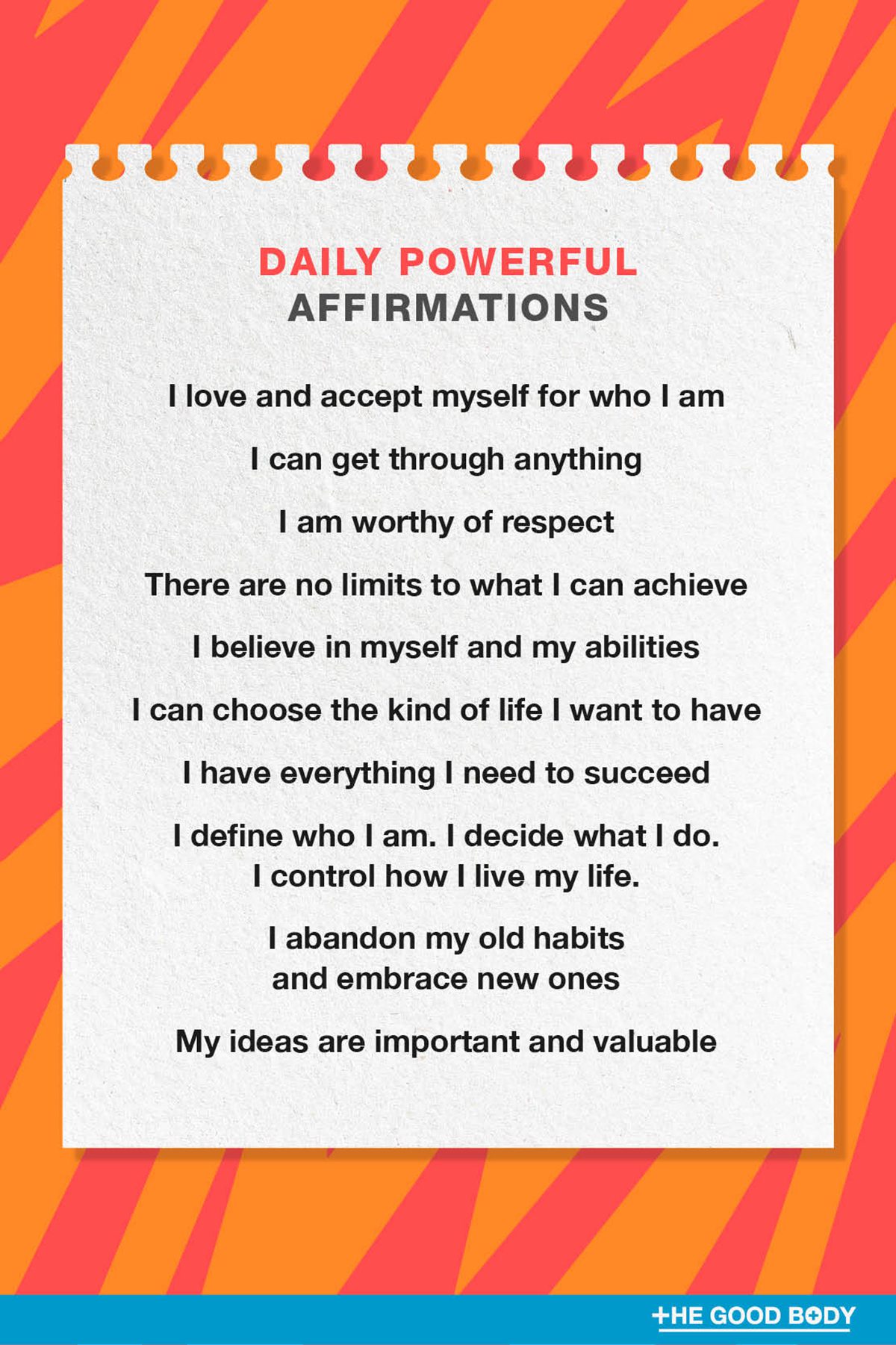
Credit: www.thegoodbody.com
How Affirmations Fit Into Mindset Change
Affirmations are one tool in a larger process of mindset change. To shift your thinking, use affirmations along with other methods:
- Gratitude practice – Write three things you are thankful for each day.
- Mindfulness meditation – Spend five minutes focusing on your breath.
- Goal setting – Write clear goals and steps.
Affirmations work best when they fit your daily habits. If you use them alongside gratitude and mindfulness, your mindset changes faster.
For deeper change, link your affirmation to a specific action. If you say, “I am organized and focused,” follow up by making a simple plan for your day. This turns words into results.
One more insight: notice when your old beliefs come up. Instead of fighting them, gently repeat your affirmation and refocus on your goal. Over time, the new belief will become stronger.
Affirmations For Special Situations
Some life events call for special affirmations. Here are examples:
Job Interview
- I am prepared and confident.
- I present my skills with clarity.
For added power, review your achievements before the interview and visualize success as you repeat your affirmation.
Exams
- I trust my memory and knowledge.
- I stay calm and focused during the test.
Combine these with deep breaths to help calm nerves.
Public Speaking
- I speak with confidence and ease.
- My words make a positive impact.
Imagine the audience listening with interest as you say your affirmation.
Personal Loss
- I am healing and growing stronger.
- I allow myself to feel and release pain.
Gentle affirmations support emotional healing by allowing space for your feelings.
Starting A New Habit
- I am consistent and motivated.
- I build healthy routines every day.
Track your progress with a journal to reinforce your affirmation.
Using affirmations for these moments helps you handle stress and perform better.
Frequently Asked Questions
What Is The Best Way To Use Affirmations?
The best way is to repeat your chosen affirmation every day, ideally in the morning or before bed. Say it out loud or write it in a journal. Use present tense, and focus on how it feels. Combine affirmations with action—take steps toward your goal.
You can also try recording your voice and listening to your affirmation during quiet moments. Hearing your own voice can make the statement feel even more personal.
How Long Does It Take For Affirmations To Work?
Change takes time. For most people, affirmations start to feel real after 21 to 30 days of daily practice. But results vary. If you feel resistance, adjust your affirmation until it feels believable. Consistency is key.
Remember, it’s normal for some days to feel easier than others. Stick with your practice and trust the process.
Can Affirmations Help With Mental Health?
Affirmations can support mental health by reducing negative self-talk and building self-esteem. They are not a cure for serious mental illness, but they help with stress, anxiety, and confidence. If you have severe symptoms, seek help from a professional.
Some therapists include affirmations as part of cognitive-behavioral therapy, especially for building positive self-image.
Are There Scientific Studies Supporting Affirmations?
Yes. Research shows affirmations help with stress, performance, and self-worth. MRI scans reveal they activate areas of the brain linked to self-processing. For more details, see Wikipedia.
Should I Use The Same Affirmation Every Day?
You can use the same affirmation or change it based on your needs. Some people keep a core affirmation for weeks, then update it as their goals change. Listen to your feelings. If your affirmation feels stale, refresh it.
A good practice is to review your affirmations every week and adjust them as you grow.
Closing Thoughts
Affirmations are simple but powerful tools for changing your mindset. The most powerful affirmations are personal, present, and emotionally charged. They help you believe in yourself, face challenges, and reach your goals. By using affirmations daily—and combining them with action—you can make real, lasting changes in your life.
Remember, the right affirmation is one that feels true and motivates you to grow. Practice with intention and patience, and you’ll see the benefits unfold.
If you ever feel stuck, go back to basics: choose a simple, honest statement that fits your life right now. Even a small shift in words can lead to a big shift in your mind. Affirmations are the seeds—your daily practice helps them grow.
