

What are Some Positive Affirmations to Boost Your Confidence Today
What Are Some Positive Affirmations
Many people struggle with negative thoughts every day. These thoughts can affect mood, confidence, and even health. Positive affirmations offer a simple but powerful tool to help change those patterns. By repeating short, uplifting phrases, you can shape your mindset and feel more motivated.
This article explores what positive affirmations are, how they work, and shares practical examples for different areas of life. You’ll also learn how to create your own affirmations, see real data about their impact, and discover tips to use them effectively.
If you want to feel happier, stronger, or more hopeful, positive affirmations could be the first step.
What Are Positive Affirmations?
Positive affirmations are short, encouraging statements that people say to themselves. The goal is to help build a better attitude and change how you see yourself or your situation. These phrases usually focus on strengths, possibilities, and self-worth.
For example, saying “I am confident” or “I deserve happiness” can help you feel more positive. Over time, repeating these statements can change your thinking.
Most affirmations are simple and easy to remember. You can use them anywhere: at home, at work, or before facing a challenge. Some people write them down, while others say them aloud.
How Positive Affirmations Work
The power of positive affirmations comes from repetition and focus. When you repeat a phrase often, your brain starts to believe it. This is known as “rewiring” your thoughts.
Research shows that self-affirmation activates certain parts of the brain linked to reward and happiness. It helps reduce stress and can even improve health by lowering blood pressure and boosting the immune system.
A common mistake is thinking affirmations alone will solve every problem. They work best when combined with action and realistic goals.
Benefits Of Using Positive Affirmations
Positive affirmations can offer many benefits. Let’s look at the most important ones:
- Improved Self-Esteem: Regularly saying affirmations can help you feel better about yourself.
- Reduced Stress: Positive statements can calm your mind and lower anxiety.
- Better Focus: Affirmations help you stay focused on what matters.
- Increased Motivation: When you believe in yourself, you try harder.
- Healthier Relationships: Feeling good about yourself helps you connect with others.
According to a study published in the journal “Social Cognitive and Affective Neuroscience,” people who practiced self-affirmation showed less stress during difficult tasks. This means affirmations are not just words—they can really change how you feel and act.
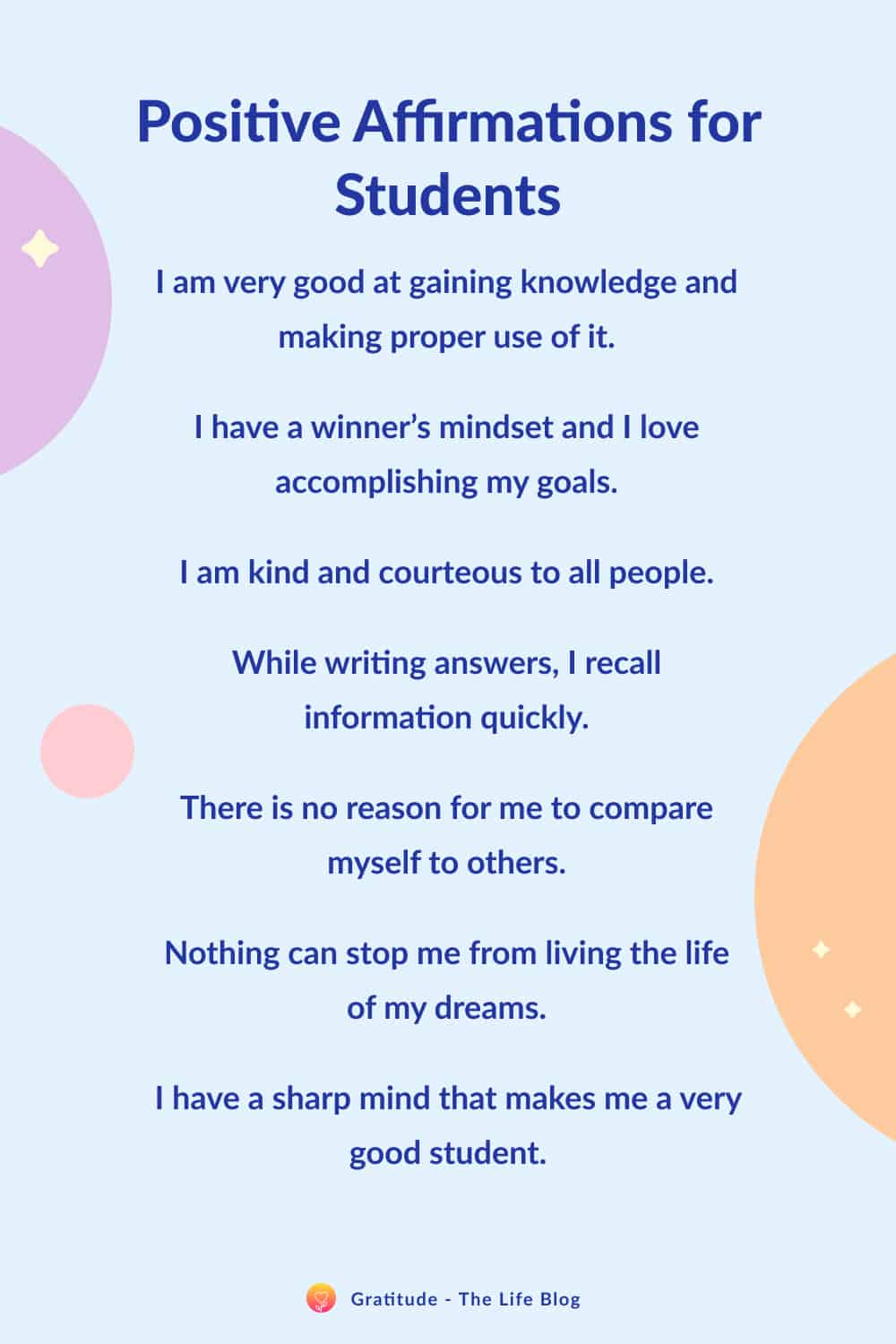
Credit: blog.gratefulness.me
Common Examples Of Positive Affirmations
Positive affirmations can be tailored for different needs. Here are some examples you can use:
For Confidence
- I am strong and capable.
- I believe in myself.
- I can handle any challenge.
- My abilities are growing every day.
For Stress Relief
- I am calm and relaxed.
- I release worries and welcome peace.
- I trust myself to manage stress.
- Every breath brings me calmness.
For Success And Motivation
- I am moving towards my goals.
- I am determined to succeed.
- Each day brings me closer to my dreams.
- I am focused and persistent.
For Self-love
- I accept myself as I am.
- I deserve kindness and respect.
- I am worthy of love.
- My happiness matters.
For Relationships
- I communicate clearly and honestly.
- I respect others and myself.
- I attract positive people into my life.
- I am a caring and supportive friend.
These affirmations are just starting points. You can adjust them to fit your needs.
How To Create Your Own Positive Affirmations
Creating your own affirmations makes them more powerful. Here’s how to do it:
- Identify Your Goal: Decide what you want to improve (confidence, peace, motivation).
- Use Present Tense: Say your affirmation as if it’s already true (e.g., “I am confident”).
- Keep It Short: Simple phrases are easier to remember.
- Be Positive: Focus on what you want, not what you don’t want.
- Add Emotion: Use words that make you feel good.
If your goal is to feel less anxious, you might create: “I am calm and in control.” For career growth: “I am ready for new opportunities.”
Common Mistakes When Creating Affirmations
- Using negative words (“I am not afraid” is less effective than “I am brave”).
- Making them too long or complex.
- Choosing goals that feel impossible.
Start with small, realistic statements. Over time, you can expand and build on them.
How To Use Positive Affirmations In Daily Life
Knowing positive affirmations is not enough—you need to use them. Here are practical ways to fit affirmations into your day:
Morning Routine
Begin your day by repeating affirmations while getting ready. This sets a positive tone for the day.
During Difficult Moments
When you feel stressed or uncertain, pause and say your affirmation. It helps redirect your thoughts.
Written Reminders
Write your favorite affirmation on a sticky note and place it where you’ll see it often—like your mirror or computer.
Meditation
Combine affirmations with deep breathing or meditation. This increases their effect.
Before Big Events
If you’re facing a test, interview, or meeting, repeat an affirmation to boost your confidence.
Tracking Progress
Keep a journal and record how you feel before and after using affirmations. Notice any changes over time.
The Science Behind Positive Affirmations
Positive affirmations are not just wishful thinking. Studies show they can change how the brain works.
Brain Activity
MRI scans show that self-affirmation lights up areas of the brain linked to reward and positive emotions. This makes you feel good and helps you stay motivated.
Stress Reduction
A study by Carnegie Mellon University found that people who used affirmations before stressful tasks had lower cortisol levels (the stress hormone).
Impact On Performance
Another study in the journal “Psychological Science” showed that students who practiced affirmations performed better on tests.
Here’s a comparison of stress levels between people who used affirmations and those who didn’t:
| Group | Average Cortisol Level | Performance Score |
|---|---|---|
| With Affirmations | Low | High |
| Without Affirmations | High | Low |
This table shows that affirmations can help reduce stress and improve results.

Credit: thechiclife.com
Positive Affirmations For Different Areas Of Life
Let’s look at how affirmations can help in specific situations:
Work And Career
- I am skilled and valuable at my job.
- I welcome new challenges and learn from them.
- My work makes a difference.
Using these phrases can help you feel more confident and productive at work.
Health And Fitness
- I make healthy choices every day.
- My body is strong and capable.
- I am committed to my well-being.
Repeating these affirmations can motivate you to take better care of your health.
Relationships And Family
- I listen and understand others.
- I am patient and loving.
- I create harmony in my home.
These statements support better communication and stronger connections.
Personal Growth
- I am always learning and growing.
- I welcome change and new ideas.
- I trust myself to make good decisions.
Affirmations for personal growth help you stay open-minded and curious.
Financial Abundance
- I attract opportunities for success.
- I manage my money wisely.
- I am open to abundance.
These can help you build a positive attitude toward finances.
Real-life Examples And Success Stories
Many people have shared how positive affirmations changed their lives.
Example 1: Overcoming Anxiety
Maria struggled with anxiety, especially before public speaking. She started saying, “I am calm and prepared” every morning. After two weeks, she noticed less nervousness and more control during presentations.
Example 2: Building Confidence
James felt unsure about his skills at work. He began using, “I am skilled and valued. ” Over time, he felt more confident and even got a promotion.
Example 3: Improving Relationships
Sophie wanted to be a better friend. She used, “I am supportive and understanding. ” Her friends noticed she listened more and gave better advice.
Example 4: Achieving Fitness Goals
Daniel wanted to lose weight but kept giving up. He tried “I am committed to my health. ” This helped him stay motivated and make healthier choices.
These real stories show that affirmations can make a difference. But remember, it takes time and consistency.
Positive Affirmations Vs. Negative Self-talk
Many people fall into the habit of negative self-talk. This means repeating bad thoughts like “I can’t do this” or “I’m not good enough. ” Negative self-talk can damage your self-esteem and motivation.
Positive affirmations work to replace these harmful messages with encouraging ones. Here’s a simple comparison:
| Negative Self-Talk | Positive Affirmation |
|---|---|
| I always fail. | I learn from every experience. |
| I’m not smart enough. | I am capable and intelligent. |
| No one likes me. | I am loved and appreciated. |
Replacing negative thoughts with positive affirmations helps you feel better and act more confidently.
How Often Should You Use Affirmations?
There is no strict rule, but most experts recommend repeating affirmations daily. Some people say them in the morning and at night. Others use them when facing a challenge.
Consistency is key. Saying an affirmation once won’t change much. But repeating it often helps your brain accept new ideas.
Tips For Better Results
- Say your affirmation with feeling.
- Look in the mirror as you speak.
- Write it down regularly.
- Use reminders on your phone.
Some people also record their affirmations and play them back throughout the day.
The Best Time And Place For Positive Affirmations
Affirmations work best when you feel relaxed and focused. Here are good times to use them:
- After waking up
- Before going to sleep
- During meditation or yoga
- Before important events
- While exercising
Choose a place where you feel comfortable. Some prefer quiet places, others like busy spots to remind themselves during stressful moments.
Common Questions About Positive Affirmations
Many beginners wonder about the best way to use affirmations. Here are some answers to common questions:
Can I Write My Own Affirmation?
Yes! Custom affirmations are often more effective. Make sure they feel true to you and fit your goals.
Do Affirmations Really Work?
Studies and real-life stories suggest they can help. They work best when used regularly and combined with action. For more research, see this Wikipedia page.
How Long Does It Take To See Results?
Some people notice changes in a few days, others take weeks. The key is consistency and patience.
Can Affirmations Replace Therapy?
No. Affirmations are helpful, but they don’t replace professional help for serious problems.
What If I Don’t Believe My Affirmation At First?
It’s normal to doubt. Start with statements that feel possible. Over time, your belief can grow.

Credit: livingasweeterlife.com
Data: Popular Affirmations Around The World
Positive affirmations are used worldwide. Here’s a look at the most popular types by region:
| Region | Common Affirmation Theme | Sample Phrase |
|---|---|---|
| North America | Self-confidence | I am confident and strong. |
| Europe | Inner peace | I am calm and balanced. |
| Asia | Harmony | I am connected and peaceful. |
| Africa | Resilience | I can overcome any challenge. |
This shows affirmations are universal, but their focus may change by culture.
Non-obvious Insights Beginners Miss
Many people think affirmations are only about words, but the way you use them matters. If you repeat an affirmation without believing it, your mind may resist. Start with statements that feel “almost true. ” As your confidence grows, adjust your affirmation.
Another insight: pairing affirmations with action is essential. If you say “I am healthy” but don’t exercise or eat well, the words lose power. Use affirmations to support real change, not avoid responsibility.
Combining Affirmations With Other Tools
Affirmations work best when used with other self-help strategies:
- Visualization: Imagine yourself acting out your affirmation.
- Journaling: Write about your progress and feelings.
- Mindfulness: Stay aware of your thoughts and feelings.
Some people also use music, art, or movement to reinforce positive messages.
Frequently Asked Questions
What Makes An Affirmation Effective?
An effective affirmation is specific, positive, and believable. It should match your goal and feel good to say. Adding emotion and repeating it daily helps.
Can I Use Affirmations For Children?
Yes! Children benefit from positive affirmations. Use simple phrases like “I am smart” or “I am loved. ” Make it fun and part of their routine.
Is It Okay To Change My Affirmation?
Absolutely. As you grow, your needs change. Adjust your affirmation to fit your new goals and feelings.
Should I Say Affirmations Out Loud Or In My Mind?
Both work. Saying them out loud can be more powerful, but silent repetition is good too. Try both and see what feels best.
Can Affirmations Help With Physical Health?
Yes, research suggests positive thinking can support better health. Affirmations can motivate you to make healthy choices and reduce stress, which helps your body.
Positive affirmations are more than just words. They are tools to shape your mindset, boost your confidence, and help you face life’s challenges. When you use them regularly and combine them with action, you can see real changes in your mood, motivation, and relationships. Start today with a simple phrase, repeat it often, and watch your thinking transform. If you want extra guidance or proof, explore reliable sources like the Wikipedia page for more information. The journey to a more positive life begins with the words you choose.
