

What are Some Good Affirmations to Boost Your Confidence Today
What Are Some Good Affirmations
Affirmations are simple, positive statements that you repeat to yourself. People use them to improve their mindset, encourage positive thinking, and build self-belief. While the idea seems easy, the results can be powerful. Science shows that affirmations can shape how you see yourself and your world.
But not all affirmations are equally effective. Some work well for certain goals, while others help with different needs.
Let’s explore what makes a good affirmation, why they matter, and see many examples you can use in daily life. You’ll also learn how to create your own affirmations and avoid common mistakes. Whether you want to boost your confidence, manage stress, or focus on your dreams, the right affirmation can help you move forward.
Why Affirmations Matter
A positive mindset is not just wishful thinking. Research shows that the way you talk to yourself can affect your actions, emotions, and even your health. For example, studies suggest that self-affirmation can reduce stress, increase problem-solving ability, and make you more open to change.
Affirmations help you:
- Replace negative thoughts with positive ones
- Strengthen self-confidence and motivation
- Set a clear direction for your goals
- Cope with challenges and setbacks
If you often think, “I can’t do this,” you may start to believe it. But if you repeat, “I am capable and resourceful,” you train your mind to look for solutions instead of problems.
What Makes A Good Affirmation?
Not every positive phrase is an effective affirmation. Some key features make an affirmation stronger:
- Present tense: Use “I am” or “I have,” not “I will” or “I want.”
- Positive language: Focus on what you want, not what you wish to avoid.
- Personal: Use “I” or “my” to make it about you.
- Specific and clear: Be direct, not vague.
- Believable: The statement should feel possible, not unrealistic.
For example, “I am calm and in control during meetings” is clearer and more effective than “I will try not to panic at work. ”
How Affirmations Work: The Science
You might wonder if repeating phrases can really change your life. Here’s why they work:
How Your Brain Responds
Your brain reacts to repeated thoughts. When you say an affirmation, your brain starts to form new pathways. Over time, these positive thoughts become more natural. This is called neuroplasticity—the brain’s ability to change and adapt.
Example: Stress Reduction
A study published in the journal “Social Cognitive and Affective Neuroscience” found that people who practiced self-affirmation had less activity in the brain areas linked to threat and stress. This means that regular affirmations can actually make you feel calmer in difficult situations.
Placebo Effect And Self-belief
Affirmations can also work like a mental placebo. If you believe you can succeed, you’re more likely to take actions that lead to success. This is not magic—it’s about changing your mindset so you look for and create opportunities.
50 Good Affirmations For Daily Life
Here are some effective affirmations you can use. Choose the ones that fit your needs, or adapt them for your own situation.
Confidence And Self-esteem
- I am enough just as I am.
- I trust my abilities and choices.
- I believe in myself and my skills.
- I am proud of who I am becoming.
- I deserve respect and kindness.
Stress And Anxiety Relief
- I am calm and centered, even under pressure.
- I handle challenges with patience and grace.
- I let go of what I cannot control.
- I breathe in peace and breathe out tension.
- I am safe and supported.
Motivation And Productivity
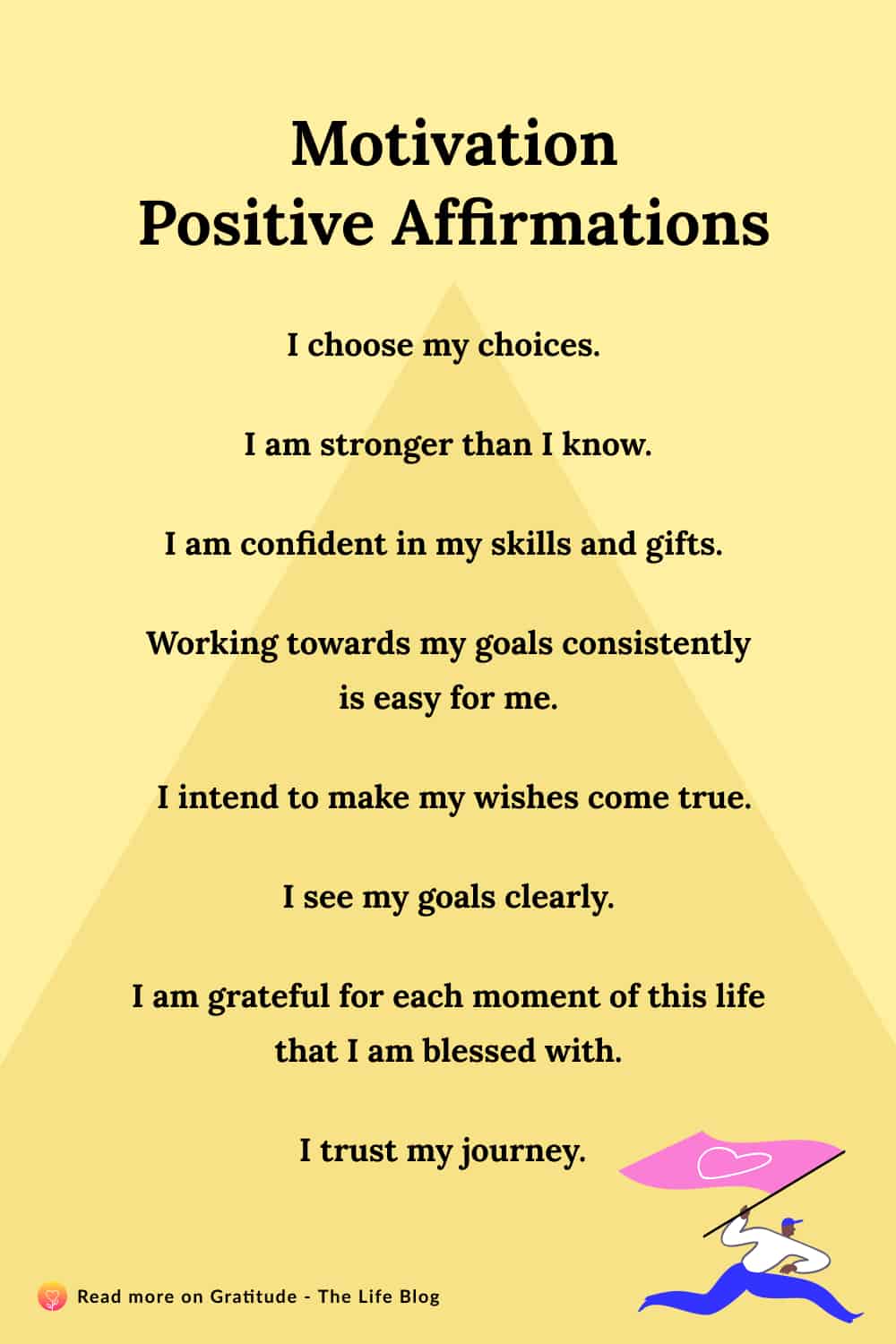
- I am focused and ready to achieve my goals.
- I make progress every single day.
- I am committed to my personal growth.
- I finish what I start.
- I am organized and manage my time well.
Health And Wellness
- I care for my body and mind with love.
- I have the energy to do what matters.
- I listen to my body’s needs.
- I am strong and healthy.
- I make healthy choices every day.
Relationships And Social Life
- I attract positive and supportive people.
- I communicate clearly and honestly.
- I am a good listener and friend.
- I am open to giving and receiving love.
- I bring kindness to every interaction.
Wealth And Abundance
- I am worthy of success and abundance.
- I attract new opportunities easily.
- I am open to wealth in all forms.
- I make smart financial decisions.
- I am grateful for what I have.
Overcoming Fear And Doubt
- I am stronger than my fears.
- I trust the process of life.
- I am brave and take action.
- I choose faith over fear.
- I can handle whatever comes my way.
Self-love And Acceptance
- I am kind to myself.
- I forgive myself and let go of guilt.
- I celebrate my progress, not perfection.
- I am unique and valuable.
- I accept myself completely.
Growth And Change
- I am always learning and growing.
- I welcome change with an open mind.
- I adapt easily to new situations.
- I turn setbacks into lessons.
- I trust my journey.
Spiritual And Emotional Balance
- I am at peace with my past.
- I trust the timing of my life.
- I am in tune with my feelings.
- I choose joy and gratitude daily.
- I am connected to something greater than myself.
How To Use Affirmations Effectively
Simply reading affirmations once is not enough. To see real results, you need to practice them the right way.
1. Repeat Daily
The more often you repeat an affirmation, the stronger the effect. Say your chosen statements every morning or before bed. Some people write them on sticky notes and place them on their mirror, desk, or phone.
2. Speak With Emotion
Say your affirmations with feeling. If you just repeat words without meaning, your brain won’t respond as strongly. Try to feel the truth of each statement as you say it.
3. Visualize Success
As you say your affirmation, picture yourself living it. For example, if you say, “I am confident in meetings,” imagine yourself speaking up with ease.
4. Write Them Down
Writing helps reinforce the message. Some studies show that writing affirmations by hand can boost their power. You might keep a journal and write your favorite affirmations each day.
5. Personalize Your Affirmations
Not every phrase will fit your life. Adjust the words so they feel real and meaningful to you. The best affirmations sound like your own voice.
Common Mistakes With Affirmations
People sometimes get frustrated when affirmations don’t seem to work. Here are some mistakes to avoid:
- Being too vague: “I want to be happy” is less effective than “I choose joy in my daily life.”
- Using negative language: Avoid phrases like “I am not anxious.” Focus on what you want, not what you don’t want.
- Saying what you don’t believe at all: If the statement feels too far from your reality, your mind may reject it. Try softer words like “I am learning to…” or “I am open to…”
How To Create Your Own Powerful Affirmations
While ready-made affirmations can help, creating your own makes them more personal and effective. Here’s a simple process:
Step 1: Identify Your Goal
Think about what you want to change or improve. Is it confidence, focus, health, or something else?
Step 2: Turn It Positive And Present
State your goal as if it’s already true. For example, instead of “I want to stop worrying,” use “I am calm and relaxed. ”
Step 3: Make It Believable
If “I am a millionaire” feels fake, try “I am improving my finances every day. ”
Step 4: Add Emotion
Phrases like “I am excited about new opportunities” have more impact than flat statements.
Example Affirmation Building
- Goal: Be less anxious at work
- Negative: “I don’t want to be nervous at work.”
- Positive: “I am calm and confident at work.”
- Add emotion: “I feel calm and confident whenever I speak at work.”
When And Where To Use Affirmations
There’s no wrong time to use affirmations, but some moments are especially powerful:
- Morning: Start your day with a positive focus.
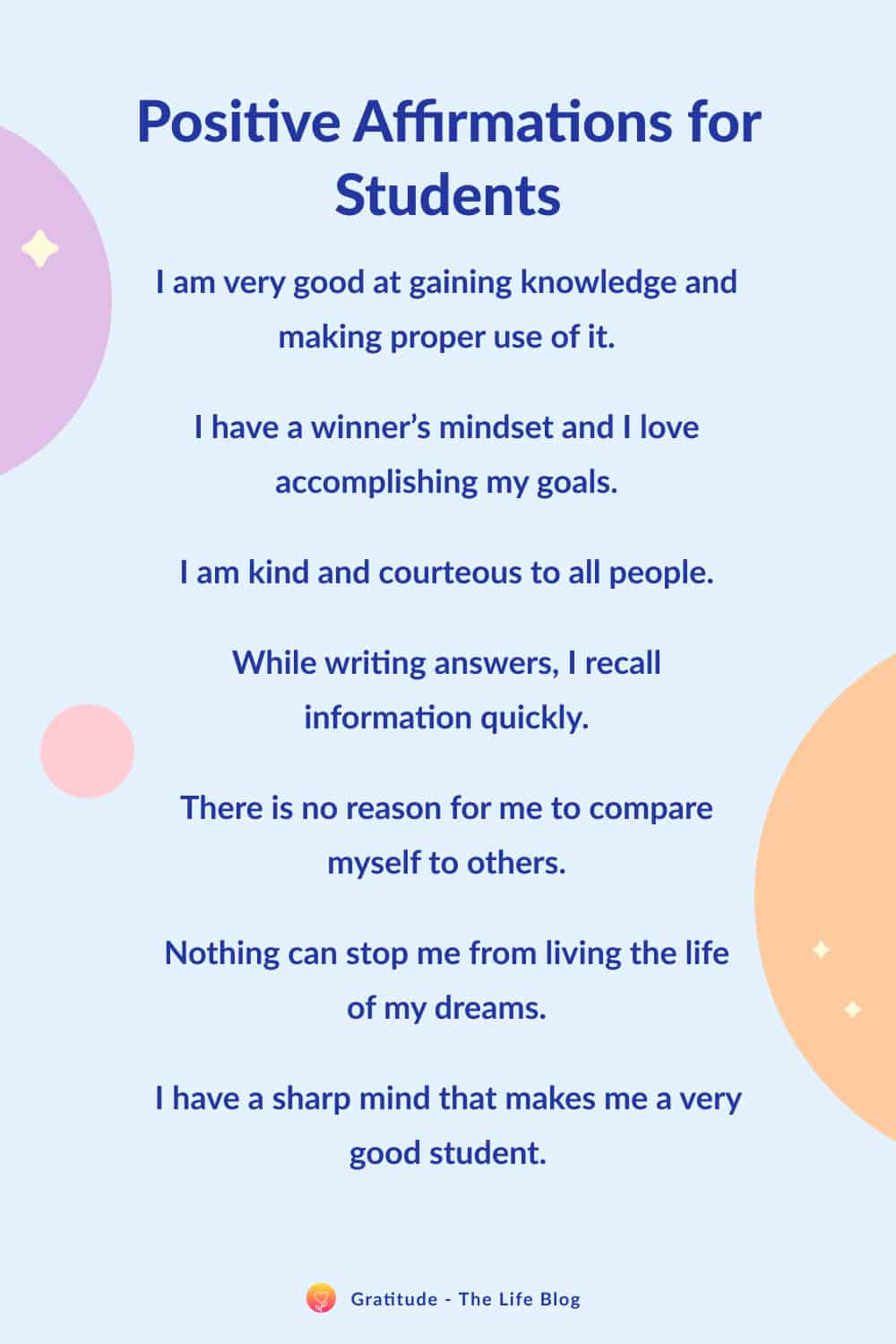
- Before stressful events: Calm your nerves before meetings, exams, or performances.
- During tough times: Remind yourself of your strength when facing challenges.
- Before sleep: Set a peaceful, positive mindset for rest.
Many people also combine affirmations with meditation, yoga, or exercise.
Credit: blog.gratefulness.me
Affirmations Vs. Positive Thinking
Some people confuse affirmations with general positive thinking. While both are helpful, there are differences.
| Aspect | Affirmations | Positive Thinking |
|---|---|---|
| Definition | Specific, repeated statements | General optimistic mindset |
| How to Practice | Repeat chosen phrases daily | Focus on seeing the good in situations |
| Goal | Change beliefs and habits | Improve outlook on life |
| Examples | “I am capable and strong.” | “Things will work out.” |
Affirmations work best when combined with positive thinking. They help you target specific areas you want to improve.
Are Affirmations Always Effective?
Affirmations are not magic. They work best when matched with real action. If you say “I am healthy,” but eat poorly and never exercise, words alone won’t change your health. However, affirmations can help you feel motivated to make better choices.
Some research shows affirmations are more effective for people with higher self-esteem. If you struggle with self-doubt, start with softer phrases, like “I am learning to believe in myself. ”
Real-life Examples: How People Use Affirmations
Hearing how others use affirmations can inspire you to try your own. Here are a few stories:
Example 1: Boosting Confidence At Work
Maria struggled with speaking up in meetings. She started repeating, “I am confident and my ideas matter. ” Over time, she felt more comfortable sharing her thoughts and received positive feedback from her team.
Example 2: Managing Stress
Jin felt overwhelmed by daily stress. He used the affirmation, “I am calm and handle challenges with patience. ” Repeating this before work helped him feel more in control, and his stress levels dropped.
Example 3: Building Healthy Habits
Leila wanted to exercise more but felt lazy. She told herself, “I have the energy to take care of my body. ” This small change in thinking helped her get moving and stick to her routine.
Data: Do Affirmations Really Work?
Let’s look at some numbers from research studies.
| Study Focus | Result | Sample Size |
|---|---|---|
| Self-affirmation and stress | Reduced stress response in participants | 68 |
| Academic performance with affirmations | Improved grades in students using affirmations | 400+ |
| Physical health and affirmations | Better health behaviors reported | 150 |
While affirmations are not a cure-all, these results show that they can help in real, measurable ways.
Two Insights Beginners Often Miss
- Small, specific affirmations are more powerful than broad ones. For example, “I am focused for the next 10 minutes” works better than “I am always focused.” Start small and grow from there.
- Action must follow words. Affirmations open your mind, but you still need to take steps toward your goals. Use affirmations to motivate action, not replace it.
How To Make Affirmations A Habit
If you want affirmations to work, consistency is key. Here are some tips to turn it into a daily practice:
- Set a reminder on your phone.
- Link affirmations to an existing habit, like brushing your teeth.
- Join a group or find a partner for accountability.
- Record your voice saying the affirmations and listen during the day.
Even two minutes a day can make a difference if you stick with it.

Credit: thechiclife.com
How Affirmations Help In Different Areas
Different goals need different types of affirmations. Here’s a quick overview:
| Goal Area | Example Affirmation | Best Time to Use |
|---|---|---|
| Confidence | “I trust my abilities.” | Before meetings, interviews |
| Health | “I care for my body.” | Morning, before meals |
| Focus | “I am present and attentive.” | Before work or study sessions |
| Calm | “I am relaxed and at ease.” | Before bed, during stress |
Matching your affirmation to your goal and timing increases the chance of success.
Making Affirmations Work For Non-native English Speakers
If English is not your first language, affirmations can still be helpful. Here’s how to make them work:
- Translate the affirmation into your native language if it feels more natural.
- Use simple English phrases if you want to practice language skills.
- Say the affirmation out loud to build confidence in both self-belief and language ability.
Sometimes, the feeling behind the words is more important than perfect grammar.
Credit: blog.gratefulness.me
Using Affirmations With Other Self-help Tools
Affirmations work best when combined with other practices. You might use them with:
- Meditation: Repeat affirmations during quiet reflection.
- Journaling: Write down affirmations and your feelings.
- Goal setting: Pair each goal with a matching affirmation.
- Breathing exercises: Use calming affirmations while you breathe deeply.
This layered approach builds a stronger foundation for change.
When Affirmations Don’t Work
Sometimes, affirmations may not have the effect you expect. Here’s why:
- If you repeat something you truly don’t believe, it may cause inner resistance.
- If you use affirmations without any real action or effort, results will be limited.
- If you expect instant change, you may get frustrated.
If this happens, adjust your affirmations to be more believable or focus on smaller steps.
Resources For Learning More
If you want to go deeper, many books, podcasts, and websites focus on affirmations and mindset. For research-based information, you can visit PositivePsychology.com for expert articles and tips.
Frequently Asked Questions
What Is The Best Time Of Day To Use Affirmations?
Many people find the best time is in the morning, right after waking up. This sets a positive tone for the day. Others prefer saying affirmations before bed to end the day with good thoughts. You can also use them anytime you need a boost or before a stressful event.
Can I Use Affirmations In My Native Language?
Yes, you can use affirmations in any language that feels natural and powerful to you. The most important thing is that you believe the words and feel their meaning. Some people even mix languages if that helps them connect with the message.
How Long Does It Take To See Results From Affirmations?
This varies from person to person. Some feel a positive shift in mood within days. For deeper changes in confidence or habits, it may take weeks or longer. Consistency is key—repeat your affirmations daily and match them with positive action.
What If I Feel Silly Or Fake Saying Affirmations?
It’s normal to feel awkward at first, especially if the statements are new or different from your usual thinking. Start with affirmations that feel believable. For example, use “I am learning to be confident” instead of “I am always confident.
” With practice, it will feel more natural.
Do Affirmations Really Work For Everyone?
Affirmations are a helpful tool, but they are not a cure-all. They work best when you choose statements that are meaningful to you and when you also take action toward your goals. If you have deep emotional struggles, affirmations can be part of your support system, but professional help may also be needed.
Affirmations are simple, but their impact can be life-changing. Choose the ones that fit your goals, use them daily, and watch how your mindset begins to shift. With patience and practice, you’ll see real progress—one positive thought at a time.
