

What Affirmation Means: Unlocking the Power of Positive Thinking
What Affirmation Means
Believing in yourself is not always easy. Many people struggle with self-doubt, negative thinking, or low confidence at some point. But what if there was a simple way to train your mind to be more positive and supportive? This is where the concept of affirmation comes in. For some, affirmations are just a trend; for others, they are a daily habit that transforms life. But what does affirmation really mean, and how does it work?
Understanding the true meaning of affirmation can be powerful. It is more than just repeating nice words to yourself. Affirmation can shape how you see yourself, your goals, and even your future. In this article, you will discover everything you need to know about affirmation — from its roots and definitions to practical examples, science, and real-life results.
Whether you are new to the idea or searching for deeper insights, you will find clear answers here.
What Is Affirmation?
The word affirmation comes from the Latin “affirmare,” meaning to make steady or strengthen. In simple terms, an affirmation is a positive statement that you say, think, or write to yourself. The purpose is to encourage and support good beliefs, actions, or feelings.
Affirmations are usually short, specific, and said in the present tense. For example: “I am confident,” “I choose to be calm,” or “I deserve success.” These statements are repeated regularly to help replace negative thoughts with positive ones.
Affirmation is not about lying to yourself. Instead, it is about focusing on what you want to be true and training your mind to accept positive possibilities. Over time, affirmations can help shape your self-talk, which is the way you speak to yourself inside your mind.
Types Of Affirmations
Affirmations are not all the same. They can focus on different areas of life, such as confidence, health, relationships, work, or healing. Here are some common types of affirmations:
Self-esteem Affirmations
These focus on building a healthy sense of self-worth. Examples include:
- “I value myself.”
- “I am worthy of love and respect.”
- “I believe in my abilities.”
Confidence Affirmations
These help boost your courage and self-trust.
- “I handle challenges with strength.”
- “I am confident in my decisions.”
- “I trust myself.”
Health Affirmations
These support physical and mental well-being.
- “My body is healthy and strong.”
- “I care for my health each day.”
- “I choose foods that nourish me.”
Success And Abundance Affirmations
These focus on achieving goals and attracting success.
- “I am open to new opportunities.”
- “Success flows to me easily.”
- “I am deserving of prosperity.”
Relationship Affirmations
These support positive connections with others.
- “I attract healthy relationships.”
- “I communicate with kindness.”
- “I am loved and supported.”
Healing Affirmations
These help with emotional or physical healing.
- “I forgive myself and let go.”
- “Each day, I feel better and stronger.”
- “I am healing, inside and out.”

Credit: 7esl.com
The Science Behind Affirmations
Many people wonder if affirmations really work or if they are just wishful thinking. While affirmations are not magic, there is real science behind them.
How Affirmations Affect The Brain
When you repeat an affirmation, you activate certain areas in your brain. Research using brain scans shows that positive self-affirmations can stimulate the reward centers of the brain, similar to when you receive praise or rewards.
Affirmations also tap into the brain’s ability to rewire itself, a process called neuroplasticity. By repeating positive statements, you create new pathways in your brain that support positive thinking and self-belief.
Evidence From Studies
Several studies have found that affirmations can:
- Reduce stress and anxiety
- Improve academic and work performance
- Help people make healthier choices
- Increase resilience after setbacks
One key study published in the journal *Social Cognitive and Affective Neuroscience* found that self-affirmation increased activity in the ventromedial prefrontal cortex, a region linked to self-worth and positive valuation.
When Affirmations May Not Work
It is important to note that affirmations are not a cure-all. In some cases, repeating statements that feel untrue (like “I am rich” when facing debt) may cause discomfort or even increase negative feelings. For affirmations to work, they should feel believable and meaningful to you.
How To Create Effective Affirmations
Not all affirmations are equally powerful. To get the most benefit, it helps to follow a few key guidelines.
1. Use The Present Tense
Affirmations are more effective when stated as if they are true right now. Instead of “I will be confident,” say “I am confident. ”
2. Keep Them Positive
Focus on what you want to experience, not what you want to avoid. Say “I am calm” instead of “I am not stressed. ”
3. Make Them Personal
Use “I” statements. This helps your mind connect with the message.
4. Be Specific
General statements can feel empty. “I am successful at my job” is stronger than “I am successful. ”
5. Keep Them Short And Simple
Clear, short affirmations are easier to remember and repeat.
6. Choose What Feels True
Pick affirmations that you can believe, even if just a little. If “I am a leader” feels too hard, try “I am learning to lead. ”
7. Repeat Regularly
Consistency matters. Repeat your affirmations daily, out loud or silently, for best results.
Practical Ways To Use Affirmations
Adding affirmations to your daily routine can be simple. Here are some effective methods:
Morning Routine
Start your day with affirmations. Say them while looking in the mirror or during a quiet moment.
Journaling
Write your affirmations in a notebook each day. This helps reinforce the message.
Audio Recordings
Record yourself saying your affirmations and listen while walking, driving, or relaxing.
Visual Reminders
Place sticky notes with affirmations on your desk, mirror, or fridge as gentle reminders.
Meditation
Use affirmations as a focus point during meditation. Repeat them slowly and mindfully.
Group Practice
Share affirmations in a support group or with friends. Saying them together can increase motivation.
Real-life Examples Of Affirmation Practice
Affirmations are used by people from all walks of life, from athletes to business leaders to students. Here are a few practical examples:
Athletes
Many top athletes use affirmations to train their minds. They might say, “I perform with focus and power,” or “I am calm under pressure. ” This helps them prepare for competition and recover from setbacks.
Students
Students often use affirmations to reduce test anxiety and boost confidence. Phrases like “I am prepared and capable” or “I learn quickly” help shift their mindset before exams.
Professionals
In the workplace, affirmations like “I am a valuable team member” or “I handle challenges with creativity” can help build confidence and resilience.
People Facing Illness
People who are healing from illness or injury may use statements like “My body knows how to heal” or “I am getting stronger every day. ” This can support their emotional well-being during recovery.
Benefits Of Affirmations
The true value of affirmation lies in its ability to change the way you think and feel about yourself and your life.
1. Improved Self-esteem
Regular use of affirmations helps build a stronger sense of self-worth. When you repeat positive messages, you start to believe them and act accordingly.
2. Reduced Stress
Affirmations can calm your mind during stressful situations. By focusing on positive thoughts, you can lower anxiety and feel more in control.
3. Enhanced Motivation
Affirmations keep your goals and values front-of-mind. This makes it easier to stay motivated and work toward what matters to you.
4. Better Emotional Resilience
Life is full of ups and downs. Affirmations can help you recover more quickly from disappointments and setbacks by shifting your focus to what you can control.
5. Healthier Habits
Affirmations can support positive behavior change, such as exercising regularly, eating well, or quitting bad habits. They remind you of your strength and commitment.
6. Greater Optimism
People who use affirmations often feel more hopeful about the future. They look for possibilities instead of focusing on problems.
Common Myths About Affirmation
Many people misunderstand what affirmation really is. Let’s clear up some popular myths:
“affirmations Are Just Wishful Thinking.”
Affirmations are not about ignoring reality or pretending problems do not exist. They are tools for focusing your mind on solutions and positive action.
“you Must Say Them Hundreds Of Times Each Day.”
Quality is more important than quantity. Meaningful, focused repetition is better than mindless chanting.
“they Only Work For Certain People.”
Anyone can benefit from affirmations. The key is choosing statements that fit your personality, goals, and beliefs.
“affirmations Can Replace All Other Self-help Or Therapy.”
Affirmations are a helpful tool but not a cure for serious problems. They work best as part of a bigger plan for growth or healing.
Affirmation Vs. Positive Thinking
While affirmation and positive thinking are related, they are not exactly the same.
Positive thinking is a general attitude of expecting good outcomes and focusing on the bright side. It is a mindset you carry throughout your day.
Affirmation, on the other hand, is an active practice. It involves choosing specific positive statements and repeating them to shape your thoughts and feelings.
Think of positive thinking as the overall approach, and affirmations as one of the tools you use to support that approach.
Affirmations In Different Cultures And Traditions
Affirmations are not new. Many cultures and spiritual traditions have used similar practices for centuries.
Ancient Roots
- In Eastern traditions like Buddhism and Hinduism, chanting mantras is a way to focus the mind and invite positive qualities.
- In Christianity and other religions, repeating prayers or blessings serves a similar purpose.
- Indigenous cultures also use positive statements or songs in rituals for healing and strength.
Modern Adaptations
Today, affirmations are used in therapy, coaching, education, and self-help. They have been adapted for different languages, beliefs, and lifestyles.
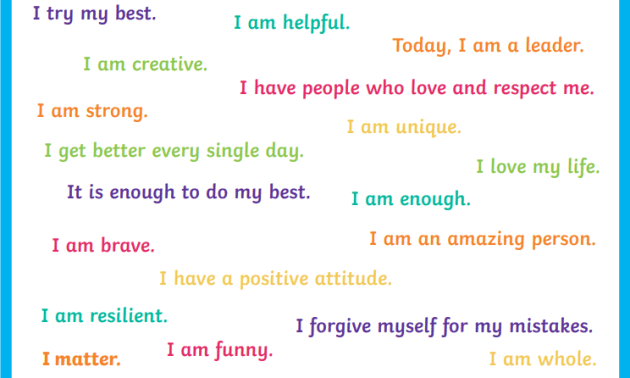
Credit: www.twinkl.es
Common Mistakes When Using Affirmations
Many beginners make simple errors that reduce the power of their affirmations. Avoid these common pitfalls:
1. Choosing Unrealistic Statements
If your affirmation feels impossible, your mind may reject it. Start with statements you can accept, even if they are small.
2. Being Too Vague
Statements like “I am happy” are too broad. Make your affirmations clear and specific.
3. Forgetting To Use Them
Consistency is key. Set reminders or tie affirmations to daily habits to remember them.
4. Ignoring Feelings
Simply repeating words without feeling their meaning does not help. Try to connect emotionally with your affirmations.
5. Giving Up Too Soon
Change takes time. If you do not see results right away, keep going. Progress often happens slowly and quietly.
How Affirmations Compare To Other Self-help Tools
Affirmations are just one way to improve your mindset. Let’s see how they compare to other popular tools:
| Tool | Main Focus | How It Works | Best For |
|---|---|---|---|
| Affirmations | Self-talk | Repeating positive statements | Changing beliefs, boosting confidence |
| Visualization | Imagination | Picture your goals as real | Goal achievement, motivation |
| Gratitude Journaling | Appreciation | Write what you are thankful for | Increasing happiness, reducing stress |
| Meditation | Awareness | Focus on the present moment | Reducing anxiety, improving focus |
| Therapy | Mental health | Talking with a professional | Deep healing, trauma, mental illness |
As you can see, each tool has its strengths. Many people combine affirmations with other practices for greater effect.
Measuring The Impact Of Affirmations
How can you tell if affirmations are working for you? Here are a few signs:
- You notice fewer negative thoughts.
- You feel more hopeful and confident.
- You take positive actions more often.
- You recover faster from setbacks.
Some people like to keep a journal to track their thoughts and feelings over time. Others notice changes in their relationships, habits, or work performance.
Data From Surveys
Surveys show that more than 60% of people who use affirmations regularly report higher self-esteem and better mood. While not everyone will have the same results, many find real, lasting benefits.
Sample Affirmations For Daily Life
Here are some examples you can try in different situations:
For Confidence
- “I am capable of great things.”
- “I trust myself to make good choices.”
For Calmness
- “I am calm and centered.”
- “I handle stress with grace.”
For Relationships
- “I deserve healthy, loving connections.”
- “I express my feelings honestly and kindly.”
For Success
- “I am open to success and abundance.”
- “I turn challenges into opportunities.”
For Health
- “I care for my body with love.”
- “My mind and body work together in harmony.”
For Motivation
- “I take action toward my goals every day.”
- “I am persistent and determined.”
Choose the ones that speak to you, or create your own.
Myths Vs. Facts About Affirmations
Here’s a quick look at what is true and what is not:
| Myth | Fact |
|---|---|
| Affirmations are magic spells. | Affirmations are mental training tools. |
| They only work for positive people. | Anyone can benefit with practice. |
| You must believe 100% right away. | Belief grows with repetition and experience. |
| Affirmations replace medical help. | They support, but do not replace, professional care. |
| More is always better. | Quality and meaning matter most. |
Two Non-obvious Insights About Affirmation
Most guides repeat the basics, but here are two things beginners often overlook:
- Affirmations can uncover hidden beliefs. When you say an affirmation and feel resistance or discomfort, it can reveal areas where you have limiting beliefs. This is a chance to gently explore and work on those deeper issues, rather than avoid them.
- Affirmations work best when linked to action. Saying, “I am healthy” is much more powerful when you pair it with a healthy habit, like drinking water or taking a walk. Action gives your affirmation real-life proof, which helps your mind accept the message faster.
The Role Of Affirmation In Modern Life
The world can be stressful and demanding. More people today are turning to affirmations as a way to manage stress, build confidence, and stay focused on their values. Schools, companies, and even sports teams are adding affirmations to their training and culture.
Some mental health programs and therapists also teach affirmation techniques to help clients manage anxiety, depression, or self-doubt. While affirmations are not a replacement for therapy, they are a valuable part of many wellness plans.
If you want to explore more about the science behind affirmations, you can visit this Wikipedia article for detailed information.
Frequently Asked Questions
What Is The Main Purpose Of Affirmation?
The main purpose of affirmation is to help you change your self-talk and focus on positive beliefs. By repeating supportive statements, you train your mind to expect good things, believe in yourself, and act with confidence.
How Often Should I Use Affirmations?
It is best to use affirmations daily. You can say them in the morning, before bed, or any time you need a boost. Consistency is more important than the number of times.
Do Affirmations Work For Everyone?
Affirmations can help most people, but results vary. They work best when you choose statements that feel believable and meaningful. If affirmations alone are not enough, consider adding other tools or seeking support.
Can I Write My Own Affirmations?
Yes, personal affirmations are often the most effective. Write statements in the present tense, keep them positive, and make sure they fit your goals and beliefs.
What If I Do Not Believe My Affirmation?
If an affirmation feels untrue, try changing the words to something you can accept. For example, instead of “I am completely confident,” try “I am learning to be more confident. ” Belief often grows with practice.
Affirmation is a simple yet powerful tool. By understanding what affirmation means and how to use it, you can shape your thoughts, feelings, and even your future. Try adding affirmations to your daily life and watch how your mindset changes over time.
The journey starts with a single, positive word.

Credit: artpchs.weebly.com
