

Positive Morning Affirmations to Start the Day: Boost Your Mindset
Positive Morning Affirmations To Start The Day
Imagine waking up and feeling confident, strong, and ready to face whatever comes. Many people struggle in the morning—feeling tired, stressed, or worried about the day ahead. But you can change this with positive morning affirmations. These simple, powerful phrases help you focus your mind, boost your mood, and set the tone for a productive day. In this article, you’ll discover how affirmations work, why they matter, and how you can use them to create your own morning routine.
Let’s explore how you can use positive affirmations to start your day with energy, clarity, and purpose.
What Are Morning Affirmations?
Morning affirmations are positive statements you say to yourself at the start of the day. They help you focus on good things, encourage confidence, and reduce negative thoughts. When you repeat these phrases, you train your brain to think positively and feel motivated.
Most people use affirmations to:
- Build self-confidence
- Overcome stress or anxiety
- Create a positive mindset
- Improve focus and productivity
Affirmations are not magic. They work because your brain pays attention to repeated words and ideas. Over time, these words become beliefs. If you say, “I am capable,” every day, you start to believe it. This belief changes how you act and feel.
Why Morning Affirmations Matter
A positive morning sets the tone for the whole day. When you wake up and tell yourself good things, your mind starts to search for proof that they are true. This is called confirmation bias—your brain looks for evidence that matches your beliefs.
Here’s why morning affirmations are so powerful:
- Reduce stress: You replace negative thoughts with hopeful ones.
- Increase motivation: You remind yourself of your strengths.
- Improve mood: You feel happier and more optimistic.
- Boost productivity: You focus on goals and actions.
According to research from the National Institutes of Health, positive self-talk can help lower stress and improve performance. People who use affirmations regularly feel less anxious and more confident.
How Affirmations Work In The Brain
When you repeat affirmations, your brain creates new neural pathways. These are connections that help you form new habits. Scientists call this process neuroplasticity. This means your brain can change and grow, even as an adult.
Here’s a simple example:
- If you often say, “I am not good enough,” your brain starts to believe it. You feel more anxious and less confident.
- If you change your thought to, “I am capable,” and repeat it every morning, your brain starts to believe this instead. You feel more confident and act with courage.
The key is consistency. You must repeat your affirmations regularly—preferably every morning—so your brain accepts them as true.
Choosing Effective Morning Affirmations
Not all affirmations work equally well. The best affirmations are:
- Personal: They reflect your own goals or values.
- Positive: They use positive words and avoid negatives.
- Present tense: They describe what you want as if it’s already true.
- Simple: They are easy to remember and say.
For example:
- “I am strong and healthy.”
- “I am ready for new opportunities.”
- “I deserve happiness and success.”
If an affirmation feels fake or forced, it won’t help. Choose words that feel natural and believable to you.
Common Mistakes When Choosing Affirmations
- Using negative language (“I will not fail” is less helpful than “I succeed.”)
- Choosing unrealistic statements (“I am a millionaire” may feel fake if you are struggling financially.)
- Forgetting to personalize (“I am happy” is good, but “I am happy and grateful for my family” is better.)
Start with small, believable affirmations. As your confidence grows, you can use stronger statements.
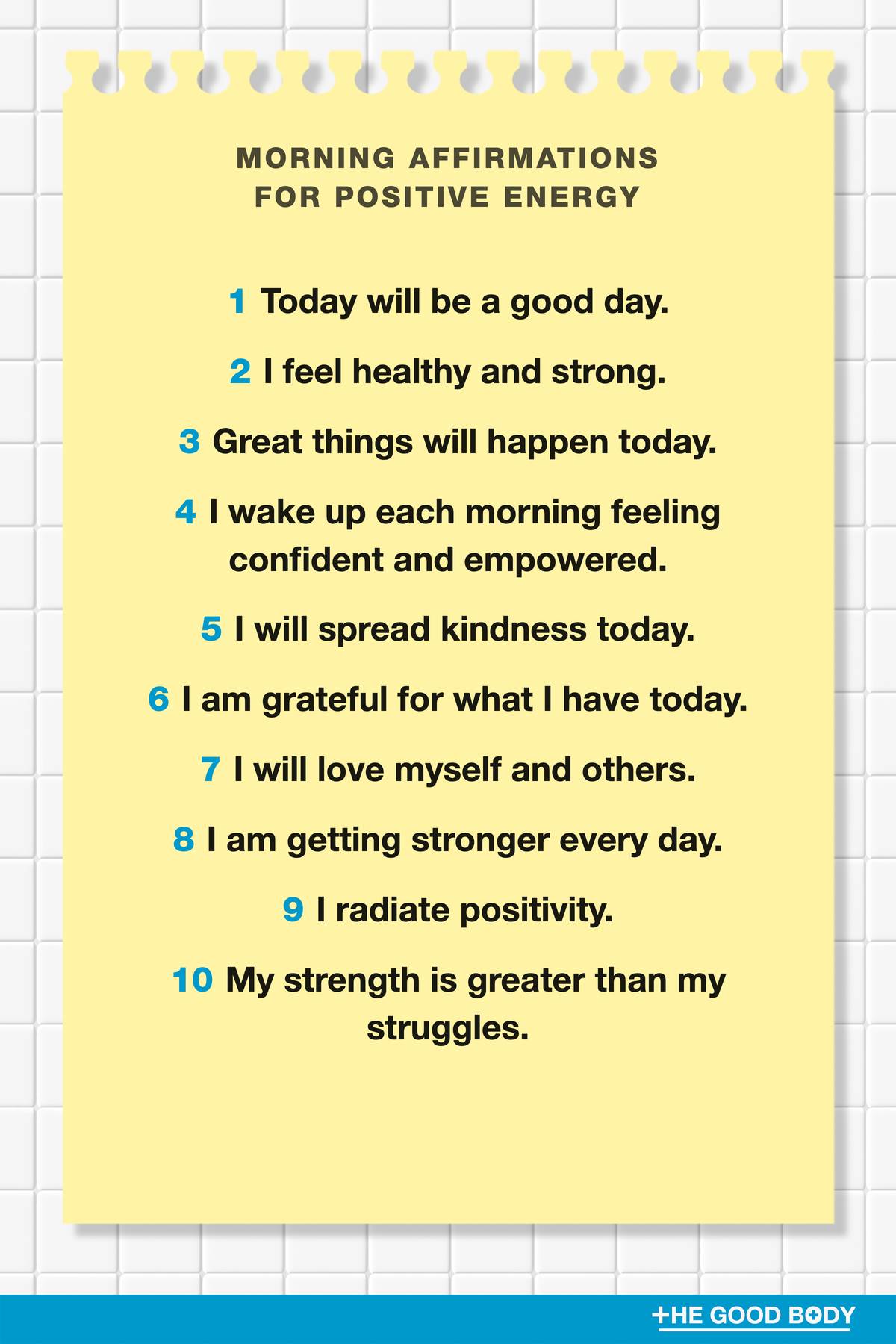
Credit: www.thegoodbody.com
30 Powerful Morning Affirmations To Try
Here are thirty affirmations you can use every morning. Choose the ones that fit your life or create your own.
- I am grateful for this new day.
- I am confident in my abilities.
- I am calm and focused.
- I deserve happiness and success.
- I trust myself to make good decisions.
- I am strong and healthy.
- I welcome new opportunities.
- I am worthy of love and respect.
- I handle challenges with courage.
- I am proud of who I am.
- I choose to be positive today.
- I am creative and resourceful.
- I am patient with myself and others.
- I forgive myself for past mistakes.
- I am open to learning and growth.
- I am in control of my thoughts.
- I am surrounded by support and kindness.
- I am motivated and productive.
- I am at peace with myself.
- I am thankful for my body and mind.
- I am optimistic about the future.
- I am successful in my goals.
- I am joyful and energetic.
- I am resilient and strong.
- I am focused on what matters most.
- I am a positive influence to others.
- I am free from worry.
- I am balanced and centered.
- I am proud of my progress.
- I am ready to make today great.
You don’t need to use all thirty. Pick a few that feel right, or write your own. The most important part is to repeat them every morning.
How To Create Your Own Morning Affirmations
Affirmations work best when they fit your life and goals. Here’s how to create powerful affirmations:
- Identify your goal: What do you want to feel or achieve?
- Use positive words: Avoid negatives (“I won’t be late” is less helpful than “I am always on time.”)
- Write in present tense: Say what you want as if it’s happening now.
- Keep it simple: Short phrases are easier to remember.
- Make it personal: Use words that matter to you.
Example: If you want to feel confident at work, you might write:
- “I am skilled and valued at my job.”
If you want to feel less anxious, you might write:
- “I am calm and in control.”
You can write your affirmation on paper, a sticky note, or in your phone. Place it somewhere you’ll see it every morning.
Morning Affirmations Vs. Other Self-talk Methods
Affirmations are not the only way to change your mindset. Other self-talk methods include visualization, gratitude journaling, and goal setting. Each has its own benefits.
Here’s a comparison:
| Method | Focus | When to Use | Benefits |
|---|---|---|---|
| Affirmations | Positive statements about self | Morning, before challenges | Boost confidence, reduce stress |
| Visualization | Imagining success or goals | Before big events, anytime | Increase motivation, clarify goals |
| Gratitude Journaling | Listing things you are thankful for | Morning or night | Improve mood, reduce negativity |
| Goal Setting | Planning future actions | Weekly, monthly | Increase productivity, track progress |
Affirmations are unique because they change how you see yourself. Visualization helps you see your goals, while gratitude journaling improves your mood. Combining these methods can make your morning routine even stronger.
How To Use Morning Affirmations In Your Routine
To get the most from affirmations, use them as part of your morning routine. Here’s a simple guide:
1. Choose Your Affirmations
Pick 2–5 affirmations that fit your goals.
2. Find A Quiet Place
Sit or stand somewhere calm. You don’t need to meditate, but avoid distractions.
3. Say Your Affirmations Out Loud
Speak clearly and with confidence. If you feel shy, you can whisper or say them in your mind.
4. Repeat Each Affirmation 3–5 Times
Repetition helps your brain remember.
5. Visualize Success
Imagine yourself living the affirmation. If you say, “I am confident,” picture yourself speaking up at work.
6. Write Them Down
Writing your affirmations reinforces your belief.
7. Stay Consistent
Use your affirmations every morning. Over time, you’ll notice changes in your mood and confidence.
Example Morning Routine
- Wake up and stretch.
- Drink a glass of water.
- Sit quietly and say your affirmations.
- Visualize your goal.
- Write your affirmations in a journal.
- Start your day with a positive mindset.
Real-life Success Stories
Many people have used positive morning affirmations to improve their lives. Here are a few examples:
Case Study 1: Overcoming Anxiety
Maria struggled with anxiety every morning. She started using affirmations like “I am calm and in control. ” After two weeks, she noticed less worry and more focus. Her confidence grew, and she felt better at work.
Case Study 2: Building Confidence
James felt unsure about his abilities at his job. He used affirmations such as “I am skilled and valued. ” Within a month, he noticed more positive feedback from his boss and colleagues. His self-esteem improved, and he started taking on new challenges.
Case Study 3: Improving Mood
Sara felt tired and unmotivated each morning. She tried affirmations like “I am joyful and energetic. ” She also wrote them in her journal. Soon, she felt more excited about her day and finished tasks faster.
These stories show that affirmations can help in many situations. The key is regular practice and choosing words that feel right.
Using Affirmations For Different Goals
You can use morning affirmations for many goals. Here are some ideas:
Confidence
- “I am confident in my choices.”
- “I am proud of who I am.”
Productivity
- “I am focused and productive.”
- “I complete tasks with ease.”
Happiness
- “I am joyful and grateful.”
- “I deserve happiness.”
Health
- “I am strong and healthy.”
- “I care for my body and mind.”
Relationships
- “I am loved and respected.”
- “I am a positive influence.”
Affirmations are flexible. Change them to fit your needs.
Scientific Evidence Behind Affirmations
Studies show that positive self-talk can improve mental health. One research project found that people who used affirmations felt less stressed and more confident. Another study showed that affirmations can help students perform better in school.
A key insight: affirmations work best when you believe them. If your affirmation feels fake, change it until it feels right.
According to the American Psychological Association, regular positive self-talk can help reduce anxiety and improve well-being. For more information, visit APA.
Common Myths About Morning Affirmations
Some people believe affirmations are only for “positive thinkers” or don’t work at all. Here are a few myths:
- Myth: Affirmations are just wishful thinking.
Fact: Affirmations help change your mindset, which leads to real actions.
- Myth: You must believe your affirmation 100% right away.
Fact: Belief grows with practice. Start small and build confidence.
- Myth: Affirmations solve all problems.
Fact: They help with mindset, but you still need to take action.
- Myth: Affirmations must be perfect.
Fact: Simple, honest affirmations work best.
Don’t let myths stop you from trying. Affirmations are a tool, not a cure-all.

Credit: www.momooze.com
Tips For Making Morning Affirmations More Powerful
Here are some practical ways to make your affirmations work better:
- Use emotion: Feel the words as you say them. Emotion makes them stronger.
- Combine with action: If you say, “I am healthy,” eat a healthy breakfast.
- Write them down: Seeing your words in writing helps your brain accept them.
- Use visual reminders: Place sticky notes on your mirror or fridge.
- Practice gratitude: Combine affirmations with gratitude for extra impact.
- Change them as needed: Adjust your affirmations when your goals change.
- Be patient: Changes take time. Keep practicing.
Comparison: Affirmations Vs. Meditation
Some people wonder if affirmations are better than meditation. Here’s a simple comparison:
| Feature | Affirmations | Meditation |
|---|---|---|
| Focus | Positive self-talk | Calming the mind |
| Time Needed | 2–5 minutes | 5–20 minutes |
| Benefits | Confidence, motivation | Stress reduction, clarity |
| How to Use | Repeat statements | Sit quietly, breathe |
Both methods are useful. You can combine them—meditate first, then say your affirmations. This creates a strong morning routine.
Who Should Use Morning Affirmations?
Affirmations are for everyone. You don’t need to be an expert or “positive thinker.” Here are some groups who benefit:
- Students: Build confidence for exams and classes.
- Professionals: Improve focus and motivation at work.
- Parents: Stay calm and patient with children.
- Athletes: Boost confidence before training or games.
- Anyone feeling stressed: Reduce anxiety and worry.
If you struggle with negative thoughts, affirmations can help. You can start small and build your own routine.

Credit: janejacksoncoach.com
The Role Of Affirmations In Success
Successful people often use morning affirmations. Athletes, CEOs, and artists use positive self-talk to prepare for challenges. Affirmations help them stay focused and confident.
For example, many Olympic athletes use affirmations before competitions. They say phrases like “I am strong” or “I am ready. ” This prepares their mind and body for success.
Affirmations are not just for famous people. Anyone can use them to improve their mindset and achieve goals.
Non-obvious Insights For Beginners
Most beginners miss a few important points:
- Timing matters: Say affirmations when you wake up, before your mind fills with worries. This sets a clear foundation for the day.
- Pair with movement: Saying affirmations while walking, stretching, or doing yoga boosts their effect. Physical activity helps your brain accept new ideas.
- Track your progress: Keep a journal of your affirmations and note changes. Seeing real progress encourages you to continue.
- Use your own voice: Hearing your own voice makes affirmations stronger. Record them and play them back if you prefer.
- Change affirmations seasonally: As life changes, update your affirmations to match your current goals.
Measuring The Impact Of Morning Affirmations
Some people wonder if affirmations really work. Here are ways to measure their impact:
- Mood tracking: Write down your mood before and after using affirmations.
- Productivity logs: Track your work or study progress.
- Confidence ratings: Rate your confidence daily on a scale of 1–10.
- Stress levels: Notice how you handle stressful situations after regular practice.
Over time, you should notice improvements. If not, change your affirmations or routine.
Sample Progress Tracking Table
| Day | Mood (1-10) | Confidence (1-10) | Productivity (Tasks Done) |
|---|---|---|---|
| Monday | 6 | 5 | 3 |
| Tuesday | 7 | 6 | 4 |
| Wednesday | 8 | 7 | 5 |
| Thursday | 8 | 8 | 6 |
| Friday | 9 | 8 | 7 |
Tracking your progress helps you see real results and stay motivated.
Adapting Affirmations For Busy Mornings
If you’re short on time, you can still use affirmations. Here are tips for busy mornings:
- Use one powerful affirmation: Pick the most important statement for your day.
- Say it while getting ready: Repeat your affirmation while brushing your teeth or eating breakfast.
- Write it on your phone: Set a reminder or alarm with your affirmation.
- Use audio: Record your affirmation and play it as you start your day.
- Combine with music: Listen to uplifting music while saying your affirmation.
Even short, simple affirmations can change your mindset.
The Best Places To Practice Morning Affirmations
Where you practice matters. Here are some good spots:
- Bedroom: Say your affirmation as soon as you wake up.
- Bathroom mirror: Look at yourself and repeat your affirmation.
- Kitchen: Speak your affirmation while making breakfast.
- On a walk: Repeat your affirmation as you walk outside.
- In your car: Say your affirmation before driving to work or school.
Choose a place where you feel comfortable and undisturbed.
Advanced Affirmation Techniques
Once you feel comfortable, try advanced techniques:
- Mirror work: Look into your eyes and say your affirmation. This builds self-trust.
- Affirmation cards: Write affirmations on cards and shuffle them each morning.
- Group affirmations: Practice with friends or family. Sharing affirmations increases motivation.
- Visualization pairing: Imagine achieving your affirmation while you say it.
- Use music: Set affirmations to music or rhythm for easier memorization.
Advanced methods help you deepen your practice and find new motivation.
Frequently Asked Questions
What Is The Best Time To Use Morning Affirmations?
The best time is right after waking up, before you start your daily activities. Your mind is clear and more open to positive ideas. If you are busy, you can say your affirmation while getting ready or on your commute.
How Many Affirmations Should I Use Each Morning?
Most people use 2–5 affirmations. Too many can feel overwhelming. Choose a few that fit your current goals and focus on them.
Can Affirmations Help With Anxiety Or Stress?
Yes, positive affirmations can reduce stress and anxiety. By focusing on hopeful thoughts, you shift your mind away from worry. For severe anxiety, affirmations can be part of a larger plan, including professional support.
Do Affirmations Need To Be Spoken Aloud?
Speaking affirmations aloud is powerful, but you can also whisper or say them in your mind. Writing them down or recording them also works. The key is regular practice.
What If I Don’t Believe My Affirmations?
It’s normal to feel unsure at first. Start with simple, believable statements. As you repeat them, your confidence grows. If an affirmation feels fake, change it until it feels right.
Starting your day with positive morning affirmations can change your mindset, boost your confidence, and help you face challenges with energy and hope. The key is to practice regularly, choose statements that feel right, and track your progress. Whether you are new or experienced, affirmations can help you build a brighter, more successful day—one morning at a time.
