

How to Use Daily Affirmations for Lasting Positive Change
How To Use Daily Affirmations
Most people want to improve their lives, but changing habits and mindset is not easy. One simple tool, however, can make a big difference: daily affirmations. These are short, positive statements you repeat to yourself every day. They help you build confidence, change negative thoughts, and reach your goals. Many successful people, from athletes to business leaders, use affirmations to stay motivated and focused. But using affirmations is more than just saying nice words. It’s about creating a routine, understanding how your mind works, and making your statements powerful and personal.
In this article, you’ll learn everything you need to know about using daily affirmations. We’ll cover why they work, how to create your own, the best ways to practice, and tips for making them a real part of your life.
You’ll also see practical examples, scientific data, and common mistakes to avoid. By the end, you’ll be ready to use daily affirmations confidently, and you’ll understand how this simple practice can help you change your life.
What Are Daily Affirmations?
Daily affirmations are simple, positive phrases that you repeat to yourself, usually each morning or throughout the day. Their main purpose is to shape your thoughts and beliefs. Instead of focusing on worries or negative ideas, affirmations help you concentrate on what you want to achieve or feel.
For example, saying “I am strong and capable” can help you face difficult situations with more confidence.
The brain is like a sponge. When you repeat positive statements often, your mind starts to believe them. This is called self-affirmation theory. It means your brain will slowly change its attitude and actions to match your words. Over time, affirmations can boost self-esteem, reduce stress, and help you stay positive even when things are tough.
Why Affirmations Work: The Science
Many people wonder if daily affirmations are just wishful thinking. But research shows they can actually change how you feel and act. Here are some key facts:
- Studies on self-affirmation show that people who use affirmations before stressful events feel less anxious and perform better.
- MRI scans reveal that repeating affirmations activates parts of the brain linked to self-worth and reward.
- Affirmations are used in therapies like Cognitive Behavioral Therapy (CBT) to help patients fight negative thoughts.
One famous study found that students who used affirmations before tests had lower stress and higher grades. Another research project discovered that people who practiced daily affirmations for two weeks felt more confident in their abilities. These effects are not just mental—affirmations can lower blood pressure and improve sleep quality.
Data Comparison: Affirmation Impact
Here’s a simple comparison of how affirmations affect stress and confidence, based on published studies:
| Group | Stress Level (Scale 1-10) | Confidence Level (Scale 1-10) |
|---|---|---|
| Used Affirmations | 4.2 | 7.8 |
| No Affirmations | 7.1 | 5.3 |
This shows how simple statements can really change how you feel day-to-day.
Credit: www.boldtuesday.com
How To Create Powerful Affirmations
Not all affirmations are equal. Some work better than others because they are personal, specific, and believable. Here’s how to make your own:
- Keep it positive: Always use words that focus on what you want, not what you want to avoid. For example, say “I am healthy” instead of “I don’t want to be sick.”
- Make it personal: Use “I” or “my” so the statement is about you. Example: “I am confident in my abilities.”
- Keep it simple: Short phrases are easier to remember and repeat. Avoid long or complex sentences.
- Use present tense: Say “I am successful” instead of “I will be successful.” This helps your mind believe it’s true right now.
- Be specific: Instead of “I am happy,” try “I am grateful for my supportive friends.”
- Make it believable: Choose statements you can accept, even if they stretch you a little. If you don’t believe what you’re saying, your mind may resist.
Common Mistakes In Affirmations
It’s easy to make mistakes when creating affirmations. Here are a few to watch out for:
- Using negative words: “I am not weak.”
- Making statements too general: “I am good.”
- Trying to change everything at once: “I am rich, famous, and loved by everyone.”
- Saying things you don’t believe at all: “I am the best in the world.”
Start with realistic goals. As your belief grows, you can make your affirmations stronger.
Building Your Daily Affirmation Routine
Using affirmations is not just about saying words. It’s about building a routine that fits your life. Here’s how you can start:
Step 1: Choose Your Affirmations
Pick 3-5 affirmations that fit your goals. Write them on paper, your phone, or a sticky note.
Step 2: Set A Time
Decide when you’ll say them. Morning is best for many people because your mind is fresh. You can also repeat them before bed or during breaks.
Step 3: Find A Quiet Space
Choose a place where you won’t be interrupted. It could be your bedroom, bathroom, or even your car.
Step 4: Repeat Out Loud
Say your affirmations clearly and with feeling. Speaking out loud makes them stronger.
Step 5: Visualize
When you say your affirmation, picture yourself living it. For example, if your affirmation is “I am confident speaking in public,” imagine yourself giving a speech.
Step 6: Track Progress
Write down how you feel after each session. Over time, notice changes in your mood, thoughts, or actions.
Example Routine
- Wake up, drink water.
- Stand in front of a mirror.
- Repeat your 5 affirmations out loud.
- Take 2 minutes to visualize each one.
- Write one sentence about your feelings.
This takes less than 10 minutes, but it can change your whole day.
Credit: www.affirmations.online
Practical Tips For Success
Daily affirmations can be simple, but making them work well takes practice. Here are tips from people who use them successfully:
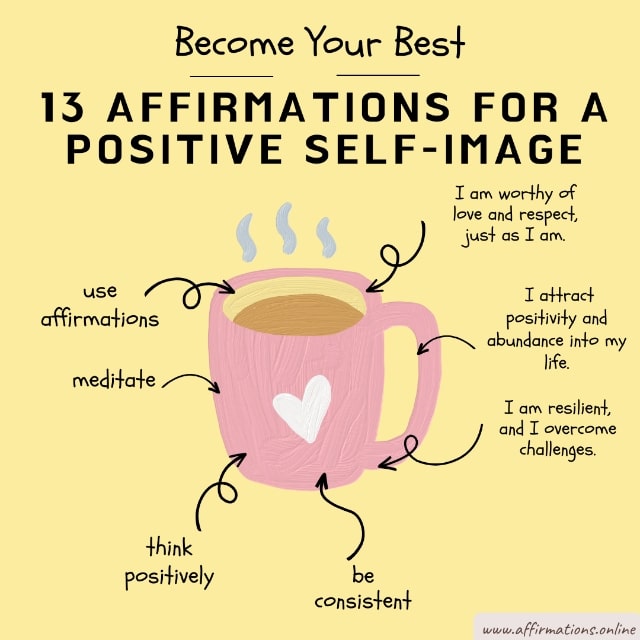
- Consistency matters: Repeat your affirmations every day, even when you don’t feel motivated.
- Use reminders: Set phone alarms or place notes in visible places.
- Combine with meditation: Spend 5 minutes breathing deeply, then say your affirmations.
- Write them down: Keeping a journal helps you remember and see progress.
- Share with a friend: Practicing together can make you more committed.
- Change them as needed: If your goals change, update your affirmations.
Non-obvious Insights
- You can record your affirmations and listen to them. Hearing your own voice can make the statements more real.
- Pair affirmations with physical actions. For example, say “I am strong” while doing exercise. This connects mind and body.
Examples Of Effective Daily Affirmations
It can be hard to know what to say. Here are examples for different goals:
Confidence And Self-esteem
- “I trust myself to make good decisions.”
- “I am proud of my progress.”
- “I am worthy of love and respect.”
Health And Wellness
- “I make healthy choices every day.”
- “My body is strong and full of energy.”
- “I am calm and peaceful.”
Success And Motivation
- “I am focused on my goals.”
- “I welcome new challenges.”
- “I learn from every experience.”
Relationships
- “I attract positive people into my life.”
- “I communicate clearly and kindly.”
- “I am patient and understanding.”
Stress And Anxiety
- “I am safe and secure.”
- “I breathe deeply and relax.”
- “I let go of worries.”
Affirmations For Different Situations
Affirmations can help in many life areas. Here’s how to use them for specific problems:
Facing Exams Or Tests
- “I am prepared and confident.”
- “I remember everything I need.”
- “I stay calm under pressure.”
Job Interviews
- “I am qualified for this position.”
- “I express myself clearly.”
- “I am a valuable asset.”
Starting A New Project
- “I am creative and resourceful.”
- “I handle challenges with ease.”
- “I believe in my vision.”
Overcoming Fear
- “I am brave and strong.”
- “I face my fears with courage.”
- “I grow from every challenge.”
Affirmations Vs. Other Positive Practices
Affirmations are just one way to improve your mindset. How do they compare to other tools like meditation, journaling, and visualization?
| Practice | Main Benefit | Best For | Time Needed |
|---|---|---|---|
| Affirmations | Change beliefs | Building confidence | 5-10 min/day |
| Meditation | Reduce stress | Calming mind | 10-20 min/day |
| Journaling | Process feelings | Self-reflection | 10-15 min/day |
| Visualization | Imagine success | Motivation | 5-10 min/day |
You can combine these practices. For example, meditate first, then repeat affirmations.

Credit: sophiecliff.com
Common Questions And Misunderstandings
Many people have doubts about affirmations. Let’s clear up some of the most common ones.
“do I Have To Believe My Affirmation Right Away?”
No. It’s normal to feel strange or doubtful when you start. Over time, repeating your affirmation helps you accept it. You can start with statements that feel comfortable and grow from there.
“how Long Before I See Results?”
This depends on your goal and how often you practice. Some people notice changes in a week. For bigger goals, it might take a month or more. The key is consistency.
“can Affirmations Replace Therapy Or Medical Treatment?”
Affirmations are helpful, but they are not a substitute for professional help. If you have serious mental health issues, see a doctor or therapist. Affirmations can support your recovery, but they are not the only solution.
“what If I Feel Silly Saying Affirmations?”
It’s normal to feel awkward at first. Try saying them privately or writing them down. With practice, you’ll feel more comfortable.
“can Children Use Affirmations?”
Yes! Affirmations work for people of all ages. They can help children build confidence, manage stress, and develop a positive attitude. Just use simple language and make it fun.
Tracking Your Progress
Measuring your progress helps you stay motivated. Here’s how to do it:
- Keep a journal: Write your affirmations and note any changes in mood or behavior.
- Use a mood tracker app: Many apps let you record how you feel each day.
- Ask for feedback: Share your goals with a friend or coach and ask them to notice changes.
Example Tracking Table
Here’s a simple way to track your feelings over time:
| Date | Affirmation Used | Mood Rating (1-10) | Notes |
|---|---|---|---|
| Monday | I am confident | 7 | Felt positive at work |
| Tuesday | I am calm | 6 | Less anxious |
| Wednesday | I am strong | 8 | Handled problems well |
Review your notes every week to see patterns.
Using Affirmations For Career Growth
Affirmations can help you at work. Here’s how:
- Boost confidence before meetings or presentations.
- Help you stay focused on goals.
- Reduce anxiety and stress.
- Build better relationships with colleagues.
Examples For Work
- “I am a skilled professional.”
- “I handle challenges with grace.”
- “I create value for my team.”
Many top companies encourage employees to use affirmations. They report higher motivation and job satisfaction.
Affirmations For Wellbeing And Mental Health
Affirmations can support mental health. They help you fight negative thoughts and focus on hope. For people with anxiety or depression, simple phrases can be a lifeline.
- “I am worthy of care.”
- “I am stronger than my challenges.”
- “I choose hope every day.”
Research shows that people who use affirmations feel less overwhelmed and more in control.
Affirmations For Physical Health
Your mind affects your body. Affirmations can support healthy habits, exercise, and recovery. Athletes often use them to boost performance.
- “I recover quickly and fully.”
- “I enjoy moving my body.”
- “I fuel my body with healthy food.”
You can use affirmations during workouts, before sleep, or when you need motivation.
Making Affirmations A Habit
Habits are built by repetition. Here’s how to turn affirmations into a daily habit:
- Start small: Pick one affirmation and repeat it every day.
- Link to another habit: Say your affirmation after brushing your teeth.
- Use reminders: Phone alarms, sticky notes, or digital reminders.
- Celebrate progress: When you notice a positive change, reward yourself.
If you miss a day, don’t give up. Start again the next day. Habits take time to build.
Advanced Affirmation Techniques
Once you’re comfortable, you can try advanced methods:
- Affirmation meditation: Sit quietly, focus on your breath, and repeat your affirmation slowly.
- Mirror work: Look into your eyes in the mirror while saying your affirmation.
- Group affirmations: Join a support group or workshop to practice together.
- Written affirmations: Write your affirmation 10 times each day.
Some people use affirmation cards—small cards with powerful statements. You can carry them, read them often, or share with friends.
Combining Affirmations With Visualization
Visualization means imagining yourself achieving your goal. When you combine it with affirmations, your brain gets a double boost.
- Say “I am confident,” then picture yourself speaking confidently in a meeting.
- Say “I am healthy,” then imagine running or eating well.
Studies show that combining affirmation and visualization helps you achieve goals faster.
Affirmations For Different Personalities
Everyone is different. Some people respond better to certain types of affirmations.
- Introverts: May prefer quiet repetition or writing affirmations.
- Extroverts: May enjoy saying affirmations out loud or in groups.
- Visual learners: Should add pictures or vision boards.
- Auditory learners: Can record and listen to affirmations.
Choose the method that feels best for you.
How To Handle Setbacks
You may face challenges or doubts. Here’s how to stay strong:
- Accept setbacks: Everyone has bad days. Don’t judge yourself.
- Review your affirmations: Change them if they don’t fit anymore.
- Ask for support: Talk to friends, coaches, or therapists.
- Keep a positive mindset: Remember, progress is not always fast.
Setbacks are part of growth. Affirmations help you bounce back.
Affirmations And Social Media
Many people share affirmations online. You can find communities, daily inspiration, and support. Be careful, though—some affirmations may not fit your goals. Always choose statements that feel right for you.
You can join groups, follow pages, or create your own posts. Sharing your journey can motivate others, too.
Frequently Asked Questions
How Many Affirmations Should I Use Each Day?
Most people find 3-5 affirmations enough. Too many can be overwhelming. Choose the statements that matter most to you.
Can Affirmations Help With Specific Goals Like Weight Loss Or Quitting Smoking?
Yes, but they work best when combined with real actions. For example, say “I make healthy choices” and also follow a healthy diet. Affirmations support your motivation, but you need to act.
Do Affirmations Have To Be Spoken Out Loud?
Speaking out loud makes them stronger, but you can also write or think them. Choose the method you prefer.
Is It Okay To Change My Affirmations?
Absolutely. As your goals or feelings change, update your affirmations. This keeps them relevant and powerful.
Where Can I Learn More About Affirmations?
You can read research and guides online. One trusted source is Positive Psychology, which offers practical tips and scientific information.
Final Thoughts
Daily affirmations are more than just positive words. They are a tool to build confidence, change your mindset, and help you reach your goals. The science backs them up, and millions of people use them every day. By creating your own affirmations, building a routine, and tracking your progress, you can make real changes in your life.
Remember, consistency is key. Start small, stay positive, and watch your life transform. Affirmations are simple, but their impact is powerful. If you practice them every day, you’ll see results—not just in how you think, but in how you live.
