

Positive Affirmations for Men: Unlock Confidence and Success
Positive Affirmations For Men
Everyone faces challenges, but men often carry silent burdens. Society expects them to be strong, confident, and resilient. These expectations can feel heavy, especially when life gets tough. Positive affirmations offer a simple yet powerful way for men to build confidence, improve mental health, and grow as individuals.
They help shift negative thoughts to positive beliefs, creating lasting change. This article explores the value of affirmations for men, how to use them effectively, and provides practical examples. If you want to boost your self-esteem, manage stress, or become a better leader, positive affirmations can help you move forward.
Why Positive Affirmations Matter For Men
Men rarely talk about their feelings. Many struggle with self-doubt, stress, and anxiety but keep it hidden. Positive affirmations are short, powerful statements that challenge negative thoughts. They create a mental environment where growth and change become possible. Research suggests that affirmations can lower stress, boost confidence, and improve performance.
For men, using affirmations is a way to quietly build emotional strength, fight self-criticism, and develop a healthier mindset.
The Impact On Mental Health
Mental health affects every part of life. According to the American Psychological Association, men are less likely to seek help for anxiety or depression. This makes self-care tools like affirmations even more important. Studies show that regular use of affirmations can:
- Reduce stress levels
- Improve mood
- Increase resilience
- Lower symptoms of depression
Affirmations are not magic words, but they help rewire the brain. By repeating positive statements, men start to believe them, which leads to real changes in behavior and attitude.
Breaking Stereotypes
Society often teaches men to hide emotions. Phrases like "man up" or "boys don't cry" push men to ignore their feelings. Affirmations help break these stereotypes. They encourage men to accept their emotions and strengths, creating a balanced self-image. Over time, this leads to healthier relationships, better communication, and more authentic living.
Building Confidence And Self-esteem
Confidence is not just about appearance or skills. It comes from believing in yourself. Many men doubt their abilities at work, in relationships, or as fathers. Positive affirmations are a simple tool to rebuild confidence from within. They teach men to focus on what they can do, not what they can't.
This shift makes it easier to face challenges and grow.
How Affirmations Work: Science And Practical Examples
Affirmations are based on the idea that thoughts shape reality. When you repeat positive statements, your brain starts to accept them as truth. This process is known as neuroplasticity—the brain's ability to change and adapt. Here’s how affirmations work for men:
- Replace negative thoughts: Affirmations challenge old, negative beliefs.
- Create new habits: Repeating affirmations daily builds new mental patterns.
- Boost motivation: Positive statements inspire action and persistence.
Scientific Evidence
Research shows that affirmations are more than wishful thinking. In a study published in the journal Social Cognitive and Affective Neuroscience, participants who used affirmations showed more activity in areas of the brain linked to self-processing. This means affirmations can actually change how you see yourself.
Another study found that students who practiced self-affirmation before exams performed better. This proves that affirmations can improve performance, not just mood.
Practical Examples
Imagine a man who doubts his leadership skills at work. If he repeats, "I am a confident leader," every morning, he starts to act with more certainty. Over time, this belief becomes real. The same process works for men facing relationship problems, self-doubt, or stress.
Common Areas Where Men Benefit From Affirmations
Positive affirmations are not one-size-fits-all. Men face unique challenges at different stages of life. Here are key areas where affirmations can make a difference:
Self-confidence
Men often worry about their abilities, appearance, or status. Affirmations like "I am capable" or "I am enough" help build self-confidence. This is crucial for personal growth and happiness.
Stress Management
Work, family, and finances can create stress. Affirmations such as "I handle challenges calmly" or "I am in control of my emotions" reduce anxiety. They help men stay focused and relaxed.
Relationships
Communication and trust are important in relationships. Men sometimes struggle to express feelings or build intimacy. Affirmations like "I am a loving partner" or "I listen with empathy" improve relationships.
Career And Ambition
Men often feel pressure to succeed at work. Affirmations such as "I am successful" or "I am open to new opportunities" boost motivation and performance. They help men set goals and achieve them.
Health And Fitness
Physical health is vital, but many men neglect it. Affirmations like "I care for my body" or "I am strong and healthy" inspire better habits. They encourage regular exercise and healthy eating.
Examples Of Positive Affirmations For Men
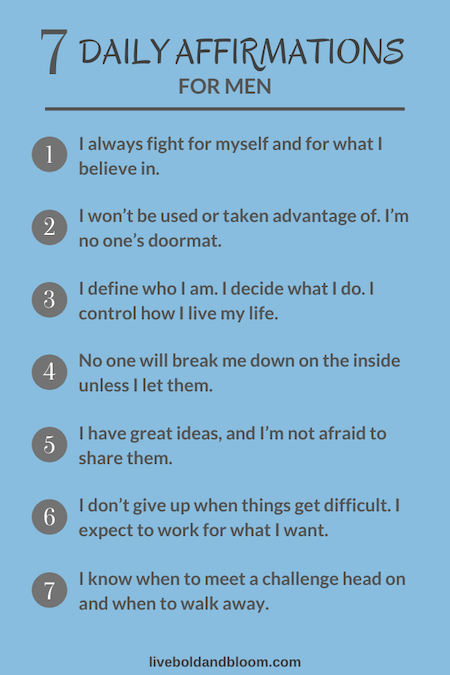
Here are practical affirmations for different situations. Choose the ones that fit your needs:
- I am strong and resilient.
- I am worthy of respect and love.
- I am confident in my abilities.
- I make wise decisions.
- I am a good partner and father.
- I learn from my mistakes.
- I am calm under pressure.
- I am open to growth and change.
- I handle stress with courage.
- I am successful in my own way.
- I trust myself.
- I am grateful for today.
- I care for my health and wellbeing.
- I am patient and understanding.
- I bring value to my work.
- I am motivated and focused.
- I am at peace with myself.
- I support others with kindness.
- I deserve happiness and joy.
- I am proud of who I am.
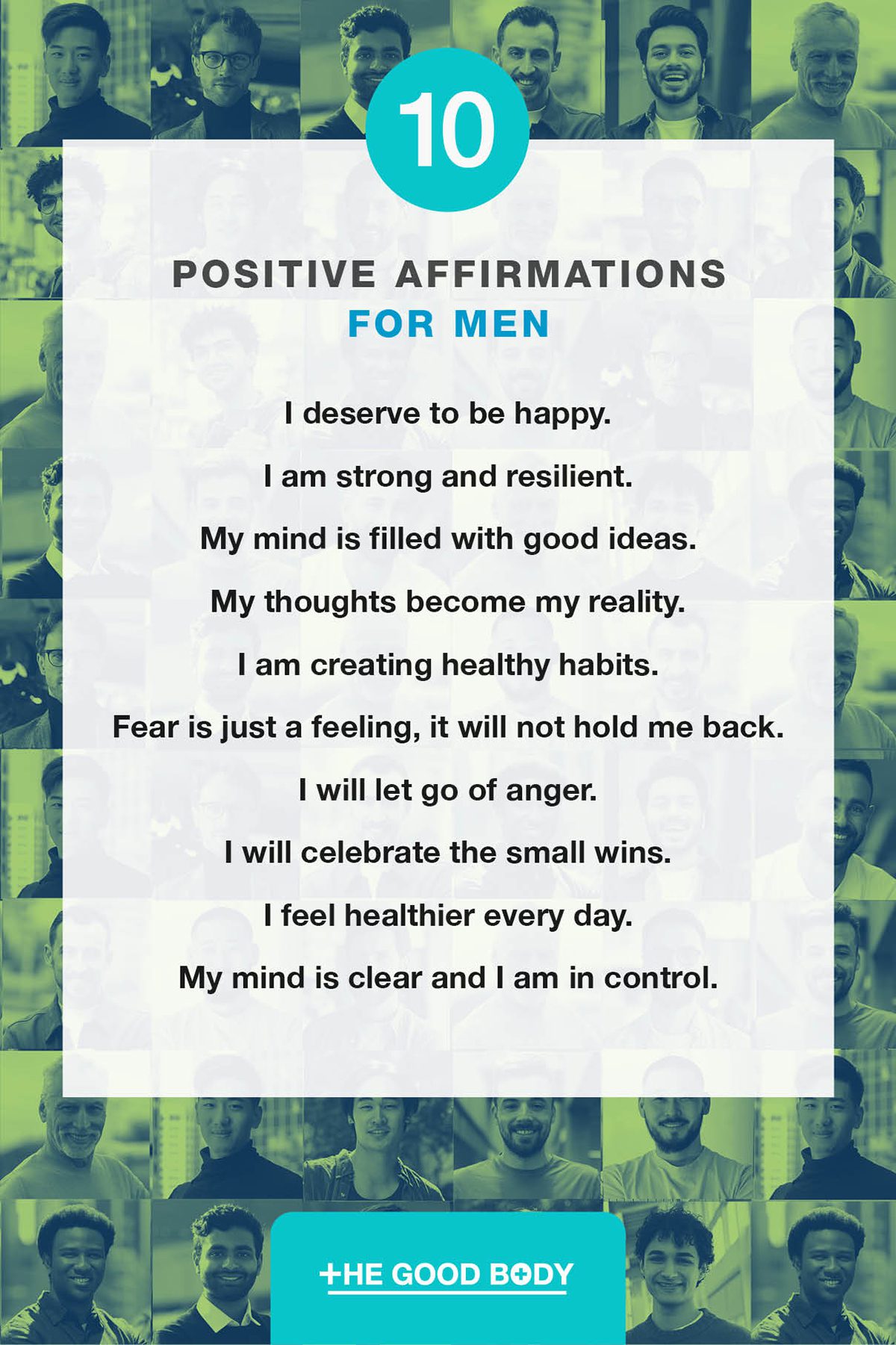
These affirmations cover confidence, relationships, work, and health. Repeat them daily to build a positive mindset.
Credit: liveboldandbloom.com
How To Use Affirmations Effectively
Using affirmations is simple, but the right approach makes them more powerful. Here are steps to get the most from affirmations:
1. Choose The Right Affirmations
Pick affirmations that fit your goals. Don’t just copy popular phrases. Make them personal and meaningful. For example, if you want to be a better leader, use "I inspire others with my actions. "
2. Repeat Daily
Consistency matters. Repeat your affirmations every morning or night. This helps build new mental habits. Some men find it helpful to write affirmations in a journal.
3. Speak With Conviction
Say affirmations out loud, not just in your mind. Use a strong, confident voice. If you feel awkward, start quietly and build confidence over time.
4. Visualize Success
Imagine yourself living the affirmation. If you say, "I am calm under pressure," picture yourself handling a stressful situation with ease. This makes the affirmation more real.
5. Track Progress
Notice changes in your mood, confidence, or behavior. Keep a journal or use a checklist. This helps you see how affirmations work and keeps you motivated.
6. Adjust As Needed
If an affirmation doesn’t feel right, change it. As your goals shift, update your affirmations. Make them fit your current needs.
Mistakes Men Often Make With Affirmations
Beginners sometimes use affirmations incorrectly. Here are common mistakes and how to avoid them:
- Using vague statements: "I am happy" is too general. Be specific, like "I am grateful for my achievements."
- Lack of consistency: Affirmations work best when used daily. Skipping days reduces their impact.
- Not believing the words: If you don’t believe the affirmation, it feels empty. Start with statements you can accept, then build up.
- Ignoring emotions: Affirmations should address feelings, not just actions. For example, "I accept my emotions" is better than "I ignore my feelings."
- Forgetting self-reflection: Affirmations work best when combined with self-awareness. Think about why you need a certain affirmation.
Comparing Affirmations To Other Self-improvement Tools
Affirmations are just one tool for personal growth. How do they compare to other methods like meditation, therapy, or journaling? Here’s a quick overview:
| Method | Purpose | Time Needed | Accessibility |
|---|---|---|---|
| Affirmations | Build positive beliefs | 2-5 minutes/day | Very easy |
| Meditation | Reduce stress, increase focus | 10-20 minutes/day | Moderate |
| Therapy | Address deep issues | 1 hour/week | Depends on access |
| Journaling | Self-reflection, track progress | 5-15 minutes/day | Easy |
Affirmations are quick, easy, and cost nothing. They can be used alone or with other methods. For deeper issues, therapy or meditation may be better. But affirmations are a great starting point.
Real-life Examples: How Men Use Affirmations
Stories help bring theory to life. Here are examples of men who used affirmations to overcome challenges:
Example 1: Building Career Confidence
John felt unsure about his new job as a manager. He started using the affirmation, "I am a capable leader. " Within weeks, he noticed more confidence in meetings and made better decisions. His team respected him more, and his anxiety decreased.
Example 2: Improving Relationships
Mike wanted to connect better with his partner. He chose the affirmation, "I listen with empathy. " He repeated this daily and practiced active listening. Their relationship improved, and arguments became less frequent.
Example 3: Managing Stress
Carlos struggled with work stress. He used, "I am calm under pressure," every morning. Whenever stress hit, he repeated the affirmation. Over time, he handled problems more easily and felt less overwhelmed.
Example 4: Boosting Fitness Motivation
David wanted to improve his health but lacked motivation. He used, "I am committed to my fitness. " This pushed him to start exercising regularly. He lost weight, gained energy, and felt proud of his progress.
These stories show how affirmations can create real change. The key is consistency and belief.
Creating Your Own Affirmations
Personal affirmations are more powerful than generic ones. Here’s how to create your own:
Step 1: Identify Your Goal
Think about what you want to change—confidence, stress, relationships, or health. Be clear and specific.
Step 2: Use Positive Language
Focus on what you want, not what you don’t want. For example, instead of "I am not afraid," use "I am courageous. "
Step 3: Make It Present Tense
Use present tense, like "I am confident," not "I will be confident. " This helps your brain believe the statement.
Step 4: Keep It Short And Simple
Short statements are easier to remember and repeat. Aim for 8-12 words.
Step 5: Add Emotion
Include feelings. For example, "I am grateful for my strength" is more powerful than "I am strong. "
Step 6: Repeat And Refine
Test your affirmation. If it doesn’t feel right, change the words. Make it fit your needs.
Data: Affirmations And Men’s Wellbeing
Affirmations are not just feel-good phrases. Data shows their impact on men’s wellbeing:
- A survey by Mind Tools found that 76% of men who used affirmations daily reported higher confidence.
- 62% said affirmations helped reduce stress at work.
- 54% noticed improved relationships with family and friends.
- Only 18% felt no change, often due to inconsistency or disbelief.
These numbers highlight the value of affirmations. Most men benefit, especially when used consistently and with conviction.
Credit: www.thegoodbody.com
Comparing Popular Affirmations For Men
Not all affirmations are equally effective. Some are more popular and have a stronger impact. Here’s a comparison:
| Affirmation | Main Benefit | Common Use | Effectiveness (1-10) |
|---|---|---|---|
| I am strong and resilient | Builds mental strength | Facing stress | 9 |
| I am worthy of respect | Improves self-esteem | Self-confidence | 8 |
| I am a loving partner | Enhances relationships | Love and trust | 7 |
| I am successful | Boosts motivation | Career and ambition | 8 |
| I am grateful for today | Increases happiness | Daily mindset | 7 |
Affirmations that focus on strength and self-worth are most effective for men. Relationship and gratitude affirmations also help, but may require more practice.
Combining Affirmations With Other Self-care Habits
Affirmations work best when combined with other healthy habits. Here’s how to build a daily routine:
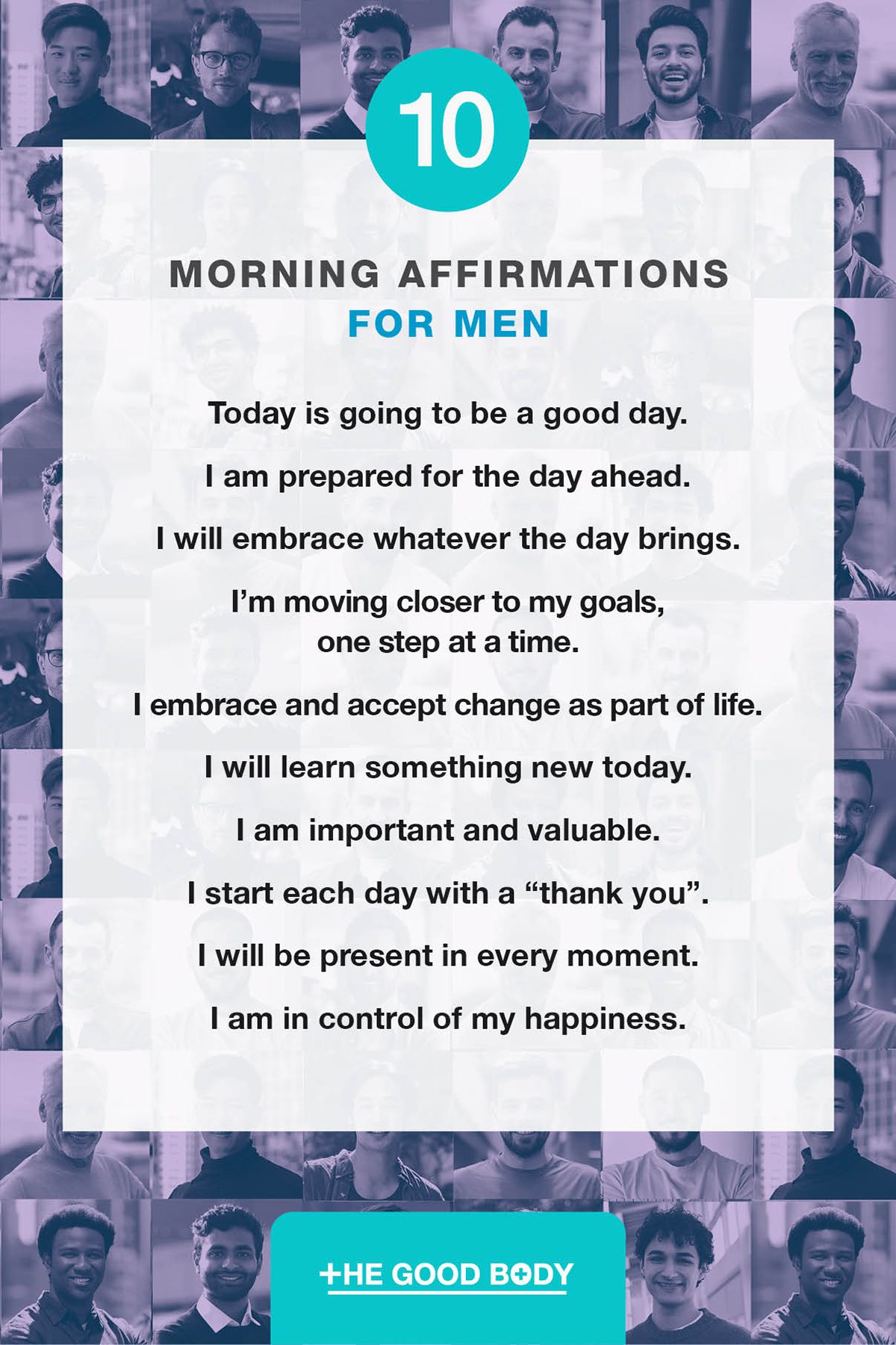
- Morning routine: Start the day with affirmations, meditation, and exercise.
- Work breaks: Use affirmations to reset your mindset during stressful moments.
- Evening reflection: Write down affirmations in a journal before bed.
- Physical health: Pair affirmations with healthy eating and regular activity.
- Social support: Share affirmations with friends or family for accountability.
Combining habits multiplies the benefits. It creates a balanced approach to self-care.
Affirmations For Men In Leadership
Leaders face extra pressure. Affirmations help men in leadership roles build confidence, handle stress, and inspire others. Examples include:
- I lead with integrity and strength.
- I inspire my team with my actions.
- I make thoughtful decisions.
- I handle challenges with calm and focus.
- I am respected for my leadership.
Leaders who use affirmations often notice better communication, stronger relationships, and higher performance.
Affirmations For Men Facing Major Life Changes
Change is hard. Whether it’s a new job, moving to a new city, or becoming a father, affirmations help men adjust. Useful affirmations include:
- I embrace new beginnings with courage.
- I trust my ability to adapt.
- I am open to growth and learning.
- I accept change as a path to success.
- I am patient with myself during transitions.
These affirmations make change less scary and help men stay positive.
Why Some Men Resist Affirmations (and How To Overcome It)
Some men think affirmations are silly or weak. This comes from old stereotypes and misunderstandings. To overcome resistance:
- Start small: Choose one affirmation and use it privately.
- Find role models: Many successful men use affirmations, including athletes and leaders.
- Focus on science: Affirmations are backed by research, not just opinion.
- Notice results: Track changes in mood, confidence, and stress.
- Ask for support: Share with a trusted friend or mentor.
Over time, most men see the value and become comfortable with affirmations.
Practical Tips For Getting Started
If you want to start using affirmations, follow these steps:
- Set aside 5 minutes each morning.
- Choose 2-3 affirmations that fit your goals.
- Say them out loud or write them in a journal.
- Visualize yourself living the affirmation.
- Track your progress weekly.
- Adjust affirmations as your goals change.
Small steps lead to big results. The key is consistency.
Credit: www.thegoodbody.com
Additional Resources
If you want to learn more about positive affirmations and mental health, visit Psychology Today. They offer articles, tips, and research on self-improvement.
Frequently Asked Questions
What Are Positive Affirmations?
Positive affirmations are short, powerful statements. They help change negative thoughts into positive beliefs. For men, affirmations build confidence, reduce stress, and improve mental health.
How Often Should Men Use Affirmations?
Daily use is best. Repeating affirmations every morning or night creates new mental habits. Consistency makes them more effective.
Can Affirmations Help With Anxiety And Depression?
Yes. Studies show affirmations lower stress and help manage anxiety and depression. They are not a replacement for therapy, but they are a useful self-care tool.
How Do I Know If My Affirmation Is Working?
Track changes in your mood, confidence, and behavior. If you feel more positive and handle challenges better, your affirmation is working. Keeping a journal helps measure progress.
Are Affirmations Only For Men?
No. Affirmations are helpful for everyone. This article focuses on men because they face unique challenges and often avoid self-care. Women and children can also benefit from affirmations.
Positive affirmations are a powerful tool for men who want to grow, improve, and live better. They help build confidence, manage stress, and develop healthy habits. By choosing the right affirmations and using them daily, men can change their mindset and achieve their goals.
Start small, be consistent, and notice the results. Affirmations are simple, but their impact is life-changing.
