

Loving the Self Affirmations: Transform Your Mindset Today
Loving The Self Affirmations
Many people struggle with self-love. Sometimes, negative thoughts take over and make us doubt ourselves. But there is a simple tool that can help: self affirmations. These are positive statements you say to yourself. They help you believe in your own worth. When used daily, affirmations can change how you see yourself, and how you handle challenges. If you feel unsure or want to boost your confidence, learning about loving the self affirmations can be a life-changing step.
What Are Self Affirmations?
Self affirmations are short, positive phrases. You say or write them to remind yourself of your value. For example, “I am worthy of love,” or “I am strong and capable.” The main goal is to build self-esteem, reduce stress, and create a healthy mindset.
Many people think affirmations are only for people with low confidence. But everyone can benefit from them. Even successful people use affirmations to stay motivated. Athletes, business leaders, and artists all use them to stay focused and positive.
How Do Self Affirmations Work?
Self affirmations are based on the idea that our thoughts shape our actions. When you repeat positive phrases, your brain starts to believe them. This is called neuroplasticity—the brain’s ability to change and adapt. Over time, affirmations can rewire your thinking, making you feel happier and more confident.
The Science Behind Affirmations
Research shows that affirmations can reduce stress and improve well-being. A study from Carnegie Mellon found that people who used self affirmations felt less stressed and performed better under pressure. The reason is simple: affirmations help you focus on strengths instead of weaknesses.
Here’s how it works:
- Positive repetition: Saying affirmations often helps your mind accept them as truth.
- Focus shift: Instead of thinking about what’s wrong, you focus on what’s good.
- Emotional boost: Affirmations can improve mood and make you feel more hopeful.
Common Misconceptions
Some people believe affirmations are just wishful thinking. But they are more than that. Affirmations help you change deep beliefs about yourself. They work best when you use them every day, and when you say them with feeling.
The Benefits Of Loving The Self Affirmations
Using self affirmations brings many advantages. Here are some of the most important benefits:
1. Improved Self-esteem
Affirmations remind you of your strengths. This builds confidence and helps you face challenges.
2. Reduced Negative Thoughts
When you focus on positive statements, it’s harder for negative thoughts to take over.
3. Better Emotional Health
People who use affirmations often feel happier and less anxious.
4. Stronger Motivation
Affirmations can push you to reach goals and keep going when things get tough.
5. Greater Resilience
Positive self-talk makes you stronger and more able to handle setbacks.
6. Better Relationships
When you feel good about yourself, you treat others better. Affirmations can help you become more caring and understanding.
Data On Self Affirmations
Studies show that people who use affirmations regularly see real changes. According to a survey by the American Psychological Association, more than 60% of people who practiced self affirmations felt more confident and less stressed.
Creating Effective Self Affirmations
Not all affirmations are equal. To get the best results, you must create statements that are personal and meaningful.
Tips For Writing Powerful Affirmations
1. Be Specific
Say exactly what you want to believe. Instead of “I am happy,” try “I am proud of my efforts. ”
2. Use Present Tense
Write affirmations as if they are true now. For example, “I am confident” instead of “I will be confident. ”
3. Keep It Positive
Focus on what you want, not what you want to avoid. “I am calm” is better than “I am not stressed. ”
4. Make Them Personal
Use “I” statements that fit your own life.
5. Believe In Your Words
Choose phrases that feel true, or that you want to believe.
Examples Of Loving The Self Affirmations
- “I deserve kindness and respect.”
- “I am enough just as I am.”
- “I accept myself fully.”
- “I am proud of who I am.”
- “My value is not based on others’ opinions.”
- “I choose to love myself every day.”
Common Mistakes When Writing Affirmations
Many beginners make mistakes that reduce the power of affirmations. Here are a few to avoid:
- Using negative words (“I am not weak”)
- Making them too general (“I am good”)
- Not repeating them enough
- Saying them without emotion

Credit: www.today.com
How To Practice Self Affirmations Daily
Repeating affirmations is important. But how you practice matters too. Here are practical ways to include affirmations in your routine:
1. Morning Ritual
Start your day with affirmations. Stand in front of a mirror and say your phrases out loud.
2. Journaling
Write affirmations in a notebook every day. This helps you reflect and focus.
3. Sticky Notes
Put notes with your affirmations on your desk or mirror. Seeing them often reminds you to stay positive.
4. Audio Recordings
Record yourself saying affirmations. Listen to them during your commute or before bed.
5. Meditation
Add affirmations to your meditation sessions. Close your eyes and repeat your phrases silently.
6. Apps And Reminders
Use smartphone apps to get reminders to say your affirmations.
Choosing The Right Time
Many people wonder when to use affirmations. The truth is, anytime works. Some prefer mornings to set a positive tone. Others use them at night to calm the mind. The most important thing is consistency.
Comparing Different Approaches To Affirmations
There are many ways to use affirmations. Some people say them quietly. Others shout them out loud. Some write them down, while others meditate on them. Let’s compare these methods:
| Method | Best For | Strengths | Weaknesses |
|---|---|---|---|
| Spoken | Quick daily boost | Easy to do, immediate effect | May feel awkward at first |
| Written | Reflection and focus | Improves memory, deeper impact | Takes more time |
| Audio | Busy people | Can listen anywhere, multitask | Less personal |
| Meditation | Calm and clarity | Reduces stress, improves focus | Requires quiet space |
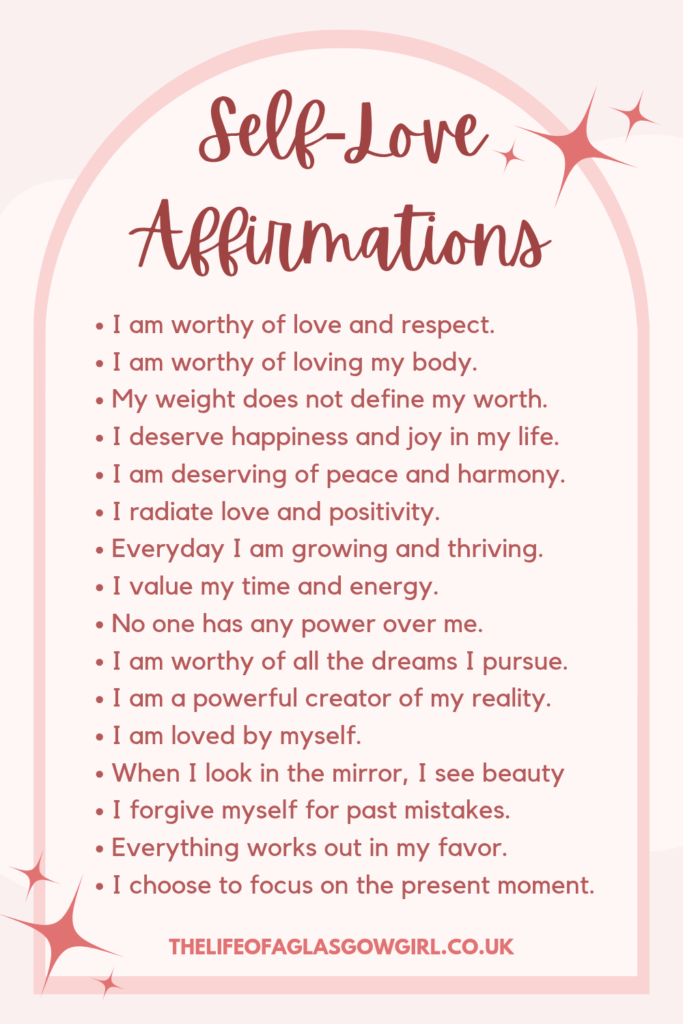
Credit: www.thelifeofaglasgowgirl.co.uk
Real-life Examples Of Self Affirmations Making A Difference
Stories can inspire us to use affirmations. Here are a few examples:
Maria’s Journey
Maria struggled with low self-esteem after moving to a new country. She started using daily affirmations like “I am brave” and “I belong. ” Within months, her confidence grew. She found new friends and started a job she enjoyed.
John’s Experience
John faced anxiety before speaking in public. He began saying “I am prepared and capable” every morning. After a few weeks, his anxiety dropped. He gave his first speech without fear and received positive feedback.
Maya’s Success
Maya used affirmations to overcome doubts in her art. “My creativity matters” helped her finish her first painting. She now shares her artwork online and feels proud of her progress.
Choosing The Right Affirmations For You
The best affirmations are those that fit your personal needs. If you want to feel more confident, focus on phrases about strength. If you want to feel calmer, use statements about peace.
Here’s a simple guide to help:
| Goal | Sample Affirmation |
|---|---|
| Confidence | “I am strong and capable.” |
| Calm | “I am at peace with myself.” |
| Self-Love | “I deserve love and respect.” |
| Motivation | “I am focused and determined.” |
| Gratitude | “I am thankful for my life.” |
The Role Of Self Affirmations In Mental Health
Many therapists recommend affirmations as part of treatment for anxiety and depression. When you change negative self-talk into positive statements, it can help you recover faster. Affirmations are not a cure, but they support other methods like therapy and medication.
Supporting Data
According to the National Institute of Mental Health, people who used affirmations felt a 20% improvement in mood after two weeks. While affirmations are not magic, they help build a strong foundation for mental health.
When To Seek Help
Affirmations are helpful, but sometimes deeper issues need professional support. If you feel stuck or overwhelmed, talk to a therapist. Affirmations can work together with counseling for better results.
Common Challenges And How To Overcome Them
Starting affirmations can feel strange. Some people worry they are not working. Here are some common challenges and solutions:
Feeling Fake
Many people feel awkward saying affirmations. This is normal. The key is to keep going. Over time, your mind will accept these words.
Forgetting To Practice
Busy schedules make it easy to forget. Set reminders on your phone or write your affirmations on sticky notes.
Doubting Their Impact
Sometimes, you may not see immediate results. Affirmations take time. Try tracking your mood in a journal to see progress.
Getting Stuck
If you use the same affirmation every day, it can lose meaning. Change your phrases or add new ones to keep things fresh.
Advanced Tips For Loving The Self Affirmations
Once you are comfortable with basic affirmations, you can try more advanced methods.
Visualization
Combine affirmations with visualization. Picture yourself living your affirmation. For example, imagine yourself feeling calm while saying “I am at peace. ”
Affirmation Stacking
Use several affirmations together. For example, “I am strong, I am loved, I am capable. ” This gives extra support.
Group Practice
Share affirmations with friends or family. Saying them together builds connection and motivation.
Tracking Progress
Keep a journal of your thoughts and feelings. Note changes in mood, confidence, and relationships.
Comparing Affirmations With Other Positive Practices
Affirmations are not the only way to build self-love. Here’s a comparison with other methods:
| Practice | Main Benefit | How It Works | Best For |
|---|---|---|---|
| Affirmations | Boosts self-esteem | Positive self-talk | Anyone, daily use |
| Meditation | Reduces stress | Mindful breathing | Those seeking calm |
| Gratitude Journaling | Improves mood | Focus on good things | People who want positivity |
| Therapy | Deep healing | Talking with professionals | People with serious issues |
Mistakes Beginners Often Make With Self Affirmations
Even with good intentions, it’s easy to make mistakes. Here are two non-obvious insights many beginners miss:
1. Ignoring Feelings
Some people say affirmations without feeling. The words lose power if you don’t believe them. Try to connect emotionally with each phrase. If it feels too hard, start with smaller, believable statements.
2. Using Affirmations To Avoid Problems
Affirmations are not a way to ignore real issues. They should help you face challenges, not hide from them. If you struggle with something, use affirmations to support action, not to avoid it.
The Difference Between Self Affirmations And Self-talk
Self affirmations are specific, positive statements. Self-talk is the general conversation you have in your mind. Both are important, but affirmations are more focused. Self-talk can be positive or negative, while affirmations are always positive.
Example
Self-talk: “i Hope I Can Do This.”
Affirmation: “i Am Capable And Ready.”
By switching from uncertain self-talk to confident affirmations, you build strength and clarity.

Credit: www.selfloverainbow.com
How Affirmations Influence Daily Life
Affirmations are not just for special moments. They help with everyday challenges. For example:
- Facing a difficult meeting
- Starting a new project
- Dealing with criticism
- Recovering from failure
When you use affirmations, you handle these moments with more confidence and resilience.
The Power Of Repetition
Repeating affirmations is key. Studies show that saying affirmations multiple times a day has a stronger effect. Consistency matters more than perfection.
Insight
Some people try many different affirmations but do not stick with one. It’s better to choose a few powerful phrases and repeat them regularly. This builds lasting change.
Using Affirmations For Specific Challenges
Affirmations can help with many problems. Here are a few examples:
Stress
Try: “i Am Calm And In Control.”
Low Confidence
Try: “i Am Worthy And Strong.”
Fear Of Failure
Try: “i Learn From Mistakes And Grow.”
Relationship Issues
Try: “i Deserve Respect And Kindness.”
Using the right affirmation for your challenge helps you recover faster and stay positive.
Combining Affirmations With Other Positive Habits
Affirmations work best when combined with other habits. Here are a few ideas:
- Exercise: Say affirmations while walking or running.
- Healthy eating: Use affirmations to support good choices.
- Mindfulness: Add affirmations to your meditation.
- Gratitude: Pair affirmations with gratitude journaling.
Combining habits creates a strong foundation for self-love.
How To Know If Affirmations Are Working
It’s important to track your progress. Here are signs that affirmations are helping:
- You feel more confident
- Negative thoughts decrease
- You handle stress better
- Your relationships improve
- You feel happier overall
You can also use a journal to record changes in your mood or actions.
Frequently Asked Questions
What Are The Best Self Affirmations For Beginners?
Beginners should choose simple, positive statements that feel believable. Examples include “I am worthy,”“I am enough,” or “I deserve kindness.” Start with phrases that fit your needs and repeat them daily.
How Many Times Should I Repeat My Affirmations?
Most experts suggest repeating affirmations at least three to five times per session. You can do this in the morning, evening, or whenever you need a confidence boost. Consistency is more important than the exact number.
Can Affirmations Help With Anxiety Or Depression?
Affirmations can support mental health by reducing negative thoughts and boosting self-esteem. They are not a cure, but they can be part of a healthy routine. If anxiety or depression is severe, seek help from a professional.
How Do I Know If My Affirmations Are Working?
Look for changes in your mood, confidence, and how you handle challenges. You may notice fewer negative thoughts, more positive actions, and better relationships. Tracking your progress in a journal can help.
Where Can I Find More Information About Self Affirmations?
You can learn more from trusted mental health sites or books. For in-depth research, visit Psychology Today, which offers articles and expert advice.
Loving the self affirmations is a journey, not a quick fix. When you practice them every day, you build a stronger, kinder relationship with yourself. This leads to more confidence, better health, and happier connections. The most important step is to start, and to keep going even when it feels strange.
Over time, affirmations become a natural part of your life, helping you face every challenge with strength and hope.
