

How to Write Affirmations for Success: Unlock Your True Potential
How To Write Affirmations For Success
Success is not just about luck or talent. It often starts with the way you think and the words you use every day. One powerful tool for shaping your mindset is affirmations. These are positive statements that help you build confidence and focus on your goals. If you want to learn how to write affirmations for success, you are in the right place. This article will guide you through the process, explain why affirmations work, and show you how to create your own. You will discover practical advice, examples, and even data showing the impact of affirmations on performance.
Many people underestimate the power of their thoughts. For example, someone who constantly thinks, “I am not good enough,” may avoid opportunities and feel stuck. On the other hand, a person who uses affirmations like, “I am capable of learning new skills,” often feels more motivated to take action.
This simple change in mindset can lead to big improvements in life. By learning how to write and use affirmations, you can take control of your thinking and move closer to your goals.
What Are Affirmations?
Affirmations are short positive sentences you repeat to yourself. They are designed to change your thoughts and beliefs. For example, instead of thinking, “I can’t do this,” you say, “I am capable of achieving my goals.” By repeating affirmations, you can shift your focus from doubt to confidence.
Affirmations are not just empty words. They are statements that help you reprogram your mind. Imagine you are learning a new skill, like public speaking. If you repeat, “I am a confident speaker,” your attitude changes over time. You start to see yourself as someone who can speak well.
This mental shift makes you more willing to practice and perform.
How Affirmations Work
Your brain listens to the words you say. When you repeat positive statements, you start to believe them. This process is called self-suggestion. Over time, affirmations can help you:
- Reduce stress
- Increase motivation
- Improve self-esteem
- Focus on your goals
When you use affirmations, you create new mental habits. For example, a student who repeats, “I am prepared and confident for my exam,” will approach the test with less anxiety. The brain builds new connections, making positive thoughts easier to access.
Research shows that people who use affirmations are more likely to take action and less likely to give up when facing challenges. One study found that athletes who used affirmations before competitions performed better and felt less nervous. Another experiment showed that people who practiced affirmations before stressful tasks felt more relaxed and focused.
Common Misconceptions
Some believe affirmations are just wishful thinking. In reality, they are tools for mental training. You still need to work hard and make plans. Affirmations support your actions, not replace them.
For example, if you say, “I am a successful entrepreneur,” you also need to learn skills, build your business, and solve problems. Affirmations help you stay motivated and confident, but they do not guarantee results without effort. The best results come from combining affirmations with real actions.
Why Use Affirmations For Success?
Success is not only about skills; it is about having the right mindset. Affirmations help you build this mindset. They make you feel confident and remind you of your strengths.
Affirmations are useful for breaking negative patterns. Many people struggle with self-doubt or fear of failure. By repeating positive statements, you can replace these thoughts with ones that support your growth. For example, someone who thinks, “I always make mistakes,” can use, “I learn from every experience,” to shift their focus.
Data On Affirmations And Performance
Studies have found that affirmations can improve academic performance and job satisfaction. In one study, students who used affirmations before exams performed better than those who did not. Another survey found that employees who used daily affirmations felt more motivated and less stressed at work.
Here is a quick comparison showing the impact of affirmations:
| Group | Motivation Level | Stress Level | Performance |
|---|---|---|---|
| With Affirmations | High | Low | Improved |
| Without Affirmations | Medium | Medium | Average |
A deeper look at the data shows that students who used affirmations felt more confident before exams, which helped them remember information and stay calm. Employees who practiced affirmations had fewer sick days and reported higher job satisfaction. These benefits come from changing mental habits, not just repeating words.
Real-life Example
Imagine two salespeople. One uses affirmations like, “I am confident and ready to close deals. ” The other focuses on worries and doubts. Over time, the first salesperson feels more positive and performs better. This is not magic—it is the result of a stronger mindset.
In another example, a manager who repeats, “I am a respected leader,” starts to act with more authority and kindness. Team members notice the change and respond positively. This creates a cycle of success—confidence leads to action, action leads to results, and results build more confidence.
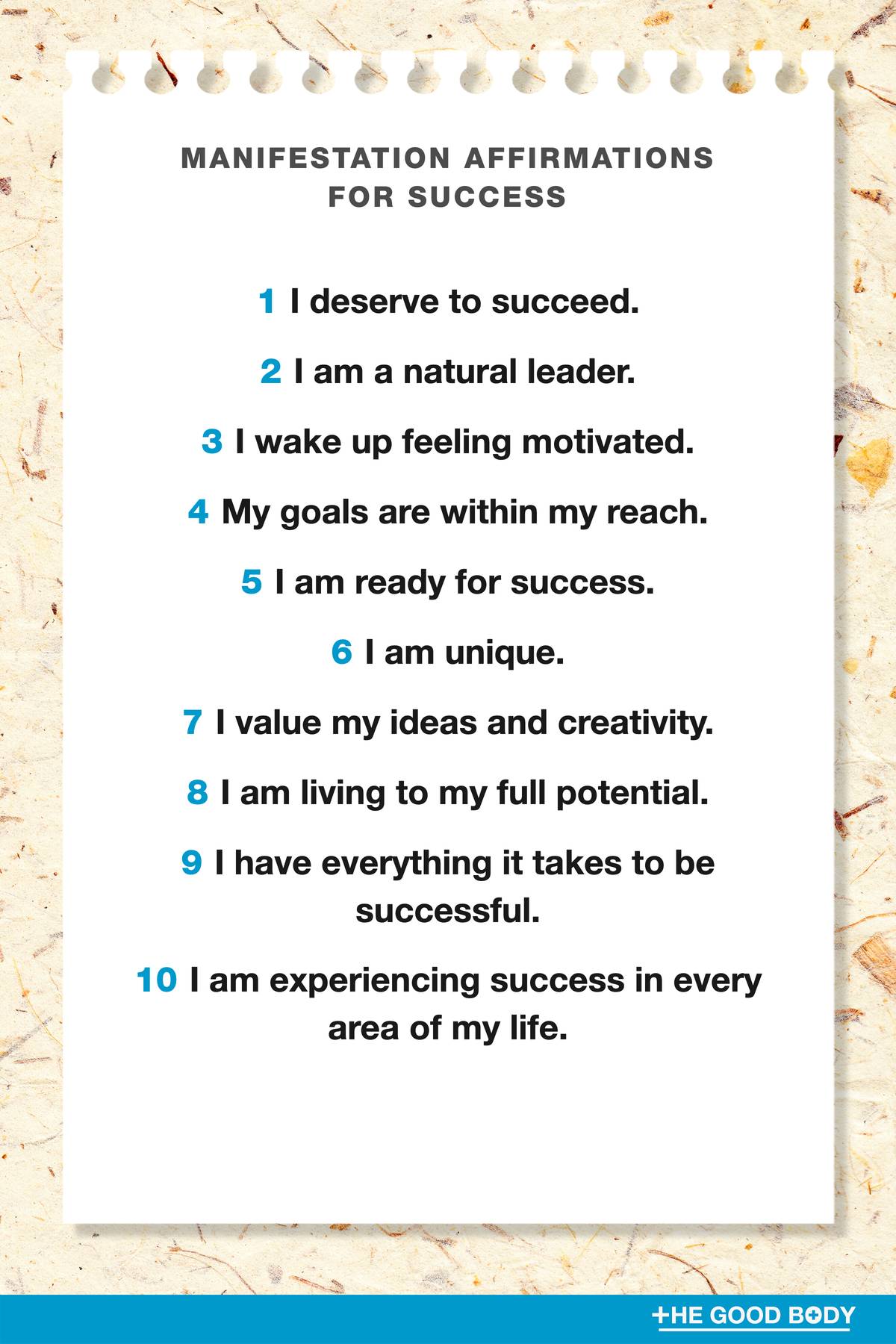
Credit: www.thegoodbody.com
How To Write Powerful Affirmations For Success
Writing affirmations is simple, but there are some important rules. Let’s break down the steps:
Step 1: Identify Your Goals
Think about what you want to achieve. Is it a promotion, better grades, or personal growth? Be clear about your goal.
- Example: “I want to become a better leader.”
If you are not sure about your goal, take time to reflect. Ask yourself what matters most in your life right now. Is it health, career, relationships, or something else? Clear goals help you write effective affirmations.
Step 2: Use Positive Language
Affirmations must be positive. Avoid words like “not” or “can’t. ” Use words that show confidence.
- Instead of “I will not fail,” write, “I succeed at every challenge.”
Positive words help your brain focus on possibilities, not limitations. For example, “I am confident” is better than “I am not afraid. ” The brain responds more strongly to positive images.
Step 3: Write In Present Tense
Use present tense, even if you have not reached your goal yet. This helps your brain believe the statement.
- “I am successful in my career.” Not “I will be successful.”
Present tense gives your affirmation urgency and reality. It makes you act as if your goal is already true, which motivates you to take steps toward it.
Step 4: Make It Personal
Use “I” statements. This makes the affirmation about you.
- “I am confident.” Not “People are confident.”
Personal affirmations are stronger because they connect directly to your identity. You are telling yourself who you are, not who others might be.
Step 5: Keep It Short And Simple
Long sentences are hard to remember. Short affirmations are easy to repeat.
- “I am focused and productive.”
Simple statements are easier to use in daily life. They also help you stay consistent, which is key for building new habits.
Step 6: Be Specific
General statements are less effective. Be clear about what you want.
- “I am earning $5,000 a month.” Not “I am rich.”
Specific affirmations guide your actions. If you know exactly what you want, you are more likely to make plans and take steps toward your goal.
Step 7: Add Emotion
Feelings make affirmations stronger. Use words like “excited,” “grateful,” or “proud. ”
- “I am excited to achieve my goals.”
Adding emotion helps your brain connect to the affirmation. For example, saying, “I am proud of my progress,” boosts your self-esteem and makes you want to repeat the statement.
Practical Examples Of Success Affirmations
Here are some affirmations you can use or adapt:
- “I am confident in my abilities.”
- “I am focused on my goals every day.”
- “I handle challenges with strength and patience.”
- “I am grateful for my progress.”
- “I attract success and opportunities.”
- “I am a leader who inspires others.”
- “I am worthy of all my achievements.”
- “I learn from every experience.”
- “I am dedicated and hardworking.”
- “I am proud of my accomplishments.”
You can adjust these affirmations to match your goals. For example, if you want to improve your health, say, “I am strong and energetic. ” If you want to build relationships, use, “I am a caring and supportive friend. ”
Comparing Affirmations: Effective Vs. Weak
Let’s see the difference between strong and weak affirmations:
| Weak Affirmation | Strong Affirmation |
|---|---|
| I hope I can do well. | I am capable and successful. |
| I wish to be more confident. | I am confident and sure of myself. |
| I will try not to fail. | I succeed at every challenge. |
Notice how strong affirmations use positive language, present tense, and confidence.
Weak affirmations often express doubt or lack of belief. Strong affirmations sound certain and encourage action. If you feel unsure, try changing your statement until it feels powerful and believable.
Mistakes To Avoid When Writing Affirmations
Many beginners make common mistakes. Here are some to watch out for:
- Negative Words: Avoid “not,” “can’t,” “won’t.”
- Future Tense: Say “I am,” not “I will be.”
- Vague Statements: Be specific about your goals.
- Too Long: Keep affirmations short.
- Lack of Emotion: Add words that show feeling.
Failing to follow these rules can make affirmations less effective. For example, “I hope to be happy someday” is not as powerful as “I am happy and grateful today. ”
Another mistake is using affirmations that do not match your values. For example, if you value teamwork, but your affirmation says, “I am the best,” it may feel uncomfortable. Adjust your affirmations to fit your beliefs.
How Often Should You Repeat Affirmations?
Repetition is key. Most experts recommend saying affirmations:
- Every morning, right after waking up
- Before important tasks or meetings
- At night, before sleep
Some people use affirmations during stressful moments. You can write them in a journal, say them aloud, or repeat them in your mind.
Repeating affirmations regularly helps build new mental habits. For example, a person who says, “I am productive and focused,” every morning starts to act with more discipline during the day. You can also use affirmations when you feel anxious, to calm your mind.
Frequency Comparison
Let’s compare different repetition methods:
| Method | Effectiveness | Recommended Frequency |
|---|---|---|
| Speaking aloud | High | Twice daily |
| Writing in journal | Medium | Once daily |
| Repeating in mind | Medium | Multiple times |
Speaking affirmations aloud is often the most effective because you hear your own voice. Writing in a journal can help you focus. Repeating silently is useful when you are busy or in public.
Some people use technology to support their practice. For example, you can set reminders on your phone or use apps that play your recorded affirmations.
Where To Use Affirmations For Success
Affirmations can be used in many areas of life. Here are some examples:
Career And Business
- “I am a skilled and valued employee.”
- “I am growing my business every day.”
- “I handle work challenges with confidence.”
You can use affirmations before meetings, interviews, or presentations to boost your performance.
Education
- “I am focused and learn quickly.”
- “I am prepared for every exam.”
- “I am proud of my academic progress.”
Students can repeat affirmations before study sessions or exams to reduce stress and increase motivation.
Health And Fitness
- “I am strong and energetic.”
- “I make healthy choices every day.”
- “I am committed to my fitness goals.”
Affirmations help build healthy habits. For example, saying, “I enjoy exercise,” can make workouts feel easier.
Personal Relationships
- “I am a caring and understanding friend.”
- “I am building strong relationships.”
- “I am loved and appreciated.”
Using affirmations in relationships can improve communication and help you stay positive during conflicts.
Advanced Tips For Writing Success Affirmations
Writing simple affirmations is good, but you can make them even better with these advanced tips.
1. Combine Affirmations With Visualization
Picture your goal while saying your affirmation. For example, imagine yourself receiving a job promotion as you say, “I am successful in my career. ” Visualization makes your affirmation feel real.
Try closing your eyes and seeing yourself achieving your goal. This makes the affirmation stronger and helps you stay motivated.
2. Use Action Words
Words like “create,” “build,” and “achieve” add power.
- “I create new opportunities every day.”
- “I build confidence and skills.”
Action words encourage you to take steps toward your goal. They remind you that success comes from action, not just thinking.
3. Add Triggers
Link affirmations to daily routines, like brushing your teeth or driving to work. This helps you remember to repeat them.
- “I am positive and ready for the day” (while getting dressed).
Triggers make affirmations easy to use. You can also use reminders, like sticky notes or alarms.
4. Personalize Based On Values
Include words that match your values, such as honesty, creativity, or teamwork.
- “I am honest and respected.”
- “I am creative and full of ideas.”
Personalized affirmations feel more authentic. They help you stay motivated because they match your beliefs.
5. Track Your Progress
Keep a journal and write down your affirmations and results. Notice changes in your mood, attitude, or achievements.
Tracking progress helps you see the impact of affirmations. For example, you may notice you feel more confident after a week of practice.
Non-obvious Insights About Affirmations
Many people miss these important points:
- Consistency beats variety: Repeating the same affirmation daily is more effective than changing it too often. Your brain needs time to build new beliefs.
- Physical posture matters: Standing tall or sitting upright while saying affirmations increases their impact. Your body language signals confidence to your mind.
- Affirmations work best with action: Saying “I am successful” is powerful, but it works even better when you take steps toward your goal each day.
Another subtle insight: affirmations are more effective when you believe they are possible. If your affirmation feels too far from reality, try adding “I am becoming…” or “I am learning…” For example, “I am becoming a confident leader” feels more believable and still encourages growth.
How Affirmations Change Your Behavior
Affirmations are more than words. They can influence how you act and react. For example, when you repeat, “I am confident,” you start to make eye contact, speak clearly, and try new things. This change leads to real success.
When you use affirmations, you start to notice new opportunities. For example, a person who says, “I attract success and opportunities,” may see new job openings or meet helpful people. This happens because your brain is looking for ways to match your beliefs.
Scientific Support
Research in psychology shows that affirmations can reduce anxiety and improve performance. In one experiment, people who used self-affirmation before a stressful task did better than those who did not. The reason: affirmations help you focus on your strengths instead of your weaknesses.
If you want more scientific background, you can read about self-affirmation theory on Wikipedia.
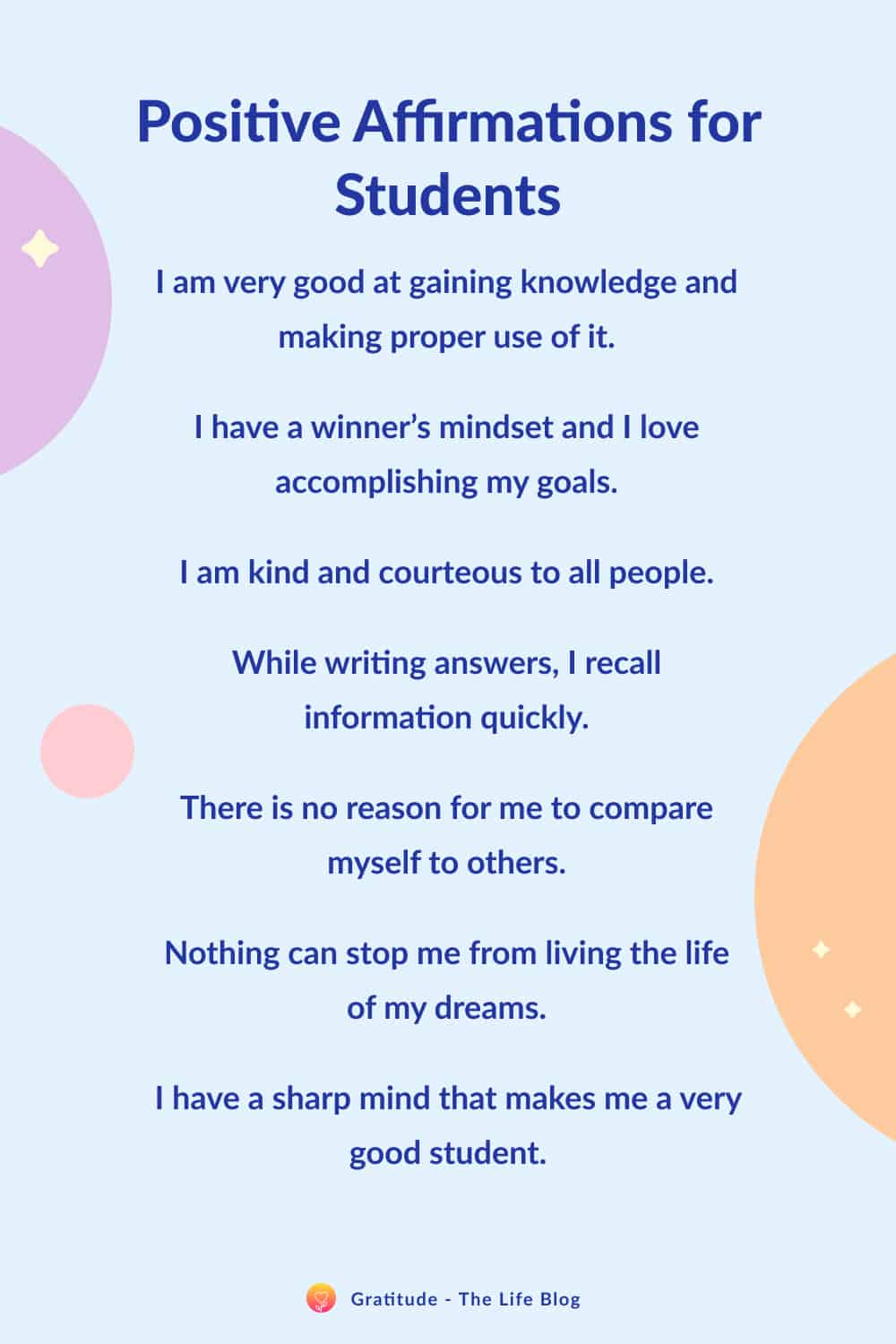
Credit: blog.gratefulness.me
How To Make Affirmations A Daily Habit
Success with affirmations comes from regular practice. Here is a simple plan:
- Choose 3 affirmations that match your goals.
- Set a routine. Say them at the same time each day.
- Use reminders. Place sticky notes on your mirror or desk.
- Record your voice. Listen to your affirmations while commuting.
- Track results. Write down any changes you notice.
Many people forget to repeat affirmations regularly. Setting reminders and linking affirmations to daily activities can help you stay consistent.
If you want to build a habit, start small. Repeat your affirmations for five minutes each morning. As you get used to it, add more sessions during the day. The more you practice, the stronger your mindset becomes.
Common Questions About Affirmations For Success
Many beginners have doubts. Here are answers to some frequent questions.
Frequently Asked Questions
What Is The Best Time To Say Affirmations?
The best time is morning, right after you wake up. Your mind is fresh and open to new thoughts. Saying affirmations before important meetings or tasks can also help. Some people repeat affirmations at night to relax and end the day positively.
You can also say affirmations during breaks or before stressful situations. The key is to choose a time when you can focus.
How Long Does It Take For Affirmations To Work?
It depends on your mindset and consistency. Most people notice changes in mood or confidence within a few weeks. For bigger goals, it may take longer. The key is to repeat affirmations daily and believe in them.
Some people see results in days, like feeling more positive or motivated. For deep changes, such as new skills or habits, affirmations may take months. Patience is important.
Can Affirmations Help With Anxiety Or Stress?
Yes, affirmations can reduce anxiety and stress. By focusing on positive thoughts, you shift your attention away from worries. For example, saying “I am calm and in control” during stressful moments can help you feel better.
Affirmations are not a cure for serious anxiety, but they help you manage daily stress. Use them together with breathing exercises or mindfulness for best results.
Should I Write My Own Affirmations Or Use Ready-made Ones?
Writing your own is better because they match your goals and feelings. Ready-made affirmations are good for inspiration, but personal affirmations are more powerful. Make sure your statements are positive, present tense, and specific.
If you use ready-made affirmations, adjust them to fit your situation. For example, change “I am rich” to “I am earning more each month. ”
What If I Do Not Believe My Affirmations At First?
It is normal to feel doubt when starting. Keep repeating your affirmations. Over time, your brain starts to believe them. You can also make your statements more believable by adding small steps, like “I am becoming more confident every day.
”
If you feel uncomfortable, try softer statements. For example, “I am learning to be confident” or “I am improving every day. ” As your belief grows, make your affirmations stronger.
Final Thoughts
Writing affirmations for success is a simple but powerful tool. It helps you shape your mindset, focus on your goals, and build confidence. By following the steps in this article, you can create your own affirmations and use them daily.
Remember, success starts with your thoughts. Affirmations are not magic, but they give you the mental strength to take action and achieve your dreams. Stay consistent, add emotion, and link affirmations to your daily routine. With practice, you will see real changes in your attitude and results.
If you want to understand more about the science of affirmations, check out Wikipedia. Start today, and see how positive words can lead to positive outcomes.

Credit: aselfguru.com
