

How to Write Affirmations for Success: Transform Your Mindset
How To Write Affirmations For Success
Success often starts in the mind. Many people talk about positive thinking, but few realize how powerful affirmations can be. These are short, positive sentences you say to yourself to shape your thoughts and actions. If you want to reach your goals—whether in business, school, or life—learning how to write affirmations for success is a skill worth mastering. This article shows you how to create affirmations that really work, why they matter, and how to use them every day. You’ll get practical examples, data, and proven advice to make your affirmations strong and effective.
What Are Affirmations?
Affirmations are simple statements that help you focus on what you want. They are usually positive, clear, and written in the present tense. For example: “I am confident in my abilities” or “I achieve my goals with hard work.” The main idea is to use these statements to change your mindset, boost your motivation, and guide your actions.
Why Do Affirmations Work?
The science behind affirmations is linked to neuroplasticity—the brain’s ability to change and adapt. When you repeat positive statements, you create new pathways in your brain. Over time, this can change how you feel and act. Research shows that people who use affirmations regularly are more likely to develop a positive self-image and stay motivated.
A study from Carnegie Mellon University found that self-affirmations can reduce stress and improve problem-solving skills. They also help you bounce back from setbacks. The key is consistency: repeating affirmations daily increases their impact.
Common Types Of Affirmations
- Personal growth: “I learn from my mistakes.”
- Career success: “I am focused and productive at work.”
- Confidence: “I believe in myself.”
- Health: “I take care of my body and mind.”
Many beginners make the mistake of using vague or negative statements. Affirmations should never include words like “not” or “can’t. ” Always focus on what you want, not what you’re trying to avoid.
How To Write Powerful Affirmations For Success
Writing affirmations isn’t just about positive words. The way you craft them can make a big difference. Here’s a practical guide to writing strong, clear affirmations that help you succeed.
1. Start With Your Goal
Think about what you want to achieve. Is it a promotion, better grades, or stronger confidence? Write down your main goal. This will guide your affirmation.
Example: If your goal is to become a manager, your affirmation could be: “I am a respected leader in my company.”
2. Use Present Tense
Affirmations work best when you speak as if your goal is already true. Avoid future words like “will” or “might. ”
Correct: “i Am Successful.”
Incorrect: “i Will Be Successful.”
3. Keep It Positive
Focus on what you want, not what you don’t want. Avoid negative phrases.
Correct: “i Make Wise Decisions.”
Incorrect: “i Don’t Make Mistakes.”
4. Make It Personal
Use “I” or “my” to make the affirmation about you.
Example: “i Manage My Time Well.”
5. Be Specific
Clear affirmations are easier to believe and follow. Instead of “I am healthy,” try “I eat healthy foods every day and exercise regularly. ”
6. Keep It Short And Simple
Long affirmations are hard to remember. Aim for 8-12 words.
Example: “i Am Confident In My Abilities.”
7. Add Strong Emotion
If you can, include a feeling word. This makes the affirmation more powerful.
Example: “i Am Excited To Achieve My Goals.”
8. Check For Realism
Affirmations must feel possible. If you write something too far from your reality, it may feel fake and not help.
Example: If you’re starting a new business, “I grow my business every day” is better than “I am a millionaire.”
9. Repeat Daily
Consistency is key. Repeat your affirmations every morning and night. Some people write them down, others say them out loud.
10. Visualize While Repeating
Picture yourself living the affirmation. This helps your brain accept the statement as true.

Credit: aselfguru.com
Examples Of Success Affirmations
Here are 20 sample affirmations for different goals:
- “I am confident in my skills.”
- “I achieve my goals with determination.”
- “I am a valued member of my team.”
- “I learn quickly and adapt easily.”
- “I stay focused and productive.”
- “I make wise decisions every day.”
- “I embrace new challenges with courage.”
- “I am motivated and energetic.”
- “I attract opportunities for growth.”
- “I communicate clearly and effectively.”
- “I manage my time well.”
- “I am resilient in difficult times.”
- “I celebrate my achievements.”
- “I support and inspire others.”
- “I grow stronger from setbacks.”
- “I balance work and life successfully.”
- “I trust my intuition.”
- “I welcome success into my life.”
- “I build strong relationships.”
- “I invest in my learning and growth.”
Data: Affirmations Vs. Negative Self-talk
Many people wonder if affirmations really make a difference. Let’s compare the effects of positive affirmations and negative self-talk using a simple table:
| Type | Effect on Motivation | Impact on Stress | Long-Term Results |
|---|---|---|---|
| Positive Affirmations | Increase motivation | Reduce stress | Build confidence and resilience |
| Negative Self-Talk | Decrease motivation | Increase stress | Lower self-esteem, block growth |
As you can see, positive affirmations boost motivation and reduce stress, while negative self-talk does the opposite.
How To Use Affirmations In Your Daily Routine
Writing good affirmations is just the start. Using them daily is what makes them work. Here’s how to build a routine that fits your life.
Morning Practice
Say your affirmations right after you wake up. This sets a positive tone for your day. Some people stand in front of a mirror to help themselves believe the words.
During Work Or Study
If you’re facing a tough task, repeat an affirmation like “I am focused and capable. ” This can help you stay calm and productive.
Evening Reflection
Before bed, review your day and repeat your affirmations. This helps your mind prepare for success tomorrow.
Written Affirmations
Writing your affirmations in a journal makes them stronger. The act of writing helps your brain focus on the words.
Digital Reminders
Set reminders on your phone to repeat your affirmations. You can also make your affirmation the background on your device.
Group Practice
Some teams and families share affirmations together. This builds unity and support.
Common Mistakes When Writing Affirmations
Many beginners make mistakes that limit the power of their affirmations. Here’s how to avoid them:
Using Negative Words
Never say “I don’t fail” or “I am not lazy. ” Your mind focuses on the negative part.
Being Too Vague
“Success comes to me” is unclear. What kind of success? Be specific.
Making It Too Long
Long affirmations are hard to remember. Keep it simple.
Ignoring Emotion
Affirmations without feeling are less effective. Add emotion like “I am proud of my progress. ”
Forgetting To Repeat
Repeating once is not enough. Make it a daily habit.
Real-life Examples: How Affirmations Changed Lives
Many famous people use affirmations to reach their goals. Here are a few examples:
Oprah Winfrey
Oprah has spoken about using affirmations to build confidence and focus on her goals. She often says, “I am worthy of success. ”
Muhammad Ali
Ali used affirmations like “I am the greatest” to boost his confidence before matches.
Jim Carrey
Carrey wrote himself a check for $10 million and repeated affirmations about being a successful actor. Years later, he achieved his dream.
Data From Everyday People
A survey from Psychology Today found that 61% of people who used daily affirmations reported feeling more positive and motivated. Only 34% of non-users felt the same.
How To Measure The Effectiveness Of Your Affirmations
It’s important to track your progress. Here are simple ways to measure if your affirmations are working:
Mood Tracking
Write down how you feel before and after repeating your affirmations. Over time, look for changes.
Goal Progress
Check if you’re moving closer to your goals. If not, adjust your affirmations.
Confidence Levels
Rate your confidence each week. If you notice an increase, your affirmations are helping.
Table: Tracking Results
| Method | How to Track | What to Look For |
|---|---|---|
| Mood Tracking | Daily journal | Improved mood after affirmations |
| Goal Progress | Weekly review | Steps toward your goal |
| Confidence Levels | Self-rating scale (1-10) | Higher scores over time |
If you don’t see results, try changing your affirmation or repeating more often.
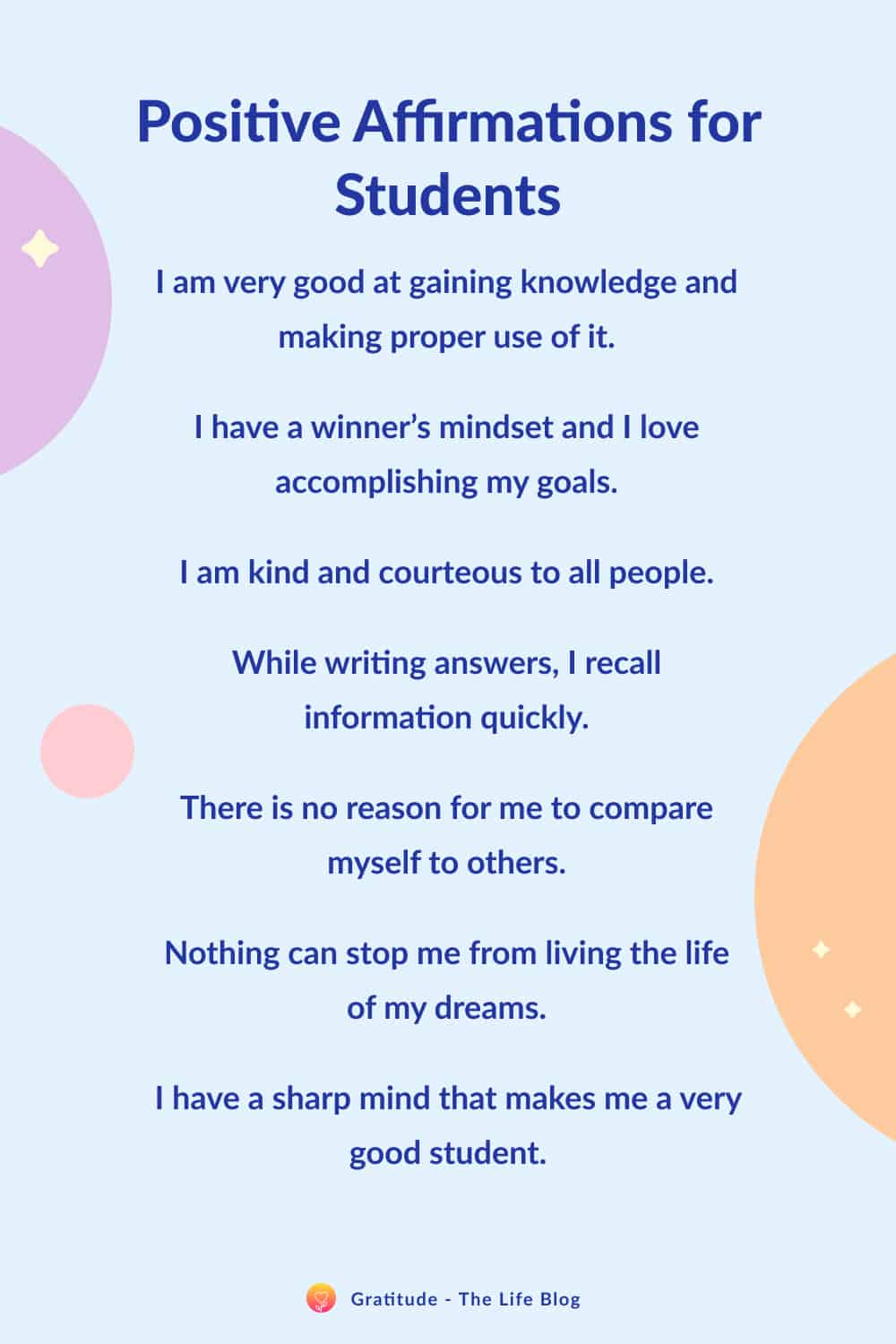
Credit: blog.gratefulness.me
How Affirmations Affect The Brain
The brain responds to repeated positive statements. When you use affirmations, you activate the prefrontal cortex, which is linked to planning and decision-making. Studies show that repeating positive statements can reduce anxiety and increase problem-solving skills.
A practical insight most beginners miss: The brain cannot easily tell the difference between reality and imagination. By repeating affirmations and visualizing success, you make your brain believe your goals are possible.
Another insight: Affirmations work faster when combined with action. Saying “I am productive” is good, but pairing it with a small task helps your brain connect words to real results.
Comparing Affirmations With Other Mindset Tools
Many people use tools like visualization, goal setting, and meditation. Here’s a comparison:
| Tool | Main Benefit | Ease of Use | Best For |
|---|---|---|---|
| Affirmations | Boosts confidence and focus | Easy to start | Daily motivation |
| Visualization | Creates mental images of success | Moderate effort | Goal achievement |
| Goal Setting | Clarifies direction | Easy if clear goals | Long-term planning |
| Meditation | Reduces stress | Requires practice | Calm and balance |
Affirmations are one of the easiest and most flexible tools. You can use them anywhere, anytime.
How To Customize Affirmations For Different Success Areas
Success means different things to different people. You can tailor your affirmations to fit your needs.
Career Success
- “I am trusted and respected at work.”
- “I finish my tasks on time.”
Academic Success
- “I understand complex ideas easily.”
- “I enjoy learning new things.”
Personal Growth
- “I grow stronger every day.”
- “I learn from every experience.”
Health
- “I make healthy choices.”
- “I feel energetic and strong.”
Relationships
- “I build lasting friendships.”
- “I listen and communicate with care.”
Customizing your affirmations makes them more powerful. The clearer and closer to your real life, the better.
Combining Affirmations With Action
Affirmations alone won’t bring success. You need to act. Here’s how to combine affirmations with practical steps:
- Write your affirmation.
- Identify a small action that matches your affirmation.
- Do the action while repeating the affirmation.
Example: If your affirmation is “I am organized,” clean your workspace while repeating it. This creates a strong link in your mind.
Advanced Tips For Writing Success Affirmations
Once you’re comfortable with basic affirmations, try these advanced tips:
Use Visualization
Imagine yourself living the affirmation. Feel the emotion and see the details.
Add Gratitude
Gratitude strengthens your affirmation. Example: “I am grateful for my success.”
Use Powerful Words
Choose words that make you feel strong—like “unstoppable,” “excited,” or “brave. ”
Record Your Voice
Record yourself saying your affirmations. Listen to them daily.
Change Affirmations As You Grow
As you reach your goals, update your affirmations to match new ambitions.
Common Questions About Affirmations For Success
Many people have doubts or questions. Let’s clear up some confusion.
Are Affirmations Just Positive Thinking?
Affirmations are more than positive thinking. They are specific, actionable statements that guide your mindset and behavior. Positive thinking is general; affirmations focus on clear goals.
How Long Does It Take For Affirmations To Work?
Most people notice small changes within a week. Bigger shifts take a month or more. The key is consistency—repeat daily and believe the words.
What If I Don’t Believe My Affirmation?
At first, many people feel awkward or fake. This is normal. Start with affirmations that feel possible. Over time, belief grows.
Can Affirmations Replace Therapy Or Coaching?
Affirmations are a helpful tool, but they don’t replace professional help. If you have deep challenges, consider speaking to a coach or therapist.
Where Can I Learn More?
For deeper information, you can visit Psychology Today. They offer research and expert advice on affirmations.
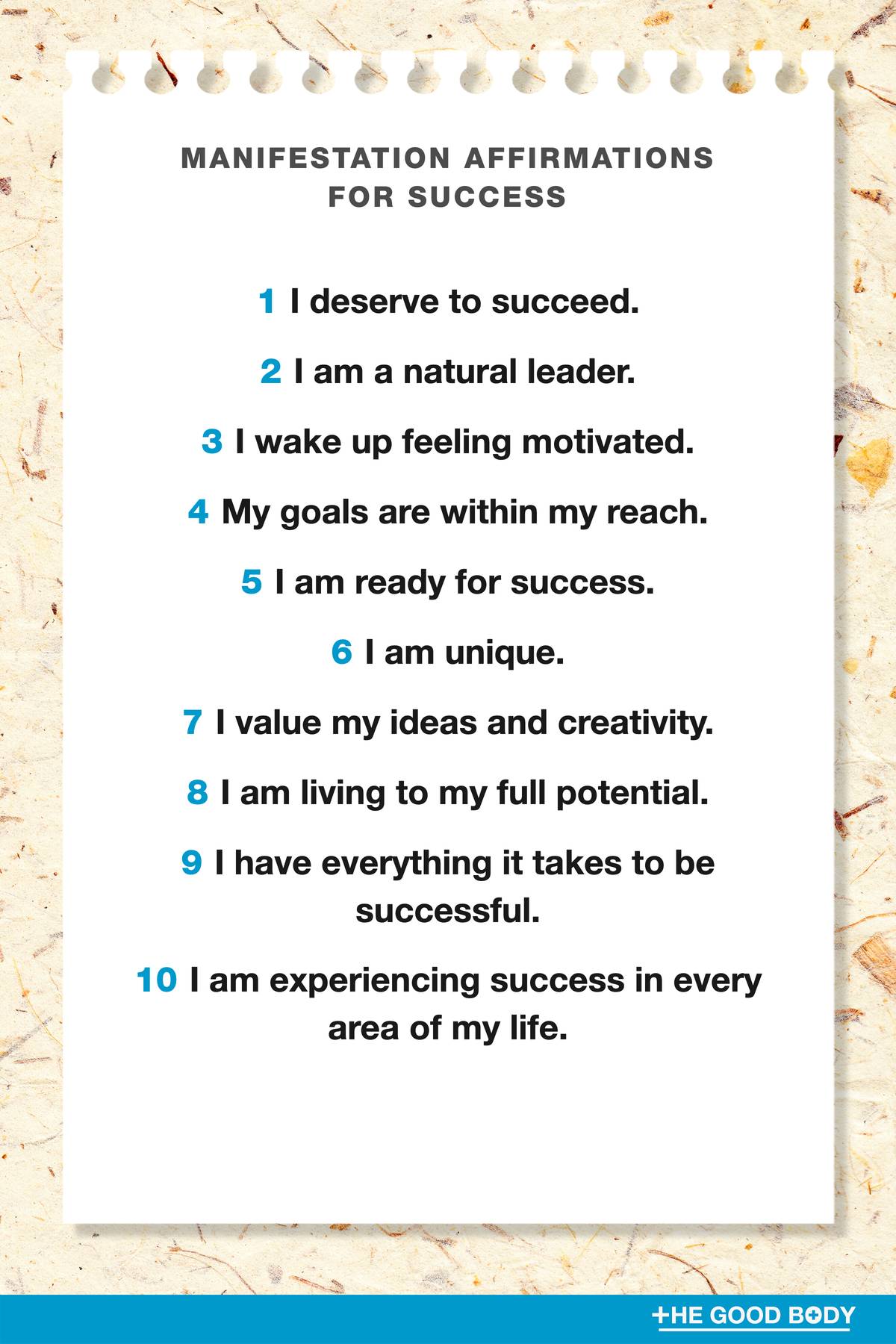
Credit: www.thegoodbody.com
Frequently Asked Questions
What Is The Best Time To Say Affirmations?
The best time is in the morning and before bed. This helps set a positive tone for your day and lets your mind focus while you sleep.
How Many Affirmations Should I Use?
Start with 3-5 affirmations. Too many can feel overwhelming. Focus on the most important goals.
Should I Say Affirmations Out Loud Or Silently?
Both work. Saying them out loud is stronger, but silent repetition is useful if you are in public.
How Long Should I Repeat An Affirmation?
Repeat each affirmation at least 3-5 times. You can spend 2-5 minutes daily.
What If My Goals Change?
Update your affirmations to match your new goals. Success affirmations should grow with you.
Success is not just about talent or luck. It’s about mindset and daily habits. Affirmations are a simple, powerful tool that can help you build confidence, focus, and motivation. By writing clear, positive, and specific affirmations and repeating them every day, you move closer to your goals.
Combine your affirmations with action, track your progress, and adjust as needed. Over time, you’ll see real changes in your thinking and results. Start today, and let your words guide you to success.
