

Best Positive Affirmations for Success: Transform Your Mindset Today
Best Positive Affirmations For Success
Success is not just about skills or hard work. It often starts in the mind. What you believe about yourself shapes your actions, choices, and habits. Positive affirmations are powerful tools that help you build strong beliefs and self-confidence. They work by repeating encouraging words, which slowly change your mindset.
Many people use affirmations to reach their goals, stay motivated, and handle challenges. This article explores the best positive affirmations for success, explains how to use them, and shows why they matter. You will find practical examples, data, and expert advice to help you get started.
Why Positive Affirmations Matter For Success
Affirmations are simple statements you say to yourself. These statements are designed to encourage, motivate, and reshape your thinking. Research shows positive self-talk can improve performance, reduce stress, and boost confidence. In fact, a study from Carnegie Mellon University found that self-affirmation can protect against stress and improve problem-solving abilities.
Success is often blocked by doubts, fears, and negative thoughts. Affirmations help you overcome these barriers. When you repeat supportive statements, your brain starts to believe them. Over time, this creates new habits and attitudes that lead to success.
The Science Behind Affirmations
Psychologists have studied the effects of affirmations. They found that positive self-talk can change how people respond to challenges. For example, athletes who use affirmations before a competition perform better and recover faster from mistakes.
Affirmations also help by reducing the impact of negative thoughts. This is called the “affirmation effect. ” When you focus on positive statements, your mind spends less energy on doubt. This frees you to think clearly, act confidently, and make better decisions.
Common Success Barriers Affirmations Can Help With
- Low self-confidence
- Fear of failure
- Procrastination
- Negative thinking
- Lack of motivation
Affirmations target these barriers directly. By using the right words, you can start to change your inner voice and support your goals.
How To Use Positive Affirmations Effectively
Many beginners make mistakes when starting with affirmations. To get the best results, you need to understand how and when to use them. Here are some practical steps:
- Choose affirmations that match your goals. If you want to improve your confidence, pick statements about believing in yourself.
- Repeat them daily. Consistency is important. Morning and evening are good times.
- Speak them out loud or write them down. Hearing or seeing the words makes them stronger.
- Believe in the words. Do not just repeat them; try to feel their meaning.
- Visualize success while repeating. Imagine yourself achieving your goals.
Common Mistakes To Avoid
- Using vague or generic statements
- Forgetting to repeat affirmations regularly
- Not connecting emotionally with the words
- Choosing affirmations that feel unrealistic
It is important to pick affirmations you can truly believe. If a statement feels impossible, adjust it until it fits your current mindset. For example, instead of saying, “I am the best at everything,” try, “I am improving every day.
”
When And Where To Use Affirmations
Affirmations can be used in many situations:
- Before starting work or study
- During stressful moments
- When feeling doubtful or anxious
- After making a mistake
- While setting goals
Some people use sticky notes, phone reminders, or journals to help them remember their affirmations. Choose a method that fits your daily routine.
Best Positive Affirmations For Success
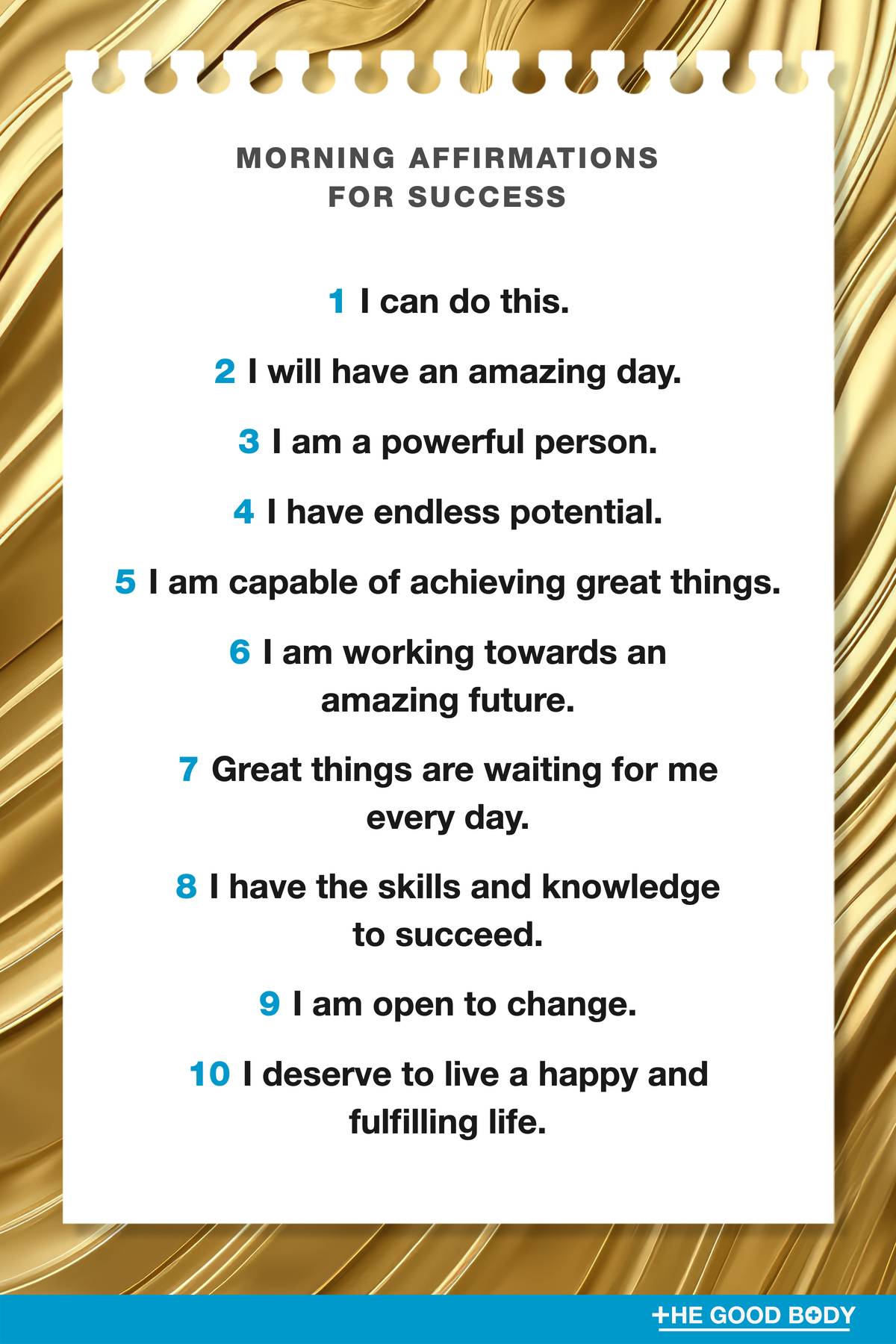
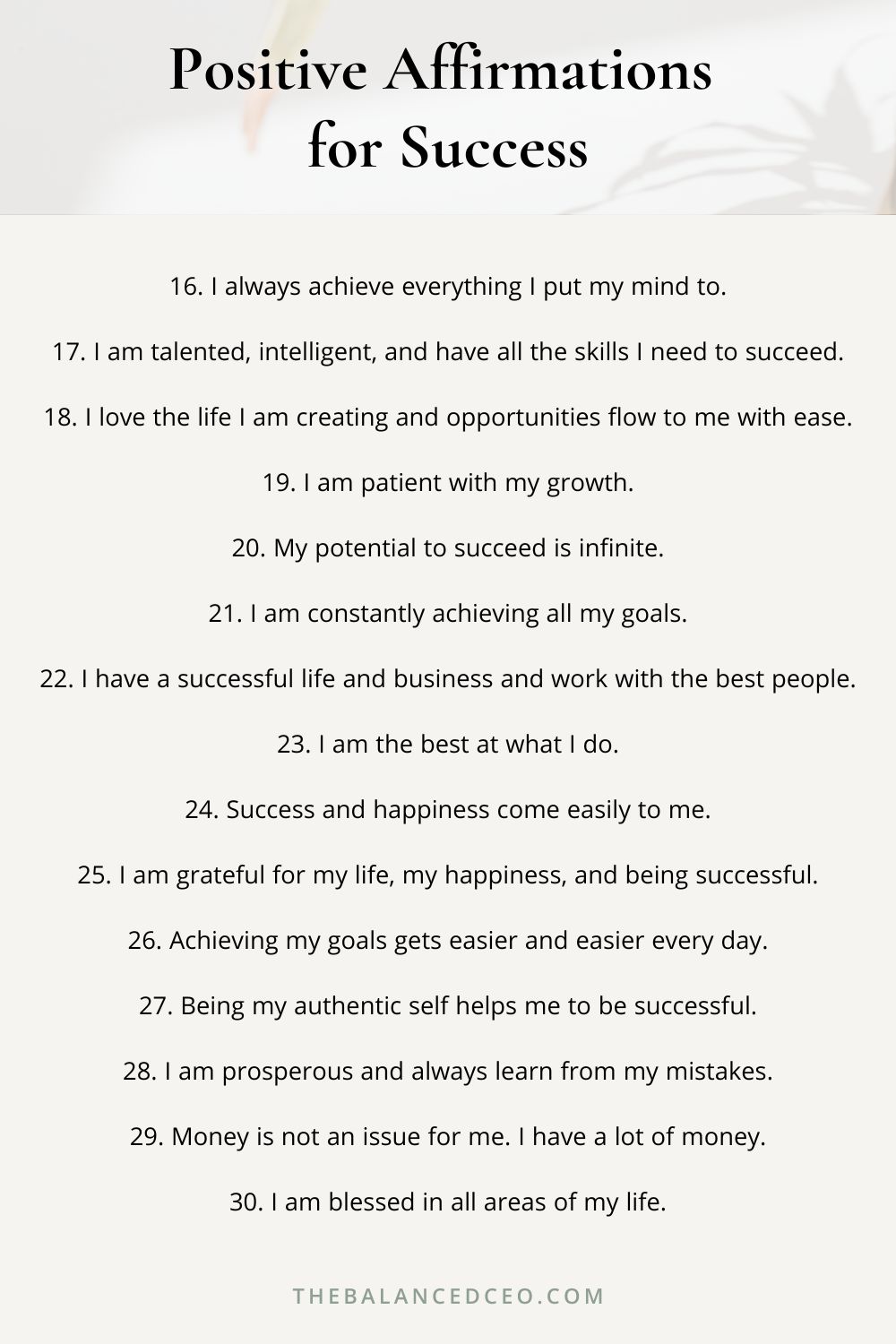
There are many types of affirmations, but some work especially well for building success. Here are 20 powerful affirmations you can use:
- I am capable of achieving my goals.
- I believe in my abilities.
- Success comes naturally to me.
- I am focused and determined.
- I learn from every experience.
- I turn challenges into opportunities.
- My hard work brings results.
- I am confident in my decisions.
- I attract positive outcomes.
- I am committed to growth.
- I overcome fears with courage.
- I create my own success.
- I stay motivated every day.
- I am worthy of achievement.
- I trust myself to succeed.
- I handle obstacles with strength.
- I take action towards my dreams.
- I celebrate my progress.
- I am resilient and persistent.
- I welcome new opportunities.
These affirmations are simple, direct, and easy to remember. You can choose a few that match your needs or use them all.
Customizing Affirmations For Your Unique Goals
Every person has different dreams and challenges. Custom affirmations are more effective because they address your personal needs. Think about your main goals: Do you want a promotion? Start a business? Improve grades? Write affirmations that fit these aims.
How To Create Your Own Affirmations
- Identify your goal. Example: “I want to become a manager.”
- Find your barrier. Example: “I doubt my leadership skills.”
- Write a positive statement. Example: “I am a skilled and confident leader.”
Make sure your affirmation is:
- Positive
- Present tense
- Personal
Avoid negative words. Say, “I am successful,” not “I am not a failure. ”
Examples For Different Goals
Career Success:
- “I am ready for new challenges at work.”
- “I bring value to my team.”
Academic Success:
- “I am disciplined in my studies.”
- “I understand new concepts easily.”
Entrepreneurship:
- “I grow my business with smart choices.”
- “I welcome innovation.”
Personal Growth:
- “I am open to learning.”
- “I accept feedback to improve.”
Custom affirmations work best when you review and update them as your goals change.
Credit: www.thegoodbody.com
Data And Real-life Examples
Many successful people use affirmations. Oprah Winfrey, one of the world’s most influential women, often speaks about the power of positive self-talk. She credits affirmations with helping her overcome difficult times and build confidence.
A survey by the American Psychological Association found that people who use daily positive statements report higher levels of motivation and satisfaction. Among participants, 72% said affirmations helped them stay focused on their goals.
Case Study: Affirmations In Sports
Athletes often use affirmations to prepare for competitions. For example, Michael Phelps, a famous swimmer, uses statements like, “I am prepared. I am strong. ” This helps him stay calm and confident before races.
Coaches recommend affirmations to help athletes recover from losses. By repeating positive words, athletes shift their focus from mistakes to growth.
Table: Affirmation Impact On Different Areas
Here’s a comparison of how affirmations affect different parts of life.
| Area | Impact | Example Affirmation |
|---|---|---|
| Career | Higher confidence, better job performance | I am skilled and valuable at work. |
| Academics | Improved focus, better grades | I master new subjects easily. |
| Sports | Greater resilience, stronger performance | I compete with courage. |
| Personal Growth | Better self-esteem, more motivation | I grow every day. |
This table shows that affirmations can make a positive difference in many situations.
Using Affirmations For Daily Motivation
Success is not just about reaching big goals. It is also about staying motivated each day. Affirmations help you build a positive routine.
Morning Routine With Affirmations
Start your day with 2-3 affirmations. Stand in front of a mirror, look at yourself, and say each statement out loud. Example:
- “I am ready for today’s challenges.”
- “I bring energy and focus to my tasks.”
Repeating affirmations in the morning sets the tone for your day.
Evening Routine
At the end of the day, reflect on your progress. Use affirmations to reinforce your efforts. Example:
- “I am proud of today’s achievements.”
- “I am grateful for my growth.”
This helps you finish the day with a positive mindset.
Affirmations In Stressful Moments
When you feel stressed or anxious, stop and use a calming affirmation. Example:
- “I handle stress with calm and strength.”
- “I trust myself to find solutions.”
This practice can lower anxiety and help you stay focused.
Credit: thebalancedceo.com
How Affirmations Change Your Mindset
Affirmations are not magic. They work by changing the way you think. Over time, your brain starts to believe the new messages. This is called “rewiring your mindset. ”
Example: Overcoming Fear Of Failure
Imagine you often worry about failing. You start using the affirmation, “I learn from every mistake. ” After repeating it daily for a few weeks, you notice you feel less anxious about trying new things. Your mind accepts that mistakes are part of learning.
Table: Affirmation Mindset Shift
Here’s how affirmations help change negative thoughts.
| Negative Thought | Positive Affirmation | Result |
|---|---|---|
| I can’t do this. | I am capable of success. | Increased confidence |
| I always make mistakes. | I learn and improve every day. | Greater resilience |
| Nothing goes right for me. | I create positive outcomes. | More optimism |
| I am not good enough. | I am worthy of achievement. | Higher self-esteem |
This process takes time. It is normal to feel doubtful at first, but with practice, your mindset will change.
Building An Affirmation Habit
Consistency is key. Many people try affirmations for a few days and then stop. To see results, you need to make affirmations a habit.
Steps To Build Your Habit
- Set a time each day. Morning or evening is best.
- Use reminders. Phone alarms, sticky notes, or journal entries help.
- Track your progress. Write down changes in your mood or performance.
- Adjust your affirmations as needed. Update them as your goals shift.
Table: Affirmation Habit Tracker Example
Here’s a simple tracker you can use.
| Day | Affirmation Used | Mood After | Progress |
|---|---|---|---|
| Monday | I am confident. | Positive | Started new project |
| Tuesday | I overcome challenges. | Motivated | Handled difficult task |
| Wednesday | I am improving daily. | Encouraged | Learned new skill |
Tracking helps you see real changes and keeps you motivated.
Advanced Tips For Using Affirmations
Many beginners miss these insights:
- Pair affirmations with action. Saying “I am successful” is powerful, but acting on your words makes them real. For example, after repeating “I am organized,” clean your workspace.
- Use visualization. Imagine yourself achieving your goal as you repeat the affirmation. This makes the message stronger.
- Connect affirmations to your values. If honesty matters to you, use affirmations like “I succeed with integrity.”
- Record your voice. Listening to your own affirmations can make them more impactful.
- Share with a friend. Saying affirmations together increases motivation and accountability.
Insight: Affirmations Can Reduce Procrastination
Many people struggle with procrastination. Affirmations can help by changing your attitude about tasks. For example, “I take action now” encourages you to start work instead of waiting.
Insight: Affirmations Help With Emotional Balance
Affirmations are not only for work or school. They also help you handle emotions. Statements like “I am calm and centered” can reduce stress and improve relationships.
Comparing Affirmations With Other Success Tools
Affirmations are just one tool for success. Here’s how they compare to other methods.
| Method | Main Benefit | When to Use |
|---|---|---|
| Affirmations | Build confidence and positive mindset | Daily, during stress, goal-setting |
| Goal Setting | Clarifies direction and priorities | Planning, tracking progress |
| Visualization | Enhances motivation and focus | Before tasks, overcoming fear |
| Journaling | Reflects on growth and challenges | End of day, self-review |
Each method is useful, but affirmations are simple and can be combined with other tools for best results.
The Role Of Self-belief In Success
Believing in yourself is essential. Without self-belief, skills and effort can go wasted. Affirmations strengthen your self-belief by reminding you of your abilities.
Example: Building Career Success
Imagine you want to apply for a better job. You feel nervous and unsure. By repeating, “I am qualified and ready,” you build confidence. This helps you write a strong application and perform well in interviews.
Data: Self-belief And Performance
A report from the National Institutes of Health shows that people with high self-belief reach goals 50% more often than those with low confidence. Affirmations are a proven way to build this belief.
How To Measure Your Success With Affirmations
Many people wonder how to know if affirmations are working. The best way is to watch for changes in your behavior and feelings.
Signs Of Progress
- Feeling more confident
- Taking action on goals
- Handling stress better
- Noticing positive changes in mood
- Seeing improvement in work or studies
Set small milestones. For example, “I will finish my project by Friday. ” Use affirmations to support your progress.
Adjusting Affirmations For Better Results
If you do not see changes after a few weeks, adjust your affirmations. Make them more specific or realistic. Ask yourself, “Does this affirmation match my current challenge? ”
Overcoming Skepticism About Affirmations
Some people doubt affirmations. They think positive words alone cannot change reality. It is true that affirmations are not magic. They work best when combined with action.
Practical Advice
- Use affirmations alongside real efforts.
- Stay consistent for at least 3 weeks.
- Track your progress to see results.
Even experts agree: affirmations are most effective when you believe in their power and act on them. For more research, check this Psychology Today article.
Frequently Asked Questions
What Are Positive Affirmations?
Positive affirmations are short, encouraging statements you repeat to yourself. Their purpose is to build confidence, motivation, and a positive mindset. Examples include “I am capable” or “I create my own success. ”
How Long Does It Take For Affirmations To Work?
Most people notice changes in 2 to 4 weeks. You need to repeat affirmations daily and believe in their meaning. Progress may be slow at first, but consistency brings results.
Can Affirmations Help With Anxiety?
Yes. Affirmations can reduce anxiety by changing negative thoughts. For example, repeating “I am calm and strong” during stressful moments helps shift your focus away from worry.
How Many Affirmations Should I Use Each Day?
Start with 2 to 5 affirmations. Too many can feel overwhelming. Choose statements that match your goals and repeat them regularly.
Are Affirmations Effective For Children And Teens?
Affirmations are helpful for all ages. Children and teens can use statements like “I am smart” or “I make good choices. ” This builds confidence and supports growth.
Success starts with belief. Positive affirmations are simple, practical tools that help you build a strong mindset. By choosing the right statements, repeating them daily, and pairing them with action, you can overcome barriers and reach your goals. Remember, progress takes time.
Stay consistent, adjust your affirmations as needed, and celebrate every step forward. Your journey to success begins with your own words.

Credit: vishakablone.com
