

How to Write Affirmations for Manifestation Examples That Work
How To Write Affirmations For Manifestation Examples
What if you could change your life by changing your words? Many people believe that affirmations—simple, positive statements—can help you attract what you want. Whether you want more confidence, money, love, or happiness, the way you talk to yourself matters. But writing affirmations is not just about repeating “I am rich” in front of a mirror. There’s a right way to do it, and some common mistakes that stop results.
This guide will show you how to write affirmations for manifestation. You’ll learn what makes an affirmation work, common pitfalls, and real examples for different goals. You’ll also find easy steps, practical tips, and answers to the most asked questions about affirmations.
By the end, you’ll be ready to create powerful affirmations that match your dreams—and use them the right way for real change.
What Are Affirmations For Manifestation?
Affirmations are short, positive statements that you repeat to yourself. The goal is to change your beliefs, feelings, and actions. When used for manifestation, affirmations help you focus on what you want to attract into your life.
Manifestation means bringing something into reality through thoughts, feelings, and actions. Many people use affirmations as part of the Law of Attraction, which suggests that your thoughts can influence what happens to you.
For example, saying “I am confident and strong” every day can slowly shift your thinking. Over time, this new belief influences your actions, helping you act more confidently.
Why Use Affirmations?
- They help you focus on your goals.
- They replace negative self-talk with positive beliefs.
- They can change your mindset, which shapes your actions.
- They create a sense of hope and possibility.
Common Myths
Some people think affirmations are about ignoring problems or pretending to be happy. But true affirmation practice is about building new beliefs. It is not about lying to yourself. Instead, you are opening your mind to new possibilities.
The Science Behind Affirmations
You might wonder if affirmations really work or if it’s just wishful thinking. While not magic, there is science that explains why affirmations can help.
How Affirmations Affect The Brain
Researchers have found that self-affirmation activates the parts of the brain related to rewards and self-processing. This means that repeating positive statements can make your mind more open to change.
A study published in Social Cognitive and Affective Neuroscience found that people who practiced self-affirmation handled stress better and were more likely to make positive choices. The brain sees affirmations as a kind of “mental rehearsal,” helping you prepare for real challenges.
Why Positivity Matters
Negative self-talk can make you feel stuck. For example, if you always think “I am not good enough,” you might avoid trying new things. Positive affirmations break this pattern and encourage you to take small actions toward your goals.
Real-world Impact
Many athletes, leaders, and high performers use affirmations. Olympic athletes, for example, use visualization and positive statements to boost their confidence before competitions. While affirmations alone won’t bring instant success, they help create the right mindset for action.
Core Elements Of A Powerful Affirmation
Not all affirmations are created equal. Some are too vague or unrealistic. Others are too negative or focused on the wrong things. The key is to use specific, positive, and present-tense statements.
1. Use Present Tense
Write as if the desired result is happening now. Instead of “I will be healthy,” say “I am healthy and full of energy. ” This tells your mind that the change is already real.
2. Be Positive
Focus on what you want, not what you don’t want. “I am calm and centered” is better than “I am not stressed. ”
3. Make It Personal
Use “I” or “my” to make the statement about you. “I am attracting new opportunities” is more effective than “Opportunities are coming. ”
4. Keep It Short And Clear
Affirmations should be easy to remember and repeat. Complex sentences are less powerful.
5. Use Emotion
Add feelings to make the affirmation stronger. “I am excited about my new job” has more energy than “I have a new job. ”
6. Be Specific
A clear goal works better than a vague wish. Instead of “I am successful,” try “I am confident and successful in my career. ”
7. Believe It’s Possible
Your mind needs to accept the statement as possible. If it feels too far from reality, adjust it. For example, “I am open to new friendships” can be easier to believe than “I am everyone’s best friend. ”
How To Write Your Own Affirmations: Step-by-step
Many people repeat affirmations but don’t see results. Often, the problem is in how the statements are written or used. Here’s a simple process to create affirmations that really work for you.
Step 1: Decide What You Want To Change
Start with one area of your life. Is it confidence, money, health, relationships, or something else? Be honest about where you want growth.
Step 2: Identify Negative Beliefs
Notice what you say to yourself about this area. For example, “I always fail at diets,” or “I am too shy to make friends. ” Write these down.
Step 3: Flip The Script
Turn each negative belief into a positive, present-tense statement. For example:
- Negative: “I am always broke.”
- Positive: “I am attracting abundance and financial success.”
Step 4: Make It Emotional
Ask yourself, “How do I want to feel? ” Add that feeling to your affirmation. For example, “I am grateful for my strong, healthy body. ”
Step 5: Test And Adjust
Say your affirmation out loud. Does it feel believable? Does it make you feel good? If not, change it until it does. It’s better to start with something you can accept.
Step 6: Repeat Consistently
Say your affirmations every day. Morning and night are good times. You can also write them in a journal or put them on sticky notes.
Step 7: Take Action
Affirmations work best with action. If your affirmation is about health, also start walking or eating better. Small steps make your affirmation real.

Credit: pageflutter.com
Examples Of Affirmations For Manifestation
Sometimes, seeing real examples helps you create your own. Below are affirmations for different goals. Remember, you can change the words to fit your needs.
Money And Abundance
- I am attracting wealth and abundance every day.
- Money flows easily into my life.
- I am open to new opportunities for income.
- I am grateful for all the money I have.
- I use money wisely and responsibly.
Confidence And Self-esteem
- I am confident in my abilities.
- I believe in myself completely.
- I am worthy of success and happiness.
- I trust myself to make good decisions.
- I accept myself as I am.
Love And Relationships
- I am attracting loving and supportive people.
- I deserve healthy and happy relationships.
- I give and receive love easily.
- I am open to deep, meaningful connections.
- I am grateful for love in my life.
Health And Wellness
- I am healthy and full of energy.
- I care for my body with love and respect.
- I am getting stronger every day.
- I make choices that support my well-being.
- I am grateful for my healthy body.
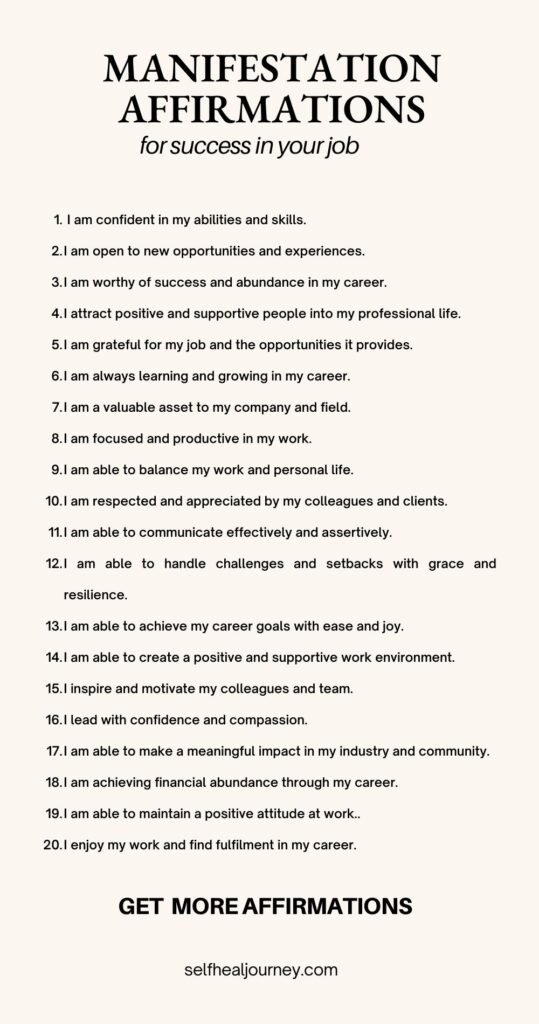
Success And Career
- I am successful in my career.
- I attract new opportunities for growth.
- I am confident in my skills and talents.
- I am a valuable member of my team.
- I am creating the life I want.
Common Mistakes When Writing Affirmations
Many people give up on affirmations because they don’t see results. Often, a few simple mistakes get in the way.
1. Using Negative Words
Affirmations should focus on what you want, not what you don’t want. Avoid words like “not,” “never,” or “don’t. ” For example, “I am not afraid” is less effective than “I am brave. ”
2. Making It Too Vague
Statements like “I am happy” are nice, but not clear. Be specific about what happiness means for you.
3. Ignoring Emotion
Affirmations without feeling are less powerful. Add words that express emotion, like “grateful,” “excited,” or “joyful. ”
4. Creating Unrealistic Statements
If you say, “I am a billionaire,” but don’t believe it, your mind will reject it. Start with a believable step, such as “I am open to increasing my income. ”
5. Not Repeating Enough
Consistency is key. Repeating affirmations once or twice is not enough. Make it a daily habit.
6. Forgetting Action
Affirmations work best with real action. If you want better health, also move your body or eat well.
7. Using Someone Else’s Words
Affirmations should be personal. Copying someone else’s exact words may not connect with your goals. Adjust examples to fit your life.
How To Make Affirmations More Effective
It’s not enough to just say affirmations. How you use them makes a big difference. Here are ways to boost their power.
Visualization
While saying your affirmation, imagine yourself living it. For example, if you say, “I am confident,” picture yourself speaking clearly in a meeting.
Writing Them Down
Writing affirmations by hand can help your brain remember and accept them. Try filling a notebook with your affirmations.
Speaking Out Loud
Hearing your own voice adds energy and emotion. Say affirmations with feeling, not just as empty words.
Using Visual Reminders
Place sticky notes with affirmations where you’ll see them—on your mirror, fridge, or computer.
Pairing With Habits
Link affirmations to a daily habit, like brushing your teeth or making coffee. This helps you remember to repeat them.
Tracking Progress
Keep a journal of changes you notice. Even small shifts in attitude or action are signs your affirmations are working.
Table: Weak Vs. Strong Affirmations
It’s helpful to see how a weak affirmation can be improved. Here’s a comparison:
| Weak Affirmation | Strong Affirmation |
|---|---|
| I want more money. | I am attracting wealth and abundance. |
| I am not stressed. | I am calm and relaxed. |
| I will be confident someday. | I am confident and sure of myself now. |
| I don’t want to be alone. | I am open to loving relationships. |
| I wish I was healthy. | I am grateful for my strong, healthy body. |
Notice how strong affirmations are present, positive, and emotional.
Credit: selfhealjourney.com
The Role Of Belief And Consistency
The best-written affirmation will not work if you don’t believe in it, or if you forget to use it. Belief and consistency are the foundation of success with affirmations.
How To Build Belief
If an affirmation feels unbelievable, adjust the wording. For example, instead of “I am wealthy,” try “I am open to creating more wealth.” Over time, as you see small changes, you can adjust your affirmation to be more direct.
Why Consistency Matters
Just like learning any new habit, repetition is important. Experts suggest repeating an affirmation for at least 21 days to start seeing changes. The brain needs time to accept new beliefs.
Table: Time Vs. Impact Of Affirmations
To give you a sense of how affirmation use can change over time, see the following:
| Time Practiced | Common Experiences | Impact Level |
|---|---|---|
| 1-7 days | Feels strange, doubts may appear | Low |
| 8-21 days | Some shift in thinking, less resistance | Medium |
| 22-30 days | More natural, positive feelings grow | High |
| 31 days and beyond | Beliefs start to change, actions follow | Very High |
This is a general guide. Some people see results faster, others need more time. Patience is key.
Real-life Stories: How Affirmations Changed Lives
Hearing how others use affirmations can inspire you. Here are some true stories (names changed for privacy):
- Sarah struggled with shyness. She started each day by saying, “I am confident and speak my truth.” After three weeks, she noticed she spoke up more in meetings. Within two months, she led her first team project.
- James wanted to improve his finances. He repeated, “I am attracting new opportunities and abundance.” He began to notice job openings and took a side gig. Six months later, he had doubled his monthly income.
- Maria used “I am healthy and grateful for my body” during recovery from surgery. She felt more positive, healed faster, and became more consistent with her therapy exercises.
These stories show that affirmations work best when combined with real action and persistence.
When Affirmations Don’t Work (and What To Do)
Some people try affirmations and see no change. This does not mean affirmations are useless. It usually means that one or more important steps are missing.
Reasons Affirmations Fail
- The statements are too big or unbelievable.
- The person does not repeat them often enough.
- There is no emotional connection.
- The person does not take action toward their goal.
- Deep, negative beliefs are not addressed.
What To Do
- Start smaller: Use gentle affirmations like “I am open to change.”
- Increase repetition: Try repeating affirmations three times a day.
- Add feeling: Imagine the joy or relief of your goal while saying the words.
- Take action: Do one small thing each day that matches your affirmation.
- Address deeper issues: If negative beliefs are strong, consider support from a coach or therapist.
Using Affirmations For Specific Goals
Let’s look at how you can write affirmations for different life goals. Here are some examples and tips for each area.
Money And Abundance
- Tip: Focus on both gratitude and openness to receive.
- Example: “I am grateful for the money I have, and I am open to more.”
Confidence
- Tip: Address your strengths and willingness to grow.
- Example: “I am becoming more confident every day.”
Love And Relationships
- Tip: Be open to both giving and receiving love.
- Example: “I am open to giving and receiving love freely.”
Health
- Tip: Focus on progress, not perfection.
- Example: “I am making healthy choices each day.”
Career And Success
- Tip: Visualize your success and the feelings it brings.
- Example: “I am successful and excited about my work.”
Table: Affirmations For Different Areas
To help you find the right fit, here’s a summary:
| Goal | Sample Affirmation |
|---|---|
| Money | I am attracting wealth and abundance. |
| Confidence | I am confident in my abilities. |
| Love | I am open to loving relationships. |
| Health | I am grateful for my healthy body. |
| Career | I am successful in my work. |
Two Non-obvious Insights Most Beginners Miss
1. Affirmations Work Best When Paired With Feeling
Many beginners repeat affirmations like a robot. The real power comes from feeling the words as you say them. If you want to attract love, imagine the warmth and happiness of being with loved ones. The emotion signals your brain to take the affirmation seriously.
2. Small Changes Add Up Fast
People often expect a big change overnight. But the most powerful transformations come from small shifts in thinking and action. Celebrate small wins: a new idea, a more positive mood, or a single brave step. These build up to major change over time.

Credit: lestallion.com
How To Stay Motivated With Affirmations
Even with the best intentions, it’s easy to forget your affirmations after a few days. Here are practical ways to stay on track.
- Set reminders on your phone.
- Ask a friend to practice with you.
- Record your voice and listen daily.
- Celebrate small progress.
- Change your affirmations as your goals grow.
How To Know If Affirmations Are Working
You might not see instant results, but there are signs that your affirmations are making a difference:
- You feel more positive about your goal.
- You notice small opportunities or changes.
- You take new actions without forcing yourself.
- Your old negative self-talk is less frequent.
- Others notice a change in your attitude.
If you see these signs, keep going. If not, adjust your affirmations or repeat them more often.
Combining Affirmations With Other Manifestation Tools
Affirmations are powerful, but they work even better when combined with other tools. Some people use visualization, vision boards, or meditation. Others use journaling to track progress and feelings.
For more about how different manifestation practices work together, you can read this guide on the Law of Attraction.
Frequently Asked Questions
What Is The Best Time Of Day To Say Affirmations?
The best times are usually in the morning (to set your mood for the day) and at night (to influence your thoughts as you sleep). You can also repeat affirmations any time you need a boost—before a big meeting, during stress, or when you need encouragement.
How Long Does It Take To See Results From Affirmations?
Results vary. Some people notice changes in days; others need weeks or months. Most experts recommend using affirmations for at least 21 days. The key is daily repetition and pairing affirmations with real action toward your goals.
Can Affirmations Work For Everyone?
Affirmations can help most people, but not all affirmations work for everyone. You need to write them in a way that feels true and possible. If you struggle with deep negative beliefs, affirmations alone may not be enough—you might need support from a coach, therapist, or counselor.
How Many Affirmations Should I Use At Once?
It’s best to start with 3 to 5 affirmations. Focus on one area of your life at a time. Too many affirmations can be overwhelming and less effective. As you see progress, you can add or change your affirmations.
Should I Write My Own Affirmations Or Use Examples?
Personal affirmations are usually stronger because they match your goals and feelings. You can use examples as inspiration but adjust them so they feel real and meaningful to you. The more personal your affirmation, the more powerful it is.
Manifestation through affirmations is a journey. With the right words, belief, and consistent practice, you can change your mindset—and your life. The first step is to start now.
