

How to Use Affirmations: Unlock Your Mindset for Success
How To Use Affirmations
Most people want to change something about themselves—maybe to feel more confident, achieve a goal, or simply stress less. But often, self-doubt gets in the way. Affirmations are a simple tool that can help you shift your mindset and create positive change. If you’ve heard about affirmations but don’t know where to start, or you wonder if they really work, this guide will walk you through everything you need to know. You’ll discover how to craft effective affirmations, fit them into your life, and avoid common mistakes that keep people stuck. Whether you’re new to self-improvement or you’ve tried affirmations before without results, you’ll find practical advice and clear examples to help you get the most out of this powerful practice.
What Are Affirmations?
Affirmations are positive statements that you repeat to yourself. The goal is to replace negative thoughts with supportive ones. Instead of focusing on what you fear or dislike, you direct your mind toward what you want.
For example, instead of thinking, “I always fail,” you might say, “I am capable of learning and growing. ” Over time, these statements help reshape your beliefs. They’re not just wishful thinking—psychologists say affirmations can influence your brain’s response to stress and even your behavior.
How Affirmations Work
Your brain is always listening to your thoughts. If you repeat something often, your mind starts to accept it as true. This is called neuroplasticity—the brain’s ability to change and adapt. Affirmations make use of this process by giving your brain new beliefs to work with.
But there’s a key point many people miss: affirmations are most effective when they match your real goals and values. Generic phrases like “I am perfect” may not work if you don’t believe them. The best affirmations feel true or possible, even if they stretch your comfort zone.
Scientific Backing
Studies have shown that self-affirmation can reduce stress, improve academic performance, and increase resilience. For example, research published in the journal *Social Cognitive and Affective Neuroscience* found that affirmations activate the reward centers of the brain. This makes you more open to positive change.
However, affirmations are not magic—they work best when combined with action.
The Benefits Of Using Affirmations
Affirmations offer more than just positive feelings. Here’s what you can expect when you use them consistently:
- Increased confidence: Regularly repeating affirmations helps you build trust in your abilities.
- Reduced stress: Positive statements calm your mind and lower anxiety.
- Improved focus: Affirmations help you concentrate on your goals instead of distractions.
- Greater motivation: They encourage you to keep trying, even when things get hard.
- Better self-image: You start to see yourself in a more positive light.
Real-life Example
Imagine someone preparing for a job interview. They might feel nervous and think, “I’m not good enough. ” Using an affirmation like “I bring valuable skills to every team” can reduce nerves and improve performance. Over time, this shifts how they see themselves.
Crafting Effective Affirmations
Not all affirmations are created equal. The way you write and say them makes a big difference. Here’s how to create statements that really work for you.
1. Use Present Tense
Affirmations are most powerful in the present tense. Say “I am confident” instead of “I will be confident.” This tells your brain that the change is happening now.
2. Keep Them Positive
Focus on what you want, not what you’re avoiding. “I am calm” works better than “I am not stressed. ”
3. Make Them Personal
Use “I” or “my” to make the statement about you. For example, “I am improving every day. ”
4. Be Specific
Vague affirmations don’t create strong images in your mind. Try “I finish my tasks on time” instead of “I am successful. ”
5. Choose Realistic Beliefs
If an affirmation feels like a lie, you’re less likely to believe it. Pick statements that feel possible, even if they’re a stretch.
6. Keep It Short And Simple
Long, complicated sentences are hard to remember and repeat. Short affirmations are easier to use throughout the day.
Examples Of Good Affirmations
- “I am strong and capable.”
- “I learn from every experience.”
- “I attract positive opportunities.”
- “I am worthy of respect.”
Common Mistakes And How To Avoid Them
Many people try affirmations and give up because they don’t see results. Here are some common mistakes and how to fix them.
Using Negative Words
If your affirmation includes words like “not” or “never,” your brain focuses on the negative part. Instead of “I am not afraid,” say “I am brave. ”
Being Too Unrealistic
Saying “I am a millionaire” when you’re deeply in debt can make you feel worse. Start with something believable, like “I am improving my finances. ”
Skipping Emotion
Affirmations work best when you feel something as you say them. If your statement feels flat, add emotion or choose a different phrase.
Forgetting To Practice
Repeating affirmations once isn’t enough. It takes regular practice to change your thinking. Find ways to remind yourself daily.
Relying Only On Words
Affirmations are a tool, not a solution by themselves. Combine them with action. For example, if your affirmation is about health, also make healthy choices.
How To Use Affirmations In Daily Life
Now that you know how to write good affirmations, let’s look at how to use them every day. Regular practice is key to seeing results.
Morning Routine
Start your day with affirmations. Say them out loud while looking in the mirror. This sets a positive tone for the day. If you don’t have time, repeat them in your mind while brushing your teeth or showering.
During Stressful Moments
When you feel anxious, repeat your affirmation to calm yourself. For example, before a meeting, say “I communicate clearly and calmly. ”
Writing Affirmations Down
Writing helps reinforce the message. Keep a journal and write your affirmations each morning or night. This simple act helps your brain remember and believe them.
Using Reminders
Set reminders on your phone or sticky notes around your home or workspace. Seeing your affirmation often makes it easier to remember and believe.
Before Bed
End your day by repeating your affirmations. This helps your mind focus on positive thoughts as you sleep.
Combining With Visualization
Imagine yourself living the affirmation. If your statement is “I am confident speaking in public,” picture yourself giving a great presentation. This makes the affirmation more real and powerful.
How Many Affirmations Should You Use?
Beginners often wonder if they need a long list of affirmations. In reality, quality is better than quantity. Start with 2-3 focused statements that match your biggest goals or challenges.
Too many affirmations can feel overwhelming and hard to remember. If you notice one isn’t working, change or replace it. Listen to your feelings—your best affirmations will feel motivating, not forced.
Choosing The Right Affirmations For Your Goals
Affirmations work best when they match your personal goals. Here’s how to pick the right ones for different areas of life.
For Confidence
- “I trust myself to make good choices.”
- “I am proud of my progress.”
For Health
- “I care for my body every day.”
- “I make healthy decisions.”
For Success
- “I am focused and productive.”
- “I achieve my goals step by step.”
For Relationships
- “I communicate with kindness.”
- “I attract positive people.”
For Stress
- “I am calm and centered.”
- “I handle challenges with grace.”
You can also create your own, based on what you need most right now.
Examples Of Affirmations For Different Situations
Below is a comparison of affirmations for various life situations. This can help you find the right words for your needs.
| Situation | Sample Affirmation |
|---|---|
| Dealing with failure | I learn and grow from every experience. |
| Feeling anxious | I am calm and in control. |
| Work performance | I bring value to my team. |
| Self-love | I am worthy of love and respect. |
| Facing change | I adapt and thrive in new situations. |
When And Where To Practice Affirmations
You don’t need a special place or time to use affirmations, but setting a regular routine helps. Here’s a quick comparison of common options.
| Time | Advantages | How to Practice |
|---|---|---|
| Morning | Sets a positive mood for the day | Say affirmations in the mirror or while getting ready |
| During breaks | Quick stress relief, boosts focus | Repeat affirmations silently at your desk or on a walk |
| Before sleep | Encourages positive thoughts before rest | Recite affirmations as you relax in bed |
How Long Does It Take To See Results?
Most people want quick results, but affirmations are a long-term practice. Some notice a shift in mood or thoughts within days, but deeper changes in confidence or behavior may take weeks or months. The key is consistency—daily repetition builds stronger beliefs over time.
If you don’t see results right away, don’t give up. Adjust your affirmations if needed. Sometimes, your mind needs time to accept new ideas, especially if old habits are strong.

Credit: sproutingzen.com
Making Affirmations More Effective
To get the most out of affirmations, combine them with other positive habits. Here are some ways to boost their power:
1. Pair With Meditation
Sit quietly and repeat your affirmation as you focus on your breath. This helps the message sink in deeper.
2. Practice Gratitude
Start or end your affirmation routine by listing things you’re grateful for. This trains your brain to look for the positive.
3. Take Small Actions
Use affirmations as motivation to do something, even small. If you say “I am organized,” spend five minutes tidying your desk.
4. Track Your Progress
Notice changes in your thinking or behavior. Keep a journal of small wins. This reinforces your belief in the process.
Non-obvious Insights
- The power of voice: Speaking affirmations out loud, especially with emotion, signals your brain that the message is important. Silent repetition works, but hearing your own voice increases impact.
- Affirmations can surface resistance: If you feel uncomfortable or “fake” when saying an affirmation, it may reveal a limiting belief you need to address. Use this as a sign to explore deeper feelings, not as a reason to quit.
Adapting Affirmations For Different Personalities
Not everyone connects with affirmations the same way. Here are some ways to adapt them to your style:
- Writers: Journaling affirmations can be more effective than saying them.
- Visual learners: Post affirmations where you can see them—on your mirror, computer, or phone.
- Auditory learners: Record yourself saying affirmations and listen back.
- Busy people: Use short, one-line affirmations you can remember easily.
If a method feels awkward, experiment with different ways until you find what works.
Affirmations Vs. Positive Thinking
People often confuse affirmations with general positive thinking, but they’re not the same. Affirmations are focused, intentional statements you repeat with a goal in mind. Positive thinking is a general attitude of looking for the good in situations.
Here’s a quick comparison:
| Affirmations | Positive Thinking |
|---|---|
| Specific statements | General mindset |
| Repeated regularly | Not always intentional |
| Targets beliefs or goals | Focuses on outlook |
Affirmations can help you build a positive mindset, but they’re a more active tool.
How To Measure Success With Affirmations
You might wonder how to know if affirmations are working. Here’s what to look for:
- Change in thoughts: You notice negative self-talk decreases.
- New behaviors: You take actions you used to avoid.
- Emotional shifts: You feel calmer, more confident, or motivated.
It’s also helpful to set a simple goal. For example, “I want to feel less anxious before meetings. ” After a few weeks, check if you feel a difference.
Remember: progress can be slow and subtle. Celebrate small changes—they add up.
Combining Affirmations With Other Self-help Tools
Affirmations work well with other strategies for personal growth. Here’s how you can combine them:
- Visualization: See yourself achieving your affirmation.
- Goal setting: Use affirmations to support your goals.
- Therapy or coaching: Share your affirmations with a counselor for extra support.
- Mindfulness: Pair affirmations with mindful breathing or meditation.
Mixing tools helps reinforce new beliefs and habits.
Myths And Misunderstandings About Affirmations
Some people think affirmations are just wishful thinking or that they’re only for “positive people.” Here’s the truth:
- Myth: Affirmations are lying to yourself.
Fact: Effective affirmations are about focusing on potential, not pretending you’re perfect.
- Myth: Affirmations work instantly.
Fact: Like any habit, affirmations need practice and patience.
- Myth: Only certain people benefit.
Fact: Anyone can use affirmations, regardless of personality or background.
If you’ve tried affirmations and felt silly, you’re not alone. It’s normal to feel awkward at first. With regular use, they become more natural and effective.
Real-life Success Stories
People from all walks of life have used affirmations to overcome challenges. Here are a few real-world examples:
- Athletes: Many top performers use affirmations before competitions to boost confidence and focus.
- Students: Affirmations help students handle test anxiety and improve performance.
- Business leaders: Some use affirmations to stay motivated during tough projects or negotiations.
One beginner started using the affirmation, “I am open to new opportunities,” every morning. Within a few months, she noticed she was saying yes to projects she used to avoid. Small shifts like these can create big results over time.
Tips For Sticking With Your Affirmation Practice
Staying consistent can be tough, especially when life gets busy. Here’s how to keep going:
- Start small: Use one or two affirmations at first.
- Link to a habit: Repeat affirmations during an existing routine, like making coffee.
- Track your progress: Write down wins and changes.
- Get support: Share your practice with a friend or group.
- Be flexible: Change or update affirmations as your needs shift.
If you miss a day, don’t worry. The key is to keep coming back.

Credit: www.lomyrick.com
When Affirmations May Not Be Enough
Affirmations can be a powerful tool, but they’re not a cure-all. If you’re struggling with serious stress, anxiety, or depression, professional help may be needed. Affirmations can support other treatments but shouldn’t replace them.
If you notice your affirmations make you feel worse, or you feel stuck, consider talking to a counselor or therapist. They can help you find the right balance and support.
For more on the science behind affirmations and mental health, visit Psychology Today.
Frequently Asked Questions
What’s The Best Time Of Day To Use Affirmations?
There’s no single best time. Mornings help set a positive tone for the day, but any quiet moment works. The key is to be consistent—choose a time you can stick with, whether that’s morning, midday, or night.
Can Affirmations Help With Anxiety Or Stress?
Yes, affirmations can calm your mind and reduce stress. When you repeat positive statements, your brain starts to feel safer and more relaxed. For severe anxiety, affirmations work best as part of a bigger self-care plan.
How Long Should I Use An Affirmation Before Changing It?
Use an affirmation until you notice it feels true, comfortable, or you’ve reached your goal. This can take days or weeks. If an affirmation feels stale or doesn’t match your needs, update it to fit your current goals.
Do I Need To Say Affirmations Out Loud?
Saying affirmations out loud helps, but it’s not required. Some people prefer to write or think them silently. The most important thing is to repeat them regularly, with focus and feeling.
What If Affirmations Feel Fake Or Uncomfortable?
This is common, especially at first. It often means the affirmation is challenging an old belief. Try adjusting the statement so it feels more believable, or keep practicing until it feels easier. Remember, discomfort can be a sign of growth.
Bringing affirmations into your life isn’t about pretending everything is perfect. It’s about giving yourself permission to believe in your potential—and taking small steps every day toward a better version of yourself. With patience and practice, affirmations can become a quiet, steady force for positive change.
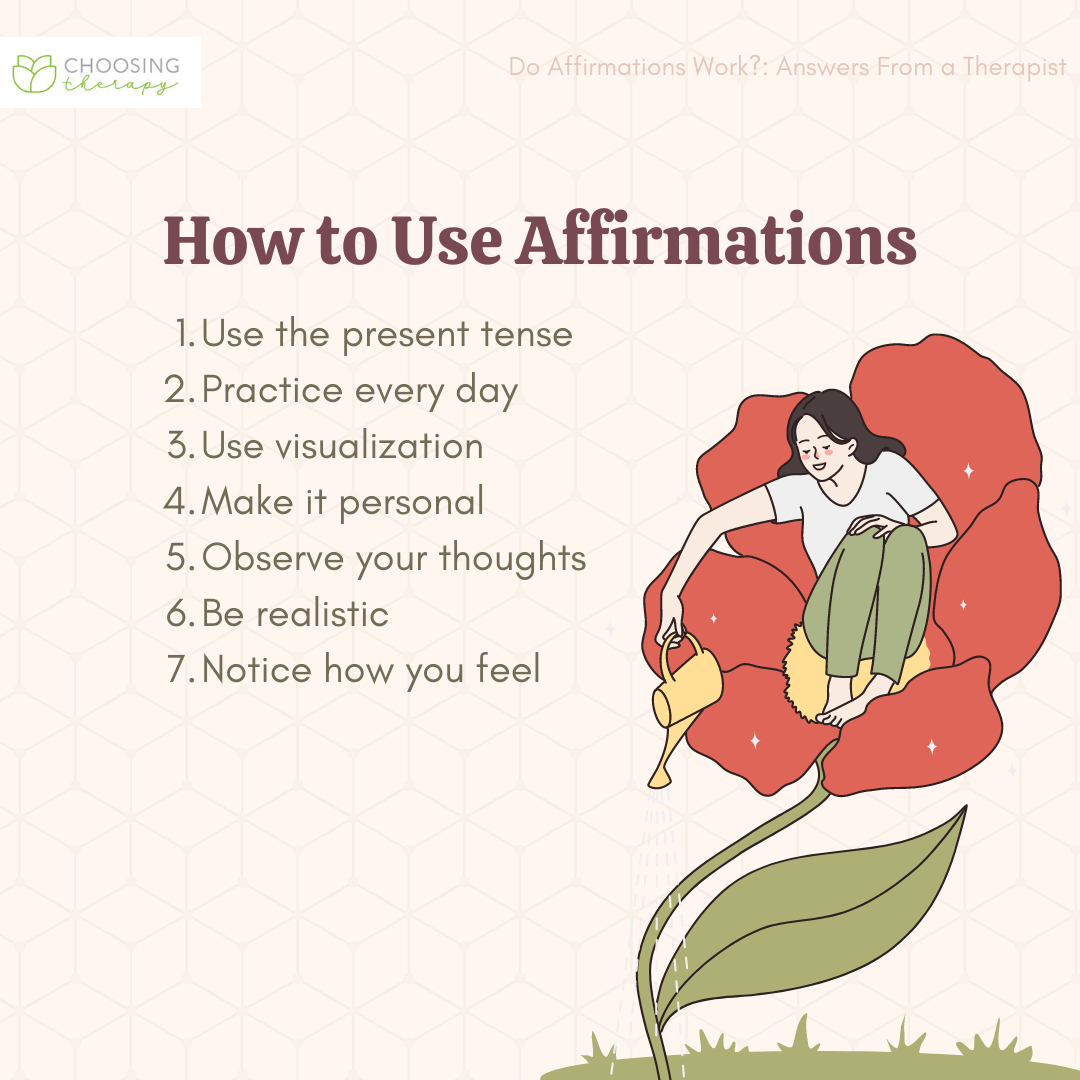
Credit: www.choosingtherapy.com
