

How to Make Daily Affirmations That Transform Your Mindset
How To Make Daily Affirmations
Many people want to feel more confident, happier, and motivated. But sometimes, negative thoughts or doubts can slow us down. Daily affirmations are simple, positive statements you say to yourself to help change your mindset. They can make a big difference, but only if you use them correctly. This guide explains how to make daily affirmations that really work, step-by-step. You’ll learn how to create your own, use them every day, and avoid common mistakes. By the end, you’ll know how to use affirmations to build a stronger, more positive mind.
What Are Daily Affirmations?
Daily affirmations are short, positive phrases that you repeat to yourself. The goal is to help your mind focus on good things instead of worries or doubts. These statements can be about confidence, health, success, happiness, or anything important to you.
For example, someone who wants to feel more confident might say: “I am strong and capable.” Another person who wants to be more calm could use: “I am peaceful and relaxed.” The words you use in your affirmations matter. If you choose the right ones, you can train your mind to believe them.
Many people use affirmations to help with:
- Self-confidence
- Motivation
- Reducing stress
- Improving focus
- Changing habits
The idea is simple: what you say to yourself every day shapes the way you think and act.
How Do Affirmations Work?
Affirmations work by influencing your thoughts and beliefs. When you repeat positive statements, your brain starts to accept them as true. This process is called self-suggestion or positive self-talk.
Studies show that regular use of affirmations can help reduce negative thinking and improve mental health. One research article found that people who practiced self-affirmation felt less stressed and more open to challenges.
Here’s a quick overview of how affirmations affect your mind:
| Effect | How It Happens |
|---|---|
| Change in beliefs | Repeating positive statements replaces old, negative thoughts |
| Emotional boost | Positive words make you feel better and more motivated |
| Better focus | Affirmations help you concentrate on goals and values |
| Stress reduction | Calming statements lower worry and anxiety |
But affirmations are not magic. You need to use them regularly and believe in what you say. If you just repeat empty words, they won’t help much. That’s why it’s important to learn how to make daily affirmations that fit your needs.
Why Use Daily Affirmations?
Daily affirmations can offer many benefits. Here are some real reasons people use them:
- Build self-confidence: Positive self-talk makes you believe in yourself.
- Reduce stress: Calm statements help you relax and handle tough situations.
- Stay motivated: Reminding yourself of your goals keeps you on track.
- Change habits: Affirmations can support healthy routines and behaviors.
- Improve focus: They help you remember what matters most.
A survey showed that people who used daily affirmations felt more positive after just a few weeks. Another study found that regular affirmation practice improved performance in work and school.
Non-obvious insight: Using affirmations for small goals (like “I will finish my work today”) can be just as powerful as big ones. Beginners often focus only on big dreams, but daily use for small tasks builds lasting habits.
How To Make Daily Affirmations That Work
Making effective daily affirmations is not hard, but it does require attention. Here’s a step-by-step guide to help you create statements that fit your life.
Step 1: Identify Your Needs
Start by thinking about what you want to change or improve. Ask yourself:
- What do I struggle with?
- What do I want to feel or achieve?
- Which negative thoughts do I want to replace?
Write down a few areas you want to focus on. For example:
- Confidence
- Health
- Relationships
- Work performance
- Stress management
Step 2: Keep It Positive And Present
Affirmations should use positive language and focus on the present moment. Avoid negative words or “not” statements.
Bad Example: “i Am Not Afraid.”
Good Example: “i Am Brave.”
It’s important to say what you want, not what you don’t want. Use “I am” or “I have” to make your statement stronger.
Step 3: Make It Personal
Use words like “I” or “my” to make the affirmation about you. This helps your brain connect with the statement.
Example: “I am healthy and strong.” Instead of “People are healthy.”
Step 4: Be Realistic
Choose statements you can believe. If your affirmation feels too far from reality, your mind may resist it.
For example, if you feel anxious, saying “I am always calm” might feel fake. Instead, try “I am learning to stay calm” or “I can handle stress. ”
Non-obvious insight: Beginners often pick affirmations that are too ambitious. Starting with believable statements builds trust and helps you see results faster.
Step 5: Keep It Short And Simple
Short affirmations are easier to remember and repeat. Aim for one sentence or a few words.
Example: “i Am Confident.” Or “i Attract Success.”
Step 6: Make It Specific
Specific affirmations are more effective than vague ones. Instead of saying “I am successful,” try “I finish my tasks with confidence. ”
Here’s a comparison of vague vs. specific affirmations:
| Vague | Specific |
|---|---|
| I am happy | I enjoy my work every day |
| I am healthy | I eat healthy food and exercise daily |
| I am successful | I achieve my goals by working hard |
Step 7: Test And Adjust
Try your affirmation for a few days. Notice how you feel. If it doesn’t work, change the words or make it more personal.
It’s normal to adjust your affirmations as your needs change.

Credit: sproutingzen.com
Examples Of Daily Affirmations
Here are some examples for different areas:
Confidence:
- “I am strong and capable.”
- “I trust myself.”
- “I speak with confidence.”
Health:
- “I choose healthy foods.”
- “My body is energetic.”
- “I care for myself every day.”
Work/Success:
- “I focus on my goals.”
- “I am productive.”
- “I learn new skills easily.”
Relationships:
- “I listen with care.”
- “I am kind to others.”
- “I deserve respect.”
Stress/Calm:
- “I am calm and relaxed.”
- “I handle challenges with ease.”
- “I breathe deeply.”
You can use these examples or create your own based on your goals.
How To Use Daily Affirmations Effectively
Creating affirmations is only the first step. How you use them matters just as much.
Timing And Frequency
Say your affirmations at the same time every day. Common times include:
- Morning (after waking up)
- Before sleep
- During breaks
Repeating your affirmations regularly helps them become a habit.
Repetition
Repeat each affirmation at least 3-5 times. You can say them out loud or silently. Some people write them down for extra effect.
Visualization
Picture yourself acting out your affirmation. For example, if your affirmation is “I speak confidently,” imagine yourself speaking with confidence. Visualization makes the words feel real.
Using A Mirror
Stand in front of a mirror and say your affirmations. Looking into your own eyes helps build belief.
Writing Them Down
Writing affirmations in a notebook or journal increases their impact. Some people keep a list and check off each one daily.
Digital Reminders
Set reminders on your phone. You can use apps, alarms, or sticky notes.
Pro tip: If you’re busy, record your affirmations and listen to them as you walk or commute.
How To Make Affirmations Part Of Your Routine
It’s easy to forget your affirmations if you don’t make them part of your daily life. Here are simple ways to add them to your routine:
- Morning ritual: Start your day with affirmations before breakfast.
- Evening wind-down: Repeat them before sleep to calm your mind.
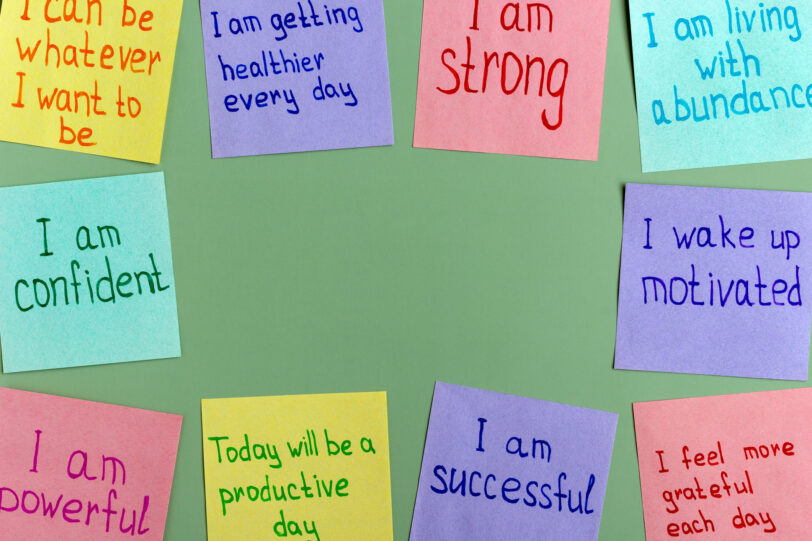
- Sticky notes: Place notes with your affirmations where you’ll see them—on your mirror, computer, or fridge.
- Phone reminders: Use calendar alerts or apps to prompt you.
- Pair with habits: Say your affirmations while brushing your teeth, stretching, or walking.
Non-obvious insight: Pairing affirmations with small habits (like drinking water) helps you remember and makes the process automatic.
Common Mistakes With Daily Affirmations
Many people try affirmations but don’t see results. Here are common mistakes and how to fix them:
Using Negative Words
Affirmations must be positive. Saying “I am not afraid” keeps your mind focused on fear. Use “I am brave” instead.
Making Them Too Long
Long, complicated affirmations are hard to remember and repeat. Keep them short.
Choosing Unrealistic Statements
If your mind rejects your affirmation as fake, it won’t help. Start with believable statements.
Forgetting To Repeat
Repeating your affirmation once is not enough. Make it a daily habit.
Not Personalizing
Generic affirmations may not connect with your needs. Make them about you.
Giving Up Too Soon
It takes time for affirmations to change your thinking. Don’t expect instant results.
Ignoring Emotions
If you say an affirmation but don’t feel it, pause and adjust the words. Your feelings matter.
Credit: www.cheservices.com
Data: Do Affirmations Really Work?
Research shows that affirmations can change the way people think and feel. Here’s a quick data comparison:
| Group | Used Affirmations | Reported Improvement |
|---|---|---|
| Students | Yes | Better grades, more confidence |
| Employees | Yes | Less stress, higher productivity |
| Patients | Yes | Improved mood, faster recovery |
| Control Group | No | No significant change |
This shows that daily affirmations can help different types of people. However, results vary depending on how committed you are and how you use them.
Practical Tips For Beginners
If you’re new to affirmations, here are some tips to help you start:
- Pick 2-3 affirmations to focus on. Don’t try too many at once.
- Use clear, simple language.
- Repeat them daily, at the same time.
- Write them down to help remember.
- Visualize yourself acting out the affirmation.
- Adjust the words if they don’t feel right.
Non-obvious insight: Some people find it helpful to record their voice saying the affirmations and play it back. Hearing your own voice can increase belief.
Advanced Strategies For Experienced Users
If you’ve used affirmations for a while, try these advanced methods:
Combine Affirmations With Journaling
Write about your progress. Describe how your affirmations make you feel. This builds self-awareness.
Affirmation Stacking
Use several affirmations in a row for a stronger effect. For example:
- “I am confident.”
- “I speak clearly.”
- “I achieve my goals.”
Group Affirmations
Share affirmations with friends or family. Saying them together can boost motivation.
Meditation With Affirmations
Use affirmations during meditation. Focus on your breathing and repeat your statement.
Customize For Situations
Change your affirmation based on your current mood or challenge.
Non-obvious insight: Affirmations can work well before stressful events (like interviews or exams) if you use them to calm nerves and boost confidence.
How Affirmations Help With Stress And Anxiety
Stress and anxiety are common problems. Affirmations can help by shifting your focus from worry to calm.
For example, saying “I am relaxed and safe” can reduce feelings of fear. Regular use builds a sense of control.
In one study, people who used calming affirmations felt less anxious before tests. Another found that positive self-talk lowered heart rates during stressful moments.
If you have anxiety, start with gentle affirmations:
- “I can handle this.”
- “I am safe.”
- “I am learning to stay calm.”
Repeat them during stressful times and when you feel anxious.
How Affirmations Can Support Goals And Growth
Affirmations are useful for reaching goals. They remind you of your strengths and keep you motivated.
Here’s how to use affirmations for goal-setting:
- Choose a goal.
- Create an affirmation that supports it.
- Repeat your affirmation daily.
Example: If your goal is to exercise more, your affirmation could be: “I enjoy moving my body.”
Tracking your progress helps. Write down your goal and your affirmation. Check in weekly to see how you feel.
Do Affirmations Replace Other Methods?
Affirmations are powerful, but they don’t replace other tools for mental health or motivation. They work best with healthy habits like exercise, meditation, and good sleep.
If you have serious mental health challenges, use affirmations as support—not as your only tool. Seek help from professionals if needed. For more information, see resources like American Psychological Association.
How To Teach Affirmations To Children
Affirmations are helpful for kids, too. Teaching children to use positive statements can build confidence and help them handle stress.
Tips for teaching kids:
- Use simple, fun language.
- Let them pick their own affirmations.
- Repeat affirmations together.
- Make it a daily game or ritual.
Examples for kids:
- “I am smart.”
- “I am kind.”
- “I can try new things.”
Children may need reminders to use their affirmations. Make it playful and encourage them often.
Comparing Affirmations With Other Positive Techniques
Affirmations are just one way to boost positivity. Here’s a comparison with other methods:
| Technique | Main Benefit | Typical Use |
|---|---|---|
| Affirmations | Change beliefs | Daily repetition |
| Gratitude practice | Increase happiness | Daily journaling |
| Meditation | Reduce stress | Quiet breathing |
| Visualization | Boost motivation | Imagining success |
You can combine these methods for stronger results.
How To Measure Success With Affirmations
It’s important to track your progress. Here’s how:
- Write down your affirmations and goals.
- Record how you feel before and after using them.
- Notice changes in mood, confidence, and habits.
- Adjust your affirmations as needed.
Some people notice changes in a week. For others, it takes longer. The key is regular practice.
Frequently Asked Questions
What Are Daily Affirmations?
Daily affirmations are positive statements you repeat to yourself to build confidence, change habits, and improve your mood. They help train your mind to focus on good thoughts.
How Long Does It Take For Affirmations To Work?
It depends on the person and the statement. Some people notice changes in a few days, while others need weeks. Consistency is important—repeat your affirmations daily for best results.
Can I Use Affirmations For Any Goal?
Yes, you can create affirmations for almost any goal—health, confidence, work, relationships, or stress. Make sure your statement is positive, personal, and realistic.
Should I Say Affirmations Out Loud Or Silently?
Both ways are effective. Saying them out loud can build belief. Silent repetition works if you’re in a public place or want privacy. Writing them down or listening to recordings also helps.
What If My Affirmation Feels Fake?
If your affirmation feels fake, try changing the words to make it more believable. Start with gentle, realistic statements like “I am learning to be confident. ” Over time, adjust your affirmation as your belief grows.
Daily affirmations are a simple, practical tool to improve your mindset. If you follow these steps and use them regularly, you can build confidence, reduce stress, and reach your goals. Affirmations work best when combined with healthy habits and a positive attitude.
Start today—your mind will thank you.

Credit: www.lomyrick.com
