

Morning Affirmation to Quit Smoking: Start Your Smoke-Free Journey
Quitting smoking is one of the most powerful choices you can make for your health, happiness, and future. But it’s not easy. Most smokers know the risks and want to stop, yet cravings, habits, and stress make it hard to break free. If you’ve tried before and struggled, you are not alone. Many people need more than willpower—they need new ways to think and feel about smoking. One practical tool that is gaining popularity is morning affirmation.
Affirmations are simple, positive statements that you repeat to yourself. They help change your thinking, boost confidence, and guide your actions. Using morning affirmations to quit smoking can set your mindset for the day, making it easier to resist cravings and build new habits.
In this article, you’ll learn how morning affirmations work, why they help, and how to use them effectively. You’ll find proven tips, examples, science-backed insights, and practical steps to make affirmations part of your journey to becoming smoke-free.
Why Quitting Smoking Is So Hard
Most smokers know the dangers of cigarettes, but quitting is a challenge. Nicotine addiction is strong. It changes the brain, making you crave more, even when you know it’s harmful. Besides addiction, smoking is tied to daily habits—like having a cigarette with coffee, during breaks, or when feeling stressed.
The body and mind both play a role. When you stop smoking, your body wants nicotine, leading to withdrawal symptoms such as irritability, headaches, and trouble sleeping. Your mind misses the routine and the comfort that cigarettes provide. Sometimes, you may even feel smoking is part of your identity.
Quitting is tough, but not impossible. Studies show that it often takes several tries to quit for good. Support, new habits, and changing your mindset are key. Morning affirmations can help change your thinking, making it easier to break the cycle.
The Science Behind Affirmations
Affirmations work by changing your thoughts and beliefs. When you repeat positive statements, your brain starts to accept them as true. This can help reduce stress, boost motivation, and make you feel stronger. Research shows that affirmations can improve self-control, lower anxiety, and even change behavior.
One study found that people who used affirmations felt less threatened by challenges. Another showed that affirmations can help people stick to healthy habits. For smokers, affirmations can help you believe in your ability to quit, making it easier to resist cravings and build a new routine.
Neuroscience explains that the brain is flexible. It can change over time, a process called neuroplasticity. When you repeat affirmations, you help your brain build new pathways. This supports new habits and ways of thinking, making it easier to let go of smoking.
Credit: www.happierhuman.com
How Morning Affirmations Help You Quit Smoking
Morning is a fresh start. Using affirmations early in the day sets your mind for success. Here’s how morning affirmations help:
- Boost confidence: Remind yourself you are strong enough to quit.
- Reduce stress: Calm your mind before cravings start.
- Build new habits: Start the day without cigarettes.
- Break old patterns: Create distance from smoking routines.
Repeating affirmations daily builds mental strength. Over time, your brain believes the new messages, helping you make better choices. Morning affirmations prepare you to handle cravings, triggers, and stress.
Creating Effective Morning Affirmations
Not all affirmations are equal. Effective affirmations are:
- Positive: Focus on what you want, not what you fear.
- Personal: Fit your goals and values.
- Present tense: Use “I am” or “I can” statements.
- Simple: Easy to remember and repeat.
Examples:
- “I am free from smoking.”
- “I choose health and happiness.”
- “I am stronger than my cravings.”
- “I enjoy a fresh start every morning.”
- “I am proud of myself for quitting.”
You can create your own affirmations or use proven ones. The key is to pick statements that feel true and motivating.
Credit: www.mondaycampaigns.org
Step-by-step Guide To Using Morning Affirmations
Starting a new habit takes practice. Here’s a simple guide:
- Find a quiet moment: Wake up, sit comfortably, and take a few deep breaths.
- Pick your affirmations: Choose 3–5 statements that feel meaningful.
- Repeat aloud or silently: Say each affirmation slowly. Focus on the words.
- Visualize success: Picture yourself living without cigarettes.
- Write them down: Keep a notebook or sticky notes near your bed.
- Commit to daily practice: Repeat your affirmations every morning for at least two weeks.
Many people find it helpful to record their affirmations and listen to them. Others use a mirror for extra confidence. Choose what works best for you.
Common Mistakes When Using Affirmations
Affirmations are simple, but some mistakes can limit their power:
- Choosing unrealistic statements: Saying “I never think about smoking” may feel false. Pick statements that are believable.
- Repeating without feeling: If you repeat words without focus, your mind may not accept them. Engage your emotions.
- Skipping days: Consistency is key. Try to repeat your affirmations every morning.
- Ignoring triggers: Affirmations are not magic. You also need to avoid triggers and build new habits.
If you miss a day, don’t give up. Just start again the next morning.
Combining Affirmations With Other Strategies
Morning affirmations are powerful, but even stronger when combined with other tools. Here are some proven methods:
- Support groups: Join a quit-smoking group for encouragement.
- Nicotine replacement: Use patches, gum, or lozenges to reduce cravings.
- Healthy routines: Exercise, drink water, and eat healthy to boost your mood.
- Stress management: Try meditation, deep breathing, or yoga.
- Professional help: Talk to your doctor or counselor for guidance.
Combining affirmations with these strategies can improve your chances of quitting for good.
Example Morning Affirmation Routine
Here’s a sample routine to try:
- Wake up and sit quietly for one minute.
- Breathe deeply five times, feeling calm.
- Repeat your chosen affirmations:
- “I am free from smoking.”
- “I choose health.”
- “I am proud of myself.”
- Visualize your day: Picture yourself resisting cravings, feeling healthy.
- Write down any positive thoughts or feelings.
- Stretch or drink water to start your day.
This routine takes less than ten minutes and can help you start the day strong.
Data: Success Rates And Affirmation Impact
To understand how affirmations help, let’s look at success rates:
| Method | Quit Rate (%) |
|---|---|
| Cold Turkey | 7–10 |
| Nicotine Replacement | 15–20 |
| Support Groups | 25–30 |
| Morning Affirmations + Support | 35–40 |
People who combine morning affirmations with other support have higher success rates. The boost comes from changing your mindset and feeling more confident.
Comparing Affirmation Styles
Different affirmation styles suit different people. Here’s a comparison:
| Style | Best For | Example |
|---|---|---|
| Simple Positive | Beginners | “I am smoke-free.” |
| Motivational | People needing energy | “I am strong and unstoppable.” |
| Health-focused | Those worried about health | “I choose health every day.” |
| Visual | People who like imagery | “I see myself breathing freely.” |
You can mix styles or change them as you progress.
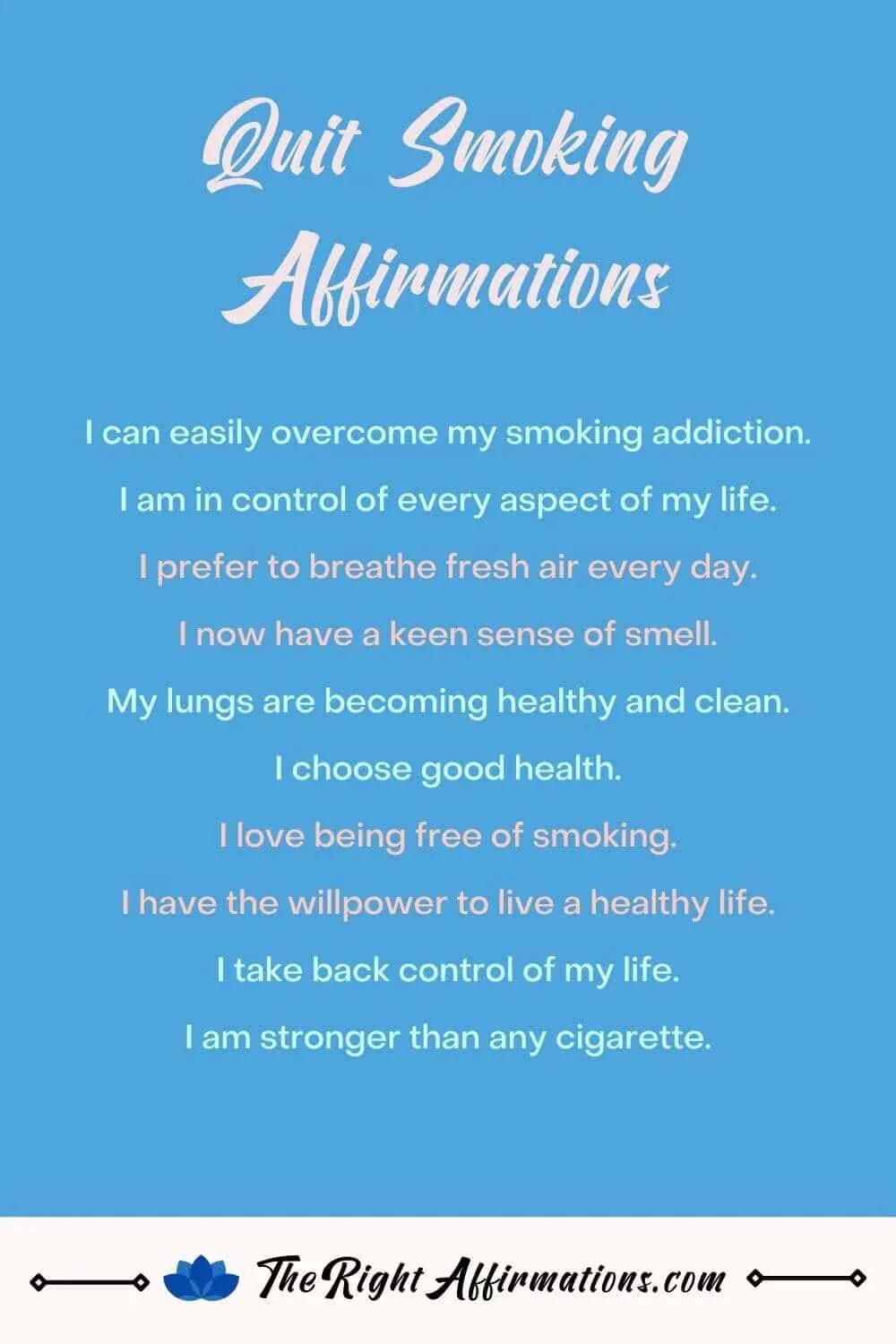
Credit: unfinishedsuccess.com
Tracking Your Progress With Affirmations
Monitoring your progress can boost motivation. Here’s a simple tracking method:
| Day | Affirmation Used | Cravings (0–10) | Smoke-free? |
|---|---|---|---|
| Monday | “I am strong.” | 3 | Yes |
| Tuesday | “I choose health.” | 2 | Yes |
| Wednesday | “I am proud.” | 4 | No |
| Thursday | “I am free.” | 1 | Yes |
Tracking helps you see patterns and adjust your affirmations as needed. If cravings are high, try new affirmations or support.
Morning Affirmations Vs. Other Quit-smoking Methods
Affirmations are different from other methods. They focus on mindset, not just physical cravings. Most quit-smoking methods use medication or physical tools. Affirmations change how you think and feel.
Medication and nicotine replacement help your body adjust. Support groups offer encouragement. Affirmations give you mental strength. Used together, these methods cover both body and mind.
An insight many beginners miss: affirmations can help even after you quit. Many people relapse because they don’t change their thinking. Morning affirmations continue to support your smoke-free life.
Advanced Tips For Morning Affirmations
To get more from your morning affirmations, try these advanced tips:
- Link affirmations to a routine: Repeat them while brushing your teeth or making breakfast. This builds a strong habit.
- Use your own voice: Record your affirmations and play them in the morning. Hearing your own voice boosts belief.
- Combine with gratitude: After affirmations, list things you’re grateful for. This lifts your mood and motivation.
- Adjust over time: As you progress, change your affirmations to fit your new goals.
- Involve your family: If possible, ask loved ones to support or join you. Shared affirmations can strengthen bonds.
Some beginners overlook the importance of personalizing affirmations. Generic statements may not connect. Tailor your affirmations to your personality, values, and reasons for quitting.
Real-life Examples: Success Stories
Many people have used morning affirmations to quit smoking. Here are two examples:
Maria, a teacher, struggled with quitting for years. She started using affirmations like “I am free from smoking” every morning. She combined this with exercise and talking to friends. After three months, she was smoke-free and felt more confident.
James, a construction worker, used motivational affirmations: “I am strong and unstoppable.” He wrote them on sticky notes and read them every morning. He also joined a support group. He found that affirmations helped him resist cravings during stressful days.
Both Maria and James learned that morning affirmations made a difference. They felt stronger, more positive, and able to stay smoke-free.
How Affirmations Change Your Brain
Repeating affirmations rewires the brain. As you say positive statements, your mind shifts from focusing on cravings to focusing on health and freedom. This is called cognitive restructuring.
Over time, the brain builds new connections. You start to believe in your ability to quit. This belief helps you make better choices. Affirmations also reduce stress, making it easier to handle tough moments.
Beginners often miss that affirmations need regular practice. The more you repeat them, the stronger the effect. Missing days can slow progress, so build a routine.
Dealing With Setbacks
Quitting smoking is a journey. Sometimes, you may slip and have a cigarette. This is normal. Setbacks are not failures—they are learning moments.
Use affirmations to handle setbacks:
- “I forgive myself and move forward.”
- “Every day is a new chance.”
- “I am learning and growing.”
Restart your affirmations the next morning. Focus on progress, not perfection.
When To Change Your Affirmations
As you move forward, your needs change. After a week, you may feel more confident. Adjust your affirmations to reflect your progress.
For example:
- Early stage: “I am strong enough to quit.”
- Middle stage: “I am proud to be smoke-free.”
- Later stage: “I enjoy my healthy life.”
Changing affirmations keeps them fresh and relevant. If you feel stuck, try new statements.
Using Technology To Support Affirmations
Many apps and tools can help you practice morning affirmations. Some apps send reminders, play audio affirmations, or track your progress. You can also use your phone’s alarm to remind you every morning.
Online communities can offer support and share affirmation ideas. For more information on smoking and tools to quit, visit CDC Tobacco.
Affirmations For Different Types Of Smokers
Every smoker is different. Here are tailored affirmations:
- Social smokers: “I enjoy socializing without cigarettes.”
- Stress smokers: “I handle stress with healthy choices.”
- Habit smokers: “I build new routines every day.”
Choose affirmations that fit your smoking style. This makes them more effective.
The Role Of Environment
Your environment affects your success. Morning affirmations are easier when you create a supportive space:
- Remove cigarettes and ashtrays from your home.
- Place affirmation notes where you see them.
- Play uplifting music in the morning.
- Ask friends and family for encouragement.
A positive environment helps your affirmations work better.
Affirmations And Long-term Success
Staying smoke-free is a long-term goal. Morning affirmations can support you for months or years. As you build new routines, affirmations help you stay focused.
Some people stop using affirmations once cravings fade. Others continue for extra motivation. If you feel strong, keep going. If cravings return, restart your morning routine.
Frequently Asked Questions
What Are Morning Affirmations For Quitting Smoking?
Morning affirmations are positive statements you repeat each morning to change your mindset and support your goal to quit smoking. They help you believe in your ability to stop, resist cravings, and build new habits.
How Long Should I Use Morning Affirmations?
It’s best to use morning affirmations daily for at least two weeks. Many people continue for months to strengthen their new mindset. If you feel cravings or stress, keep using your affirmations.
Can Affirmations Alone Help Me Quit Smoking?
Affirmations are powerful, but most people need extra support. Combine affirmations with other strategies like support groups, nicotine replacement, or healthy routines for better results.
What If I Don’t Believe My Affirmations At First?
This is common. Start with statements that feel believable, such as “I am working toward quitting. ” As you progress, adjust your affirmations to match your confidence.
How Do I Make My Own Affirmations?
Think about your reasons for quitting, your strengths, and your goals. Create short, positive statements in the present tense. Examples: “I am smoke-free,” “I am strong,” “I choose health.”
Morning affirmations are a practical, science-backed tool to help you quit smoking and change your life. They build confidence, change your mindset, and support healthy habits. Combined with other strategies, affirmations can boost your chances of becoming smoke-free for good.
Start your morning routine today, believe in your strength, and take the first step toward a healthier, happier life.
