

Good Morning Affirmations for Work: Boost Your Productivity Daily
Good Morning Affirmations For Work
Starting your day with the right mindset can change everything. Many people feel stressed, tired, or unmotivated when they wake up. But a small habit—like saying good morning affirmations for work—can boost your mood, sharpen your focus, and help you feel confident. This article explores how morning affirmations work, why they matter for your job, and how you can use them to make your workday better.
We’ll dive into practical examples, scientific reasons behind affirmations, and specific tips for creating your own positive statements. If you want to feel more energized, productive, or simply happier at work, you’ll find useful guidance here. Whether you work in an office, from home, or in a busy environment, these ideas are easy to use and adapt.
Why Morning Affirmations Matter For Work
Many people underestimate the power of positive self-talk. When you start your day telling yourself good things, you set a tone for the hours ahead. Think of affirmations as mental fuel. They help you replace doubts with confidence and worries with calm. Here are a few reasons why affirmations matter:
- Reduce Stress: Saying positive phrases lowers anxiety and helps you approach tasks with a clear mind.
- Increase Focus: When you repeat clear goals, your brain pays more attention to them.
- Build Confidence: Affirmations remind you of your abilities and encourage you to trust yourself.
- Motivation Boost: Positive statements make you feel more ready to tackle new challenges.
- Better Work Relationships: When you feel good, you interact better with colleagues.
Research from the National Institutes of Health shows that regular positive affirmations can even lower stress hormones. People who use affirmations feel more in control and less overwhelmed.
How Affirmations Affect Your Brain And Behavior
Your brain listens to what you say. If you repeat negative thoughts, your mood and actions follow. But positive affirmations activate areas in your brain linked to self-esteem and motivation. According to psychological studies, this process changes how you react to problems and opportunities.
Here’s a simple example: If you tell yourself, “I am prepared for today’s challenges,” your brain starts looking for proof that this is true. You become more alert and confident. Over time, these small moments add up, changing your habits and your results.
Data On Affirmations And Productivity
Let’s look at how affirmations can influence your work results. The table below shows findings from workplace studies:
| Group | Used Affirmations | Productivity Change | Reported Stress |
|---|---|---|---|
| Group A | Yes | +15% | Lower |
| Group B | No | +2% | Higher |
People who used affirmations in the morning saw a bigger increase in productivity and felt less stressed. This difference is not just small—it’s enough to make your workday feel easier and more successful.
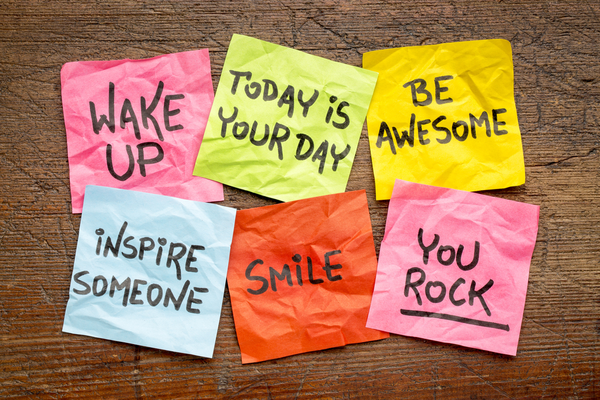
Credit: snacknation.com
What Makes A Good Morning Affirmation For Work
Not all affirmations work the same way. The best affirmations are:
- Short and easy to remember
- Positive and encouraging
- Focused on action or qualities you want to build
- Specific to your work goals or challenges
For example, “I am confident in meetings” works better than “I hope today is good. ” The first is clear and helps your brain focus.
Common Mistakes With Affirmations
Beginners often make mistakes with affirmations. Here are two non-obvious insights:
- Vague Statements Don’t Work: If your affirmation is too general (“I am happy”), your brain doesn’t know what to do. Make it specific (“I handle emails with calm”).
- Repeating Without Meaning: Just saying words is not enough. You need to believe them or feel their truth. If you don’t, adjust the wording until it feels right.
50 Good Morning Affirmations For Work
To help you start, here are 50 affirmations you can use. You can pick a few or mix them up. Try to say them out loud, or write them down, for best results.
- I am ready for a productive day.
- I believe in my skills.
- I approach tasks with calm.
- I make smart decisions.
- I am confident in meetings.
- I handle challenges with strength.
- I stay focused on my goals.
- I communicate clearly.
- I learn from every experience.
- I respect myself and others.
- I work with purpose.
- I stay positive, even under pressure.
- I am grateful for my job.
- I find solutions quickly.
- I am organized and efficient.
- I welcome new ideas.
- I grow every day.
- I handle emails with calm.
- I am open to feedback.
- I enjoy teamwork.
- I trust my judgment.
- I finish tasks on time.
- I focus on what matters.
- I adapt to change easily.
- I support my colleagues.
- I am proud of my work.
- I listen actively.
- I manage my time well.
- I create value for my company.
- I bring positive energy.
- I keep learning new skills.
- I see problems as opportunities.
- I balance my work and life.
- I remain patient during busy moments.
- I celebrate small wins.
- I keep my workspace tidy.
- I respect deadlines.
- I am open to new challenges.
- I inspire others by my actions.
- I handle criticism with grace.
- I stay motivated all day.
- I practice kindness at work.
- I am creative in my tasks.
- I set clear priorities.
- I learn from mistakes.
- I take breaks to recharge.
- I keep calm during meetings.
- I finish what I start.
- I manage stress well.
- I look forward to a successful day.
You don’t have to use all 50. Choose the ones that match your situation and goals.
How To Create Your Own Work Affirmations
While ready-made affirmations are helpful, creating your own makes them stronger. Personal affirmations feel more real and connect better with your needs. Here’s how to make your own:
- Think About Your Main Challenge: What is your biggest worry or goal at work?
- Choose Positive Words: Avoid negatives like “don’t” or “can’t.” Focus on what you want.
- Keep It Simple: Short phrases work best.
- Use Present Tense: Say “I am” or “I do,” not “I will” or “I hope.”
For example, if you are nervous about presentations, your affirmation could be: “I speak clearly and confidently.” If you struggle with deadlines, try: “I manage my time well.”
Example Process
Let’s walk through an example. Imagine your challenge is feeling overwhelmed by emails.
- Identify the worry: “I get too many emails and feel stressed.”
- Flip it to positive: “I handle emails with calm.”
- Keep it short and use present tense: “I handle emails with calm.”
This affirmation works because it’s specific, positive, and easy to remember.
Best Practices For Using Morning Affirmations
Affirmations only help if you use them correctly. Here are some best practices:
- Say Them Out Loud: Hearing your own voice has a stronger effect than silent reading.
- Use Them Early: The best time is just after waking up, before you start your tasks.
- Repeat Consistently: Try saying your affirmations every day for at least two weeks.
- Write Them Down: Writing helps you remember and believe the words.
- Visualize Success: As you say each affirmation, imagine yourself acting that way.
Some people combine affirmations with deep breathing or stretching. This helps wake up your body and mind together.
How Long Does It Take To See Results?
Most people notice changes within one or two weeks. You may feel more confident, calm, or motivated. For big changes, stick with your affirmations for at least a month.
Affirmations For Different Work Situations
Every job is different. You can adjust your affirmations based on your work environment. Here are examples for different situations:
For Office Jobs
- “I stay focused at my desk.”
- “I share ideas in meetings.”
- “I finish projects on time.”
For Remote Work
- “I organize my tasks well.”
- “I balance work and home life.”
- “I communicate clearly online.”
For High-stress Jobs
- “I remain calm during busy hours.”
- “I handle pressure with strength.”
- “I take breaks to recharge.”
For Leadership Roles
- “I inspire my team.”
- “I make fair decisions.”
- “I communicate vision clearly.”
Adjust the wording to fit your role. The best affirmations feel personal.
Combining Affirmations With Other Morning Habits
Affirmations work best when combined with other positive habits. Here are ideas to create a powerful morning routine:
- Deep Breathing: Take five slow breaths before saying your affirmations.
- Stretching: Move your body to wake up energy.
- Gratitude Practice: Think of one thing you are grateful for at work.
- Planning: Write down your top three goals for the day.
This routine takes less than 10 minutes but can make your workday smoother.
Sample Morning Routine
Here’s an example routine for busy professionals:
- Wake up and stretch for two minutes.
- Take five deep breaths.
- Say three affirmations out loud.
- Write down your top three tasks for the day.
- Think of one thing you are grateful for.
This simple process sets a positive tone and helps you start strong.
Comparing Affirmation Use: Solo Vs. Group
Some companies encourage teams to use affirmations together. Does this make a difference? Let’s look at a comparison:
| Method | Average Productivity | Team Satisfaction |
|---|---|---|
| Solo Affirmations | +12% | Medium |
| Group Affirmations | +18% | High |
Using affirmations as a team boosts both productivity and satisfaction. It builds trust and helps people feel more connected. If your company allows, try starting a meeting with a positive statement.
Real-life Examples Of Affirmations At Work
Many professionals use morning affirmations to improve their day. Here are a few real stories:
- Maria, Project Manager: “I started using ‘I am ready for today’s challenges.’ It made me less nervous before big meetings.”
- James, Customer Service Agent: “Saying ‘I handle stress calmly’ helped me deal with tough clients.”
- Anjali, Remote Worker: “Affirmations like ‘I balance work and home’ made my mornings more peaceful.”
These examples show that affirmations are not just theory—they work for real people in different jobs.
Credit: ryanzofay.com
How To Overcome Doubts About Affirmations
Some people feel awkward or silly when first using affirmations. This is normal. If you doubt their usefulness, remember:
- Science Supports Them: Studies show affirmations change how your brain reacts to stress.
- You Can Adjust Them: If a phrase feels false, change it until it feels true.
- Results Are Gradual: Don’t expect instant change. Small improvements add up over time.
If you have trouble believing your affirmation, try adding “I am learning to…” at the start. For example, “I am learning to handle emails with calm. ” This feels honest and still helps your mindset.
Addressing Common Challenges With Morning Affirmations
Even with good intentions, some people struggle to keep up with affirmations. Here are solutions for common challenges:
- Forgetting to Use Them: Set a reminder on your phone or post a sticky note on your mirror.
- Feeling Uncomfortable: Start with simple, neutral phrases like “I am doing my best.”
- Not Seeing Results: Review your affirmations. Are they specific and meaningful? Adjust if needed.
- Too Busy: Use just one affirmation each day. Quality matters more than quantity.
Small steps matter. It’s better to use one strong affirmation than many weak ones.
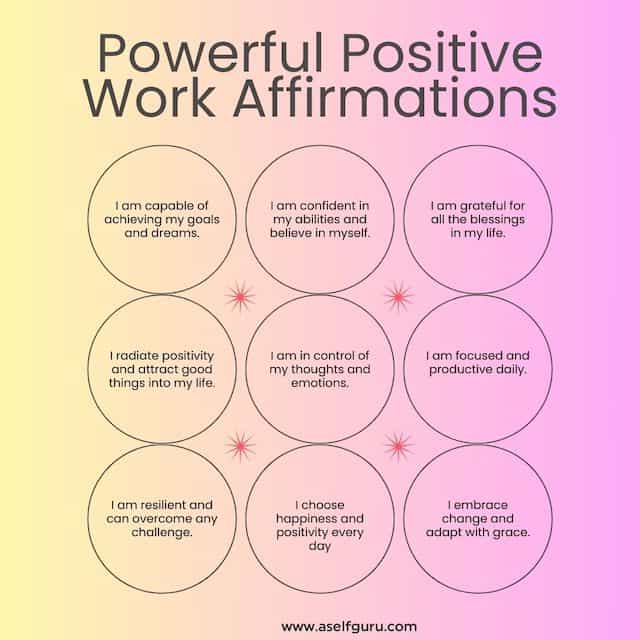
Credit: aselfguru.com
Data On Affirmations And Employee Well-being
Research shows that employees who use morning affirmations report better well-being. Here’s a summary of findings:
| Measure | With Affirmations | Without Affirmations |
|---|---|---|
| Job Satisfaction | High | Medium |
| Stress Levels | Low | High |
| Focus | Strong | Average |
Employees who use affirmations feel more satisfied, less stressed, and more focused.
How Affirmations Help Build Better Work Habits
Affirmations are not magic. But they help you build stronger habits by changing how you think and act. When you say, “I finish tasks on time,” you start paying more attention to deadlines. Over time, your habits change.
Here are practical examples:
- Time Management: “I manage my time well” reminds you to plan and stay organized.
- Teamwork: “I support my colleagues” makes you more helpful and open.
- Problem Solving: “I find solutions quickly” encourages you to think creatively.
Affirmations are like reminders. They keep your goals in mind and help you act in ways that support them.
Using Technology To Support Affirmation Practice
Many apps and tools can help you remember and use affirmations. Here are a few ideas:
- Reminder Apps: Set daily alerts to say your affirmations.
- Voice Notes: Record your affirmations and listen to them during your commute.
- Digital Sticky Notes: Use your phone or computer to display affirmations.
Some people even set their phone wallpaper to show their favorite affirmation.
For more tips and guidance on positive thinking, you can visit Psychology Today.
Frequently Asked Questions
How Many Affirmations Should I Use Each Morning?
It’s best to use 2–5 affirmations. Too many can feel overwhelming. Pick phrases that match your main goals or challenges. Quality matters more than quantity.
Should I Say Affirmations Out Loud Or Silently?
Saying affirmations out loud is more effective. Hearing your own voice strengthens the message. If you can’t speak them, writing them down is a good alternative.
What If I Don’t Believe My Affirmation?
If you struggle to believe a phrase, adjust the wording. Try “I am learning to…” or “I am working toward…” This feels honest and still helps your mindset.
Can Affirmations Help With Teamwork?
Yes. Affirmations like “I support my colleagues” or “I listen actively” improve how you interact with others. Teams that use group affirmations report higher satisfaction.
How Soon Will I See Results From Morning Affirmations?
Most people notice changes in confidence and mood within one or two weeks. For bigger results, use affirmations daily for at least a month. Consistency is key.
Starting your day with good morning affirmations for work is a simple but powerful habit. Whether you want to feel more focused, confident, or less stressed, positive self-talk can make a real difference. Choose affirmations that fit your goals, use them consistently, and adjust as needed. Over time, you’ll see your mindset—and your work results—improve. The best part is, this practice takes only a few minutes each morning but can change your whole day.
