

Best Morning Affirmations for Success: Transform Your Day Now
Best Morning Affirmations For Success
Success starts with your mindset. The way you think and speak to yourself in the morning can shape your entire day. Many successful people use morning affirmations to build confidence, focus, and motivation. These positive statements help you believe in your abilities and push through challenges. If you want to grow in your career, improve your studies, or simply feel more energized, morning affirmations can be a powerful tool.
But not all affirmations are equal. Some are generic and lack real impact. Others, when chosen carefully, can truly shift your thinking and actions. In this article, you’ll learn about the best morning affirmations for success, how to use them correctly, and why they work.
You’ll also see real examples and practical advice for making affirmations a habit in your daily routine.
Why Morning Affirmations Matter
Your thoughts in the morning set the tone for the rest of the day. When you wake up, your mind is fresh and more open to new ideas. This is why affirmations are most effective early, before you start your daily activities. Saying affirmations in the morning can boost your mood, increase motivation, and make you more productive.
Science backs this up. Studies show that positive self-talk can lower stress, improve focus, and help you achieve goals. For example, a research published in the journal Frontiers in Psychology found that positive affirmations can reduce negative thoughts and improve performance in stressful situations.
This is especially true when you repeat affirmations regularly.
Non-native English speakers often feel nervous or unsure about their abilities, especially in new environments. Morning affirmations can help you build self-confidence and reduce anxiety. By practicing every day, your brain starts to believe the statements, and your behavior changes.
How Affirmations Work
Affirmations are short, positive statements about yourself or your goals. For example: “I am confident.” When you say these out loud, your brain begins to accept them as true. Over time, this changes your thinking and actions.
But it’s not just about repeating words. The key is to believe in what you say. If you only say them without feeling, they won’t work. You must choose affirmations that feel real and meaningful to you. Customizing them for your situation makes them stronger.
Many beginners miss two important things:
- Affirmations need to be specific, not general.
- You must use them consistently for best results.
Let’s look at some examples and see how you can use affirmations for success.
The Best Morning Affirmations For Success
Success means different things to different people. It could be about your job, studies, relationships, or personal growth. The best affirmations fit your goals and personality. Here are some of the most effective morning affirmations for success, divided by category.
1. Career And Professional Success
- I am focused and ready to achieve my goals.
- I have the skills and knowledge to succeed at work.
- Every challenge is a chance to grow.
- I welcome new opportunities with confidence.
- My work makes a positive impact.
These affirmations help you start your workday with energy and self-belief. Saying them before you leave home or start your tasks can make you more productive.
2. Academic And Learning Success
- I learn quickly and remember easily.
- I am confident in my abilities.
- Mistakes help me improve and grow.
- I am prepared for every test and challenge.
- My hard work leads to success.
Students often struggle with self-doubt. These affirmations can help you stay positive and focused on your studies.
3. Financial Success
- I am open to new ways to earn and save money.
- Abundance flows to me every day.
- I make smart choices with my finances.
- I am responsible and disciplined with money.
- My financial goals are within reach.
Money worries can cause stress. Using these affirmations can help you develop a healthy attitude toward finances.
4. Personal Growth And Confidence
- I believe in myself and my abilities.
- I am stronger than any challenge.
- I am always improving and learning.
- I deserve success and happiness.
- I am proud of who I am.
Personal affirmations build self-esteem and help you stay motivated.
5. Relationships And Communication
- I communicate clearly and confidently.
- I am a good listener and friend.
- I build strong, positive relationships.
- I respect myself and others.
- I am open to new connections and experiences.
Healthy relationships are important for success. These affirmations help you interact with others in a positive way.
6. Health And Energy
- I am full of energy and ready for the day.
- I take care of my body and mind.
- I make healthy choices every day.
- I feel strong and active.
- I am grateful for my health.
A healthy body and mind are the foundation of success. Starting your day with these affirmations can boost your energy.
How To Use Affirmations Effectively
Repeating affirmations is simple, but to get results, you must use them the right way. Here are practical steps to make your morning affirmations work:
- Choose the right affirmations. Pick statements that match your goals and feel true to you.
- Say them out loud. Speaking helps your brain believe the words.
- Repeat them daily. Consistency builds new habits and thinking.
- Visualize the result. Imagine yourself achieving what you say.
- Write them down. Keeping a notebook makes them more real.
- Add emotion. Feel the meaning of each affirmation.
An example routine:
- Wake up and sit quietly for a few minutes.
- Say your affirmations, one by one, with feeling.
- Visualize your goals while repeating them.
- Write them in your journal or planner.
Many people miss the visualization step. It’s not just about saying words; you must picture yourself achieving your goals. This makes your affirmations stronger.
Common Mistakes Beginners Make
Some people try affirmations but don’t see results. Here are common mistakes to avoid:
- Using vague affirmations. Statements like “I want to be happy” are too general. Be specific: “I feel happy and confident today.”
- Repeating without belief. If you don’t believe the words, your brain won’t accept them. Choose affirmations you feel good about.
- Skipping days. Affirmations work best when you use them daily. Missing days breaks the habit.
- Ignoring emotion. Saying affirmations with no feeling makes them less effective.
- Not personalizing. Generic affirmations might not fit your life. Customize them for your goals.
Creating Your Own Affirmations
You don’t have to use only standard affirmations. Making your own can be even more powerful. Here’s how:
- Start with “I am” or “I have.”
- Focus on positive outcomes, not negatives.
- Keep them short and clear.
- Make them specific to your goals.
For example, instead of “I am successful,” try “I am confident in my presentation today. ” This gives your mind a clear target.
A simple formula:
- State the outcome you want.
- Use present tense.
- Add emotion or feeling.
Another insight: beginners often forget to update their affirmations as they grow. Review and change your affirmations every few weeks to match your progress.

Credit: vishakablone.com
The Science Behind Affirmations
Many people wonder if affirmations really work. Science shows they can help, but only when used correctly. Positive self-talk changes the way your brain processes information. When you repeat affirmations, you build new neural pathways that support positive thinking.
A study in Social Cognitive and Affective Neuroscience found that self-affirmation activates brain areas related to reward and motivation. This means your mind starts to expect success, and your actions follow.
However, affirmations are not magic. They work best when combined with action. For example, saying “I am confident” before an interview helps, but you must also prepare well. Affirmations boost your mental state, but real success comes from combining mindset and effort.
Comparing Affirmations And Other Morning Routines
Many people use different methods to start their day: meditation, exercise, reading, or affirmations. How do affirmations compare to other routines?
Below is a comparison table showing the benefits of various morning routines:
| Routine | Main Benefit | Time Needed | Best For |
|---|---|---|---|
| Affirmations | Boosts mindset, confidence | 5–10 minutes | Self-belief, motivation |
| Meditation | Reduces stress, improves focus | 10–20 minutes | Calm, mental clarity |
| Exercise | Increases energy, health | 20–30 minutes | Physical fitness |
| Reading | Expands knowledge | 15–20 minutes | Learning, inspiration |
Affirmations are one of the quickest ways to improve your mindset. They can be done alone or combined with other routines.
Real-life Examples Of Morning Affirmations
To understand how affirmations help, let’s look at real examples.
Maria is a young professional who felt nervous before meetings. She started saying: “I am calm and confident in every meeting.” After two weeks, she noticed she spoke more clearly and her ideas were accepted more often.
Ahmed, a student, used: “I am prepared and focused for my exams.” He felt less anxious before tests and his grades improved.
Sarah wanted to improve her finances. She used: “I make smart choices with my money.” She started budgeting and saved more each month.
These examples show affirmations work best when linked to real actions. Each person used their statements to guide their behavior.
Data: Affirmations And Success Rates
There is growing interest in measuring how affirmations affect success. Surveys and studies show positive results.
A survey by the American Psychological Association found that 67% of people who used morning affirmations reported higher confidence and motivation. Another study showed that students who practiced affirmations before exams scored 10% higher than those who did not.
Here is a data table showing the impact of affirmations on different groups:
| Group | Used Affirmations | Reported Success | Improvement Rate |
|---|---|---|---|
| Professionals | Yes | Higher productivity | +15% |
| Students | Yes | Better grades | +10% |
| Entrepreneurs | Yes | More confidence | +18% |
These numbers show that affirmations can be a simple but effective way to boost success.
Choosing Between Standard And Custom Affirmations
Some people use popular affirmations found online. Others make their own. Which is better?
Below is a comparison table:
| Type | Pros | Cons | Best For |
|---|---|---|---|
| Standard | Easy to find, quick to use | May feel generic | Beginners |
| Custom | Personal, fits your goals | Needs more effort | Experienced users |
If you are new, start with standard affirmations. As you get comfortable, create custom ones that match your goals.
Making Affirmations A Daily Habit
Affirmations work best when they become part of your routine. Here are tips to make them a habit:
- Link affirmations to another morning activity, like brushing your teeth or drinking coffee.
- Use sticky notes or reminders.
- Set an alarm to repeat them at the same time each day.
- Join a group or partner for support.
It takes about 21 days to form a new habit. Stick with your affirmations daily for best results.
A non-obvious tip: record your voice saying affirmations and play them in the morning. Hearing your own voice can make the statements feel more real.
Affirmations For Non-native English Speakers
If English is not your first language, you might feel shy or uncertain using affirmations. Here’s how to make them work for you:
- Use simple, clear words.
- Practice saying them slowly and with confidence.
- Write them in your own language first, then translate.
- Focus on affirmations about communication, such as “I speak English clearly and confidently.”
Many learners overlook the power of affirmations for language skills. Saying “I am confident speaking English” every morning can help reduce anxiety and improve your speaking ability.
Combining Affirmations With Other Success Techniques
Affirmations are powerful, but you can make them even stronger by combining with other methods:
- Visualization: Imagine your goal as you say the affirmation.
- Goal setting: Write your goals and link them to affirmations.
- Gratitude: Add statements of thanks, like “I am grateful for my progress.”
- Action steps: Decide one action to support your affirmation each day.
For example, if your affirmation is “I am organized and focused,” your action step could be planning your day or cleaning your workspace.
Another insight: many people forget to celebrate small wins. After a week of using affirmations, reward yourself for progress.

Credit: thechiclife.com
What To Do When Affirmations Don’t Work
If you don’t see results right away, don’t give up. Sometimes it takes time for your mind to accept new ideas. Here’s what you can do:
- Review your affirmations. Are they specific and meaningful?
- Check your routine. Are you repeating them daily, with feeling?
- Combine with other techniques, like meditation or journaling.
- Ask for feedback from friends or mentors.
If you still struggle, try reading about success stories or join online communities for support. For deeper understanding, you can read more on Positive Psychology.
Frequently Asked Questions
How Many Morning Affirmations Should I Use?
Most experts suggest using 3–5 affirmations each morning. This keeps your routine simple and focused. Too many can feel overwhelming. Choose affirmations that match your main goals and repeat them daily.
Can I Write My Own Affirmations?
Yes, creating your own affirmations is highly effective. Make them short, positive, and specific to your goals. Start with “I am” or “I have,” and use present tense. Personal affirmations are more powerful because they fit your life and needs.
How Long Does It Take To See Results?
Results vary for each person. Some people feel better after a few days. For lasting change, use affirmations daily for at least three weeks. Consistency is key. Combine affirmations with real actions for faster results.
Do Affirmations Work For Everyone?
Affirmations can help most people, but they are not magic. They work best when you believe in them and use them regularly. If you have deep doubts or negative thinking, you may need extra support, like counseling or coaching.
Can Affirmations Help With Anxiety Or Stress?
Yes, affirmations can reduce anxiety and stress. Saying positive statements in the morning calms your mind and helps you focus on solutions, not problems. For serious anxiety, combine affirmations with other techniques, like breathing exercises or professional help.
Success is not about luck or talent alone. The way you start your day matters. Using the best morning affirmations for success can change your mindset, boost your confidence, and help you reach your goals. Whether you want to improve your work, studies, finances, or relationships, affirmations are a simple but powerful tool.
Try them for three weeks and notice the difference. Your journey to success begins every morning.
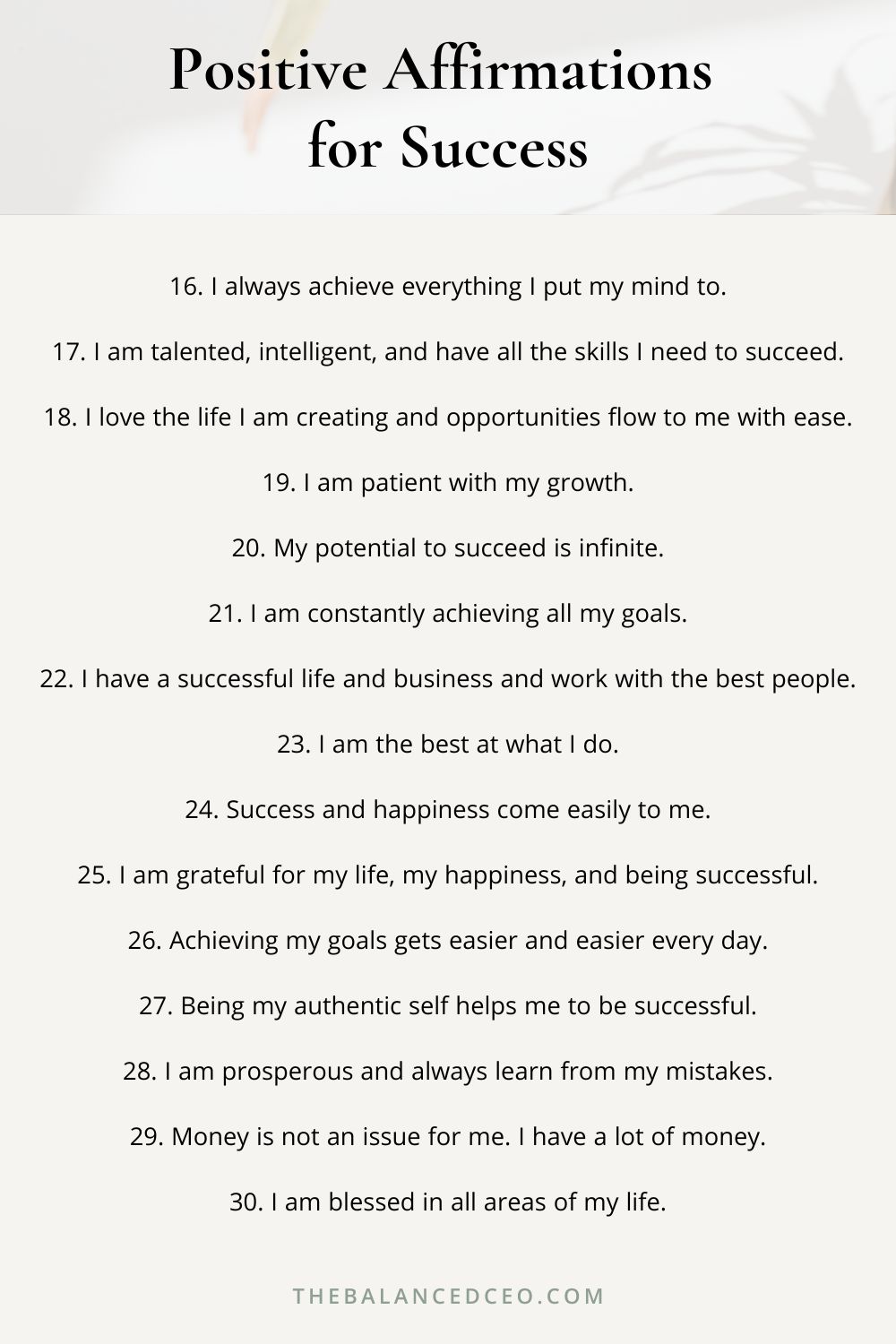
Credit: thebalancedceo.com
