

Positive Affirmations for Success: Transform Your Mindset Today
Positive Affirmations For Success
Success is not just about talent or luck. Many people achieve their goals by building the right mindset. One powerful way to shape your thinking is through positive affirmations. These simple statements can help you believe in your abilities, stay motivated, and overcome challenges. Whether you want to advance in your career, grow your business, or improve your personal life, affirmations can play a key role. The idea is simple: you repeat positive phrases to yourself, which helps you focus on your strengths and possibilities.
It’s easy to think affirmations are only for those who struggle with confidence. But even top athletes, leaders, and entrepreneurs use them. They understand that the mind needs constant encouragement to keep moving forward. Research shows that self-affirmation can reduce stress and improve problem-solving.
When you change your self-talk, you change your actions—and your results. In this article, you’ll learn how affirmations work, how to use them for success, and how to make them part of your daily routine.
What Are Positive Affirmations?
Positive affirmations are short, powerful statements that you say to yourself. Their purpose is to help you believe in your goals and your ability to achieve them. For example, saying “I am confident” can help you feel more secure before a presentation.
Affirmations are not magic words. Instead, they guide your thoughts and feelings in a helpful direction.
How Affirmations Shape Your Mindset
Your mind listens to what you say, even if you don’t realize it. When you repeat positive phrases, you start to accept them as truth. This process is called self-talk. It can be positive or negative. Positive self-talk gives you energy and hope, while negative self-talk holds you back.
Affirmations work by creating new mental pathways. If you often say, “I can’t do this,” your mind believes it. But if you switch to, “I am capable,” you begin to see new possibilities. This shift is supported by psychological studies.
For example, research in the Journal of Personality and Social Psychology found that self-affirmation improves problem-solving under pressure.
Common Misconceptions
Some people think affirmations are only for the weak or that they don’t really work. But this is not true. Affirmations are tools used by many successful people. The key is consistency and belief. You can’t just say them once and expect change.
You need to repeat them regularly and connect them to your actions.
Another misconception is that affirmations are just wishful thinking. In reality, they encourage you to focus on solutions and possibilities, not just hopes. When paired with effort, they become powerful motivators.
How Positive Affirmations Lead To Success
Success depends on your actions, but your actions depend on your mindset. Affirmations help you build a mindset for achievement. Here’s how:
Boosting Confidence
Confidence is essential for success. If you believe in yourself, you try harder and bounce back from failure. Affirmations like “I am worthy of success” or “I can handle any challenge” can increase your self-confidence. This is especially useful before interviews, exams, or important meetings.
Improving Focus
Affirmations help you stay focused on your goals. When you repeat phrases such as “I stay committed to my goals” or “I am disciplined,” you remind yourself of what matters. This keeps distractions away and helps you make better decisions.
Reducing Stress
Stress can block your progress. Positive affirmations calm your mind and lower anxiety. For example, saying “I am calm and in control” can help you relax before a big event. Studies show that affirmations activate parts of the brain linked to reward and self-control.
Building Resilience
Life brings setbacks. Affirmations help you bounce back. If you tell yourself, “I learn from every mistake,” you turn failures into lessons. This builds resilience, which is a key trait of successful people.
Creating Motivation
Motivation comes from within. Affirmations like “I am driven to succeed” or “I take action every day” can boost your energy. They remind you of your purpose and encourage you to keep moving forward.

Credit: www.thegoodbody.com
Examples Of Positive Affirmations For Success
There are many ways to create affirmations. The best ones are personal and specific to your goals. Here are some examples:
- I am confident in my abilities.
- I deserve success and happiness.
- I stay focused on my goals.
- I learn from every challenge.
- I am a problem-solver.
- I take action every day.
- I trust myself to make good decisions.
- I am open to new opportunities.
- I am persistent and never give up.
- I believe in my dreams.
You can modify these to fit your situation. For example, if you want to improve your business, you might say, “I am building a successful business. ” If you want to pass an exam, try, “I am prepared and confident.
”
Creating Your Own Affirmations
Personal affirmations are more powerful because they relate to your unique goals. Here’s how to create them:
Step 1: Identify Your Goals
Think about what you want to achieve. Is it a promotion? Starting a business? Improving your health? Your goals will guide your affirmations.
Step 2: Focus On Positive Language
Avoid negative words. Instead of “I will not fail,” say “I will succeed. ” Positive language triggers positive feelings.
Step 3: Keep Them Short And Clear
Simple phrases are easier to remember and repeat. For example, “I am strong” is better than “I am trying to be strong. ”
Step 4: Use The Present Tense
Speak as if your goal is happening now. “I am successful,” not “I will be successful. ” This helps your mind believe it.
Step 5: Make Them Specific
General affirmations are helpful, but specific ones are better. “I am a confident speaker” is more effective than “I am confident. ”
Practical Examples
Suppose your goal is to get a promotion. Your affirmation could be, “I am ready for new responsibilities. ” If you want to run a marathon, try, “I am strong and prepared. ”
How To Use Affirmations Effectively
Repeating affirmations is simple, but there are ways to make them more effective. Here are some tips:
Repeat Them Daily
Consistency is key. Say your affirmations every morning or before important events. You can write them down, say them aloud, or think them quietly.
Believe In Your Words
If you don’t believe your affirmation, it won’t help. Imagine yourself achieving your goal as you say the phrase.
Combine With Action
Affirmations work best when you take action. For example, if you say, “I am organized,” also create a plan or tidy your workspace.
Use Visual Reminders
Put your affirmations where you can see them. On your desk, mirror, or phone. This keeps your mind focused.
Record Your Progress
Keep a journal of how affirmations affect your mood and actions. Review it regularly to see your growth.
Adjust As Needed
As your goals change, update your affirmations. Make them fit your current needs and challenges.
Scientific Evidence Behind Affirmations
Many people wonder if affirmations really work. There is scientific proof that they can help.
Brain Activation
Researchers have found that self-affirmation activates the ventromedial prefrontal cortex. This is the part of the brain linked to self-worth and reward. When you use affirmations, you feel more positive about yourself.
Stress Reduction
A study published in the journal Psychological Science showed that people who used affirmations felt less stressed during exams. They performed better than those who did not use them.
Improving Performance
Another study found that affirmations improve problem-solving skills. Participants who affirmed their values solved tasks faster and with less anxiety.
Table: Effects Of Positive Affirmations (data From Research Studies)
| Effect | Study Result | Benefit |
|---|---|---|
| Stress Reduction | Lower cortisol levels | Improved calmness |
| Performance Boost | Higher task accuracy | Better productivity |
| Confidence Increase | Improved self-rating | More motivation |
Limitations
Affirmations are helpful, but they are not a substitute for hard work. If your affirmation is too unrealistic, your mind may reject it. For example, saying “I am a millionaire” when you are struggling financially can feel false. It’s best to choose affirmations you can believe and work towards.

Credit: www.swagmagic.com
Common Mistakes When Using Affirmations
Affirmations are simple, but people often make mistakes. Avoid these pitfalls:
- Lack of Consistency: Saying affirmations once or twice is not enough. They must become a habit.
- Unrealistic Statements: If you don’t believe your affirmation, it won’t help. Start with small, believable phrases.
- Negative Language: Avoid words like “not,” “can’t,” or “won’t.” They trigger negative feelings.
- Ignoring Action: Affirmations work best with effort. Combine them with steps toward your goal.
- Skipping Personalization: Generic affirmations are less effective. Personalize your statements.
Table: Common Affirmation Mistakes And Solutions
| Mistake | Solution |
|---|---|
| Lack of consistency | Repeat daily, set reminders |
| Unrealistic statements | Choose believable phrases |
| Negative wording | Use only positive language |
| No action | Pair with real steps |
| Generic affirmations | Make them personal |
Positive Affirmations For Different Areas Of Success
Success means different things to different people. Here are examples of affirmations for various areas:
Career Success
- I am skilled and valued at work.
- I am open to new opportunities.
- I am a leader and inspire others.
Academic Success
- I am focused and prepared.
- I understand new concepts easily.
- I am confident during exams.
Business Success
- I am building a successful business.
- I attract loyal customers.
- I make smart decisions.
Personal Growth
- I am becoming my best self.
- I learn from every experience.
- I am open to change.
Health And Fitness
- I am strong and healthy.
- I make good choices for my body.
- I am dedicated to my fitness goals.
Real-life Examples Of Affirmations In Action
Many successful people use affirmations. Here are some stories:
A Sales Manager's Experience
A sales manager named Maria faced tough targets. She felt stressed and doubted herself. She started repeating, “I am capable of achieving my goals. ” Within weeks, she felt more confident and performed better. Her team noticed her positive attitude and followed her lead.
An Entrepreneur's Journey
John wanted to launch a tech startup. He struggled with fear and uncertainty. He used affirmations like, “I am a successful entrepreneur” and “I welcome new challenges. ” This helped him stay motivated during tough times. His business eventually grew, and he credited affirmations for his mental strength.
Athlete's Use Of Affirmations
A professional runner named Lisa used affirmations before every race. She said, “I am fast and strong. ” This boosted her confidence and helped her win several competitions.
Making Affirmations Part Of Your Daily Life
It’s easy to forget affirmations in busy days. Here are practical ways to make them part of your routine:
Morning Rituals
Start your day with affirmations. Say them as you wake up or while getting ready. This sets a positive tone.
During Challenges
Use affirmations when facing problems or stress. Remind yourself of your strengths.
Before Sleep
Repeat affirmations before going to bed. This helps your mind relax and prepare for the next day.
Technology Tools
Use apps or alarms to remind you to say your affirmations. Some apps let you record your own voice and play it back.
Sharing With Others
Talk about your affirmations with friends or family. This builds support and accountability.
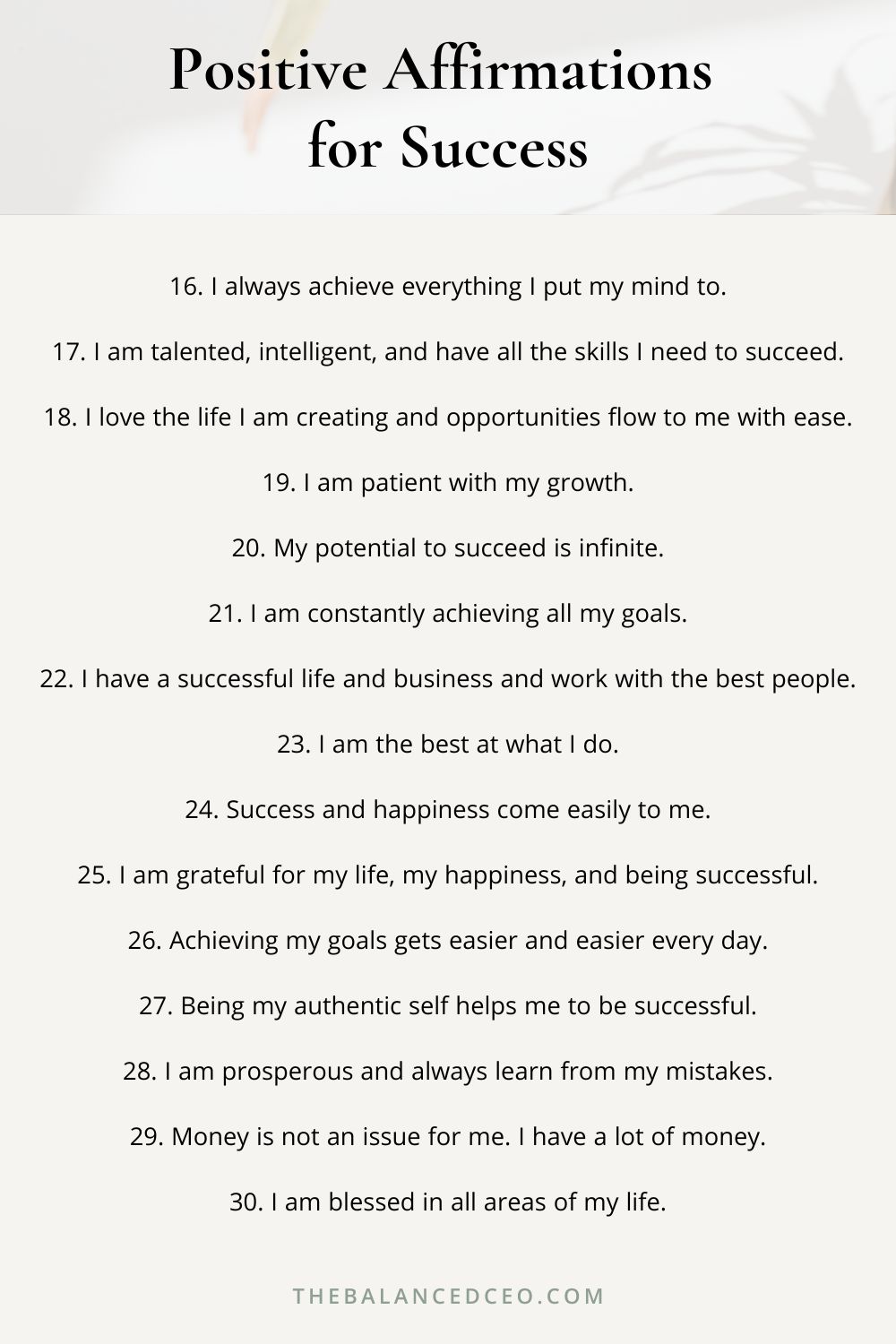
Credit: thebalancedceo.com
Comparing Affirmations To Other Mindset Tools
Affirmations are just one way to shape your mindset. How do they compare to other methods?
Table: Comparison Of Mindset Tools
| Tool | Main Benefit | Best Use |
|---|---|---|
| Positive Affirmations | Boost self-confidence | Daily motivation |
| Meditation | Reduce stress | Calm and focus |
| Visualization | Clarify goals | Goal-setting |
| Journaling | Track progress | Self-reflection |
Affirmations work well with meditation, visualization, and journaling. Combining these tools can give you even better results.
Two Non-obvious Insights About Affirmations
1. Affirmations Can Help You Spot Opportunities
When you repeat affirmations like “I am open to new opportunities,” your mind starts looking for them. This is known as the reticular activating system effect. Your brain becomes alert to things that match your affirmations.
2. Affirmations Can Change How Others See You
Positive self-talk not only changes your mindset—it also changes your behavior. When you act confidently, people respond better. This can lead to new chances and support.
Overcoming Doubts About Affirmations
It’s normal to doubt affirmations at first. You may feel silly repeating positive phrases. Here’s how to overcome doubts:
- Start with small, believable statements.
- Pair your affirmations with action.
- Track your progress in a journal.
- Remind yourself that many successful people use affirmations.
If you need more evidence, see this Psychology Today resource.
Frequently Asked Questions
What Is The Best Time To Use Positive Affirmations?
The best time is in the morning, before important events, or when facing challenges. Consistency is more important than timing. Choose a time that fits your routine and stick to it.
Can Affirmations Help With Anxiety And Stress?
Yes, positive affirmations can reduce anxiety and stress. They calm your mind and shift your focus from problems to solutions. For best results, combine them with breathing exercises or meditation.
How Long Does It Take To See Results From Affirmations?
Results vary. Some people feel better after a few days, while others need weeks or months. The key is regular practice and pairing affirmations with action.
Are Affirmations Effective For Everyone?
Affirmations can help most people, but they work best when you believe the statements and use them consistently. If you find them hard to believe, start with smaller goals and build from there.
Can I Use Affirmations For Specific Goals?
Yes, affirmations are most powerful when they are specific to your goals. For example, “I am a confident public speaker” is more effective than “I am confident. ”
Success is not just about skills or luck—it’s about your mindset. Positive affirmations are simple, yet powerful tools that help you build confidence, focus, and resilience. When you use them regularly and combine them with real action, you can achieve more than you ever thought possible.
Make affirmations part of your daily life, and watch your mindset—and your results—change for the better.
