

Best Daily Affirmations for Success: Transform Your Mindset Fast
Best Daily Affirmations For Success
Success means different things for everyone. For some, it’s achieving goals at work or school. For others, it’s about feeling confident, healthy, or happy. No matter how you define success, one thing is clear: your thoughts shape your actions. If you start your day believing you can succeed, you are more likely to make choices that lead to success.
Daily affirmations are simple statements you repeat to yourself. They help you focus on positive beliefs. Over time, these words can change how you think, feel, and act. Many people use affirmations to stay motivated, boost confidence, and overcome doubts.
Research shows that positive self-talk can improve performance, reduce stress, and support mental health.
In this article, you’ll learn how daily affirmations work, why they matter, and how to create your own. You’ll also discover the best affirmations for success, examples, and practical ways to use them. If you’re new to affirmations, you’ll find clear advice and real-life tips.
If you already practice them, you may find new ideas to make your routine even stronger.
What Are Daily Affirmations?
Daily affirmations are short, positive sentences. You say them out loud or silently to yourself. The goal is to remind yourself of your strengths, goals, and values.
For example, “I am confident,” or “I will achieve my goals. ” These words help you focus on what you want to become, not just who you are now.
How Affirmations Work
Our brains listen to what we say. If you repeat positive statements, your mind starts to accept them as true. This idea is supported by psychology. The more you hear something—especially from yourself—the more you believe it.
Affirmations can:
- Reduce negative thinking
- Improve mood
- Build confidence
- Encourage healthy habits
This is called “self-affirmation theory. ” It means you can shape your beliefs and actions with simple, repeated phrases.
Why Affirmations Matter For Success
Success often starts with belief. If you believe you can succeed, you’re more likely to try, learn, and grow. Affirmations help you:
- Focus on your goals
- Overcome fear and doubt
- Stay motivated when things get hard
Many top athletes, leaders, and artists use affirmations. They know that mindset is just as important as skill. Even small changes in thinking can make a big difference.
The Science Behind Affirmations
Some people think affirmations are just wishful thinking. But science shows they can really work.
Research And Data
A study published in the journal “Social Cognitive and Affective Neuroscience” found that self-affirmation activates parts of the brain linked to reward and positive emotions. Another study from Carnegie Mellon University showed that people who used affirmations had lower stress levels and performed better on tests.
Here’s a quick look at how affirmations impact the brain and behavior:
| Area | Effect | Data Source |
|---|---|---|
| Stress Reduction | Lower cortisol after affirmations | Carnegie Mellon University |
| Performance | Improved test scores | University of California |
| Self-Esteem | Increased confidence | Social Cognitive & Affective Neuroscience |
Practical Example
Imagine you’re preparing for a job interview. If you repeat, “I am prepared and confident,” you’ll feel calmer and more focused. This helps you give better answers and make a stronger impression.
Non-obvious insight: Affirmations don’t only change your mood. They also help your brain handle challenges better, making it easier to solve problems or adapt.
Creating Effective Affirmations
Not all affirmations work the same way. Some are more powerful than others. Here’s how to create affirmations that really help you succeed.
Be Specific
Vague statements like “I am successful” can feel empty. Instead, focus on your real goals. For example:
- “I am confident in my presentation skills.”
- “I handle challenges with a positive attitude.”
Use Present Tense
Affirmations work best when they describe your life now, not in the future. Say, “I am strong,” not “I will be strong. ” This tricks your brain into acting as if it’s already true.
Keep It Positive
Avoid negatives. Instead of “I am not afraid,” say “I am brave. ”
Make It Personal
Choose affirmations that fit your life, values, and goals. They should feel true and meaningful to you.
Repeat Regularly
Say your affirmations every day. The more you repeat them, the stronger they become.
Best Daily Affirmations For Success
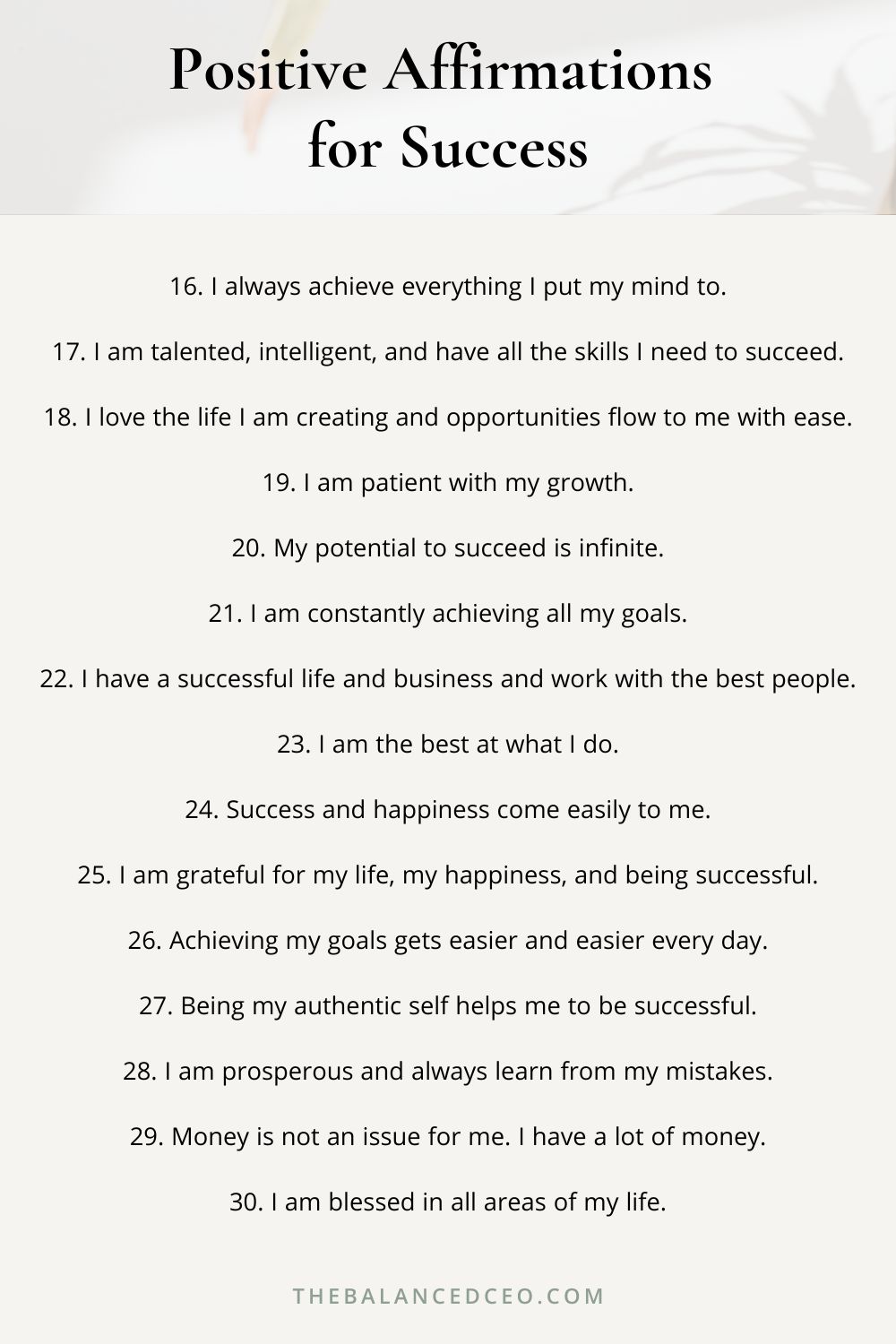
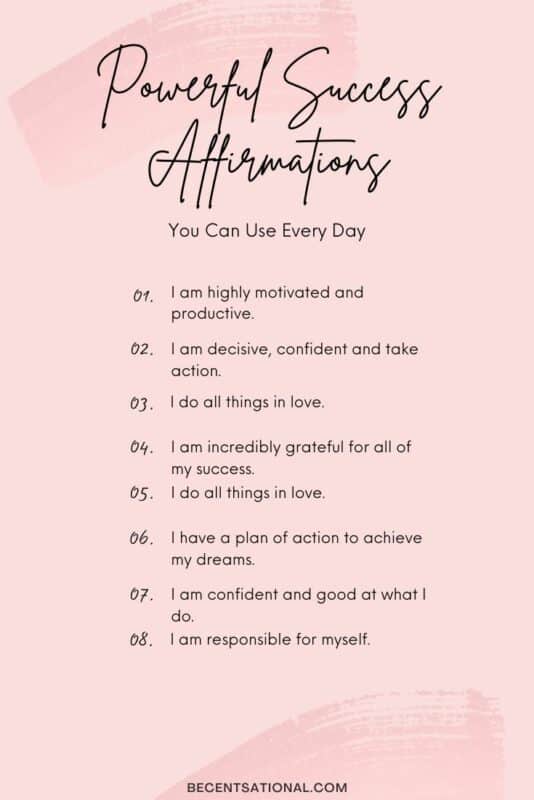
Success affirmations cover many areas: confidence, motivation, focus, and resilience. Here are some of the most effective affirmations. You can use these or create your own based on your needs.
Confidence And Self-belief
- I am confident in my abilities.
- I trust myself to make good decisions.
- I believe in my potential.
- I am worthy of success.
- I stand tall and speak clearly.
These affirmations help you build self-esteem. When you feel confident, you take more chances and handle mistakes better.
Motivation And Drive
- I am motivated to reach my goals.
- I work hard every day.
- I am focused and determined.
- I embrace challenges with energy.
- I never give up.
Motivation affirmations keep you moving forward, even when things get tough.
Growth And Learning
- I learn from every experience.
- I am open to new ideas.
- I grow stronger with every challenge.
- I welcome feedback and use it to improve.
- I am always learning and evolving.
Learning affirmations help you stay flexible and curious. They make it easier to adapt and grow.
Overcoming Fear And Doubt
- I am brave and face my fears.
- I trust myself to overcome obstacles.
- I let go of doubt and embrace confidence.
- I am calm under pressure.
- I am resilient and bounce back from setbacks.
These affirmations support you during tough times. They help you handle stress and uncertainty.
Success And Achievement
- I achieve my goals with determination.
- I am proud of my progress.
- I attract opportunities for success.
- I celebrate every victory, big or small.
- I am surrounded by success and positivity.
Success affirmations keep you focused on what you want to achieve.

Credit: vishakablone.com
How To Use Daily Affirmations
Knowing the best affirmations is only part of the story. To make them work, you need a routine.
Morning Routine
Start your day with affirmations. Say them out loud while you get ready, or write them in a notebook. This sets a positive tone for the day.
Mirror Technique
Stand in front of a mirror and repeat your affirmations. Looking at yourself makes the words feel more real and powerful.
Writing Practice
Write your affirmations by hand. This helps you focus and remember them. Some people keep a journal of their daily affirmations.
Visualization
Picture yourself living your affirmation. For example, if you say, “I am confident,” imagine yourself speaking confidently in a meeting or interview.
During Challenges
Use affirmations when you feel nervous or stressed. Repeat them quietly before a big presentation, exam, or event.
Combining With Other Habits
Pair affirmations with other positive habits. For example, say them while you exercise, meditate, or practice gratitude.
Non-obvious tip: Try recording your affirmations and playing them back. Hearing your own voice boosts the effect and makes the statements feel more personal.
Real-life Examples Of Success Affirmations
Affirmations work in many areas of life. Here are some real examples:
At Work
Maria, an accountant, felt nervous before meetings. She started saying, “I am confident in my expertise. ” Over time, her anxiety dropped, and she contributed more ideas.
At School
Raj, a student, used the affirmation, “I am prepared for exams. ” He said it every morning, and his grades improved as he felt calmer and more focused.
In Sports
Elena, a runner, repeated, “I am strong and fast. ” This helped her push through tough workouts and break her own records.
Personal Growth
Jake wanted to overcome shyness. He used, “I am comfortable speaking in groups. ” After a few weeks, he joined a public speaking club and felt more at ease.
Common Mistakes When Using Affirmations
Many people try affirmations but give up quickly. Here’s why:
Not Believing The Words
If you don’t believe your affirmation, it won’t work. Choose statements you can accept, even if they’re a stretch.
Being Too Vague
General affirmations lack power. Make your words clear and specific.
Irregular Practice
Saying affirmations once a week is not enough. Practice daily for real change.
Ignoring Feelings
Don’t just repeat words. Feel the emotion behind the affirmation. Imagine what it would be like if it were true.
Giving Up Too Soon
Affirmations take time. You may not see results right away. Keep going, even if it feels slow.
Non-obvious insight: Sometimes, negative thoughts pop up after you say a positive affirmation. This is normal. Instead of ignoring them, try saying, “I acknowledge my doubts, but I choose to focus on progress.”
Choosing The Right Affirmations For Your Goals
Different goals need different affirmations. Here’s how to pick the best ones:
Identify Your Goal
Are you aiming for career success, better health, or personal growth? Write down what you want.
Match Affirmation To Goal
If your goal is a job promotion, try: “I am ready for new challenges at work.”
For Health, Use: “i Make Healthy Choices Every Day.”
Test And Adjust
Try a few affirmations. Notice how they make you feel. If one doesn’t work, change the words until it feels right.
Track Progress
Keep a journal of your affirmations and any changes you notice. This helps you see what’s working.
Credit: thebalancedceo.com
Comparing Popular Affirmation Styles
People use affirmations in different ways. Here’s a comparison of three common styles:
| Style | How It Works | Best For |
|---|---|---|
| Verbal Repetition | Say affirmations out loud or silently | Building confidence, quick motivation |
| Written Affirmations | Write affirmations daily in a journal | Deep focus, long-term change |
| Visualization | Picture your affirmation as real | Goal setting, overcoming fear |
Non-obvious tip: Mixing styles can boost results. For example, say your affirmation out loud, then write it down, and finish by visualizing it.
Affirmation Examples For Different Success Areas
Success means more than just money or fame. Here are affirmations for different areas:
Career
- I am a valuable member of my team.
- I take initiative and solve problems.
- I am open to new opportunities.
Health
- I make choices that support my health.
- I listen to my body and care for it.
- I am strong and energetic.
Relationships
- I communicate clearly and kindly.
- I build positive connections with others.
- I am worthy of love and respect.
Money
- I attract financial abundance.
- I manage my money wisely.
- I am open to new sources of income.
Happiness
- I choose happiness every day.
- I am grateful for my life.
- I focus on the positive.
Using Affirmations To Build Habits
Affirmations don’t just change thoughts—they can help you build habits.
Habit Formation
Say, “I am consistent in my healthy habits,” every morning. This reminds you to stick to your routine.
Tracking Progress
Use affirmations along with a habit tracker. For example, write, “I exercised today because I am committed to my health. ” This connects your actions with your affirmations.
Encouraging Change
Affirmations make new habits feel easier. Instead of saying, “I can’t change,” try, “I am open to positive change. ”
Non-obvious insight: Pairing affirmations with small actions (like drinking water, stretching, or organizing your desk) helps anchor the words in real behavior.
How Long Does It Take For Affirmations To Work?
Some people notice changes in a few days. For others, it takes weeks or months. The key is consistency.
Factors That Affect Results
- Frequency: Daily practice works best.
- Belief: Choose affirmations you believe.
- Emotion: Feel the words as you say them.
- Action: Support your affirmations with real steps.
Tracking Your Progress
Keep a simple log. Write down your daily affirmation, how you feel, and any changes. This helps you stay motivated and see your growth.
Here’s a sample progress tracking table:
| Date | Affirmation | Feeling | Result |
|---|---|---|---|
| Monday | I am confident | Calm, focused | Spoke up in meeting |
| Tuesday | I am prepared | Ready, positive | Finished project early |
| Wednesday | I am resilient | Strong, hopeful | Handled stress well |
Credit: becentsational.com
Affirmations And Mental Health
Affirmations can support mental health, but they are not a cure. If you feel depressed or anxious, affirmations can help reduce negative thoughts. However, it’s important to seek professional help if needed.
Supporting Well-being
Use affirmations to boost mood and reduce stress. For example:
- I am patient with myself.
- I forgive myself for mistakes.
- I am in control of my thoughts.
When To Seek Help
If your negative thoughts don’t improve, or if you feel overwhelmed, reach out to a mental health professional. Combining affirmations with therapy can be very effective.
For more information, visit Psychology Today.
Frequently Asked Questions
What Is The Best Time To Say Daily Affirmations?
The best time is when you feel calm and focused. Most people use affirmations in the morning to start the day with positive energy. You can also use them before important events or whenever you need a confidence boost.
How Many Affirmations Should I Use Each Day?
Using 3 to 5 affirmations daily is a good start. This keeps your routine simple and focused. Too many can feel overwhelming and lose impact.
Can Affirmations Help With Anxiety Or Stress?
Yes, affirmations can reduce anxiety and stress. Positive self-talk calms your mind and helps you focus on solutions. However, if stress is severe, affirmations should be used with professional help.
How Do I Know If My Affirmations Are Working?
You’ll notice changes in your mood, attitude, and actions. You may feel more confident, motivated, or relaxed. Keeping a journal helps track your progress.
Do Affirmations Need To Be Spoken Aloud?
No, you can say them silently or write them down. Speaking aloud adds power, but writing or thinking your affirmations also works.
Success starts with belief. Daily affirmations are a simple but powerful tool to shape your thinking, boost your confidence, and help you reach your goals. Whether you use them for work, school, health, or happiness, the right words can make a real difference.
Start small, choose affirmations that matter to you, and repeat them every day. Over time, you may find yourself stronger, more motivated, and ready for success.
