

Affirmations to Stop Smoking: Transform Your Mindset Today
Affirmations To Stop Smoking
Quitting smoking is one of the most important decisions you can make for your health and your life. But for many people, stopping is difficult. Cigarettes are not just a physical habit—they are tied to emotions, stress, and routines. When cravings hit, willpower alone can feel weak. That’s why using affirmations is becoming a popular tool for breaking the smoking cycle. Affirmations are positive statements you repeat to yourself. They help rewire your mind, build confidence, and create new beliefs. In this article, you’ll discover how affirmations can help you stop smoking, how to use them effectively, and practical examples. Whether you’re trying for the first time or have tried to quit before, this guide can help you create a stronger mindset for a smoke-free life.
Why Smoking Is Hard To Quit
Smoking is more than a habit. For many, it’s a way to cope with stress, boredom, or social situations. Cigarettes create a physical addiction to nicotine, a chemical that changes how your brain feels pleasure. But the challenge isn’t only in your body. Emotional triggers—like anxiety or sadness—can push you toward smoking. Social triggers, like being around other smokers, also make quitting tough.
Some people worry about gaining weight, losing friends, or feeling lost without their cigarette breaks. Others feel they will fail because they’ve tried to quit before. These fears are real and can block your progress. Understanding why smoking is hard helps you see why affirmations are useful. They can change your thinking, reduce fear, and help you focus on success.
How Affirmations Work
Affirmations are simple, positive phrases you repeat often. They are designed to change the way you think and feel. When you say an affirmation like “I am free from smoking,” you begin to believe it. Over time, your brain creates new pathways that support this belief.
This makes it easier to act on your new mindset.
Science supports the power of self-talk. Studies show that positive affirmations can reduce stress, improve motivation, and even help change habits. For smokers, affirmations can help you:
- Stay focused on your goal
- Reduce cravings
- Build self-confidence
- Overcome setbacks
The key is to use affirmations regularly and with intention. They are not magic, but they are a proven tool for changing behavior.
Examples Of Powerful Affirmations To Stop Smoking
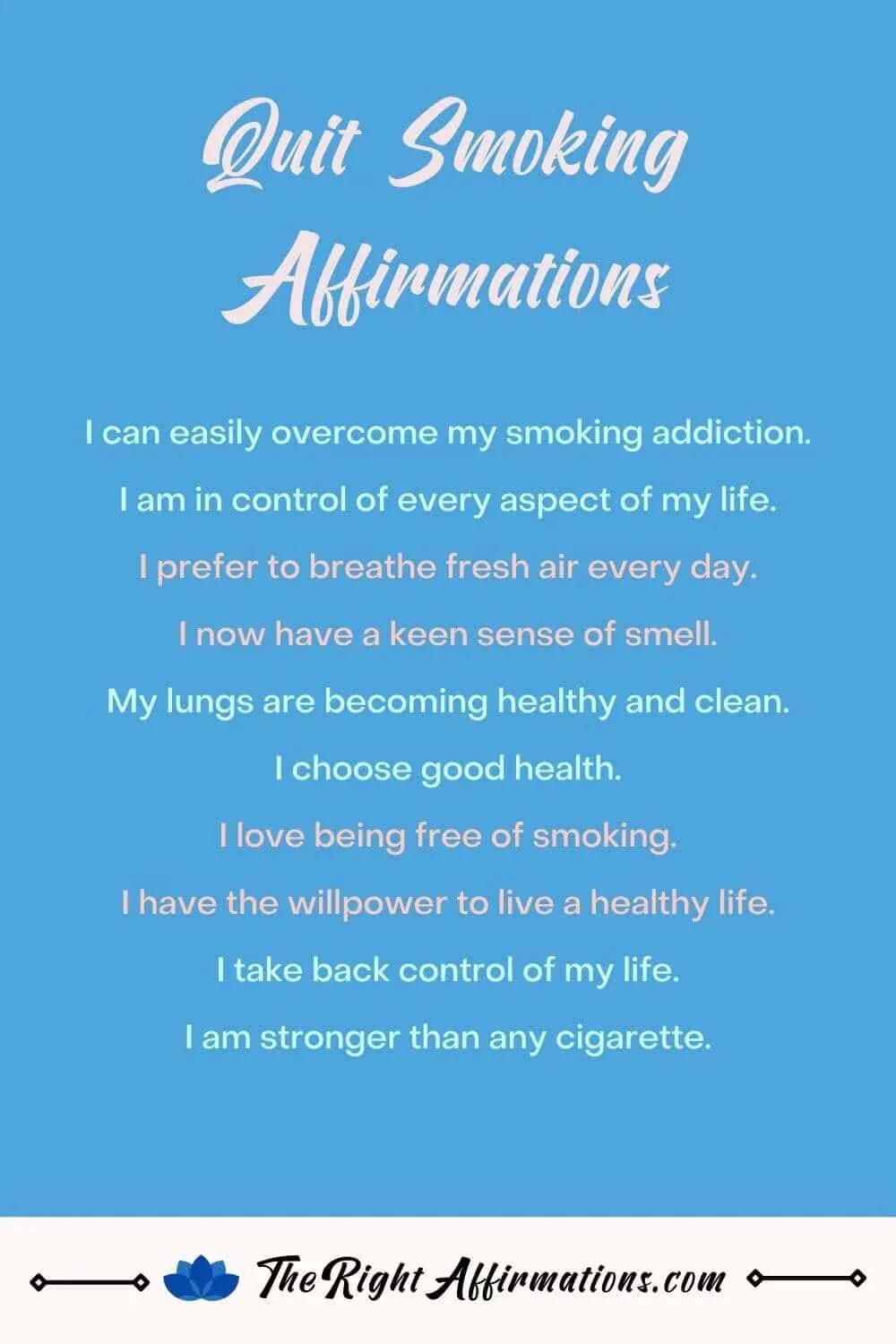
If you want to quit smoking, the right words matter. Here are some affirmations that have helped many people:
- “I am strong enough to live smoke-free.”
- “Every day, my body becomes healthier.”
- “I choose freedom from cigarettes.”
- “I can handle stress without smoking.”
- “My lungs are healing with every breath.”
- “Cravings are temporary. My health is forever.”
- “I respect myself and my body.”
- “I am in control of my choices.”
- “I am proud of myself for quitting.”
- “Each day without smoking is a victory.”
You can create your own affirmations, too. Think about what motivates you—your family, your health, your future. Make your statements personal and meaningful.
Creating Your Own Affirmations
Writing your own affirmations gives them more power. Here’s how to do it:
1. Keep It Positive
Always use positive words. Instead of “I don’t want to smoke,” say “I enjoy being smoke-free. ” Positive statements are easier for your brain to accept.
2. Make It Present
Use present tense, as if it’s already true. “I am healthy” is stronger than “I will be healthy. ”
3. Keep It Short
Simple phrases are easier to remember and repeat. Aim for 5–10 words.
4. Make It Personal
Include your name or reasons. For example, “I, Maria, am smoke-free for my children. ”
5. Repeat Often
The more you say your affirmation, the more it sinks in. Try repeating it during cravings, before bed, or in the morning.

Credit: thinkup.me
When And How To Use Affirmations
Affirmations work best when you use them often. Here are practical ways to include them in your daily routine:
- Morning routine: Start your day by repeating your affirmation out loud.
- During cravings: When you feel the urge to smoke, say your affirmation. It helps you pause and rethink your choice.
- Before bed: Repeat your affirmation to remind yourself of your progress.
- Write it down: Keep a journal and write your affirmations daily.
- Sticky notes: Place notes with your affirmation on mirrors, doors, or your phone.
- Audio: Record yourself saying your affirmation and listen to it.
You don’t have to limit yourself to one affirmation. Use several, or change them over time as you grow stronger in your journey.
The Science Behind Affirmations
While affirmations feel simple, there is real science supporting their effect. Studies show that self-affirmation can activate areas of the brain linked to reward and positive emotion. This helps you feel stronger during tough moments.
A research study published by the American Psychological Association found that people using affirmations can better manage stress and make healthier choices. Another study showed that affirmations helped smokers reduce their cravings and stick to their quit plan.
Here’s a comparison of brain activity between smokers using affirmations and those who did not:
| Group | Craving Levels | Positive Mood | Success Rate |
|---|---|---|---|
| With Affirmations | Low | High | Better |
| Without Affirmations | High | Low | Poor |
This data shows that affirmations are not just “feel-good” words. They really help people change.
Common Mistakes With Affirmations
Affirmations can help, but only if you use them correctly. Here are mistakes to avoid:
- Not believing the affirmation: If you don’t believe your statement, it won’t work. Choose words you can accept.
- Using negative language: Avoid phrases like “I won’t smoke.” Focus on what you want, not what you’re avoiding.
- Being inconsistent: Affirmations need repetition. Saying them once or twice isn’t enough.
- Ignoring emotional triggers: Affirmations are helpful, but you also need to address your feelings and reasons for smoking.
- Comparing yourself: Everyone’s journey is different. Focus on your progress, not others.
Combining Affirmations With Other Strategies
Affirmations are powerful, but they work best with other tools. Here are ways to combine them for better results:
- Nicotine replacement therapy: Use affirmations along with patches or gum. Remind yourself you’re using these tools to become smoke-free.
- Support groups: Share your affirmations in a group. Hearing others’ positive statements can motivate you.
- Exercise: Physical activity reduces cravings. Use affirmations before or after your workout to reinforce your commitment.
- Mindfulness: Practice deep breathing or meditation. Pair these with affirmations for a calm, focused mind.
- Healthy routines: Replace smoking with new habits. When you feel the urge, repeat your affirmation and drink water or take a walk.
This combined approach helps you tackle both the physical and mental sides of quitting.

Credit: www.amazon.com
Real-life Success Stories
Many people have used affirmations to quit smoking. Here are some real examples:
Sarah’s Story: Sarah had smoked for over ten years. She started using the affirmation, “I am free from smoking and in control.” Every time she felt stressed, she repeated it. Over time, she noticed her cravings became less strong. She combined affirmations with yoga, and after several months, she stopped smoking completely.
James’s Experience: James tried to quit smoking many times. He found that repeating “My health is more important than any craving” helped him stay focused. He also wrote his affirmations in a journal and reviewed them before bed. After a few weeks, his confidence grew, and he stopped smoking for good.
Priya’s Journey: Priya created her own affirmation: “I am proud to be smoke-free for my family.” She put sticky notes around her home. Every day, she read them and felt motivated. She used affirmations along with a support group and found strength during tough days.
These stories show that affirmations, when used with other tools, can lead to real change.
Comparing Affirmations With Other Quit Methods
There are many ways to stop smoking. Some people use medication, others join support groups, and some rely on willpower alone. How do affirmations compare?
| Method | Cost | Success Rate | Side Effects | Ease of Use |
|---|---|---|---|---|
| Affirmations | Free | Moderate | None | Easy |
| Medication | High | High | Possible | Moderate |
| Support Groups | Low | Moderate | None | Easy |
| Nicotine Patches | Moderate | High | Mild | Easy |
Affirmations are simple, free, and safe. They can be used alone or with other methods. Combining them increases your chances of success.
Measuring Your Progress
Tracking your progress helps keep you motivated. Here’s how you can measure your journey:
- Days smoke-free: Mark each day you don’t smoke on a calendar.
- Cravings: Keep a log of when cravings happen and how you respond.
- Health improvements: Note changes in breathing, energy, and taste.
- Savings: Calculate how much money you save by not buying cigarettes.
Let’s see how a typical smoker’s progress looks over time:
| Time Since Quitting | Cravings | Health Improvement | Money Saved |
|---|---|---|---|
| 1 week | High | Slight | $35 |
| 1 month | Moderate | Better | $140 |
| 3 months | Low | Strong | $420 |
| 6 months | Rare | Major | $840 |
Seeing your progress in numbers and improvements keeps you inspired.
Overcoming Setbacks With Affirmations
Quitting smoking is not always a straight path. Some days will be harder than others. You may slip and have a cigarette. This is common, but it doesn’t mean you failed.
Affirmations can help you bounce back quickly. When you have a setback:
- Remind yourself: “One slip does not define me. I am still smoke-free.”
- Repeat: “I forgive myself and continue on my journey.”
- Focus on your reasons for quitting.
- Look at your progress and celebrate your successes.
Setbacks are part of change. Using affirmations during these times keeps your mindset strong and positive.
Credit: unfinishedsuccess.com
The Role Of Visualization With Affirmations
Visualization is a technique where you imagine yourself succeeding. When you combine visualization with affirmations, you create a powerful tool. For example, as you say “I am smoke-free,” picture yourself breathing easily, feeling healthy, and enjoying life without cigarettes.
Some people find it helpful to:
- Close their eyes and imagine their lungs healing.
- Picture themselves saying no to a cigarette.
- Visualize spending money saved on something enjoyable.
This makes your affirmation feel real and helps your brain believe it.
Tips For Staying Motivated
Quitting smoking is a journey. Motivation can fade, especially during stressful times. Here are practical tips to stay inspired:
- Set small goals: Focus on one day at a time.
- Reward yourself: Use the money saved for something fun.
- Share your progress: Tell friends or family about your victories.
- Change your environment: Remove smoking triggers from your home.
- Remind yourself of your reasons: Keep a list of why you want to quit.
When motivation drops, use your affirmation to refocus. “I am strong enough to stay smoke-free today. ”
Non-obvious Insights For Success
Most people know to repeat affirmations. But there are less obvious tricks to make them work better:
- Pair affirmations with physical actions: For example, as you repeat your affirmation, squeeze a stress ball or take a deep breath. This creates a new habit loop.
- Use affirmations during high-risk moments: Instead of only using them when you feel good, say your affirmations when you feel stressed, angry, or lonely. This is when you need them most.
Many beginners forget to update their affirmations as they grow. Your needs change as you progress, so adjust your statements to fit your current stage.
The Benefits Of A Smoke-free Life
Quitting smoking brings many rewards. Here are some you can look forward to:
- Better health: Your risk of heart disease, cancer, and lung problems drops.
- More energy: You breathe easier and feel stronger.
- Improved taste and smell: Food tastes better, and scents are clearer.
- Financial savings: Cigarettes are expensive. Quitting saves you money.
- Peace of mind: You no longer worry about the effects of smoking.
Affirmations help remind you of these benefits every day.
Frequently Asked Questions
What Are Affirmations, And How Do They Help Stop Smoking?
Affirmations are positive statements you repeat to yourself. They help change your mindset and beliefs. When you use affirmations to stop smoking, you build confidence and motivation. This makes it easier to resist cravings and stay focused on your goal.
How Often Should I Use Affirmations When Trying To Quit Smoking?
You should use affirmations every day. Repeat them in the morning, during cravings, and before bed. The more often you use them, the stronger their effect. Some people also write them in a journal or place them on sticky notes as reminders.
Can Affirmations Replace Other Quit Methods, Like Medication Or Patches?
Affirmations are helpful, but they work best with other tools. Medication, patches, and support groups address the physical side of addiction. Affirmations help with the mental and emotional parts. Combining methods increases your chances of quitting successfully.
What If I Don’t Believe My Affirmation At First?
It’s normal to feel doubt at first. Choose affirmations you can accept, even if they feel a little uncomfortable. With repetition, your belief will grow. Start with statements like “I am learning to live smoke-free” and build up to stronger affirmations.
Where Can I Find More Resources For Quitting Smoking?
You can find helpful guides and support at official health websites. For more information, visit Smokefree.gov. They offer tools, tips, and support for people wanting to stop smoking.
Quitting smoking is a journey, but you are not alone. Using affirmations can help you build a new, smoke-free life. With persistence, support, and a positive mindset, you can overcome cravings and enjoy the benefits of better health and freedom.
Take the first step today—choose your affirmation, repeat it often, and believe in your power to change.
