

Affirmations from the Bible
Many people search for peace, strength, and hope in daily life. Some find comfort in positive statements, known as affirmations. Affirmations are simple phrases that help people focus on good thoughts and beliefs. But did you know the Bible is full of powerful affirmations? These are not just uplifting words—they are promises, truths, and encouragements from God. When you use affirmations from the Bible, you can find support, confidence, and guidance for every situation.
This article explores what biblical affirmations are, how they differ from regular affirmations, why they matter, and how to use them daily. You will discover examples, practical tips, and answers to common questions. Whether you are new to Bible affirmations or want to deepen your practice, you will find clear steps and insights that will help you grow.
What Are Affirmations From The Bible?
Biblical affirmations are positive statements based on Scripture. They reflect God’s truth, promises, and character. Unlike regular affirmations, which often come from personal beliefs or popular psychology, Bible affirmations are rooted in verses and teachings from the Word of God.
For example, instead of saying “I am strong” based on your own feelings, you can say “I am strong in the Lord” (based on Ephesians 6:10). This connects your confidence to God’s power, not just your own.
How Biblical Affirmations Differ From Regular Affirmations
Regular affirmations focus on self-confidence, goals, and positive thinking. They may say “I am successful” or “I can do anything. ” While these can be helpful, they depend on human ability.
Biblical affirmations focus on God’s truth and promises. They might say “God is with me” or “I am loved by God. ” These statements remind you that your strength, value, and future come from God, not just yourself.
Here is a simple comparison:
| Regular Affirmation | Biblical Affirmation |
|---|---|
| I am enough. | God’s grace is enough for me. |
| I can achieve anything. | I can do all things through Christ who strengthens me. |
| I am confident. | The Lord is my confidence. |
| I am loved. | I am loved by God with an everlasting love. |
Why Use Bible Affirmations?
Using Bible affirmations does more than boost your mood. It anchors your mind in truth that doesn’t change. When life gets hard, emotions can shift. But God’s Word stays the same. By repeating Bible affirmations, you remind yourself of God’s promises, and you can face challenges with faith, not fear.
Many believers use affirmations to:
- Fight negative thoughts
- Grow closer to God
- Build confidence based on truth
- Find peace during stress
- Set a positive tone for the day
How To Create And Use Biblical Affirmations
Anyone can use Bible affirmations, but getting the most out of them takes a few simple steps. Let’s walk through how to make your own and use them every day.
Step 1: Choose A Bible Verse
Start by picking a verse that speaks to your need or situation. For example, if you feel anxious, you might choose Philippians 4:6-7 (“Do not be anxious about anything…”). If you need courage, Joshua 1:9 (“Be strong and courageous…”).
Step 2: Turn The Verse Into An Affirmation
Rewrite the verse as a statement about yourself. Keep it simple and clear. For example:
- From Joshua 1: 9: “God is with me wherever I go.”
- From Psalm 23: 1: “The Lord is my shepherd; I lack nothing.”
- From Romans 8: 37: “I am more than a conqueror through Christ.”
Step 3: Repeat Your Affirmation
Say your affirmation aloud, write it down, or memorize it. You can repeat it in the morning, during stressful moments, or before sleep. The key is consistency.
Step 4: Reflect And Believe
Don’t just say the words—believe them. Reflect on what the affirmation means. Ask God to help you trust His promises. This is where transformation begins.
Practical Tips For Using Bible Affirmations
- Write your affirmations on sticky notes and place them where you can see them daily.
- Record yourself saying the affirmations and listen to them.
- Share affirmations with friends or family.
- Pray over your affirmations, asking God to make them real in your life.
- Keep a journal of affirmations and how they help you.
Common Mistakes Beginners Make
Many people rush through affirmations or pick verses without understanding. Here are two mistakes to avoid:
- Choosing verses out of context: Sometimes a verse may sound good, but it doesn’t fit your situation or its meaning. Always check the verse’s context.
- Treating affirmations like magic spells: Affirmations are not tricks. They are reminders of God’s truth. Focus on belief, not just repetition.

Credit: wellnessmanifest.wordpress.com
Powerful Examples Of Bible Affirmations
Below are some affirmations based on well-known Bible verses. Each one addresses a different need—strength, peace, love, forgiveness, guidance, and more.
Affirmations For Strength
- “I am strong in the Lord and in His mighty power.” (Ephesians 6: 10)
- “God gives me strength for every task.” (Philippians 4: 13)
- “The Lord is my refuge and fortress.” (Psalm 18: 2)
Affirmations For Peace
- “God’s peace guards my heart and mind.” (Philippians 4: 7)
- “I am kept in perfect peace because I trust God.” (Isaiah 26: 3)
- “Jesus gives me His peace, not as the world gives.” (John 14: 27)
Affirmations For Love
- “I am loved by God with everlasting love.” (Jeremiah 31: 3)
- “Nothing can separate me from God’s love.” (Romans 8: 38-39)
- “God’s love is poured into my heart.” (Romans 5: 5)
Affirmations For Forgiveness
- “I am forgiven through Christ.” (Ephesians 1: 7)
- “God removes my sins as far as the east is from the west.” (Psalm 103: 12)
- “I am made new in Christ.” (2 Corinthians 5: 17)
Affirmations For Guidance
- “God directs my steps.” (Proverbs 3: 5-6)
- “The Lord teaches and counsels me.” (Psalm 32: 8)
- “I trust God to lead me in the right path.” (Psalm 23: 3)
Affirmations For Faith
- “I walk by faith, not by sight.” (2 Corinthians 5: 7)
- “My faith is strong because God is faithful.” (Hebrews 10: 23)
- “I believe God’s promises for my life.” (2 Peter 1: 4)
The Science Behind Affirmations
People often wonder if affirmations really work. Recent studies show that positive self-talk can shape beliefs and emotions. When you repeat affirmations, your brain starts to focus on those ideas. This can help lower stress and improve confidence.
But biblical affirmations add another layer. They connect you to God’s truth, which is unchanging and reliable. Neuroscience research shows that beliefs rooted in meaning and purpose are even more powerful for mental health.
A study from Duke University found that people who practice spiritual affirmations report higher resilience and lower anxiety. This is because faith-based affirmations help you see challenges through God’s perspective, not just your own.
Here is a comparison of effects:
| Type | Main Effect | Extra Benefit |
|---|---|---|
| Regular Affirmations | Boosts self-confidence | Improves mood |
| Biblical Affirmations | Builds faith and hope | Connects to God’s promises |
When And How To Use Bible Affirmations
There is no “perfect” time to use affirmations. But some moments are especially helpful:
- Morning routine: Start your day with God’s truth.
- During stress: Remind yourself of God’s peace and power.
- Before sleep: Calm your mind with promises from Scripture.
- Facing decisions: Seek guidance and wisdom through affirmations.
Making Affirmations A Habit
To build a habit, connect affirmations to daily actions. For example:
- Say an affirmation while brushing your teeth.
- Write one in your planner or calendar.
- Repeat one before important meetings or tasks.
- Use a phone reminder to prompt you.
Consistency is key. The more you repeat and believe, the stronger your faith grows.
20 Timeless Bible Affirmations For Daily Life
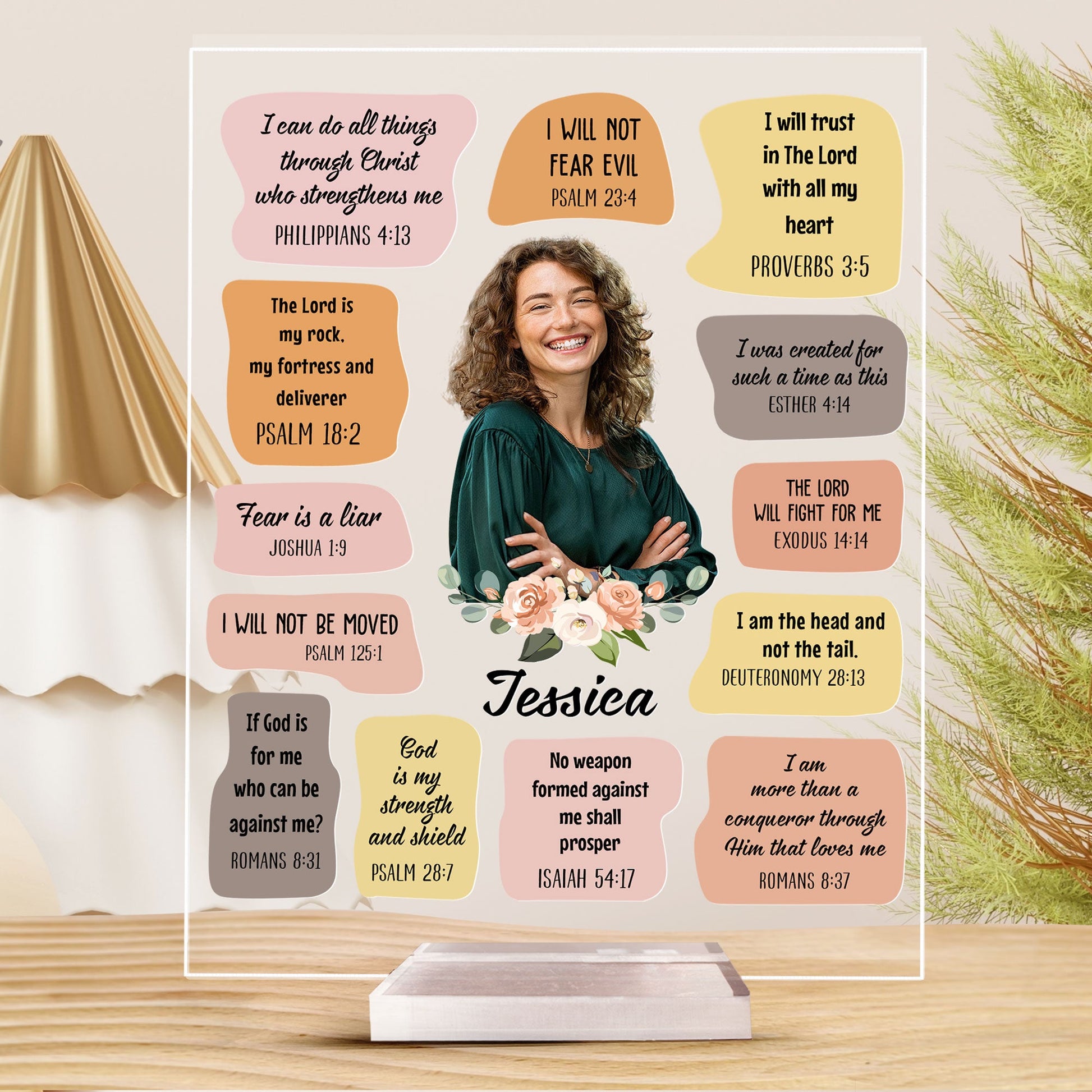
Here are 20 affirmations, each based on a Bible verse. Use these as a starting point, or personalize them for your needs.
- “God is with me; I will not fear.” (Psalm 118: 6)
- “I am God’s masterpiece, created for good works.” (Ephesians 2: 10)
- “I am forgiven and free in Christ.” (John 8: 36)
- “God’s grace is enough for me.” (2 Corinthians 12: 9)
- “The Lord is my shepherd; I lack nothing.” (Psalm 23: 1)
- “God’s peace fills my heart.” (Philippians 4: 7)
- “I am loved with everlasting love.” (Jeremiah 31: 3)
- “God gives me strength for today.” (Isaiah 40: 29)
- “I am more than a conqueror through Christ.” (Romans 8: 37)
- “God’s wisdom guides my decisions.” (James 1: 5)
- “My future is secure in God’s hands.” (Jeremiah 29: 11)
- “I am not alone; God is my helper.” (Hebrews 13: 6)
- “God hears my prayers.” (1 John 5: 14)
- “I am chosen and loved by God.” (Colossians 3: 12)
- “God’s joy is my strength.” (Nehemiah 8: 10)
- “I am protected under God’s wings.” (Psalm 91: 4)
- “God’s Spirit gives me power, love, and self-control.” (2 Timothy 1: 7)
- “I am light in the world because of Christ.” (Matthew 5: 14)
- “God works all things for my good.” (Romans 8: 28)
- “I am free from fear because God is with me.” (Isaiah 41: 10)
These affirmations cover many needs—identity, confidence, peace, strength, joy, and purpose. Use them individually or combine them for a daily routine.
Credit: macorner.co
How Bible Affirmations Help Different Groups
Bible affirmations are not just for individuals. They can help families, children, leaders, and communities.
For Children
Simple affirmations help children build faith and confidence early. For example, “God loves me” or “Jesus is my friend. ” Parents can teach these affirmations to children as part of bedtime or morning routines.
For Families
Families can repeat affirmations together before meals or during family prayers. This helps build unity and trust in God’s promises.
For Leaders
Pastors, teachers, and group leaders use affirmations to encourage their teams. For example, “God equips us for every good work. ” This builds a positive, faith-filled environment.
For Communities
In group settings, affirmations remind people of shared beliefs and hope. Churches often use affirmations in worship or teaching to strengthen faith.
Examples Of Bible Affirmations In Real Life
Many people have shared how Bible affirmations changed their lives. Here are a few real examples:
- Maria, a teacher, struggled with anxiety before class. She started repeating “God gives me strength for today.” Over time, her confidence grew, and she felt peace in stressful moments.
- David, a student, faced challenges with self-worth. He used “I am God’s masterpiece” as his daily affirmation. This helped him see himself through God’s eyes and improved his self-esteem.
- A family used “God’s peace fills our home” every evening. This brought calm and unity during difficult times.
These stories show that affirmations are more than words—they are tools for real change when grounded in faith.
How To Personalize Bible Affirmations
Everyone’s journey is different. Personalizing affirmations makes them more meaningful.
Steps To Personalize
- Identify your need: What area do you want to grow in? (Peace, courage, forgiveness, etc.)
- Find a matching verse: Look for a Bible verse that speaks to your need.
- Rewrite as a statement: Make the verse personal. For example, “God gives me courage.”
- Pray and reflect: Ask God to help you believe and live the affirmation.
Non-obvious Insight: Emotional Connection
Many beginners miss the importance of emotional connection. When you feel the truth of the affirmation, it is more powerful. Don’t just say it—feel it and let it sink in.
Non-obvious Insight: Consistency Over Quantity
Some people think more affirmations are better. But repeating a few daily with faith works better than rushing through many. Focus on depth, not just numbers.
Comparing Bible Affirmations With Other Practices
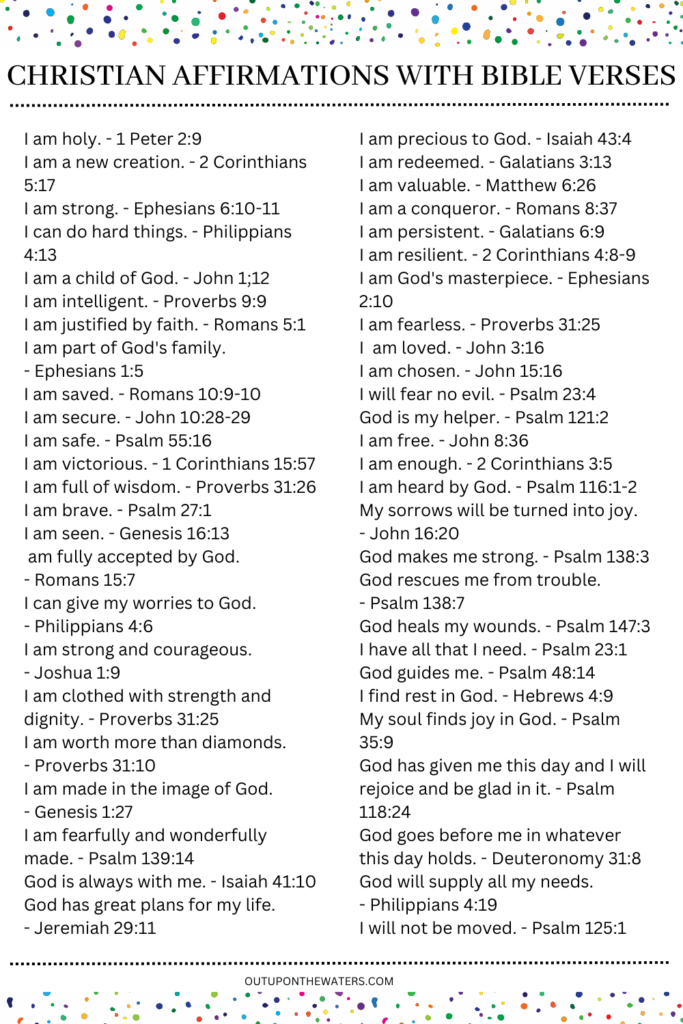
People sometimes ask if Bible affirmations are similar to meditation, positive psychology, or mindfulness. Let’s compare these approaches:
| Practice | Main Focus | Spiritual Element | Lasting Effect |
|---|---|---|---|
| Positive Psychology | Self-confidence, optimism | None | Often temporary |
| Mindfulness | Awareness, presence | Varies | Improves calm |
| Bible Affirmations | Faith, God’s promises | Strong | Enduring hope |
Bible affirmations stand out because they connect your mind to something greater than yourself—God’s truth. This creates lasting change, not just temporary motivation.
Credit: outuponthewaters.com
Common Questions And Misunderstandings
People sometimes worry about whether affirmations are “biblical” or if they will work. Here are a few common misunderstandings:
- Affirmations are not magic spells. They are reminders of truth, not quick fixes.
- Repeating affirmations is not about performance. It is about belief and trust.
- Affirmations work best when combined with prayer and reflection.
If you have doubts, remember that God invites us to meditate on His Word (Psalm 1:2). Affirmations are one way to do this.
Frequently Asked Questions
What Are Bible Affirmations?
Bible affirmations are positive statements based on Scripture. They help you remember God’s promises and truths. For example, “God is my strength” is an affirmation rooted in the Bible.
How Do I Know If An Affirmation Is Biblical?
Check if the affirmation is based on a Bible verse or principle. Read the verse’s context to make sure it fits. If you are unsure, ask a pastor or use a trusted Bible resource.
Can I Use Bible Affirmations With Prayer?
Yes. Many people combine affirmations with prayer. You can repeat an affirmation, then pray for God to help you believe and live it. This makes the practice more powerful.
Are Bible Affirmations Suitable For Children?
Absolutely. Children can learn simple affirmations like “God loves me” or “Jesus is my friend. ” This helps build faith and confidence early.
Where Can I Find More Bible Affirmations?
Many Christian websites and apps offer lists of affirmations. You can also create your own by reading the Bible and turning verses into statements. For more guidance, visit Bible Gateway.
Final Thoughts
Bible affirmations are more than just positive words. They are tools that help you anchor your mind in God’s truth. When you face challenges, doubts, or fears, repeating these affirmations can bring peace, strength, and hope. Remember, the real power comes from believing and living the truths you affirm.
Start with one or two Bible affirmations today—make them part of your routine and let God’s promises shape your life. The journey may begin with words, but it leads to real transformation.
