

Affirmation Ideas for Kids: Boost Confidence and Positivity
Affirmation Ideas For Kids
Every child deserves to grow up feeling confident, valued, and loved. But for many kids, self-doubt and negative thoughts can creep in—even at a young age. The good news is that you can help children build a positive mindset using simple but powerful tools called affirmations. These are short, encouraging statements that remind kids of their strengths, potential, and worth. When used regularly, affirmations help children develop self-esteem, resilience, and a kinder inner voice.
In this guide, you’ll discover practical affirmation ideas for kids, how to use them effectively, and why they matter. Whether you’re a parent, teacher, or caregiver, you’ll learn how to make affirmations a fun and natural part of any child’s daily life.
Understanding Affirmations And Their Impact
Affirmations are positive phrases that people repeat to themselves to encourage a healthy mindset. For kids, they can be as simple as “I am kind” or “I can try again.” The real power of affirmations comes from repetition. When children say and hear positive words often, they start to believe them. This can help:
- Boost self-confidence
- Reduce anxiety and fear
- Improve motivation
- Support emotional health
Research shows that positive self-talk can lower stress and improve performance in both children and adults. One study found that children who practiced positive affirmations were better at handling challenges and setbacks.
But there’s a subtle point many adults miss: Affirmations work best when they feel believable and personal. If a child feels uncertain, “I am the best” might not help. Instead, “I am learning every day” feels more real and encouraging.
Why Kids Need Affirmations
Children face many pressures—school, friendships, social media, and family expectations. Even small disappointments can feel big to them. Negative self-talk, like “I’m not good enough” or “I always mess up,” can build up over time. That’s why it’s important to teach kids how to replace those thoughts with kinder, more helpful ones.
Some non-obvious benefits of affirmations for kids:
- Building a Growth Mindset: Affirmations encourage kids to focus on effort and learning, not just winning or being perfect.
- Emotional Regulation: Positive phrases can give children tools to calm themselves during stress or anger.
- Connection with Adults: Sharing affirmations together deepens trust and communication between kids and adults.

Credit: www.shutterstock.com
How To Introduce Affirmations To Kids
You don’t need to make affirmations formal or forced. Children respond best when positive words are woven into daily routines. Here are some practical ways to introduce affirmations:
- Morning Routine: Start the day with a shared affirmation at breakfast or while getting ready.
- Visual Reminders: Write affirmations on sticky notes and put them on mirrors, lunchboxes, or notebooks.
- Bedtime Reflection: End the day by recalling good moments and repeating a calming affirmation.
- Art Activities: Let kids decorate affirmation cards with drawings and colors.
Pro tip: Involve kids in choosing or creating their own affirmations. When children pick words that matter to them, they feel more ownership and belief.
50 Powerful Affirmation Ideas For Kids
Every child is unique, so it’s helpful to have a variety of affirmations for different needs and situations. Here are 50 ideas you can use or adapt:
- I am loved just as I am.
- I can learn new things.
- My mistakes help me grow.
- I am a good friend.
- I am brave, even when things are hard.
- I listen to my feelings.
- I am proud of myself.
- I can ask for help when I need it.
- I am kind to others and myself.
- I keep trying, even when it’s tough.
- I have good ideas.
- I am important.
- I believe in myself.
- I can make a difference.
- I am patient with myself and others.
- I am creative.
- I am safe.
- I forgive myself for mistakes.
- I am strong inside and out.
- I am grateful for today.
- I am curious and love to learn.
- I choose to be happy.
- I respect myself and others.
- I am unique and special.
- I enjoy helping others.
- I am getting better every day.
- I can solve problems.
- I am calm and relaxed.
- I trust myself.
- I am responsible.
- I am gentle with my words.
- I enjoy trying new things.
- I can control my actions.
- I am thoughtful.
- I am part of a loving family.
- I am enough, just as I am.
- I am a good listener.
- I can do hard things.
- I notice the good in others.
- I am thankful for my friends.
- I am full of energy.
- I am honest.
- I am learning from my challenges.
- I am helpful.
- I am confident in who I am.
- I trust that things will be okay.
- I choose to be kind.
- I am respectful.
- I am happy to be me.
- I am proud of what I accomplish.
You don’t need to use all of these at once. Pick a few that fit your child’s needs or let them choose their favorites.
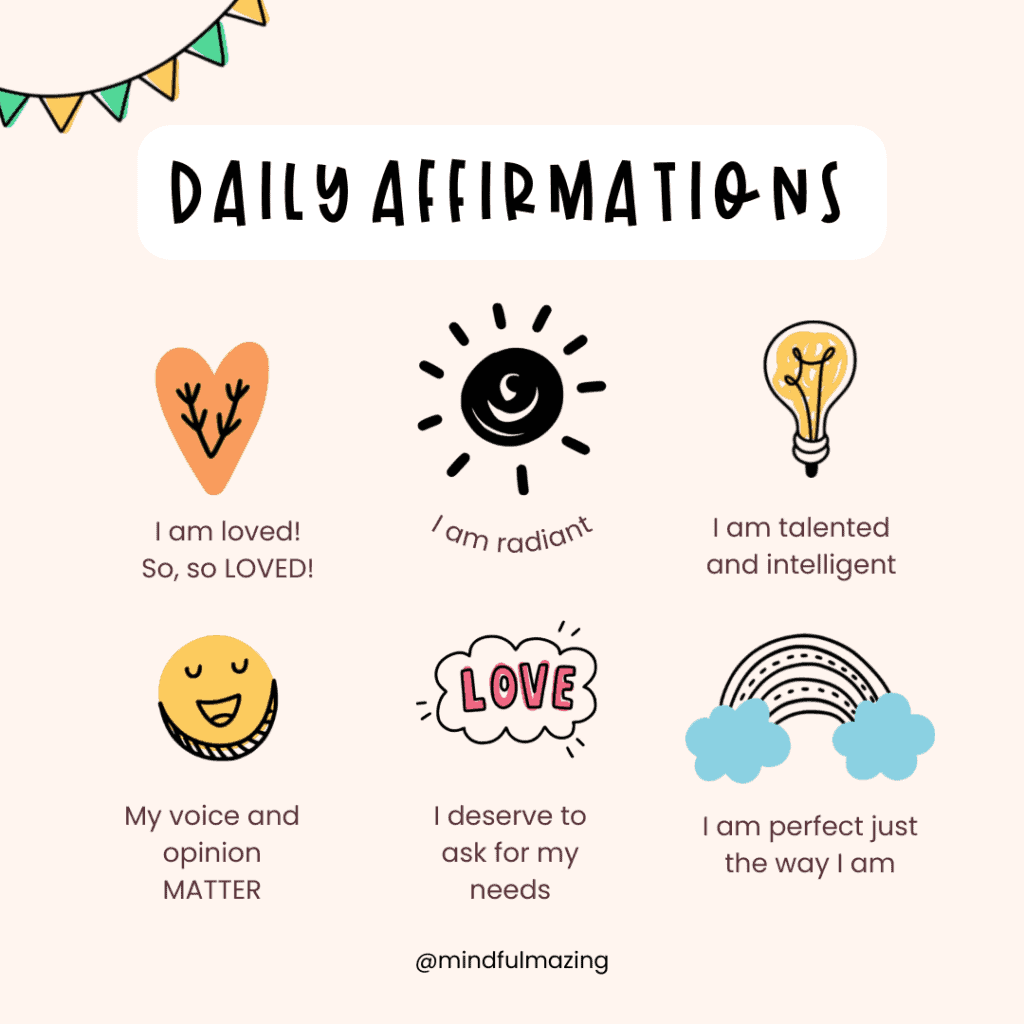
Credit: www.mindfulmazing.com
Types Of Affirmations For Different Situations
Children face different challenges at different times. Using the right affirmation can help them through specific moments.
For School And Learning
- “I am capable of learning new things.”
- “It’s okay to ask questions.”
- “I will keep trying, even if I don’t get it right away.”
For Friendships And Social Skills
- “I am a good friend.”
- “I treat others the way I want to be treated.”
- “I like meeting new people.”
For Handling Mistakes
- “Mistakes help me learn.”
- “It’s okay to not be perfect.”
- “I can try again.”
For Confidence And Self-esteem
- “I am proud of who I am.”
- “I believe in myself.”
- “I have talents that make me special.”
For Calming Anxiety
- “I can take deep breaths to calm down.”
- “I am safe.”
- “I can handle this.”
Age-appropriate Affirmations
What works for a preschooler may not feel right for a teenager. Tailoring affirmations to a child’s age helps them connect with the words.
Here is a comparison of suitable affirmation types by age group:
| Age Group | Example Affirmations | Key Focus |
|---|---|---|
| 3-5 years | I am loved. I am a helper. I can try. | Simple, concrete, focused on belonging |
| 6-9 years | I learn from mistakes. I am a good friend. | Encouragement, social skills, learning |
| 10-13 years | I believe in myself. I can solve problems. | Confidence, independence, resilience |
| 14+ years | I accept myself. I have a voice. I am strong. | Self-identity, emotional awareness |
Notice how the language grows with the child. For younger kids, keep it short and easy to understand. Older children can handle deeper ideas about self-worth and identity.
Making Affirmations Fun And Engaging
Kids learn best when activities are playful and creative. Here are some ways to make affirmations exciting:
- Affirmation Jars: Write affirmations on slips of paper and put them in a jar. Each morning, pick one to read together.
- Song and Dance: Turn affirmations into simple songs or dances. Movement helps words stick.
- Art Projects: Let kids paint or draw their favorite affirmation.
- Mirror Talk: Stand in front of a mirror and say affirmations out loud.
- Affirmation Bracelets: Make beaded bracelets with words like “brave” or “strong.”
- Story Time: Create stories where the main character uses affirmations to solve problems.
Encourage children to use their own words. The more personal the affirmation, the more powerful it becomes.
Common Mistakes When Using Affirmations With Kids
Affirmations sound easy, but there are some pitfalls to avoid:
- Too Abstract or Unrealistic: If the statement feels untrue, kids may reject it. “I am the smartest” might backfire if a child doesn’t feel that way.
- Forcing Participation: Don’t pressure kids to say affirmations. Invite, model, and encourage, but let them join in when they’re ready.
- Overusing Generic Phrases: “You’re awesome!” is nice, but gets old. Mix it up and be specific.
- Ignoring Negative Feelings: Affirmations should not push away real emotions. If a child is sad, validate their feelings first, then offer encouragement.
A subtle insight: Affirmations are most effective when paired with action. For example, after saying “I can try again,” help the child take a small step to practice.
Practical Tips For Parents And Teachers
Affirmations can be woven into family or classroom life with a little creativity. Here are some tips that make a real difference:
- Model Positive Self-Talk: Let children hear you use affirmations about yourself. “I had a hard day, but I am strong.”
- Make It a Habit: Consistency matters more than perfection. A daily affirmation routine, even for two minutes, makes a difference.
- Celebrate Progress: Notice and praise children when they use affirmations on their own.
- Use Visuals: Posters, bookmarks, and cards help keep affirmations top of mind.
- Check In Regularly: Ask kids how affirmations make them feel. Adjust as needed.
Here’s a look at some practical affirmation activities and their benefits:
| Activity | How It Works | Benefit |
|---|---|---|
| Morning Affirmation Circle | Each child shares an affirmation out loud | Builds confidence and group connection |
| Affirmation Art Wall | Kids create posters of their favorite affirmations | Encourages creativity and daily reminders |
| Affirmation Journal | Kids write or draw affirmations each day | Supports reflection and emotional growth |
| Bedtime Affirmation Routine | End the day with calming affirmations | Reduces anxiety and improves sleep |
Affirmations For Special Situations
Some children face unique challenges, such as anxiety, bullying, or big life changes. Tailor affirmations to support them through tough times.
For Anxiety Or Worries
- “I can handle my feelings.”
- “I am safe and cared for.”
- “I can talk to someone I trust.”
For Bullying Or Social Struggles
- “I deserve respect.”
- “I am not alone.”
- “I am strong, even when others are unkind.”
For Transitions (like Moving Or Changing Schools)
- “I can make new friends.”
- “I am brave in new places.”
- “It’s okay to feel nervous. I can do this.”
For Sibling Rivalry
- “I am a loving brother/sister.”
- “We can work together.”
- “It’s okay to be different.”
Often, combining affirmations with practical support—like role-playing or talking through fears—brings the best results.
How To Help Kids Create Their Own Affirmations
Kids are more likely to use affirmations they help make. Guide children through these steps:
- Identify a Feeling or Challenge: Ask, “Is there something you want to feel better about?”
- Flip the Negative: Turn “I’m not good at math” into “I can get better at math with practice.”
- Keep It Simple: Short, clear phrases work best.
- Use “I am” or “I can” Statements: This makes the affirmation personal and powerful.
- Say It Out Loud: Practice together, maybe with a silly voice or a clap.
For example, a child feeling nervous about a test might say, “I am ready and I will do my best. ”
Science Behind Affirmations And Kids’ Well-being
You might wonder, do affirmations really work for kids? Scientific studies suggest yes—when used well.
- Brain Research: Repeating positive self-talk activates brain areas connected to self-worth and motivation.
- Emotional Benefits: Kids who practice affirmations report feeling calmer and more hopeful.
- Resilience: Affirmations help children bounce back from setbacks, especially when combined with supportive adults.
A non-obvious insight: It’s not just the words, but the caring relationship and consistency that make affirmations effective. When kids feel seen and supported, positive words take root more deeply.
If you’re curious about the science, organizations like Positive Psychology offer research-based insights.

Credit: www.thepathway2success.com
Making Affirmations Inclusive And Culturally Sensitive
Affirmations should reflect each child’s background, language, and beliefs. Here’s how to make sure every child feels included:
- Use the Child’s Own Language: If a child speaks another language at home, say affirmations in both languages.
- Honor Individual Values: Some families value teamwork, others independence. Tailor affirmations to fit.
- Be Mindful of Cultural Differences: Not all cultures value self-praise. Focus on community, family, or effort if that feels right.
Affirmations are about helping kids feel safe and valued—never about pushing one way of thinking.
Real-life Examples: Affirmations In Action
Sometimes, the best way to learn is through stories. Here are real examples of how affirmations help kids:
- A shy child starts each school day with “I am brave.” Over time, they raise their hand more often and make new friends.
- A child struggling with reading uses “I can learn with practice.” They begin to see mistakes as part of learning, not something to fear.
- A family facing a big move says, “We are together, and we can handle change.” The children settle into their new school more smoothly.
These stories show that small words, repeated often, can create big changes.
Frequently Asked Questions
How Often Should Kids Use Affirmations?
Consistency is key. Aim for at least once a day—morning or bedtime are great times. But even a few times a week can help. The most important thing is making it a positive, pressure-free habit.
What If My Child Doesn’t Want To Say Affirmations?
That’s okay. Never force affirmations. Model them yourself, use playful activities, or simply write them as notes. Over time, many children become more open to trying.
Can Affirmations Help With Anxiety Or Big Worries?
Yes, affirmations are a helpful tool for managing anxiety. Phrases like “I am safe” or “I can handle my feelings” give kids coping skills. Combine affirmations with other calming strategies for best results.
Are There Any Risks To Using Affirmations With Children?
Affirmations are safe, but avoid unrealistic or dishonest phrases. If a child feels a statement is untrue, it can backfire. Always validate real feelings and use affirmations that feel believable.
How Do I Know If Affirmations Are Working For My Child?
Look for small signs: more confidence, kinder self-talk, or willingness to try new things. Ask your child how affirmations make them feel. Progress can be slow and gentle, but over time, you’ll notice a more positive outlook.
Helping kids build a positive inner voice is a gift that lasts a lifetime. With the right affirmation ideas and plenty of encouragement, children can grow up believing in themselves, facing challenges with courage, and treating themselves and others with kindness.
Affirmations are a simple, powerful way to plant seeds of confidence, hope, and resilience—one word at a time.
