

Affirmation Ideas for Kids: Boost Confidence and Positivity
Affirmation Ideas For Kids
Children face many challenges as they grow. They learn new things, make friends, and sometimes feel unsure about themselves. In these moments, affirmations can be powerful tools. Affirmations are positive statements that help children believe in their abilities and build confidence. When used regularly, they can shape how kids think, feel, and act.
Many parents and teachers are searching for ways to support children’s emotional health. Simple words, repeated often, can make a big difference. This article will show you what affirmations are, why they matter for children, and how to use them.
You’ll find a variety of affirmation ideas for kids, tips for making them effective, and practical advice for daily life. You’ll also learn how to handle common problems and answer questions parents often ask about affirmations.
Whether you are a parent, teacher, or caregiver, these ideas can help children grow stronger inside. Let’s explore how affirmations can become a source of strength and joy for kids.
What Are Affirmations?
Affirmations are short, positive sentences that people say to themselves. The goal is to encourage positive thinking and self-belief. For kids, affirmations can help them feel brave, smart, and loved. Instead of focusing on what they cannot do, children learn to pay attention to their strengths and possibilities.
Affirmations work best when they are:
- Simple and easy to remember
- Positive (not negative)
- Present tense (as if already true)
- Personal (using “I am” or “I can”)
For example, instead of saying, “I am not scared,” a better affirmation is, “I am brave. ”
Why Affirmations Matter For Kids
The early years are critical for shaping how children see themselves. A child who hears positive words will often develop more confidence. Affirmations can help with:
- Building self-esteem
- Reducing anxiety and worries
- Improving focus and motivation
- Encouraging a growth mindset
- Helping kids handle mistakes
According to research, children who use positive self-talk are more likely to try new things and bounce back from failure. When affirmations are part of daily life, kids learn to face challenges with a stronger heart.
Non-obvious insight: Children often repeat what adults say about them. Using affirmations together with your child can make your words even more powerful.

Credit: www.shutterstock.com
How To Introduce Affirmations To Kids
Introducing affirmations to kids can be simple and fun. Here are some ways to get started:
- Choose a few easy affirmations.
- Say them together, out loud, at a regular time (like morning or bedtime).
- Make it playful: Use a mirror, sing the affirmations, or add hand motions.
- Let your child pick their favorite affirmations.
It’s important not to force kids. If they feel silly or shy at first, that’s normal. Give them time and join in so they don’t feel alone.
Non-obvious insight: Children learn faster when they see adults joining in. Say the affirmations with your child, not just to them.
Types Of Affirmations For Kids
Not all affirmations are the same. They can help with different parts of a child’s life. Below are some main types:
1. Self-esteem Affirmations
These affirmations help children feel good about who they are.
- “I am important.”
- “I like who I am.”
- “I believe in myself.”
- “I am proud of what I can do.”
2. Confidence Affirmations
These statements boost a child’s courage to try new things.
- “I am brave.”
- “I can do hard things.”
- “I try, even when things are tough.”
- “I am strong inside and out.”
3. Kindness And Friendship Affirmations
These help kids build positive relationships with others.
- “I am a good friend.”
- “I am kind to others.”
- “I listen to people.”
- “I care about others’ feelings.”
4. Learning And Growth Affirmations
These support a growth mindset and love for learning.
- “I learn from my mistakes.”
- “I can always get better.”
- “I love to learn new things.”
- “My brain is growing every day.”
5. Calming And Anxiety-reducing Affirmations
These help children manage stress and anxiety.
- “I am safe.”
- “I can calm myself.”
- “I can handle big feelings.”
- “I breathe in peace, I breathe out worries.”
6. Gratitude Affirmations
These help children focus on the good things in their lives.
- “I am thankful for my family.”
- “I notice the little things.”
- “I am grateful for today.”
- “Good things come my way.”
7. Responsibility And Honesty Affirmations
These support positive behavior and self-control.
- “I do the right thing.”
- “I am honest.”
- “I take care of my things.”
- “I finish what I start.”
50 Powerful Affirmation Ideas For Kids
Here are 50 affirmation ideas that you can use with your child. You do not have to use all of them. Pick the ones that fit your child’s needs and change them as needed.
- I am loved.
- I am important.
- I am safe.
- I am smart.
- I am a good friend.
- I am brave.
- I can ask for help.
- I can do hard things.
- I am creative.
- I am kind to others.
- I try my best.
- I learn from mistakes.
- I am strong inside and out.
- I am proud of myself.
- I listen to others.
- I am grateful for today.
- I am calm and peaceful.
- I believe in myself.
- I am helpful.
- I can make good choices.
- I am patient.
- I care about my feelings.
- I care about others’ feelings.
- I am unique.
- I am honest.
- I am responsible.
- I forgive myself.
- I forgive others.
- I am growing every day.
- I can solve problems.
- I am respectful.
- I finish what I start.
- I am in control of my actions.
- I am fun to be around.
- I am confident.
- I am enough.
- I am thankful for my friends.
- I am thankful for my family.
- I am loved just as I am.
- I am not afraid to be myself.
- I am good at learning new things.
- I am patient with myself.
- I can do great things.
- I am healthy and strong.
- I am good at sharing.
- I am gentle with others.
- I am proud of who I am.
- I can ask questions.
- I am open to new ideas.
- I am happy to be me.
Practical Ways To Use Affirmations With Kids
Making affirmations a regular part of life helps children get the most benefit. Here are some practical ways to use them:
Morning Routines
Start the day with a positive mindset. Say a few affirmations together after waking up or during breakfast. This can set a cheerful tone for the day.
Bedtime Routines
Repeating affirmations before sleep can calm the mind and help kids feel safe. You can say them together after reading a bedtime story.
During Stressful Moments
When your child is nervous (before a test, for example), remind them to use their favorite affirmation. This can help reduce worries and boost confidence.
Using Visual Reminders
Write affirmations on sticky notes and place them on the bathroom mirror, fridge, or inside a school bag. Kids will see them often and remember the positive words.
Affirmation Jars
Create a jar filled with strips of paper, each with a different affirmation. Each day, your child can pick one and say it out loud.
Affirmation Songs And Chants
Turn affirmations into simple songs or chants. Music helps children remember better and makes the process fun.
In The Classroom
Teachers can start or end the school day with a group affirmation. This creates a supportive classroom environment.
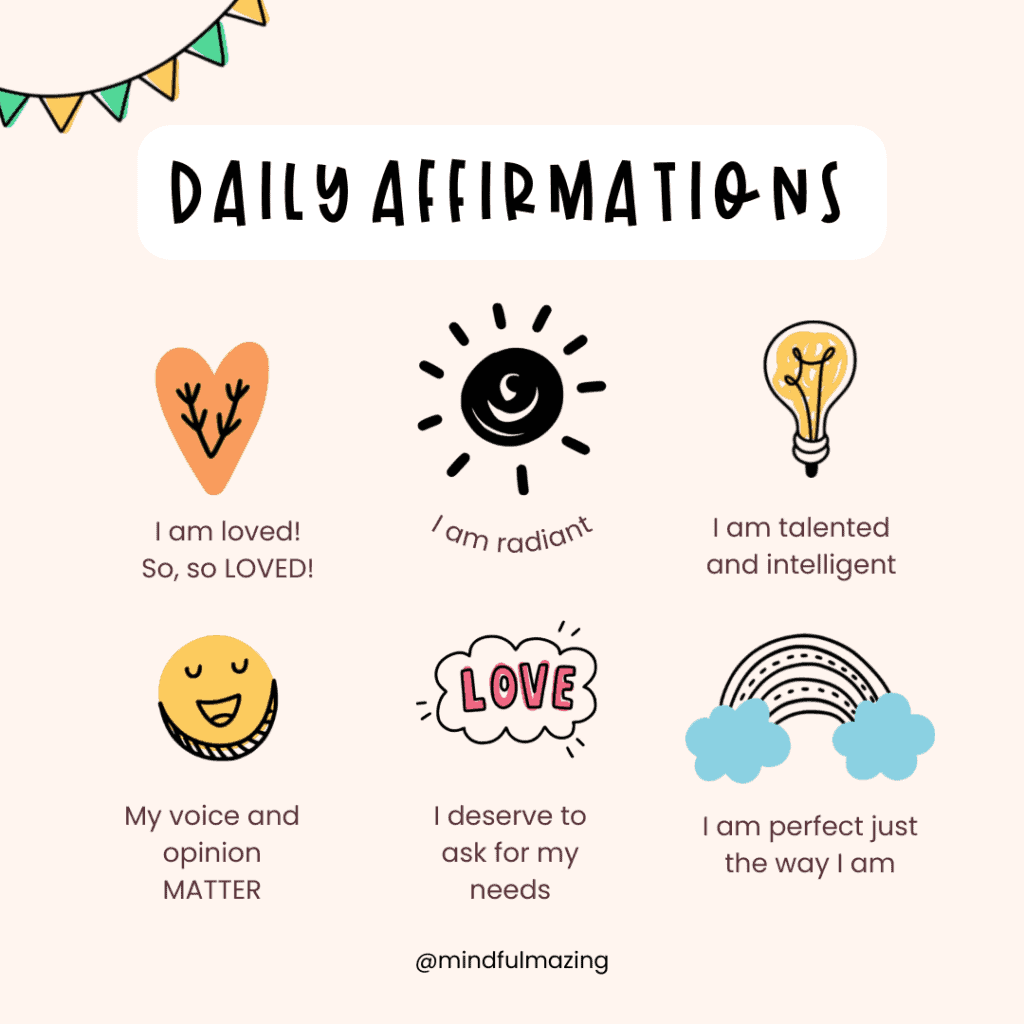
Credit: www.mindfulmazing.com
Making Affirmations Effective For Children
Not all affirmations work the same for every child. Here are ways to make them more effective:
Keep It Personal
Let your child choose the affirmations that feel right for them. Personal choices are more meaningful and powerful.
Make It Realistic
Affirmations should be believable. For example, “I am learning to be brave” may feel more true to a shy child than “I am the bravest kid ever. ”
Use The Present Tense
Affirmations work best when spoken as if they are true right now. Use phrases like “I am,” “I can,” or “I feel. ”
Be Consistent
Repeating affirmations daily builds new thought habits. Short, regular practice is better than long, rare sessions.
Celebrate Success
Notice when your child shows positive changes. Praise their effort, not just the result.
Common Mistakes When Using Affirmations With Kids
Even with good intentions, adults can make mistakes. Here are common problems and how to avoid them:
- Forcing affirmations: Don’t push your child to say words they don’t believe. Instead, invite them to join and share your own examples.
- Using negative words: Focus on what you want, not what you don’t. Say, “I am calm,” not “I am not angry.”
- Being unrealistic: If an affirmation feels impossible, your child may not believe it. Adjust the words to fit their experience.
- Expecting instant results: Affirmations take time. Changes happen slowly, as new thoughts become habits.
- Ignoring feelings: If your child feels sad or worried, listen first. Affirmations help most when feelings are accepted and understood.
How Affirmations Support Social And Emotional Learning
Affirmations are tools for social and emotional learning (SEL). SEL helps children understand and manage their feelings, build good relationships, and make smart choices.
Using affirmations can:
- Help kids name their feelings (“I can handle big feelings”)
- Teach empathy and kindness (“I care about others’ feelings”)
- Encourage responsibility (“I am in control of my actions”)
- Build respect for self and others
Schools that use SEL programs show better student behavior, higher test scores, and happier classrooms. Adding affirmations to SEL routines can make these programs even stronger.
Comparing Affirmations By Age Group
Children of different ages need different types of affirmations. Here’s a comparison for preschoolers, early elementary, and older kids:
| Age Group | Best Affirmation Style | Sample Affirmations |
|---|---|---|
| Preschool (3-5) | Simple, short phrases; use visuals and actions | "I am loved." "I am kind." |
| Early Elementary (6-8) | Clear, positive statements; add reasons | "I am a good friend because I share." "I try my best each day." |
| Older Kids (9+) | More complex ideas; connect to personal goals | "I can learn anything I set my mind to." "I am proud of how I handle challenges." |
How Affirmations Help Different Types Of Kids
Every child is unique. Some kids are shy, some are outgoing, and some may have special needs. Affirmations can be adjusted for each child’s personality:
- For shy children: “I am brave enough to speak up.”
- For active children: “I use my energy in positive ways.”
- For children with learning differences: “I learn in my own way, and that’s okay.”
- For sensitive children: “It’s okay to have big feelings.”
Parents and teachers should observe what each child needs and change affirmations as needed.
Data On Affirmations And Child Development
Many studies show that positive self-talk helps children’s mental health. For example, research published in the journal Child Development found that children who practiced positive thinking had lower stress and better social skills. Another study from the American Psychological Association reported that students who used affirmations before tests had higher scores and less anxiety.
Here’s a quick overview:
| Benefit | Evidence/Source | How It Helps |
|---|---|---|
| Self-esteem | American Psychological Association | Children feel more confident and willing to try new things |
| Academic success | Child Development Journal | Students perform better on tests and assignments |
| Emotional health | Multiple studies | Kids handle stress and challenges more calmly |

Credit: www.thepathway2success.com
Creative Activities Using Affirmations
Adding creativity to affirmations makes them more engaging for kids. Here are some fun activities:
Affirmation Art
Let children draw or paint their favorite affirmation. Hang the art in their room as a daily reminder.
Affirmation Bracelets
Make simple bracelets with beads or string. Each time your child looks at the bracelet, they can remember their affirmation.
Affirmation Stories
Ask your child to make up a short story using an affirmation, like “I am a helper. ” This connects the words to real-life actions.
Affirmation Posters
Create posters with colorful letters and pictures. Hang them at home or in the classroom.
Group Affirmation Circles
In a group (family or class), sit in a circle. Each person shares one affirmation. This builds community and support.
How To Handle Resistance Or Doubt
Sometimes, children may not believe affirmations at first. They might say, “That’s not true!” or feel silly. Here’s how to help:
- Start with affirmations that are easier to believe, like “I am learning every day.”
- Talk about times when the affirmation was true (even in small ways).
- Share your own experiences. “I used to be nervous, but I tried saying ‘I am brave’ and it helped.”
- Be patient. Self-belief grows slowly.
Practical tip: If your child feels shy, let them say affirmations in their mind or whisper them.
Supporting Affirmations With Other Positive Practices
Affirmations are just one tool. You can combine them with other practices for even better results:
- Mindfulness: Teach your child to notice their thoughts and feelings.
- Gratitude journaling: Write or draw things they are thankful for.
- Goal setting: Help your child set small, reachable goals.
- Physical activity: Exercise supports a positive mood.
When these habits work together, children become more resilient and positive.
How Adults Can Model Affirmations
Children learn from watching adults. When parents and teachers use affirmations themselves, kids see that everyone needs encouragement, even grown-ups.
- Say your own affirmations out loud.
- Share how affirmations help you.
- Use positive self-talk when facing a challenge.
- Celebrate mistakes as learning opportunities.
By modeling, you show children that affirmations are for everyone—not just for kids.
Adapting Affirmations For Different Cultures And Languages
Affirmations can be used in any language or culture. It’s important to choose words and ideas that fit your family’s values and traditions.
- Translate affirmations into your home language.
- Use local stories or sayings as affirmations.
- Respect your child’s cultural background and identity.
This makes affirmations more meaningful and helps children feel proud of who they are.
When Affirmations Are Not Enough
Sometimes, children need more support than affirmations alone can give. If your child is very anxious, sad, or withdrawn, consider talking to a counselor or mental health professional. Affirmations are helpful, but they are not a replacement for professional care when needed.
Frequently Asked Questions
What Age Can Children Start Using Affirmations?
Children as young as three can start using simple affirmations. The key is to keep the words short and the ideas easy to understand. Younger children learn best with visuals and actions. As children grow, affirmations can become more complex and personal.
How Many Affirmations Should A Child Use Each Day?
It’s better to use a few affirmations regularly than many all at once. Two to three affirmations each day is a good start. Over time, your child can add more as they become comfortable.
Do Affirmations Really Change How Kids Think?
Yes, affirmations can change thought patterns if used consistently. They help children focus on their strengths and possibilities. Research shows that positive self-talk builds confidence and resilience in kids.
What If My Child Refuses To Say Affirmations?
It’s normal for some children to feel shy or unsure. Do not force them. Instead, model affirmations yourself and invite them to join when they are ready. You can also let them say affirmations quietly or write them down.
Can Affirmations Help With School Stress Or Bullying?
Affirmations can support children who are stressed or experiencing bullying. They build inner strength and self-worth. However, for serious issues like bullying, affirmations should be used along with seeking help from teachers, counselors, or trusted adults.
Affirmations are simple yet powerful tools. When used with care and creativity, they help children build a strong, positive sense of self. By making affirmations part of everyday life, you are giving your child a valuable gift that will last for years to come.
