

Women's Leg and Glute Workout: Sculpt Stronger, Toned Curves Fast
Women’s Leg And Glute Workout: Build Strength, Shape, And Confidence
Strong legs and glutes are about more than just looks. For many women, training these muscles means more confidence, better mobility, and real power for daily life. Whether you want toned thighs, a lifted backside, or simply more energy, the right workout plan makes all the difference.
But with so much advice online, it’s easy to feel lost or overwhelmed. This article offers a complete guide to women’s leg and glute workouts—clear, practical, and based on real science.
You’ll learn which exercises matter most, how to build a balanced routine, and how to avoid common mistakes. If you want to see progress, prevent injury, or just feel stronger, this guide is for you. We’ll break down each move, explain why it works, and help you adjust for your own body and goals.
Let’s get started on the journey to stronger, more confident legs and glutes.
Why Focus On Legs And Glutes?
Your leg and glute muscles are among the largest muscles in your body. Training them regularly gives you more than just a better shape. Here’s why they’re important:
- Functional strength: Everyday movements like walking, running, standing up, or climbing stairs all use these muscles.
- Fat burning: Large muscles burn more calories—even when you’re resting.
- Injury prevention: Strong legs and glutes support your knees, hips, and back.
- Posture and balance: Your glutes stabilize your pelvis and spine, helping you stand tall and move with confidence.
Many women notice that after a few weeks of consistent training, daily tasks feel easier and their energy increases. Strong legs and glutes also help with other sports and activities, from yoga to hiking.
Key Muscles: What Are You Really Working?
Understanding which muscles you target helps you train smarter—not just harder. The main groups you’ll work are:
- Quadriceps: Front of the thighs, used for straightening your legs.
- Hamstrings: Back of the thighs, bend your knees and extend your hips.
- Gluteus maximus, medius, and minimus: Your main “butt” muscles, responsible for hip movement and stability.
- Adductors and abductors: Inner and outer thighs, control side-to-side movement.
- Calves: Lower leg, help push you up and stabilize your steps.
Focusing on all these areas leads to balanced, shapely legs and a strong, rounded backside.
Essential Leg And Glute Exercises For Women
Not all exercises are equal. Some moves target multiple muscles at once (compound exercises), while others isolate specific areas. Below are the most effective exercises for women’s leg and glute training.
1. Squats
Squats are the “queen” of leg and glute exercises. They work your quads, glutes, hamstrings, and even your core.
- Bodyweight squat: Start with feet shoulder-width apart. Lower your body as if sitting in a chair, keeping your chest up and knees in line with your toes. Go as low as comfortable, then push back up.
- Goblet squat: Hold a dumbbell or kettlebell at your chest to add weight.
- Barbell back squat: Use a barbell across your shoulders for more resistance.
Tip: Depth matters more than weight. Go low enough to feel your glutes and thighs working, but never let your lower back round.
2. Lunges
Lunges build strength, balance, and coordination. They focus on the quads and glutes, and help even out strength differences between legs.
- Forward lunge: Step forward, lower your back knee toward the ground, then push back to start.
- Reverse lunge: Step back instead of forward—easier on the knees for some women.
- Walking lunge: Move forward with each step for a greater challenge.
Tip: Keep your torso upright and don’t let your front knee go past your toes.
3. Hip Thrusts
Hip thrusts put the focus right on your glutes. They are one of the best moves for building a round, strong butt.
- Bodyweight hip thrust: Sit on the ground with upper back against a bench. Roll feet in, then drive hips up, squeezing your glutes at the top.
- Barbell hip thrust: Add a barbell across your hips for extra resistance.
Tip: Pause at the top for one or two seconds. Squeeze your glutes hard, not your lower back.
4. Deadlifts
Deadlifts are powerful for your entire lower body and core. Many women shy away from them, but with good form, they’re safe and effective.
- Romanian deadlift: Focuses on hamstrings and glutes. Hold weights, keep knees slightly bent, and hinge forward from the hips.
- Sumo deadlift: Feet wide, toes out—more glute and inner thigh activation.
Tip: Keep your back flat and drive through your heels.
5. Step-ups
Step-ups are simple but effective. They target the quads, glutes, and stabilizing muscles.
- Use a sturdy bench or step.
- Step up with one foot, press through your heel, then step down and repeat.
Tip: Hold dumbbells to increase difficulty.
6. Glute Bridges
Similar to hip thrusts but with your back on the ground. Great for beginners or as a warm-up.
- Lie on your back, knees bent, feet flat.
- Lift hips, squeeze glutes, lower back down.
Tip: Add a resistance band above your knees for more glute activation.
7. Bulgarian Split Squats
A challenging single-leg squat variation. Fantastic for glutes, quads, and balance.
- Stand with one foot behind you on a bench or chair.
- Lower your back knee toward the floor, keeping your front knee in line.
Tip: Start without weights to practice balance.
8. Side-lying Leg Raises And Abductions
These isolate the outer glutes (gluteus medius), which shape the sides of your hips.
- Lie on your side, lift your top leg up, lower slowly.
- Add a resistance band for more challenge.
9. Leg Press
A machine-based move that’s safe and effective for all levels.
- Sit on the leg press machine, feet shoulder-width apart.
- Push the platform away, then return slowly.
Tip: Adjust foot placement to focus more on glutes (high and wide) or quads (lower and narrow).
10. Calf Raises
Don’t forget your calves—they complete your leg shape and help with balance.
- Stand on a step or flat surface.
- Rise onto your toes, lower back down.
Tip: Try single-leg calf raises for extra intensity.
Sample Leg And Glute Workout Routine
Building a routine means more than just picking exercises. You need the right mix, order, and rest. Here’s a sample workout that balances all key muscles.
Warm-up (5–10 Minutes)
Always warm up to prepare your joints and muscles. Try:
- Light cardio (jog, brisk walk, or cycling)
- Dynamic stretches (leg swings, bodyweight squats, lunges)
Main Workout
Repeat this routine 1–2 times per week, with at least 48 hours between sessions for recovery.
| Exercise | Sets | Reps | Rest | Focus |
|---|---|---|---|---|
| Barbell Squat | 3 | 8–12 | 90 sec | Quads, Glutes |
| Romanian Deadlift | 3 | 10–15 | 90 sec | Hamstrings, Glutes |
| Hip Thrust | 3 | 12–15 | 60 sec | Glutes |
| Walking Lunge | 2 | 12–16 (each leg) | 60 sec | Quads, Glutes, Balance |
| Glute Bridge (Band) | 2 | 15–20 | 45 sec | Glute Activation |
| Calf Raise | 2 | 20–25 | 30 sec | Calves |
Cool-down (5–10 Minutes)
Stretch your quads, hamstrings, glutes, and calves. Hold each stretch for 20–30 seconds. Consider foam rolling to ease muscle tension.
Progression: How To Keep Improving
You won’t see changes overnight, but smart progression leads to lasting results. Here’s how to keep moving forward:
- Increase resistance: Add weight, bands, or slow down your reps.
- Add sets or reps: Gradually do more work, but avoid overtraining.
- Change exercise order: Start with moves that target your weaker areas.
- Try new variations: Switch up squat or lunge types to challenge your muscles differently.
Non-obvious tip: Many women forget to track their progress. Write down weights, reps, and how you feel after each workout. This helps you see real growth and adjust your plan.
Training Frequency And Recovery
How often should you train legs and glutes? Most women do best with 1–2 focused sessions per week. This gives your muscles time to recover and grow stronger.
- Beginners: Start with 1 session per week.
- Intermediate/Advanced: Aim for 2 sessions, with at least 48 hours between.
Rest is not laziness—it’s when your muscles actually rebuild and shape up. Too much training without rest can lead to injuries or slow progress.
Hidden insight: If you’re always sore, you may be doing too much. Listen to your body and use rest days for gentle movement like stretching or walking.
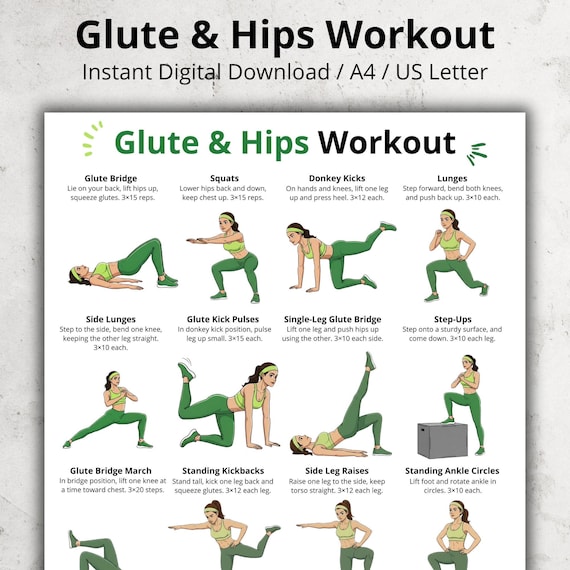
Credit: www.etsy.com
Nutrition For Leg And Glute Growth
Exercise is only half the battle. Your muscles need fuel to grow and recover.
- Protein: Essential for muscle repair. Aim for 0.7–1 gram per pound of body weight daily.
- Carbs: Give you energy for hard workouts—don’t skip them.
- Fats: Needed for hormones and overall health.
- Water: Stay hydrated for better performance and recovery.
Practical example: If you weigh 130 lbs, try to eat at least 90–130 grams of protein each day. Include lean meats, tofu, beans, and dairy.
Many women under-eat, especially when trying to “tone up. ” This slows muscle gain and fat loss. Focus on a balanced diet, not extreme restriction.
Home Workouts: No Gym, No Problem
You don’t need a gym to shape your legs and glutes. With just your body weight or simple tools, you can get a great workout.
Bodyweight Routine Example
- Bodyweight squats: 3 x 20 reps
- Reverse lunges: 3 x 12 reps each leg
- Glute bridges: 3 x 20 reps
- Side-lying leg raises: 2 x 15 reps each side
- Standing calf raises: 2 x 20 reps
Tips for home workouts:
- Use a backpack with books for extra resistance.
- Loop a resistance band around your legs for added challenge.
- Do moves slowly and pause at the hardest part.
Common Mistakes Women Make (and How To Fix Them)
Even with the best intentions, many women fall into these traps:
- Too much cardio: Cardio is healthy but won’t build muscle or shape your glutes.
- Light weights only: Muscles need challenge to grow. Don’t fear heavier dumbbells.
- Skipping glute activation: If your glutes don’t “fire,” your back or thighs take over. Warm up with bridges or band walks.
- Rushing reps: Fast, sloppy moves do less. Slow down and focus on muscle squeeze.
- Neglecting rest: Muscles grow when you rest, not just when you train.
Advanced insight: Many women do not “feel” their glutes working. Try touching your glutes during exercises (called “tactile feedback”) to improve mind-muscle connection.
Exercise Variations For All Levels
Every woman’s body is different. You can adjust exercises to match your fitness level.
Beginner
- Use bodyweight only
- Practice good form in front of a mirror
- Do fewer sets and reps
Intermediate
- Add dumbbells or resistance bands
- Try single-leg moves (Bulgarian split squats)
- Increase range of motion
Advanced
- Use barbells or heavy weights
- Add plyometric moves (jump squats, jumping lunges)
- Use tempo: 3 seconds down, 1 second up
Personalization tip: If you have knee pain, focus on hip-dominant moves like hip thrusts and deadlifts.
Tracking Your Progress: More Than Just Looks
It’s easy to get focused on the mirror or scale, but real progress means more:
- Strength: Are you lifting heavier or doing more reps?
- Endurance: Can you finish workouts with less fatigue?
- Mobility: Are your squats or lunges deeper and smoother?
- Confidence: Do you feel better in daily life?
Take pictures, measure thigh and hip circumference, or just notice how your jeans fit. Progress is not always about the number on the scale.
Cardio And Legs/glutes: How To Combine?
Some cardio is good for heart health, but too much can slow muscle growth. Here’s how to balance:
- Do leg/glute workouts on separate days from high-intensity cardio
- Try low-impact options like walking, cycling, or swimming
- Limit long runs if your main goal is muscle growth
Best practice: End your strength session with 10–15 minutes of incline walking or stair climbing. This gives you a cardio boost without tiring your muscles too much.
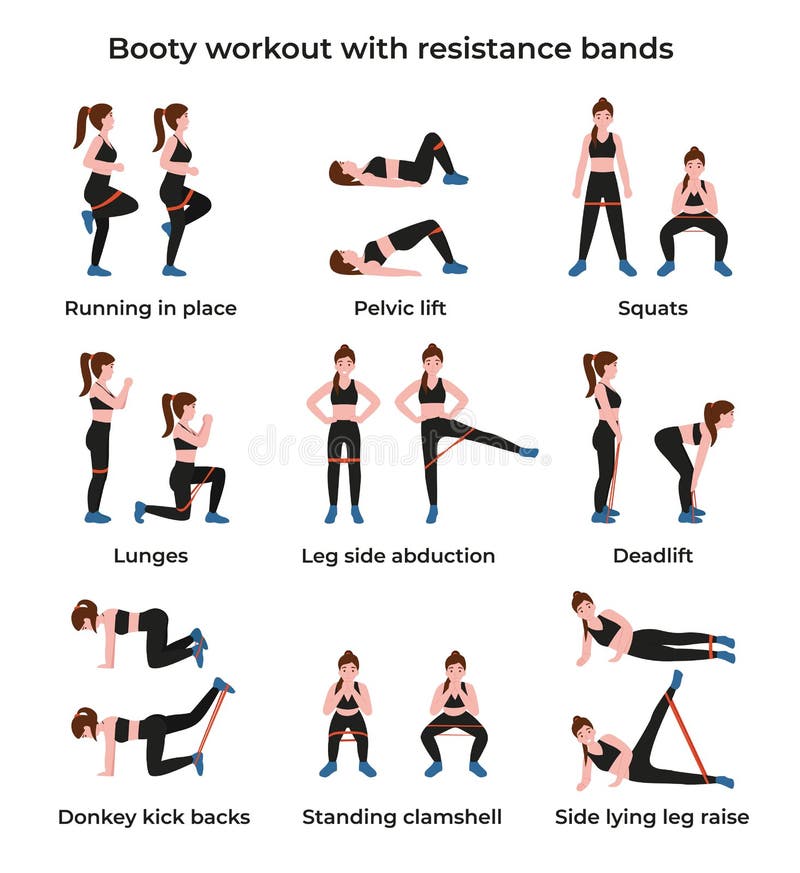
Credit: www.dreamstime.com
Example Week: Leg And Glute Training Split
Here’s how you might organize your week for best results.
| Day | Workout | Notes |
|---|---|---|
| Monday | Leg & Glute Strength | Main workout (see above) |
| Tuesday | Upper Body or Rest | Optional |
| Wednesday | Cardio or Yoga | Low-impact |
| Thursday | Leg & Glute (optional) | Lighter session or variation |
| Friday | Core & Mobility | Pilates, stretching |
| Saturday | Active Rest | Walk or easy bike ride |
| Sunday | Rest | Full recovery |
Adjust this plan for your schedule and energy levels. It’s better to be consistent with two good sessions per week than to burn out trying to do too much.
Equipment Guide: What Do You Really Need?
Some women prefer the gym, others want to work out at home. Here’s what helps most:
- Essential: Resistance bands, dumbbells, sturdy chair or bench
- Nice to have: Barbell, kettlebell, ankle weights, foam roller
- Gym-only: Leg press machine, Smith machine, cable machine
Smart tip: Start simple. Bands and bodyweight can build strength and shape, especially for beginners.
If you’re considering equipment, check guides from trusted fitness sources like the American Council on Exercise.
Glute Activation: The Secret To Better Workouts
Some women struggle to “feel” their glutes during training. This is common—especially if you sit a lot for work or study. Glute activation drills before your main workout can make a big difference.
- Mini-band walks: Place a resistance band above your knees, step side to side.
- Clamshells: Lie on your side, band above knees, open and close legs.
- Single-leg glute bridge: Lift one leg while bridging up.
Just 5 minutes of these moves before your main session helps you target the right muscles and get better results.
Non-obvious insight: Activation isn’t just for beginners. Even advanced lifters use these drills to prevent injury and maximize gains.
Stretching And Mobility For Healthy Legs And Glutes
Tight muscles can limit your results or lead to pain. Spend a few minutes after each workout on:
- Standing quad stretch: Pull one foot toward your butt, hold.
- Seated hamstring stretch: Reach for your toes, keep back straight.
- Pigeon pose: Sit with one leg bent in front, stretch the glute.
- Calf stretch: Press your heel into the floor, lean forward.
Flexibility improves your squat and lunge depth, reduces soreness, and keeps you moving well for life.
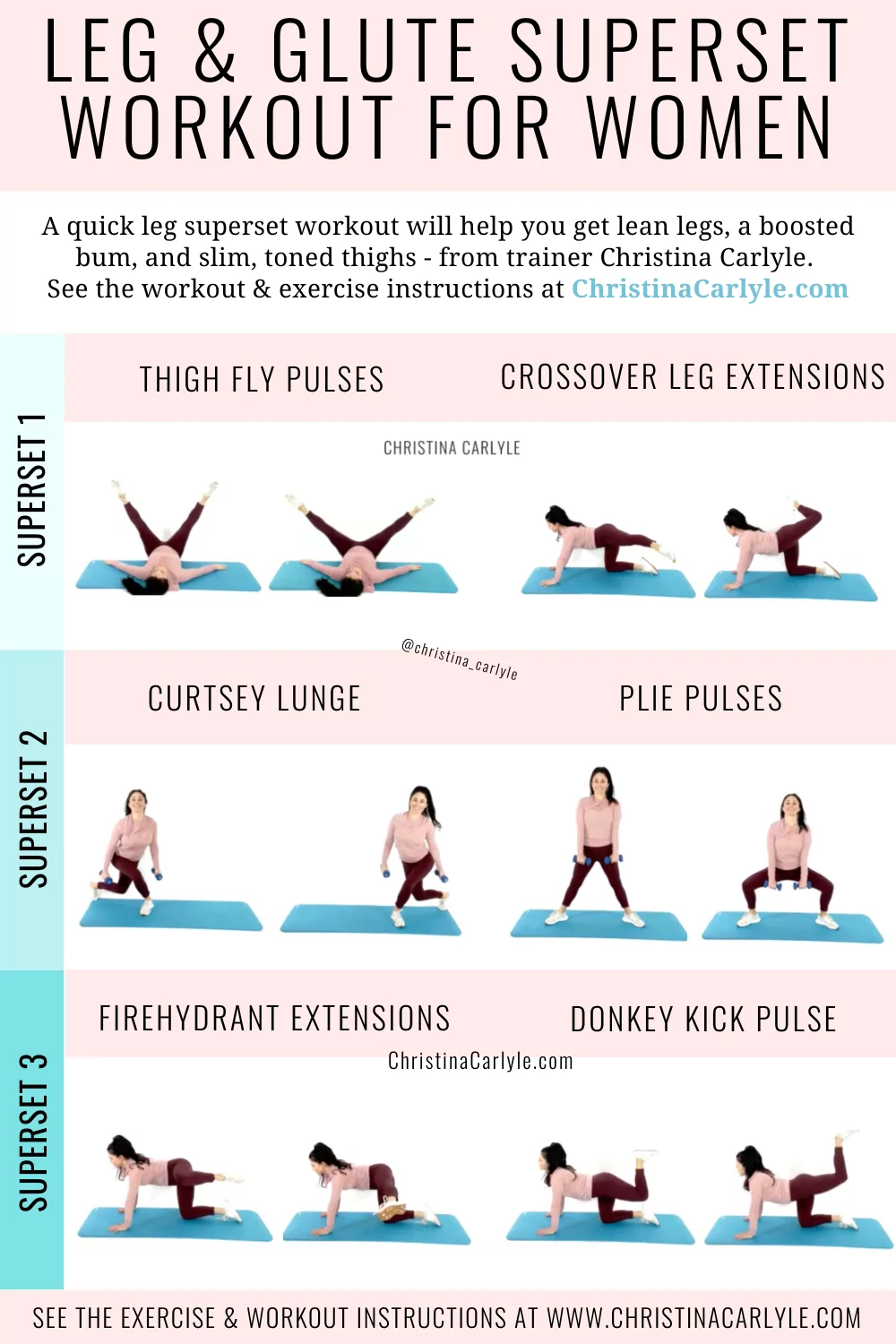
Credit: www.christinacarlyle.com
Staying Motivated: Mindset Matters
Building stronger legs and glutes takes time and patience. Here’s how to stay on track:
- Set small goals: Try adding one more rep or 2.5 lbs every few weeks.
- Find a workout buddy: Training with a friend keeps you accountable.
- Track your wins: Write down what you accomplished, not just what’s left.
- Celebrate progress: Fit into old jeans? Do a victory dance!
Remember, everyone’s journey is different. Focus on your own progress, not comparison with others.
Frequently Asked Questions
How Long Does It Take To See Results From Leg And Glute Workouts?
Most women notice changes in strength and muscle tone within 4–8 weeks of consistent training, especially if combined with good nutrition and rest. Visible changes depend on body type, diet, and workout intensity.
Should Women Lift Heavy Weights For Leg And Glute Growth?
Yes, as long as you use proper form. Heavier weights challenge your muscles to grow and shape. Start with manageable weights and increase slowly. Don’t worry—lifting heavy will not make your legs “bulky. ”
Can I Train Legs And Glutes If I Have Knee Pain?
Yes, but choose exercises carefully. Focus on hip-dominant moves like hip thrusts, glute bridges, and Romanian deadlifts. Avoid deep squats or lunges if they cause pain, and always check with a healthcare professional.
Is Cardio Necessary For Leg And Glute Development?
Cardio is not required for muscle growth, but it helps with overall health and fat loss. For best results, combine moderate cardio with strength training. Don’t let cardio replace your leg and glute workouts.
What Should I Eat Before And After A Workout?
Before: Eat a small meal with carbs and some protein (e.g., banana and yogurt) 1–2 hours before training.
After: Have protein and carbs within two hours (e.g., chicken and rice, or a protein shake with fruit) to help your muscles recover and grow.
Strong legs and glutes are about more than looks—they’re your foundation for health, confidence, and a more active life. Start with these workouts, stay consistent, and enjoy the journey to your best self.
