

What is Tricep Workout: Benefits, Techniques, and Top Exercises
What Is Tricep Workout
For many people, strong and defined arms are a fitness goal. Yet, most focus only on the biceps, forgetting another key muscle: the triceps. The triceps make up about two-thirds of your upper arm. If you want stronger, more toned arms, you need to understand and work your triceps properly. But what is a tricep workout, and why does it matter? This article breaks down everything you need to know, from the science behind the triceps to how to build an effective routine, avoid mistakes, and see real results.
Understanding The Triceps Muscle
The triceps brachii, or "triceps," is a three-headed muscle on the back of your upper arm. These three parts are:
- Long head
- Lateral head
- Medial head
All three heads work together to straighten (extend) your elbow. They also help with pushing movements and stabilize your shoulder joint. When you push yourself up from a chair or do a push-up, your triceps are working.
Anatomy Breakdown
Here’s a closer look at each part:
- The long head attaches to your shoulder blade and crosses the shoulder joint.
- The lateral head is on the outer side of your arm.
- The medial head sits deep and helps with all elbow extension.
Understanding these parts is important because different exercises target each head in unique ways. For example, overhead movements hit the long head more, while close-grip presses work the medial head.
Why Tricep Workouts Matter
Many people want bigger arms, but overlook the triceps. Here’s why focusing on tricep workouts is essential:
- Arm size and shape: Since triceps make up most of your upper arm, working them gives your arms a fuller look.
- Upper body strength: Strong triceps help with pressing exercises, like bench presses and push-ups.
- Joint protection: The triceps support your elbow and shoulder, reducing injury risk.
- Everyday movement: From pushing open a door to getting up from the floor, triceps are always working.
Research shows that balanced arm training (biceps and triceps) leads to better performance and reduces muscle imbalances.
Common Myths About Tricep Training
Even experienced gym-goers believe some myths about triceps. Here are a few to watch for:
- “Bigger arms mean more biceps.” In reality, the triceps are the larger muscle.
- “You don’t need isolation exercises.” Compound moves like bench press help, but targeted tricep exercises maximize growth.
- “Push-ups are enough.” Standard push-ups work the triceps, but not enough for serious strength or muscle gains.
Many beginners skip tricep isolation, missing out on real arm growth.
Types Of Tricep Workouts
A tricep workout means a session or routine focused on exercises that target the triceps. There are many ways to train them, but most routines use a mix of:
- Compound exercises: Work multiple muscles at once (e.g., bench press).
- Isolation exercises: Focus only on the triceps (e.g., tricep pushdowns).
Both are important for strength and muscle building.
Compound Exercises For Triceps
Some of the best compound moves include:
- Bench press (narrow grip): Focuses more on triceps than chest.
- Push-ups (diamond or close grip): Simple, but effective.
- Dips: Use parallel bars or a bench; targets all three tricep heads.
Isolation Exercises For Triceps
These moves focus directly on the triceps:
- Tricep pushdowns: Performed with a cable machine.
- Overhead tricep extensions: Great for the long head.
- Skullcrushers (lying tricep extensions): Use a barbell or dumbbells.
Each exercise has its place, depending on your goals.
How To Structure An Effective Tricep Workout
Building a good tricep workout is more than doing random exercises. You need a plan that considers:
- Exercise selection: Use both compound and isolation moves.
- Volume: How many sets and reps you do.
- Rest: How much time you take between sets.
- Frequency: How often you train triceps each week.
Sample Tricep Workout Routine
Here’s an example routine for a balanced tricep workout:
- Close-grip bench press – 3 sets of 8-10 reps
- Tricep dips – 3 sets of 10-12 reps
- Overhead tricep extension – 3 sets of 10-15 reps
- Tricep pushdowns – 3 sets of 12-15 reps
Rest 60-90 seconds between sets. This routine hits all three heads of the triceps and mixes strength and muscle-building rep ranges.
Key Principles For Tricep Growth
To get the most from your tricep workouts, keep these principles in mind:
- Progressive overload: Add weight, reps, or sets over time to keep challenging your muscles.
- Mind-muscle connection: Focus on feeling your triceps working during each rep.
- Proper form: Quality is better than quantity. Bad form can lead to injuries and poor results.
- Full range of motion: Move your arm through the entire motion for best results.
A common mistake is using too much weight and swinging the arms. This uses other muscles, not just the triceps.
Popular Tricep Exercises Explained
Let’s look at some of the top exercises for building your triceps. Each one has unique benefits.
Close-grip Bench Press
This move is similar to a regular bench press, but your hands are closer together (shoulder-width apart). This shifts more work to the triceps. It’s a good way to build strength and size at the same time.
Tricep Dips
Dips can be done on parallel bars or using a bench. They target all three heads but especially the lateral head. Leaning forward works more chest, so keep your body upright for triceps.
Skullcrushers
Also called lying tricep extensions, this exercise is done with a barbell or dumbbells. You lower the weight to your forehead, then push it back up. This move is great for isolating the triceps, but requires good form to protect your elbows.
Tricep Pushdowns
Using a cable machine, you push a bar or rope down until your arms are straight. This move is easy to learn and safe for most people.
Overhead Tricep Extensions
With a dumbbell or cable, you extend your arms overhead and lower the weight behind your head. This stretches the long head of the triceps and helps with arm size.
Diamond Push-ups
Bring your hands together under your chest (making a diamond shape with your thumbs and index fingers) and do a push-up. This bodyweight exercise really burns the triceps.
Comparison: Compound Vs. Isolation Tricep Exercises
To help you choose the right exercises, here’s a comparison between compound and isolation tricep exercises:
| Type | Main Benefit | Example Exercises | Best For |
|---|---|---|---|
| Compound | Builds overall strength, involves other muscles | Close-grip bench press, dips, push-ups | Beginners, strength focus |
| Isolation | Targets triceps directly, helps muscle growth | Tricep pushdowns, skullcrushers, overhead extensions | Muscle definition, fixing weaknesses |
Smart routines use both types for best results.
How Many Sets And Reps For Triceps?
The right number of sets and reps depends on your goal:
- Strength: 3-5 sets of 4-6 reps (heavier weight)
- Muscle growth (hypertrophy): 3-4 sets of 8-12 reps
- Endurance: 2-3 sets of 15-20 reps (lighter weight)
Most people get the best mix by using 8-15 reps for most tricep exercises.
Volume And Frequency
For muscle growth, aim for about 10-15 total sets per week, spread across 2-3 sessions. This allows recovery and good progress.
Mistakes To Avoid In Tricep Workouts
Even with the right routine, small mistakes can hurt your progress. Here are common errors:
- Using too much weight: Leads to bad form and risk of injury.
- Neglecting the long head: Only doing pushdowns misses one-third of the muscle.
- Not using full range of motion: Half-reps don’t build as much muscle.
- Ignoring recovery: Triceps need rest, especially if you do lots of pressing exercises.
An easy-to-miss mistake: doing too many chest exercises can overwork the triceps and lead to slow gains or injuries.
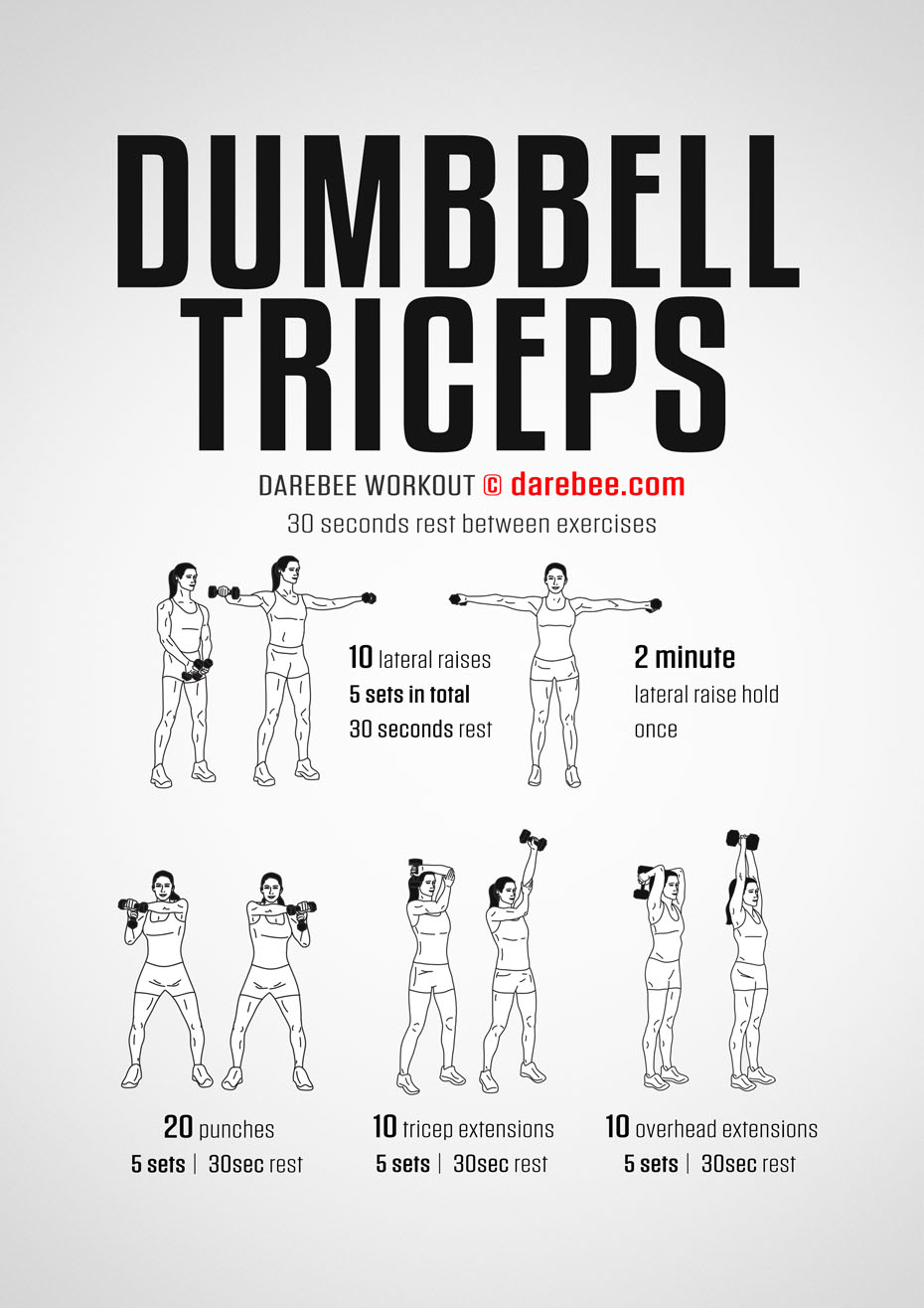
Credit: darebee.com
Advanced Tricep Training Techniques
Once you master the basics, these advanced techniques can boost results:
- Supersets: Do two exercises back-to-back with no rest. Example: tricep pushdowns then overhead extensions.
- Drop sets: After reaching failure, reduce the weight and keep going.
- Paused reps: Pause for 1-2 seconds at the bottom of a rep to increase tension.
- Eccentric focus: Lower the weight slowly for more muscle growth.
Don’t use these techniques every workout—once a week is enough for most people.
Tricep Training For Different Goals
Your tricep workout should match your main goal. Here’s how to adjust:
For Strength
Use heavier weights and lower reps. Focus on compound moves like close-grip bench press and weighted dips.
For Muscle Size (hypertrophy)
Use moderate weight, higher reps, and a mix of exercises. Include isolation moves to hit all three heads.
For Toning And Endurance
Use lighter weights, higher reps (15-20), and shorter rest between sets. Bodyweight exercises like diamond push-ups are great here.
Comparing Tricep Exercises: Free Weights, Machines, And Bodyweight
Different types of tricep exercises suit different needs. Here’s a look at how they compare:
| Exercise Type | Equipment Needed | Best For | Safety Level |
|---|---|---|---|
| Free Weights | Dumbbells, barbells | Muscle growth, strength | Medium (requires good form) |
| Machines | Cable machine, tricep extension machine | Beginners, controlled movement | High (guided path) |
| Bodyweight | None (just your body) | Home workouts, endurance | High (easy to learn) |
Beginners often find machines easiest to start with, while free weights build more stabilizer muscles.
Tricep Workouts At Home Vs. Gym
You can build strong triceps anywhere. Here’s a quick comparison:
| Setting | Advantages | Disadvantages | Example Exercises |
|---|---|---|---|
| Home | Convenient, no cost, flexible time | Limited equipment, fewer options | Diamond push-ups, bench dips, resistance band extensions |
| Gym | More equipment, heavier weights, variety | Travel, membership fee | Tricep pushdowns, skullcrushers, cable kickbacks |
You don’t need a gym membership to see progress. Consistency matters more than location.
Equipment For Tricep Workouts
Depending on where you train, you might use:
- Dumbbells: For extensions, kickbacks, skullcrushers.
- Barbells: For close-grip presses, lying extensions.
- Cable machines: For pushdowns, overhead extensions.
- Resistance bands: For home versions of pushdowns and extensions.
- Parallel bars or benches: For dips.
If you only have your body, diamond push-ups and bench dips are still effective.
How Triceps Affect Other Exercises
Strong triceps don’t just make your arms look better. They help in many other movements:
- Bench press: Weak triceps often cause people to fail at the top of the lift.
- Shoulder press: Triceps help lock out the weight overhead.
- Push-ups: Triceps are key for finishing each rep.
If your progress stalls on these exercises, more tricep training can help.

Credit: centr.com
Tricep Training For Women
Many women worry that tricep workouts will make their arms bulky. This is a myth. In reality, tricep training helps tone the arms and reduces “flabby” areas. Since women have lower testosterone, muscle growth is slower and less dramatic.
Focus on:
- 2-3 tricep exercises per week
- 10-15 reps per set
- Bodyweight moves or light weights
Consistency is key for results.
Common Questions About Tricep Soreness And Recovery
After a good tricep workout, soreness is normal, especially for beginners. This is called DOMS (delayed onset muscle soreness). It’s a sign your muscles are adapting and getting stronger. Here’s how to manage it:
- Rest: Give at least 48 hours before working triceps hard again.
- Light movement: Gentle stretching or light cardio can help blood flow.
- Nutrition: Eat enough protein to help muscles repair.
- Hydration: Drink water to help recovery.
If pain is sharp or lasts more than a week, consider seeing a professional.

Credit: www.reddit.com
Nutrition For Tricep Growth
Exercise is half the battle—nutrition is the other. For tricep growth:
- Protein: Aim for 0.7–1 gram per pound of body weight.
- Carbs: Fuel your workouts for energy.
- Fats: Support hormone health and joint recovery.
Eating a balanced meal with protein and carbs after your workout helps repair your muscles.
Tricep Workout Programming For Beginners
If you’re new to training, start simple. Here’s a beginner tricep program:
- Day 1: Push-ups (3 sets of 10), bench dips (3 sets of 8)
- Day 2: Rest or train other muscles
- Day 3: Tricep pushdowns (3 sets of 12), overhead dumbbell extension (3 sets of 10)
- Day 4: Rest or lower body
- Repeat
This plan mixes bodyweight and simple equipment exercises. Focus on form, not weight.
Tricep Workout Progression For Intermediates
If you’ve been training for a few months, step up your routine:
- Add weight to dips (hold a dumbbell between your feet)
- Try supersets (e.g., pushdowns then skullcrushers)
- Use more advanced moves like close-grip bench press
Track your reps and sets. If you can do 15 reps easily, increase the weight.
Tricep Training And Injury Prevention
Tricep injuries are rare but can happen, especially if you use too much weight or poor form. To avoid problems:
- Warm up: Do light cardio and arm circles before training.
- Stretch: After workouts, gently stretch the triceps.
- Listen to your body: If you feel sharp pain, stop and check your form.
One advanced tip: avoid locking your elbows hard at the top of each rep. This protects your joints from strain.
Signs Your Triceps Are Getting Stronger
How do you know your triceps are growing? Look for these changes:
- You can do more reps or lift more weight.
- Your arms look fuller, especially from the side.
- Pressing exercises (like bench press) feel easier.
- Everyday pushing tasks (like getting off the floor) feel smoother.
Progress might be slow at first, but small gains add up over weeks.
Real-world Examples: Tricep Growth In Action
Many athletes and fitness enthusiasts share their progress. For example, people who added 2-3 focused tricep exercises each week often report:
- Better arm definition in 6-8 weeks
- Stronger bench press by 10-15%
- Less arm “jiggle” and more confidence in T-shirts
One insight: people who take “before” photos often notice changes they miss in the mirror.
How To Track Tricep Workout Progress
Tracking helps you stay motivated. Use a notebook or app to record:
- Date, exercise, sets, reps, and weight used
- How each set felt (easy, hard, form breakdown)
- Arm measurements every 4-6 weeks
Review your notes to see what’s working and what’s not. Adjust your program if you stop seeing progress.
When To Change Your Tricep Workout
Even the best routine gets stale. Change your tricep workout every 6-8 weeks by:
- Swapping exercises (e.g., switch pushdowns for overhead extensions)
- Changing rep ranges (try higher or lower)
- Adjusting rest time between sets
This keeps your muscles challenged and prevents boredom.
Tricep Workout And Fat Loss
You can’t “spot reduce” fat from your arms. But building muscle under the skin helps tighten the area. For best results, combine tricep training with:
- Full-body strength workouts
- Cardio (walking, running, cycling)
- Healthy eating
As you lose body fat, your triceps will look more toned.
Tricep Workout For Different Sports
Strong triceps help in many sports, not just bodybuilding. For example:
- Basketball: More powerful passes and shots
- Swimming: Stronger strokes
- Boxing: Harder punches
- Gymnastics: Needed for handstands and pressing moves
Athletes often add tricep-specific exercises to improve their sport performance.
Extra Tips For Better Results
Here are two non-obvious tips that most beginners miss:
- Vary your grip: Small changes in hand position (overhand, underhand, neutral) can hit the triceps in new ways and prevent plateaus.
- Stretch between sets: Light stretching between sets can increase blood flow and help with muscle pump.
Try these with your next workout and notice the difference.
Where To Learn More
If you want to dive deeper into tricep anatomy and advanced training, you can visit this Wikipedia page for detailed information.
Frequently Asked Questions
What Is The Best Tricep Exercise For Beginners?
For beginners, tricep pushdowns and bench dips are safe and easy to learn. These exercises don’t need much equipment and are gentle on the elbows.
How Often Should I Train My Triceps Each Week?
Most people see best results with 2-3 tricep workouts per week, with at least one day of rest between sessions. This gives your muscles time to recover and grow.
Can I Train Triceps And Biceps On The Same Day?
Yes, you can. Many people do arm days where they train both triceps and biceps in the same session. Just be sure not to overwork your arms if you have other upper body workouts planned.
Why Do My Elbows Hurt During Tricep Workouts?
Elbow pain is often caused by using too much weight or poor form. Lower the weight and focus on controlled, smooth movements. If pain continues, take a break and consult a professional.
Will Tricep Workouts Make My Arms Bulky?
No. Tricep training helps tone and shape your arms, not make them bulky. Building large muscles takes time and a special diet. Most people get a tighter, firmer look from regular tricep training.
Strong triceps are essential for both appearance and performance. With the right workout routine, consistency, and smart training, you’ll see real changes in your arms—and your overall strength. Whether at home or in the gym, the key is to challenge your triceps and give them time to recover.
Start simple, focus on form, and enjoy your progress.
